Domenico Ghirlandaio's Country Retreat, His Son's Frescoed Chapel, and Five Private Villas: Getting Married at Dimora Ghirlandaio, Impruneta
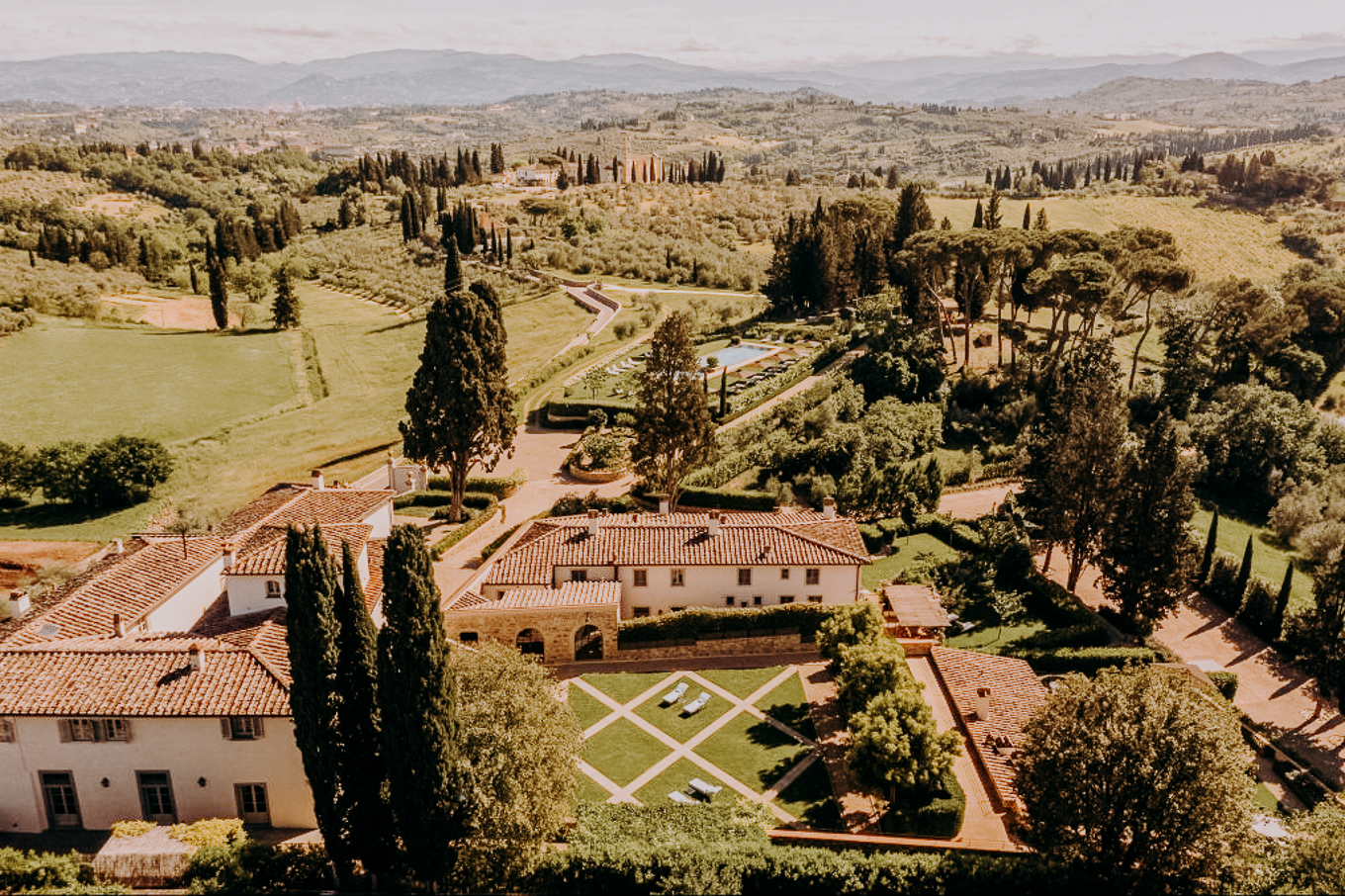
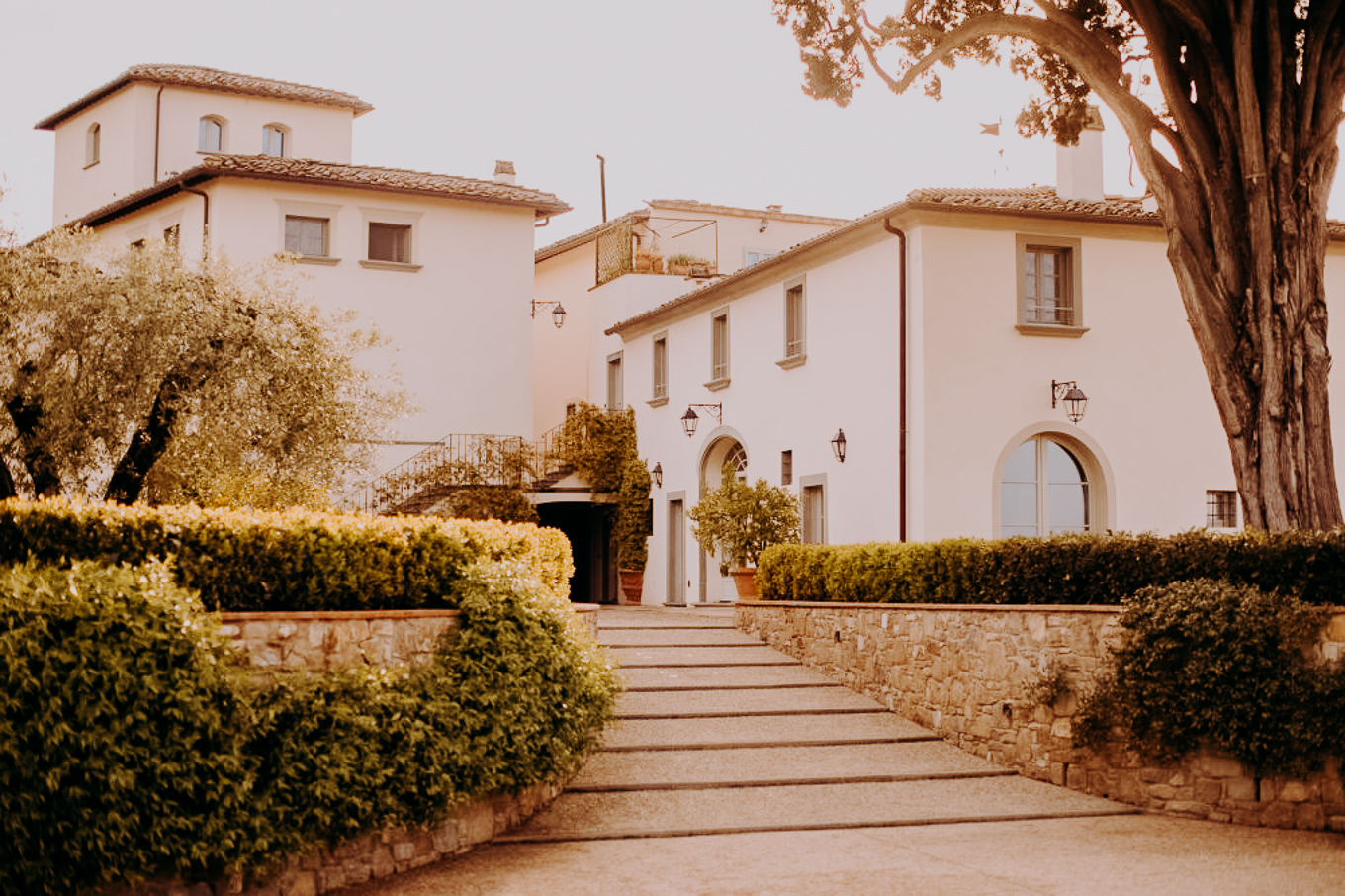
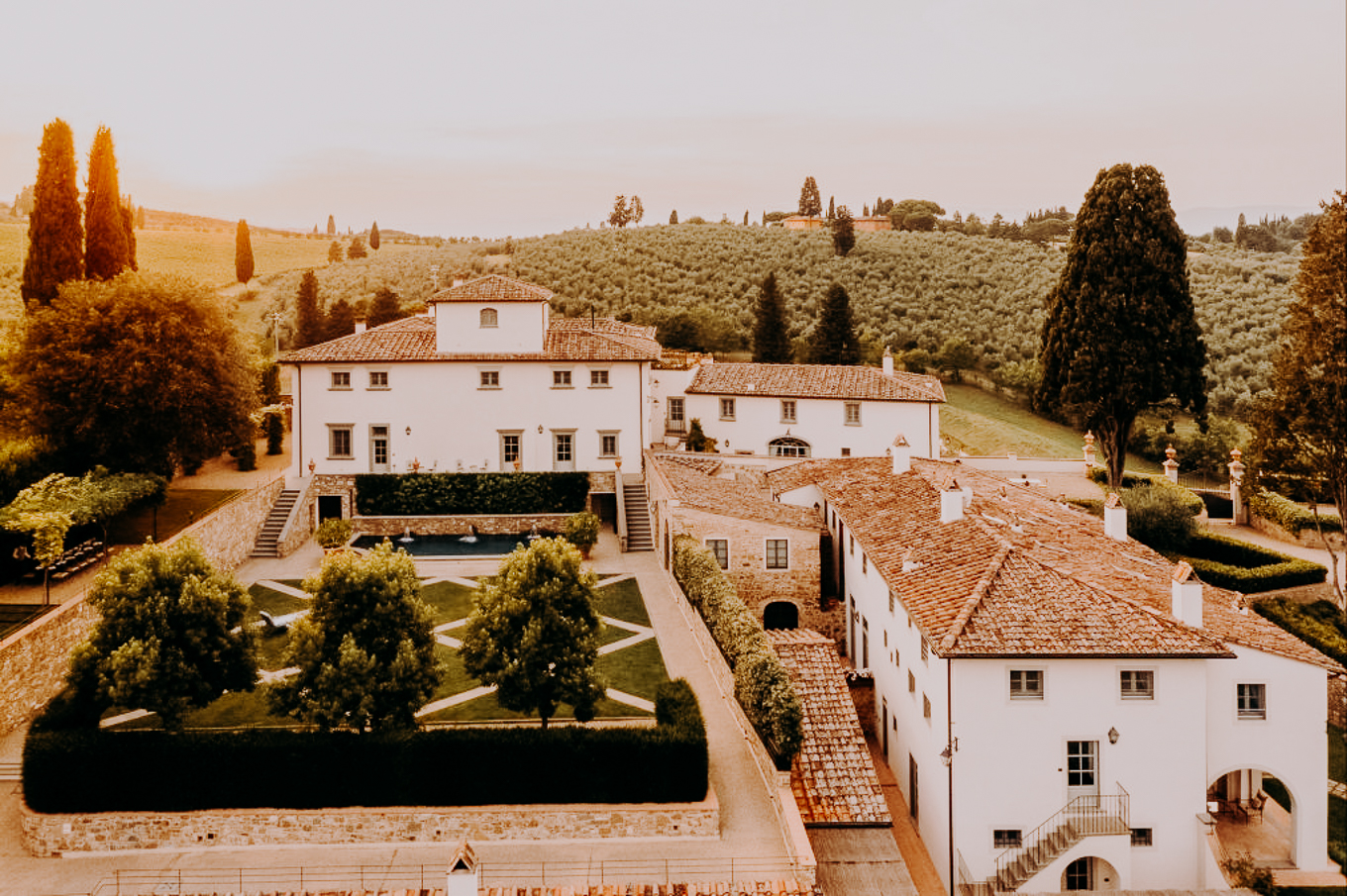
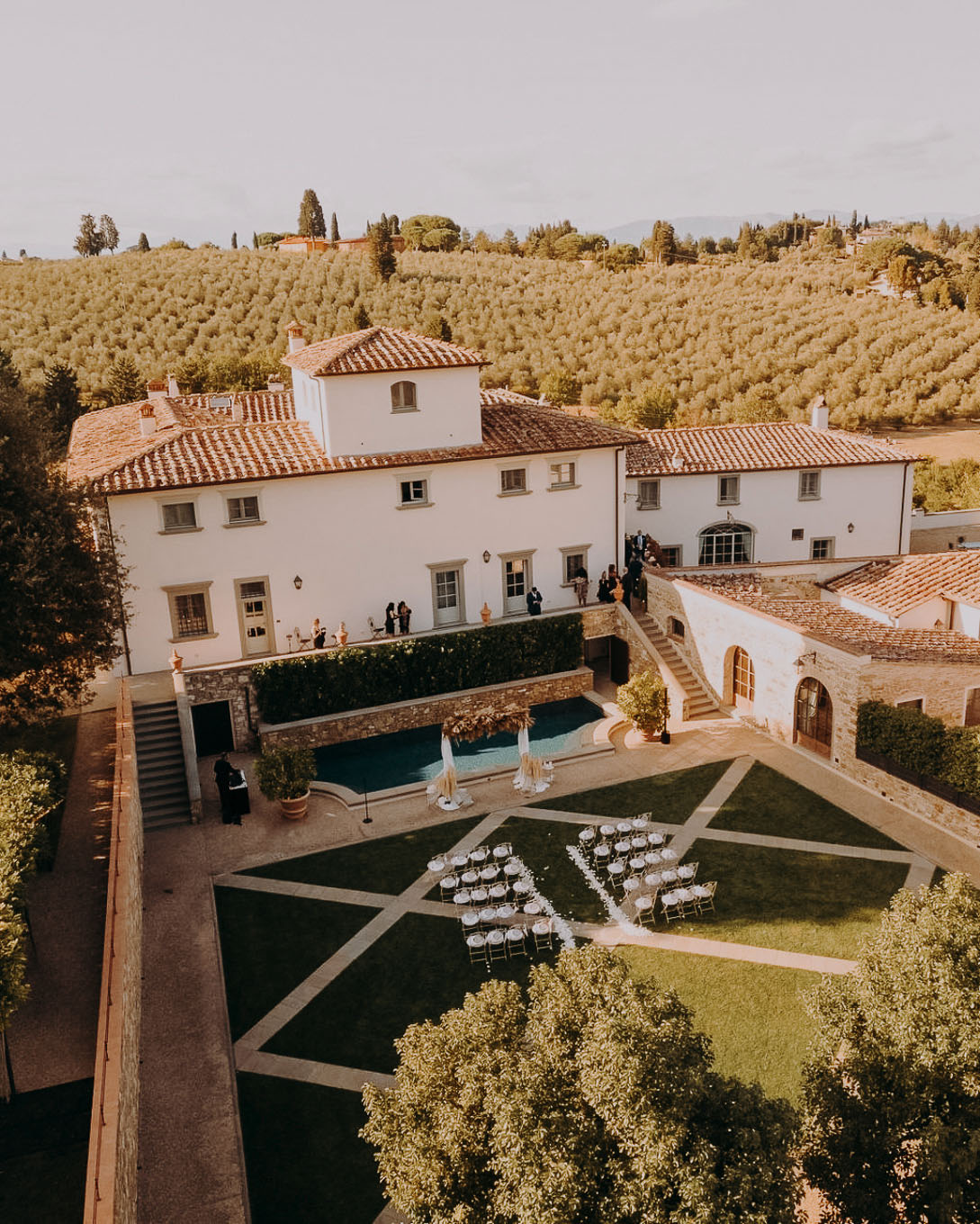
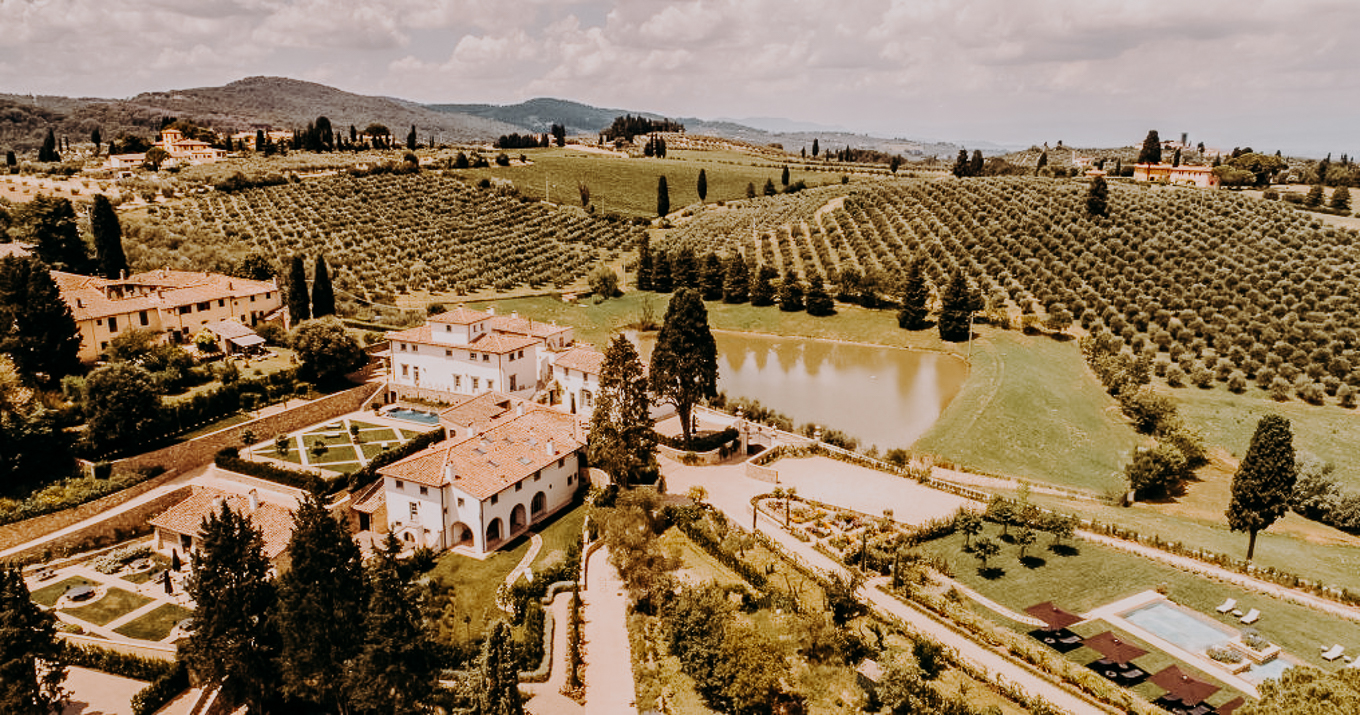
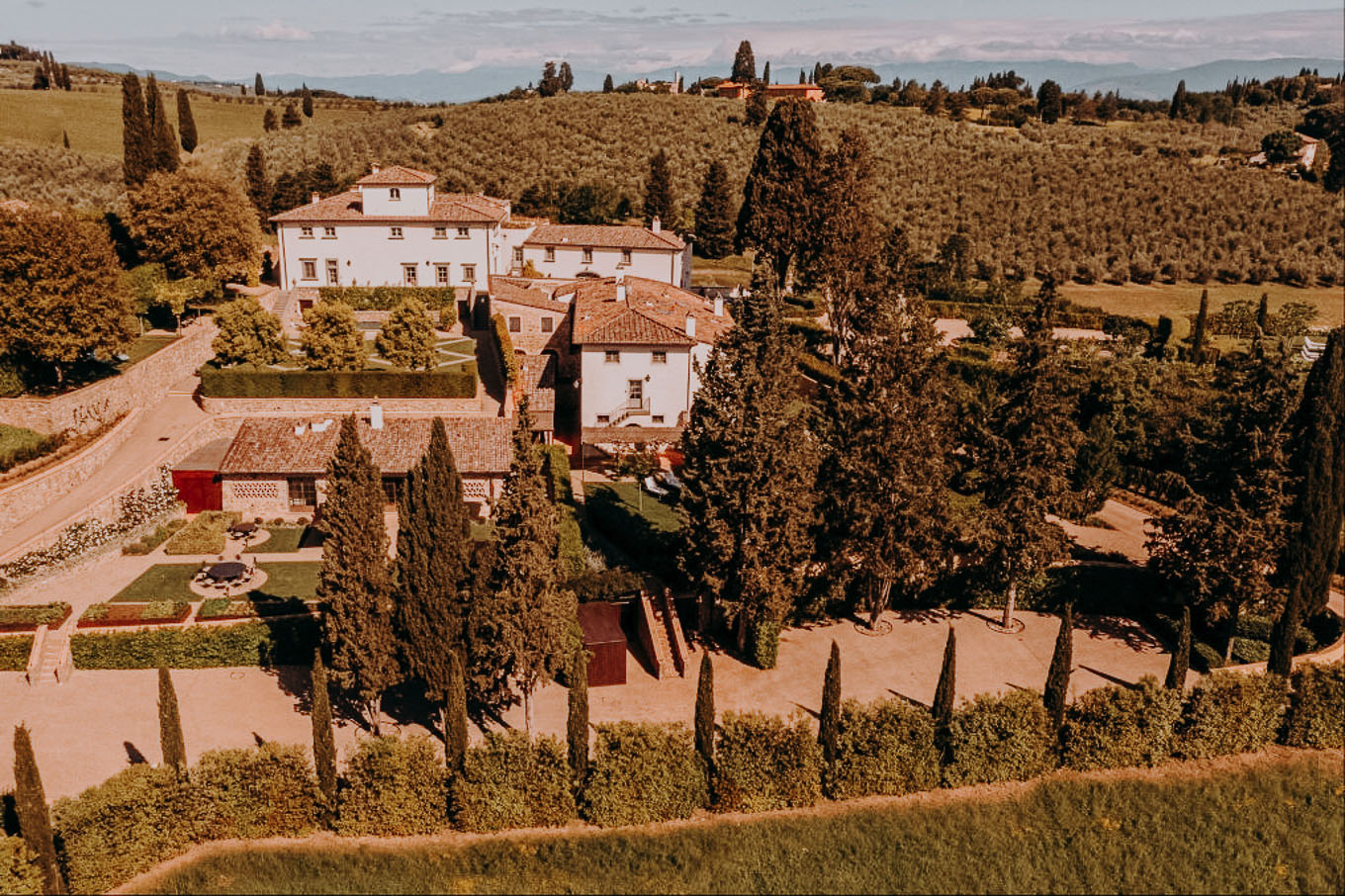
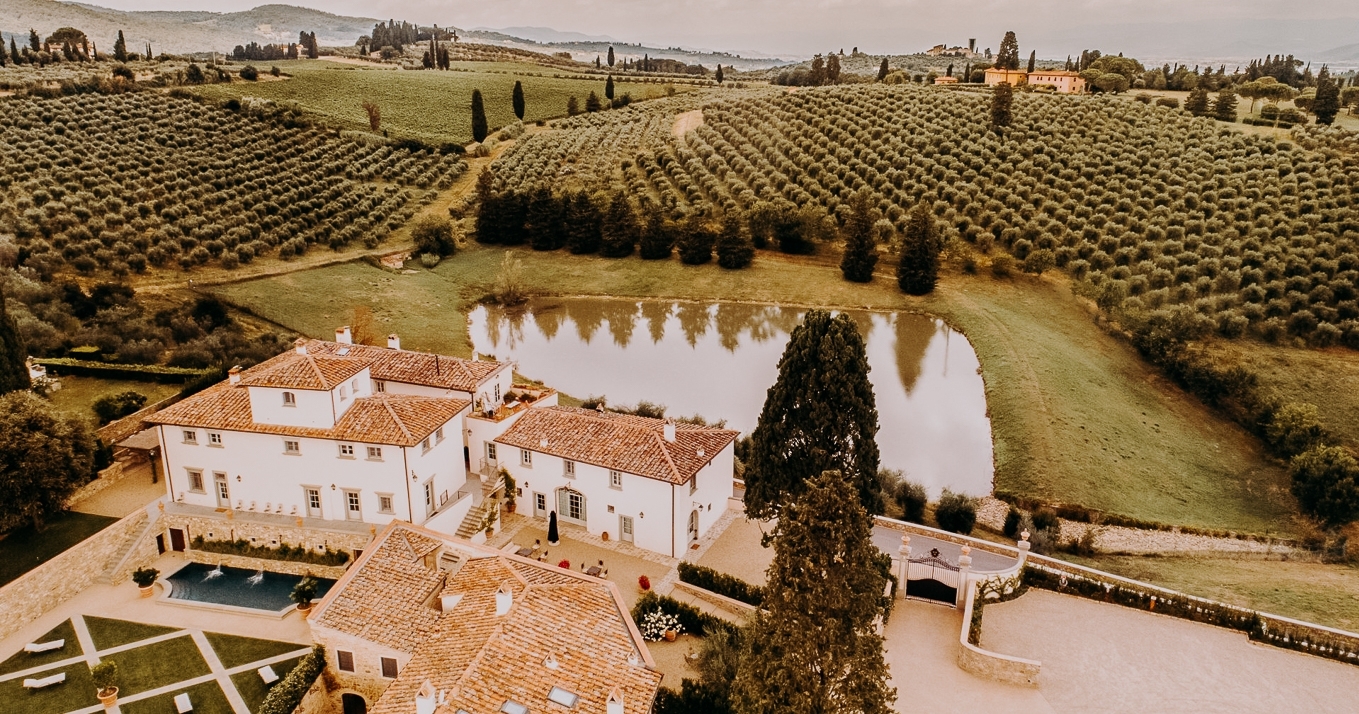
Domenico Ghirlandaio painted the official portraits of the noble families of Florence, was among the favourite artists of Lorenzo the Magnificent, and — in the decade before he died in 1494 — accepted as an apprentice in his workshop a thirteen-year-old from Caprese named Michelangelo Buonarroti. He is one of the most significant painters of the Florentine Quattrocento, and the country estate he used as a rural retreat between the fifteenth and sixteenth centuries, on the hills above Impruneta, is today one of the most quietly extraordinary destination wedding venues within fifteen minutes of Florence. The Podere Grande di Colle Ramole, known since the estate's restoration as Dimora Ghirlandaio, contains within its borgo a chapel frescoed by Domenico's son Ridolfo — the last painter of the Ghirlandaio dynasty — and five private villas whose names speak the language of the agricultural buildings they once were: Villa Ghirlandaio, Villa La Fattoria, Villa Il Frantoio, Villa La Bottega, Villa Lo Studio. For international couples planning a destination wedding near Florence who want an estate where the art history is visible in the walls rather than referenced in the marketing, and where the entire property — all twenty rooms across all five villas and the suite — is reserved for a single celebration with no other guests present, Dimora Ghirlandaio offers a combination of cultural specificity and private luxury that is genuinely rare.
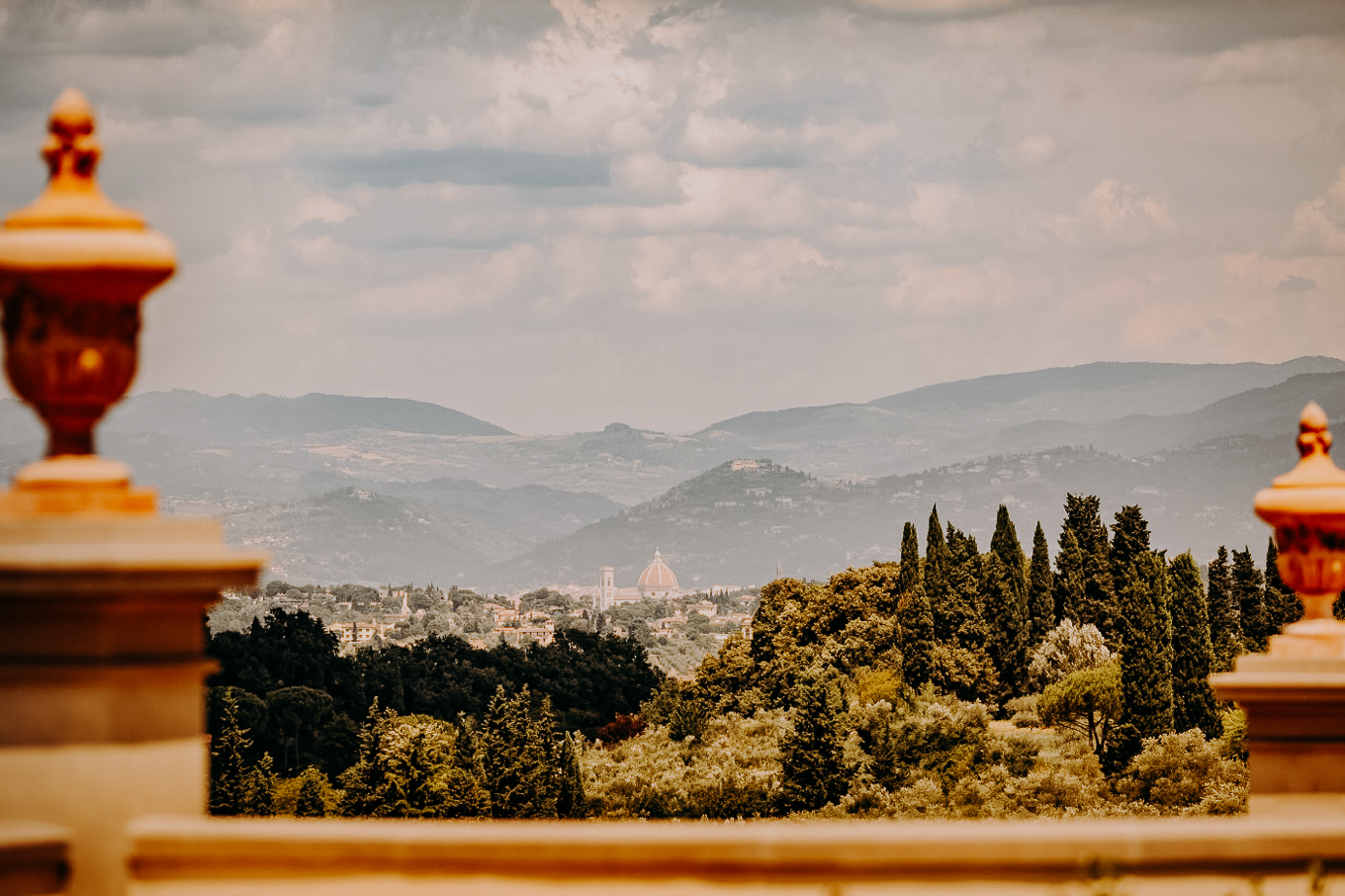
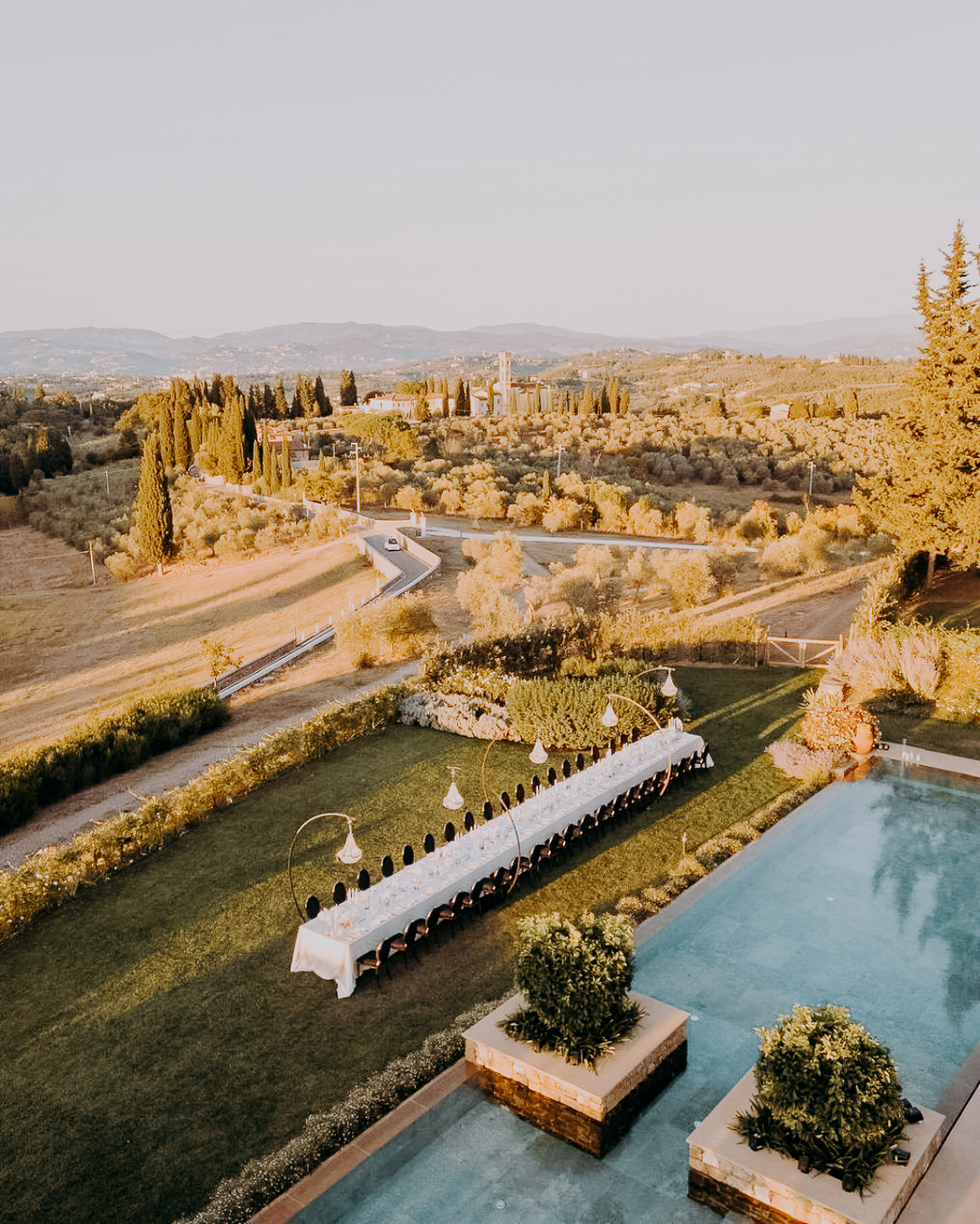
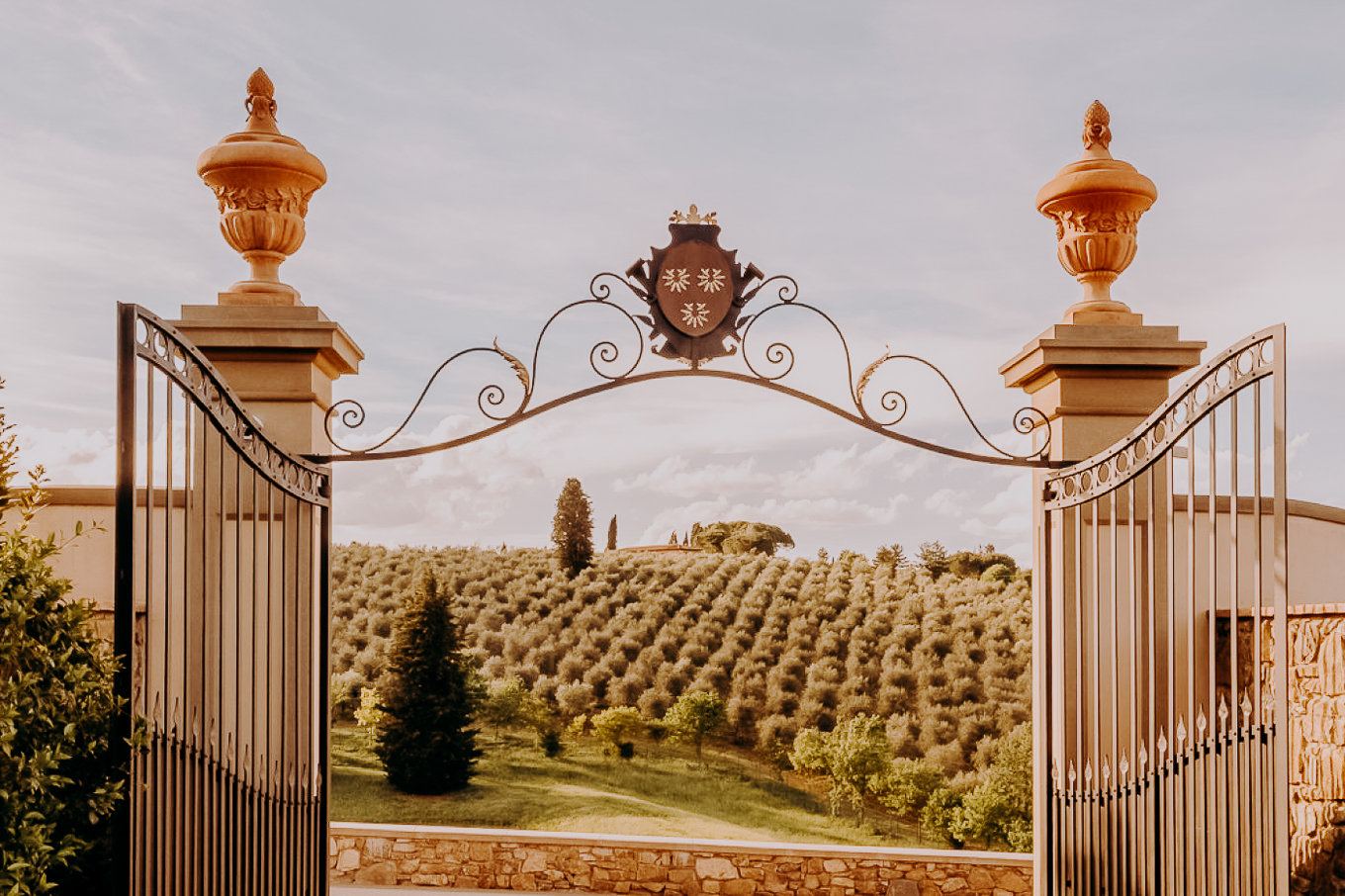
I work as a wedding photographer in the Florentine hills and in Florence itself, and Impruneta — the commune south of the city known for its medieval basilica, its terracotta production, and its position on the ridge that separates the Arno valley from the Chianti — is one of the most visually complete positions in this part of Tuscany. From the estate's grounds, Florence is fifteen minutes by car and visible on the horizon. The Chianti countryside begins on the other side of the ridge. The cypresses and the olive groves that frame the borgo belong to a landscape that the Ghirlandaio family themselves knew and painted.
The Cappella Ghirlandaio and the Frescoes of Ridolfo
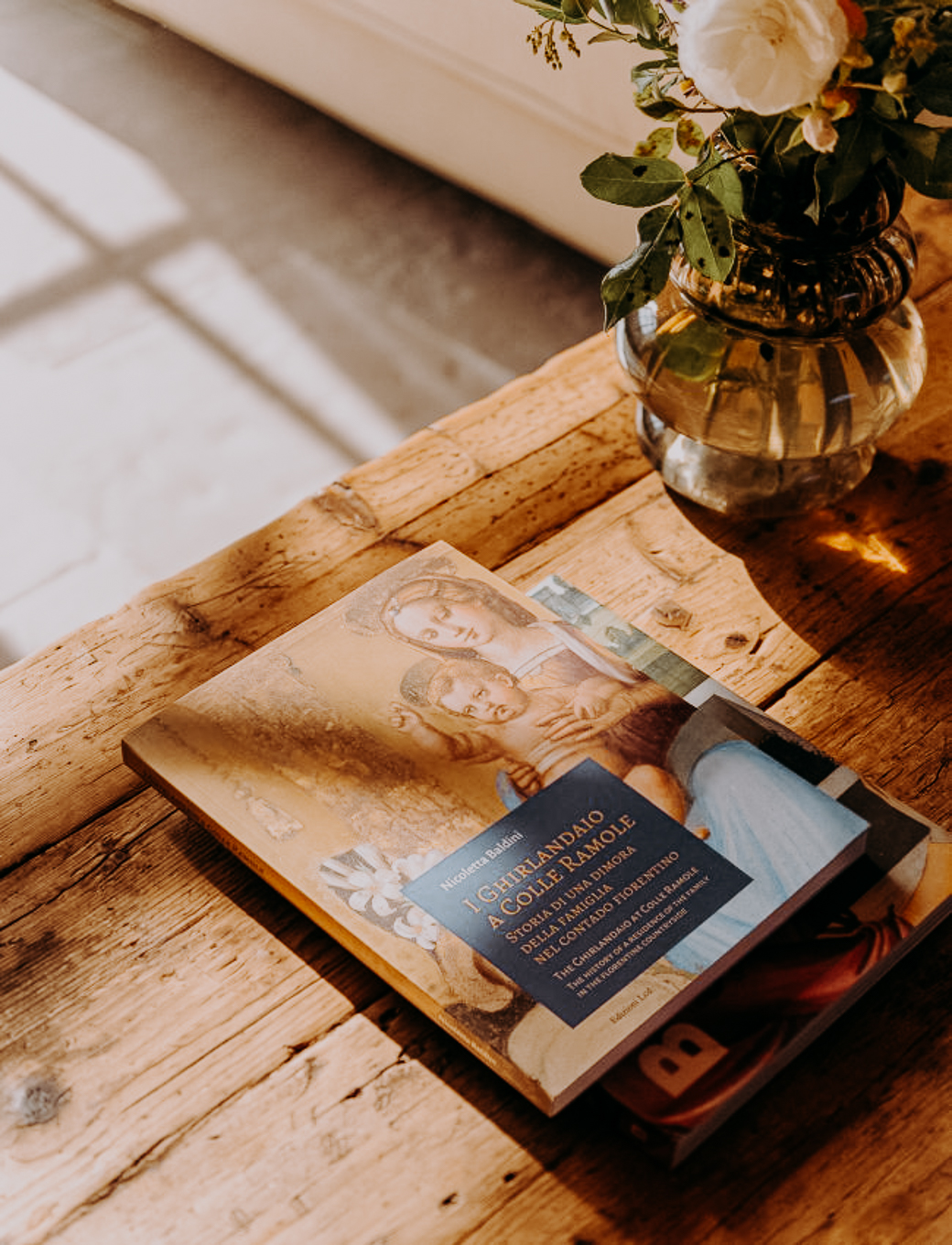
Within the borgo of Dimora Ghirlandaio stands the private chapel that carries the family's name — frescoed by Ridolfo Ghirlandaio, Domenico's son and the last painter of the dynasty. The Ghirlandaio family workshop was one of the most productive in Renaissance Florence: Domenico painted the great fresco cycles in Santa Maria Novella and the Tornabuoni Chapel, trained Michelangelo, and painted the portraits of the Sassetti and Tornabuoni families that are today in the Uffizi and the Louvre. His son Ridolfo continued the tradition, working in a slightly different style but carrying the family's technical mastery and its commitment to the physiognomic specificity that made Domenico's portraiture so distinctive. The chapel Ridolfo frescoed at Colle Ramole is the most intimate legacy of this dynasty in a place that was always private — a country chapel painted for a family's personal devotion rather than for public commission. For ceremonies that want the concentrated emotion of an intimate sacred space with genuine artistic heritage in its walls, the Cappella Ghirlandaio offers something that no amount of floral decoration or lighting design could replicate.
Five Villas, Twenty Rooms, One Estate: The Logic of Buy-Out Only
Every stay at Dimora Ghirlandaio is a buy-out. The estate cannot be booked piecemeal — Villa Ghirlandaio without Villa La Fattoria, or the suite without the villas. The entire property — five villas, one suite, twenty rooms across the medieval borgo — is reserved for a single group, a single celebration, a single set of days. The estate explicitly describes this as enabling couples and guests to experience the wedding as a shared retreat: unhurried mornings, convivial breakfasts, walks in the park, genuine time together in a private world that belongs entirely to the occasion. This is the logic of a very small, very private village — which is exactly what Dimora Ghirlandaio is.
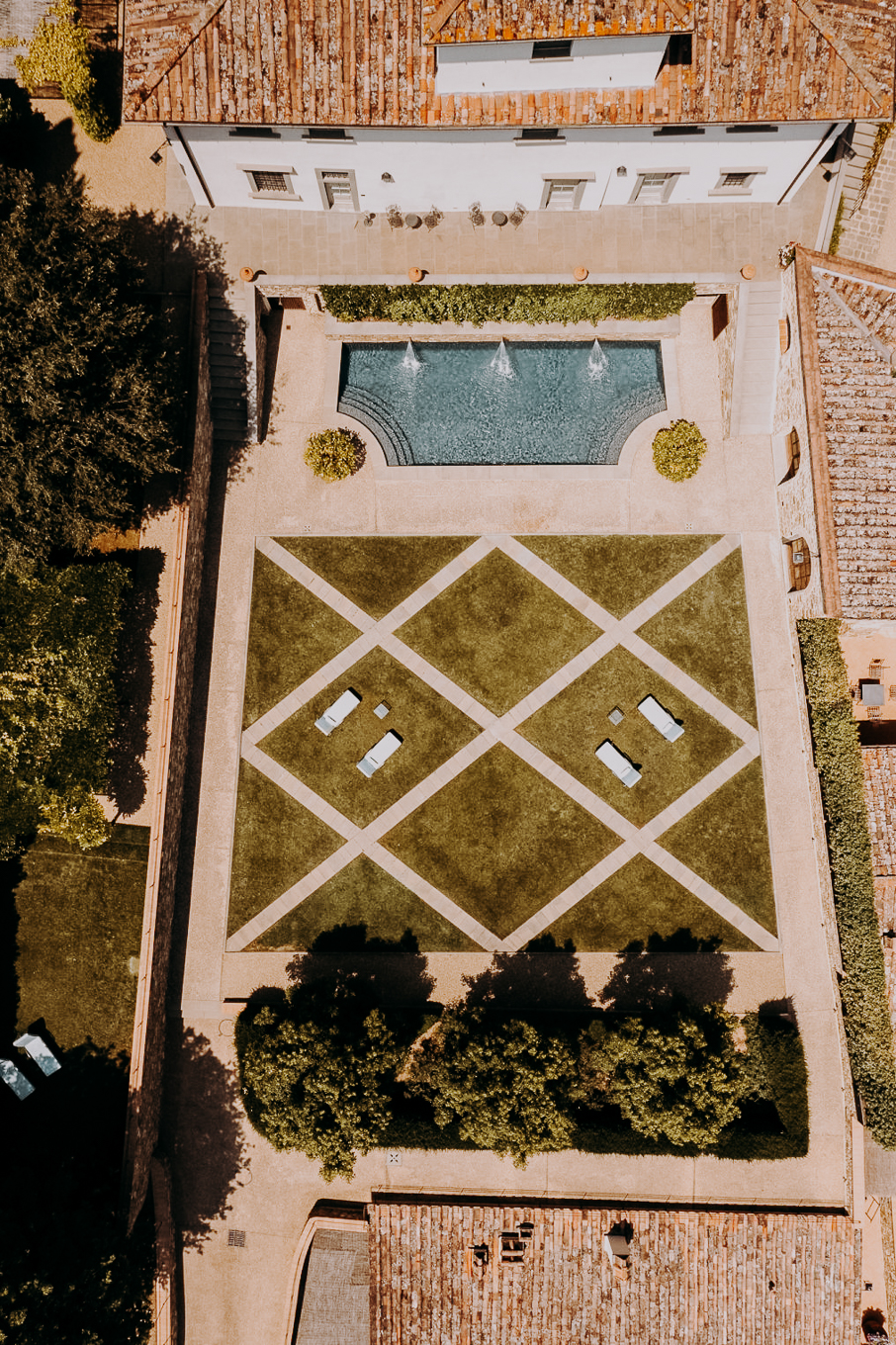
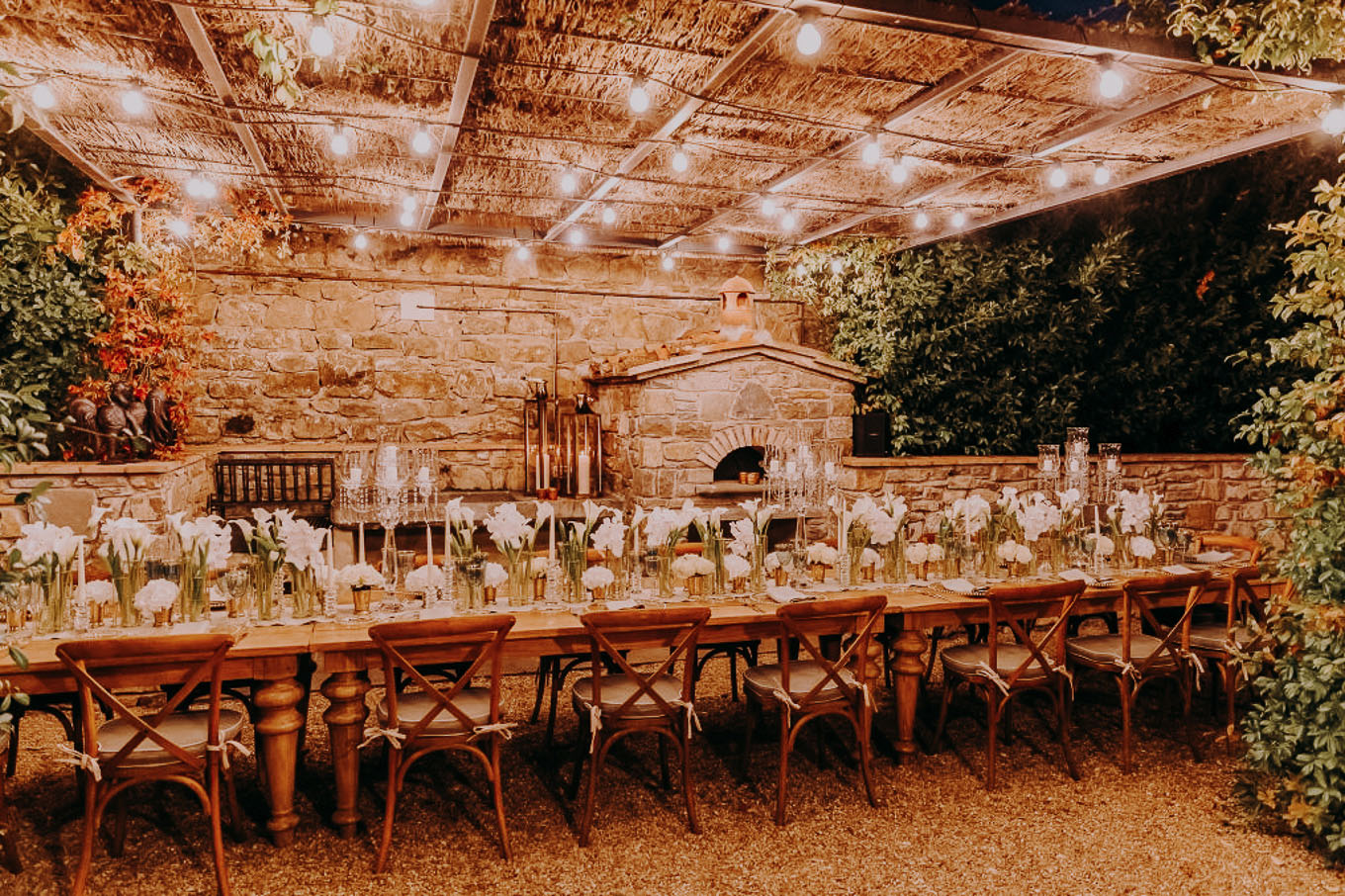
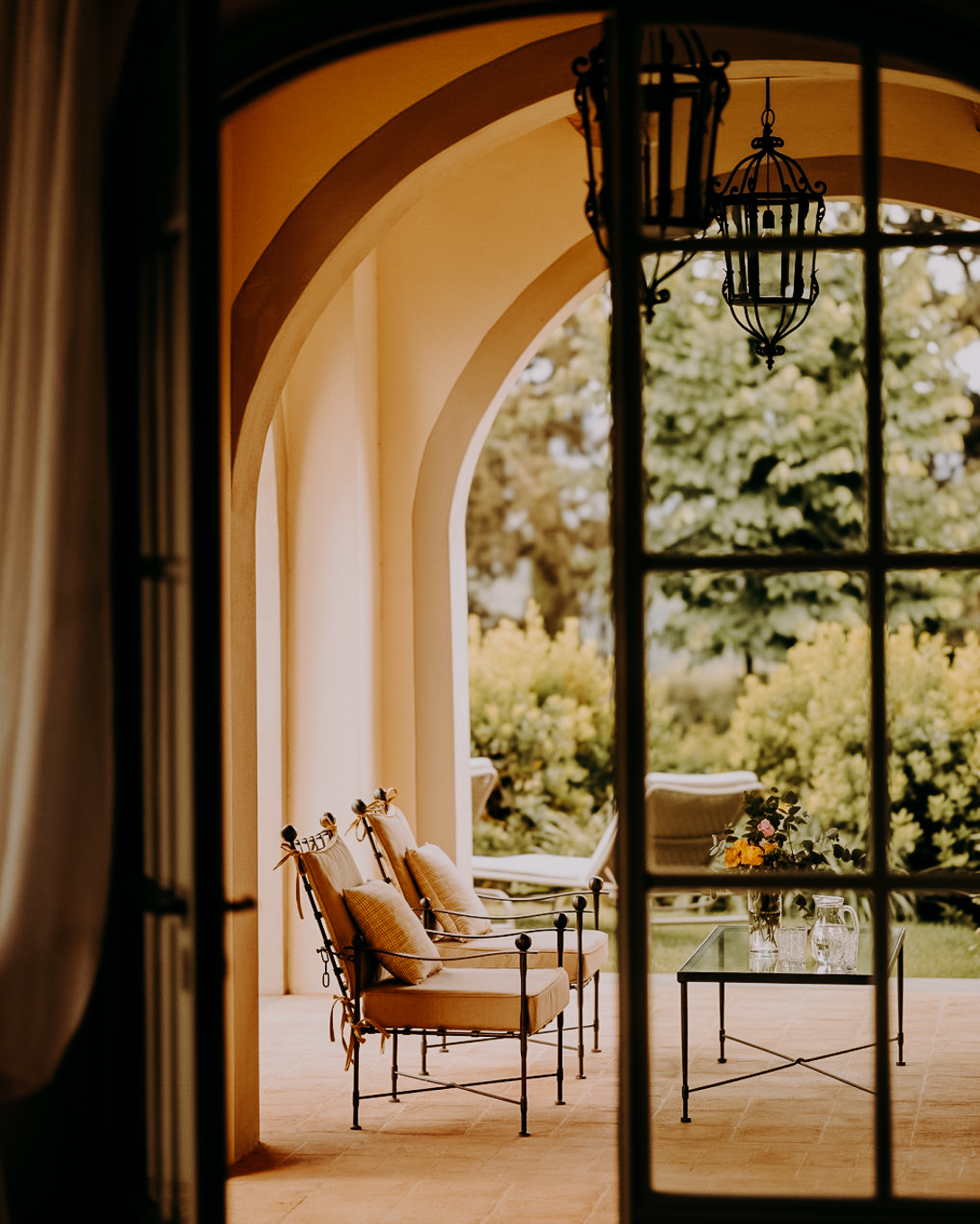
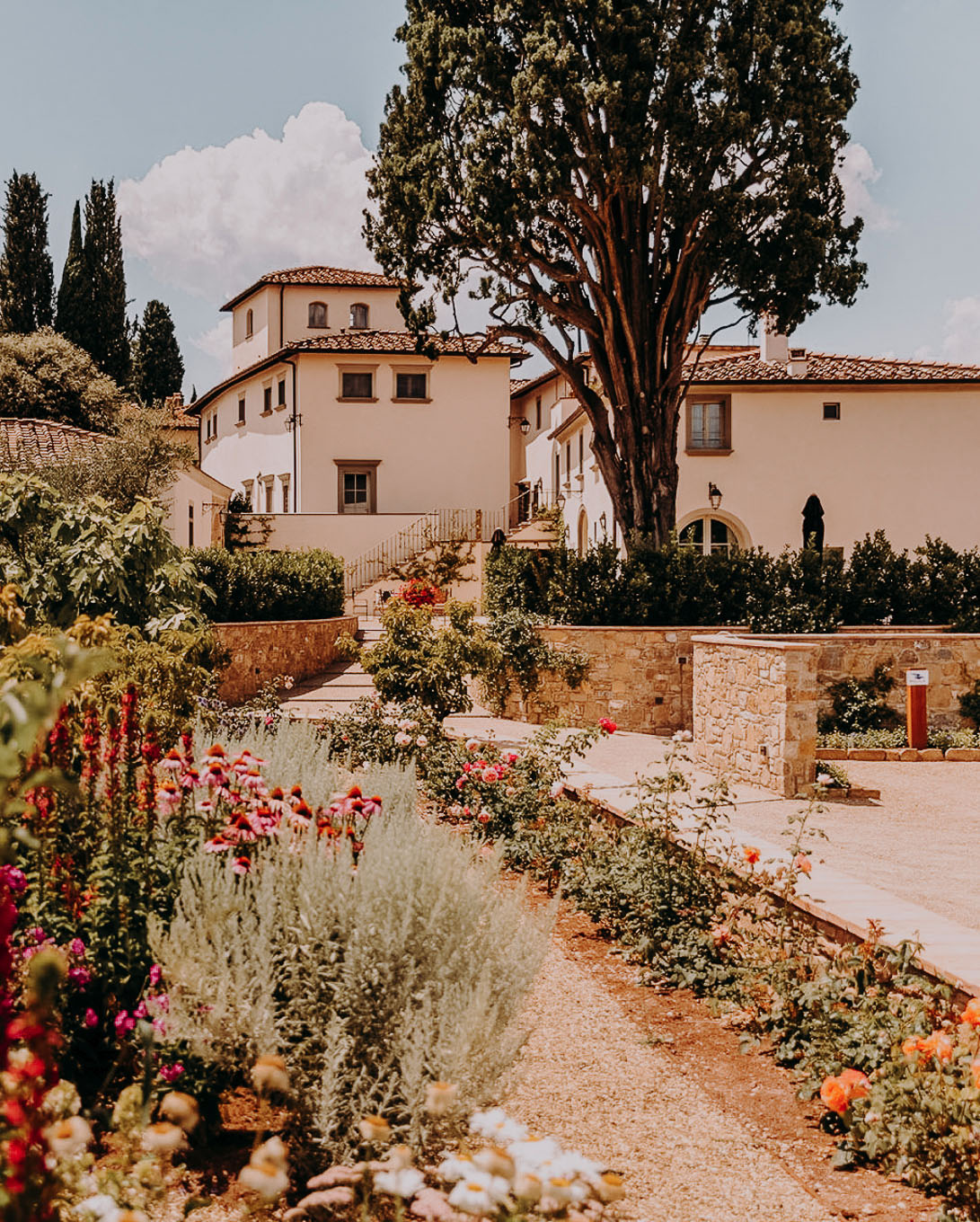
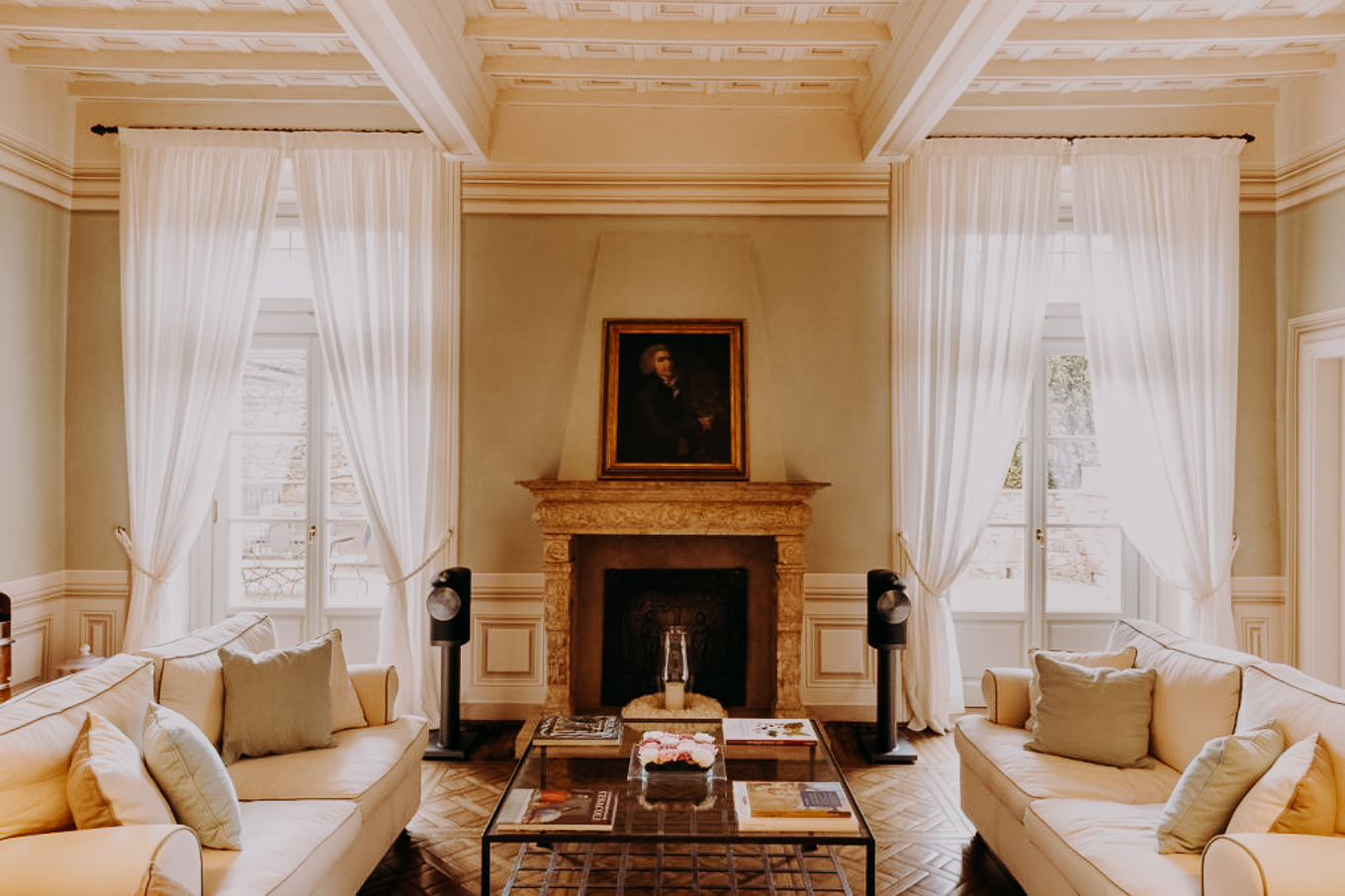
The five villas are distinct in character, each one the result of a different original agricultural function converted into accommodation through a restoration that respected the specific character of the original building. Villa Ghirlandaio is a Renaissance villa in Medicean style overlooking the Italian-style garden — the grandest of the five, in the main historic building of the estate. Villa La Fattoria is in Tuscan farmhouse style, with a terrace giving direct views over Florence and the hills. Villa Il Frantoio occupies the ancient olive press, with a private garden, an arched loggia, and an ancient stone oven set into the wall. Villa La Bottega was restored in the style of the original Tuscan coloniche, with a private garden and its own view of Florence. Villa Lo Studio is the most intimate: a private garden and a vine-covered pergola for outdoor lunches. Suite La Limonaia, in the lemon house whose large windows look onto the Renaissance garden, completes the accommodation with a luminous, self-contained alternative to the villas.
Five Ceremony and Celebration Spaces Within the Same Borgo
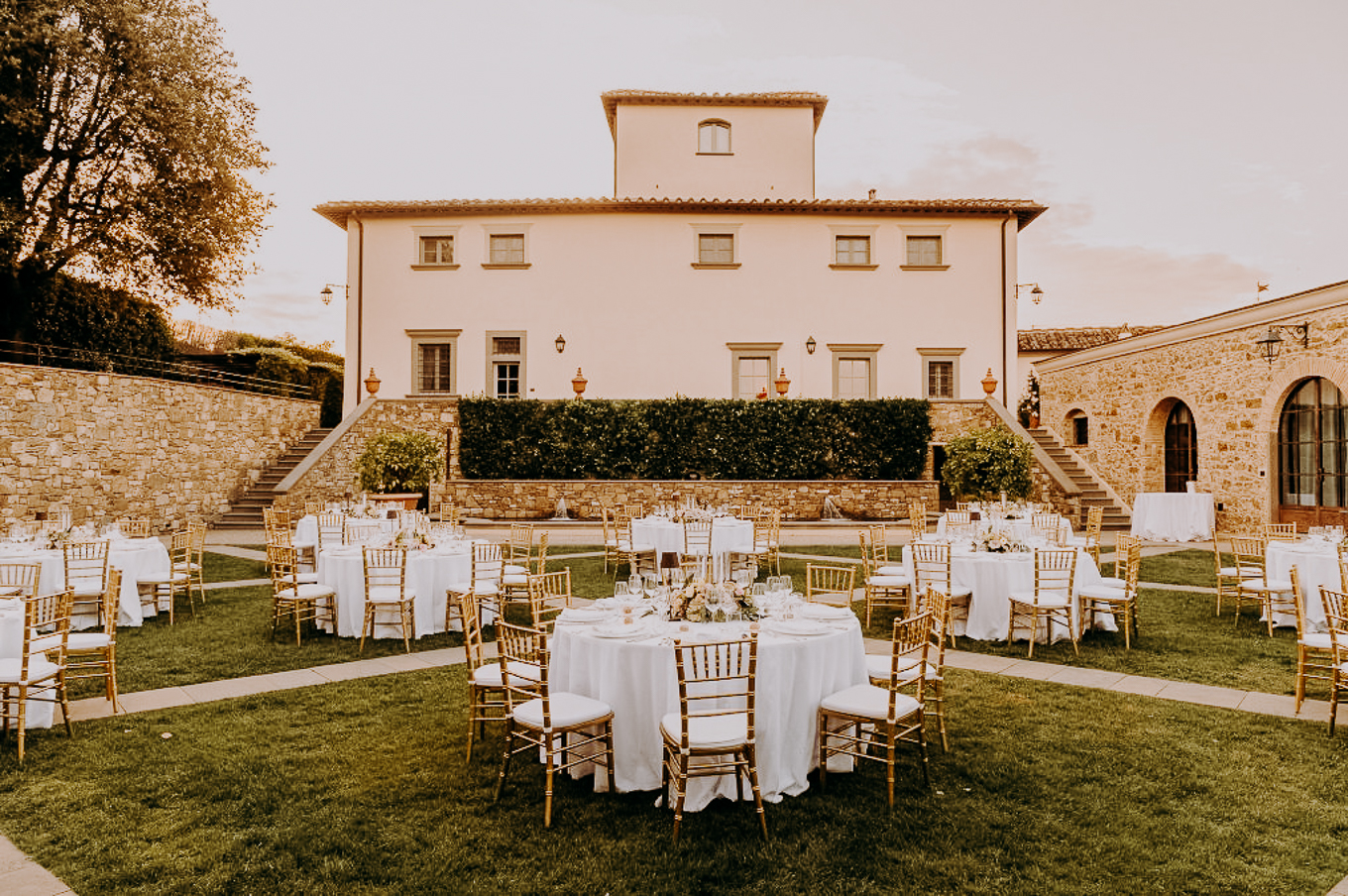
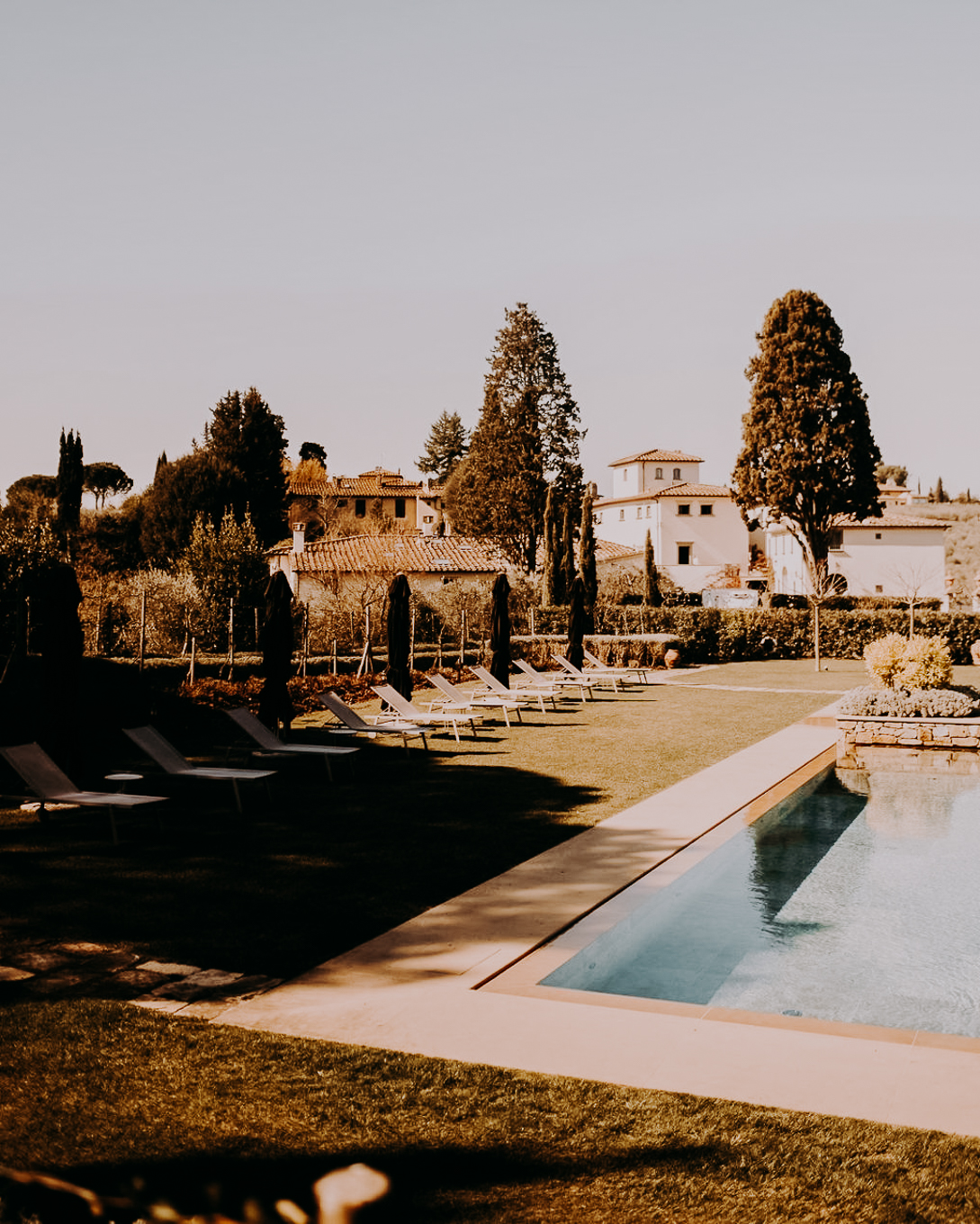
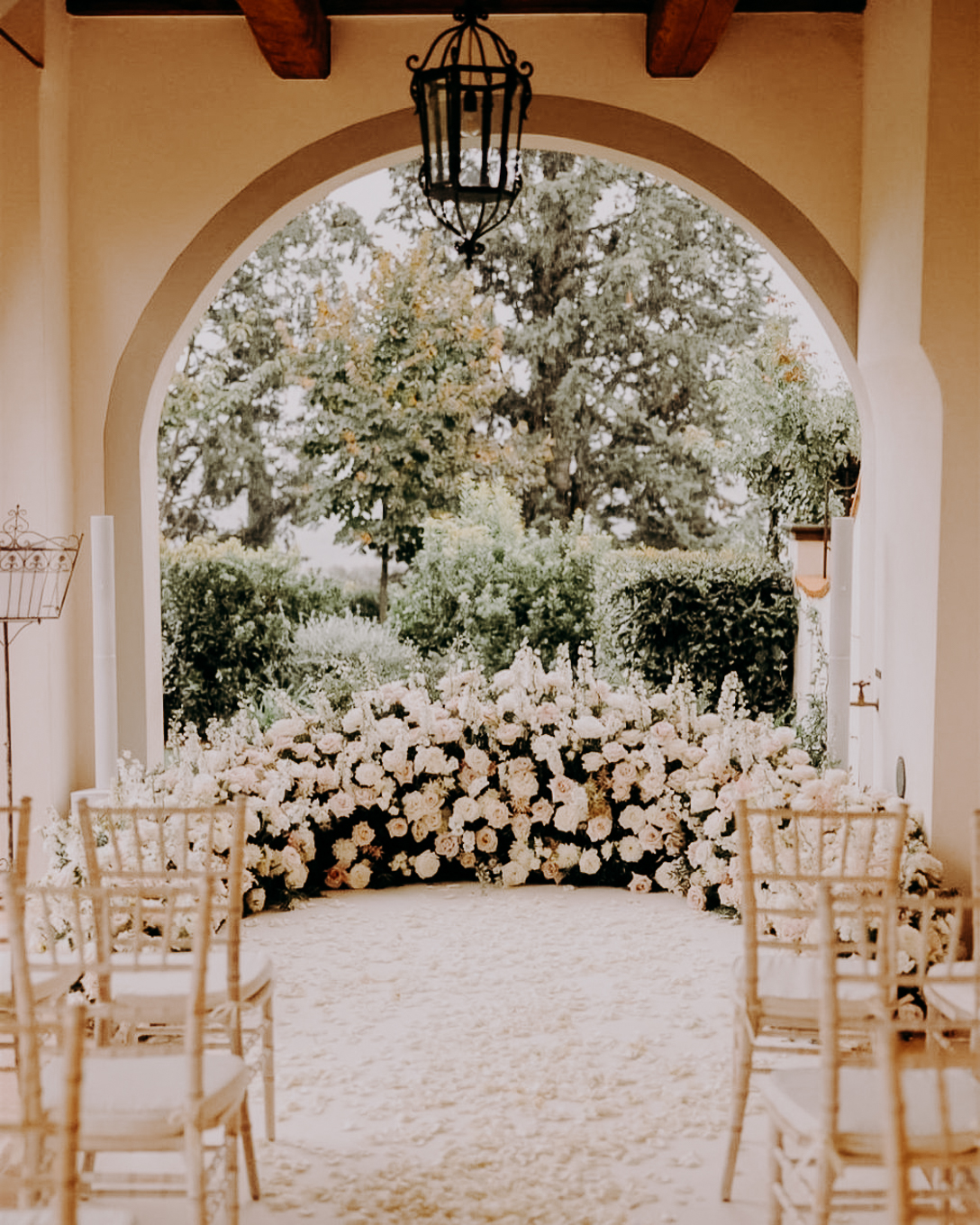
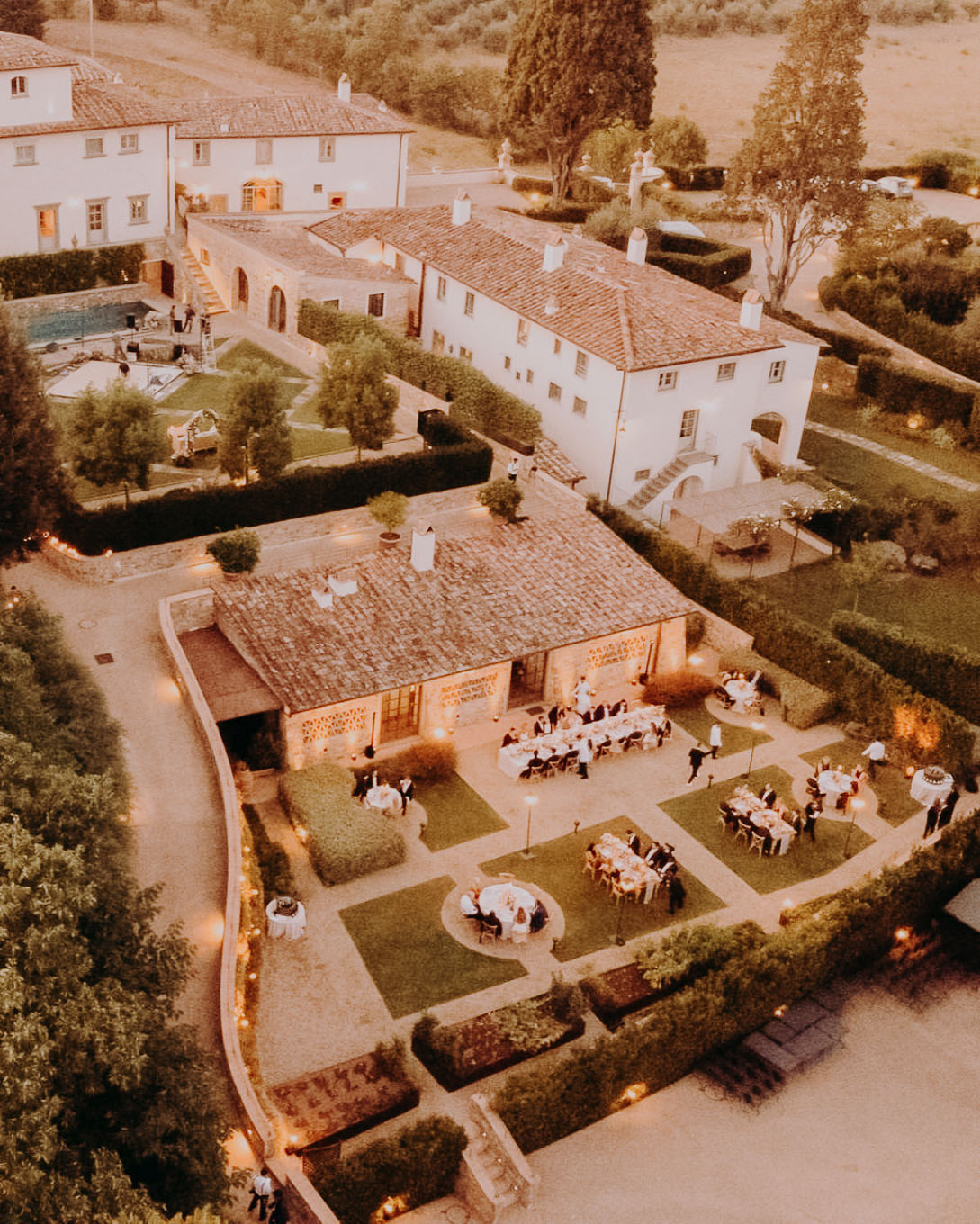
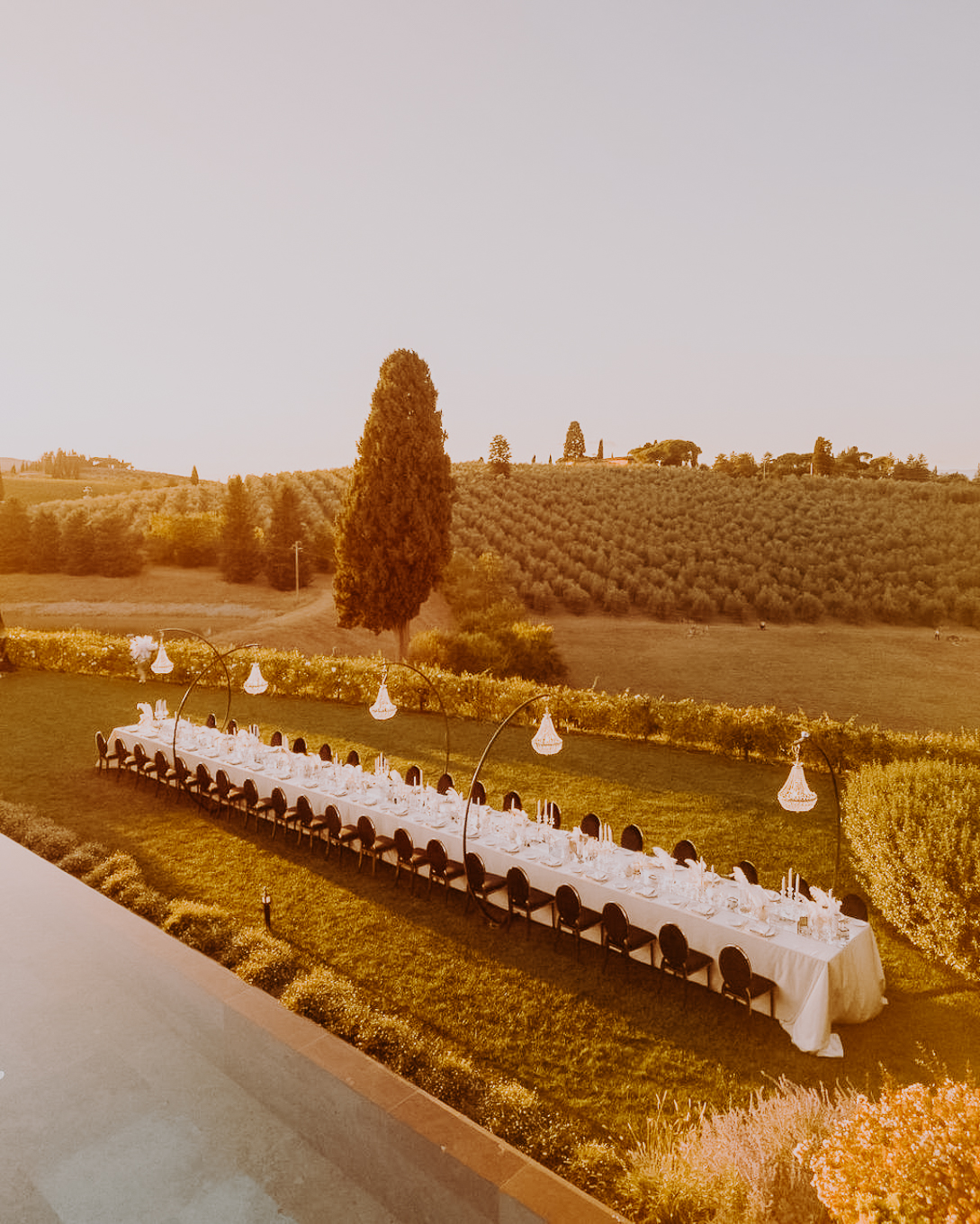
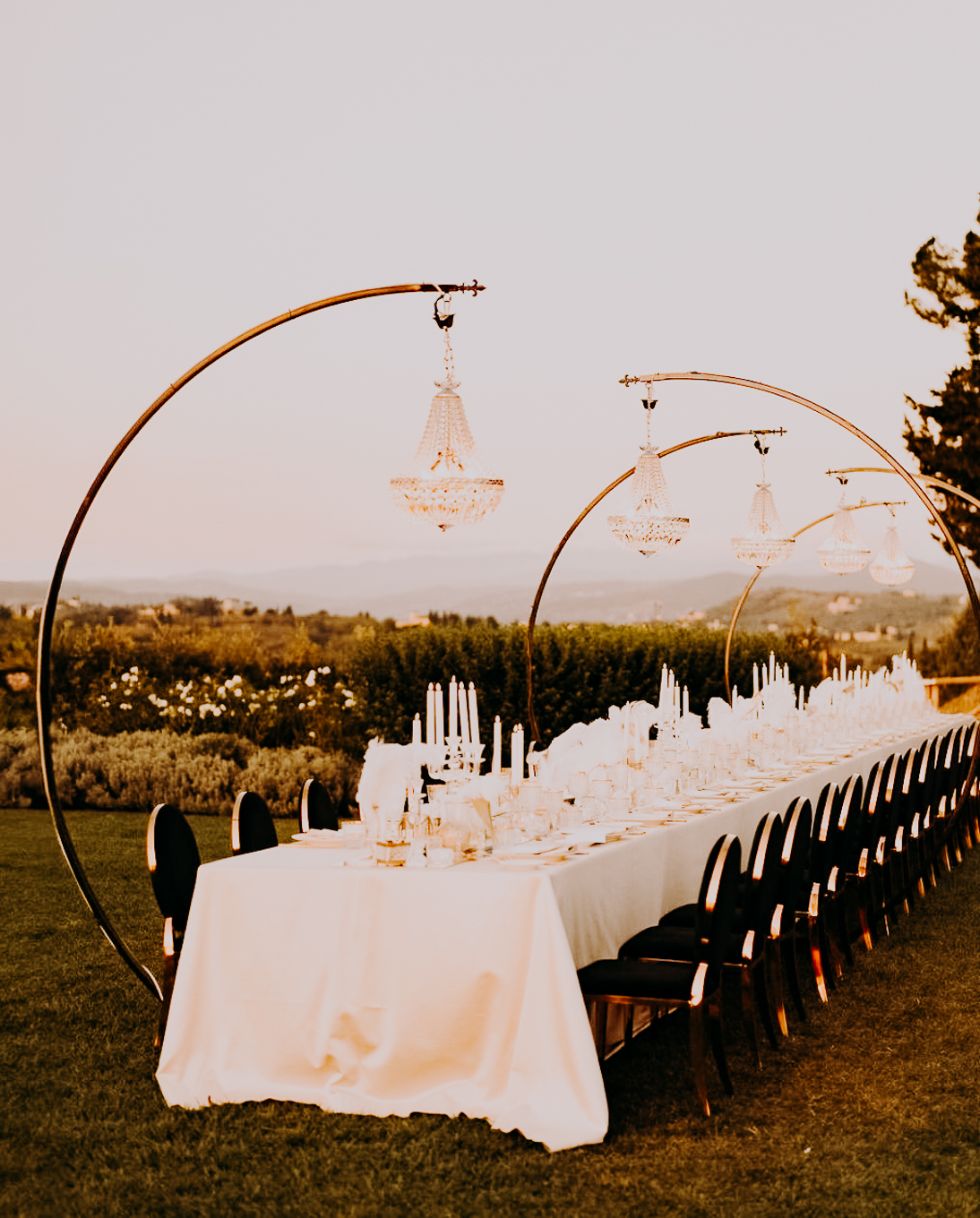
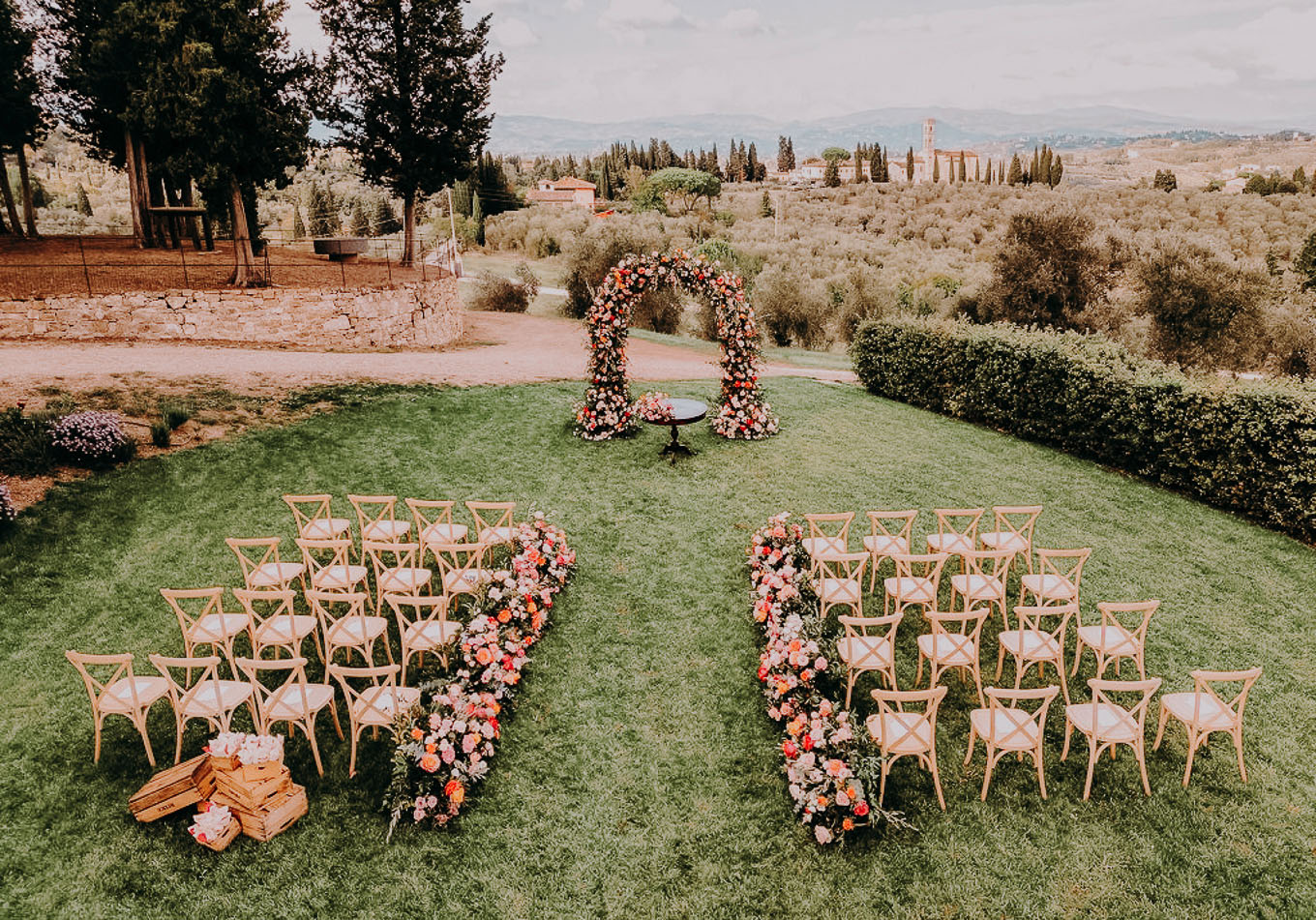
The event spaces within Dimora Ghirlandaio's grounds follow the natural geography of the medieval borgo and its gardens, each one with its own character and its own position in the day's progression. The Cappella Ghirlandaio, with its Ridolfo frescoes, hosts intimate ceremony moments and is also one of the most compelling photographic interiors on the estate — the combination of sacred space and genuine Renaissance painting on the walls produces images that are entirely specific to this place. The Prato del Belvedere — the open lawn that overlooks the soft Florentine hills — is the outdoor ceremony setting: green, elevated, with the Florence skyline visible on the horizon when the air is clear. The panoramic pool garden becomes the aperitivo setting, its position above the surrounding landscape giving the cocktail hour a golden quality at sunset that the enclosed courtyards cannot offer. The Corte del Borgo — the courtyard of the medieval hamlet — hosts convivial dinners in the tradition of the small Tuscan village, with the borgo's stone walls on every side and the open sky above. The Renaissance garden hosts dinners under the stars with the historic villa in the background — the most formally architectural of the outdoor settings, its geometry inherited directly from the Italian garden tradition that Cosimo and Lorenzo de' Medici made the signature of their Tuscan estates.
The Restaurant, the Chef, and the Tuscan Table
The restaurant at Dimora Ghirlandaio is reserved exclusively for the estate's guests — it does not operate as a public restaurant and its service is built around the specific requirements and the specific vision of the couples and groups who have booked the estate for their celebration. The kitchen works with local and seasonal ingredients, celebrating the Tuscan tradition in a contemporary key: the estate's own olive grove supplies the oil, the garden supplies seasonal vegetables, and the chef builds menus that the website describes as designed for sharing — autore canapés, exclusive dinners paired with selected Tuscan wines, served on precious porcelain in whichever of the estate's spaces the couple has chosen for each moment of the day. The restaurant space develops from the ancient hay barn of the property, overlooking the garden: another agricultural conversion that retains the memory of its original function while offering a contemporary quality of dining experience.
If Domenico Ghirlandaio trained Michelangelo, and this was Ghirlandaio's country retreat, what does that make the light in the garden at golden hour?
The same light that fell on this borgo in the fifteenth century falls on it today. The chapel frescoes are still there. The Italian garden is still there. The Florence skyline is still visible from the lawn where Ghirlandaio rested between portraits. Photographing inside that continuity is the particular honour and the particular responsibility of this location.
How Francesco worksGetting to Dimora Ghirlandaio: Practical Information for International Couples
Dimora Ghirlandaio is located at Via Colleramole 59, 50023 Impruneta, in the province of Florence, fifteen minutes by car from Florence city centre. Florence Airport serves European routes directly. The estate's luxury concierge service manages arrival logistics and has established partnerships with high-end services including private aviation through XO Private — a detail that signals the level of international client the estate regularly hosts. Impruneta itself is a characteristic Florentine hill commune famous for the Basilica di Santa Maria all'Impruneta, which houses two miraculous icons of the Virgin attributed to Saint Luke, and for the production of terracotta that has been used in Florentine architecture — including Brunelleschi's Duomo dome — for centuries. For guests who want to combine a wedding stay at the estate with the cultural programme of Florence, the proximity makes the estate an ideal base for a several-day celebration that includes days in the city.
Dimora Ghirlandaio: Questions From Couples Planning a Wedding in the Florentine Hills
How does the legal wedding process work for foreign couples getting married at Dimora Ghirlandaio?
Foreign nationals wishing to marry legally in Italy must begin the documentation process through the Italian consulate in their country of residence several months before the wedding date, with requirements varying by nationality. The estate's team accompanies couples through every phase of the event organisation, from initial concept to the day itself, with a personalised service that includes coordination with local authorities for civil ceremony requirements. The specific ceremony location within the estate is agreed at the time of booking. A locally based wedding coordinator with experience in destination weddings for international couples is strongly recommended as an additional resource for the administrative process.
Who was Domenico Ghirlandaio and what is his connection to this estate?
Domenico Ghirlandaio (1448–1494) was one of the leading painters of the Florentine Quattrocento — a favourite of Lorenzo the Magnificent, the official portraitist of the great noble families of Renaissance Florence, and the master in whose workshop Michelangelo Buonarroti trained as a young teenager. His major works include the fresco cycle in the Tornabuoni Chapel in Santa Maria Novella, visible today in Florence, and portrait commissions that now hang in the Uffizi, the Louvre, and the Metropolitan Museum in New York. Dimora Ghirlandaio was his country retreat — the Podere Grande di Colle Ramole on the hills above Impruneta — between the 15th and 16th centuries. The chapel within the borgo was frescoed by his son Ridolfo, the last painter of the Ghirlandaio dynasty.
Is the entire estate genuinely available only for exclusive buy-out, and what does this mean in practice?
Yes. Dimora Ghirlandaio operates on an exclusive buy-out basis: the entire estate — all five villas, the suite, all twenty rooms, all the gardens and event spaces — is reserved for a single group with no other guests present. This means that from arrival to departure, every element of the estate's hospitality — the restaurant, the spa, the pool, the event spaces, the concierge — is dedicated entirely to the couple and their guests. The estate describes this as enabling a wedding that feels less like an event and more like a private retreat: unhurried mornings, collective breakfasts, genuine time in a world that belongs entirely to the occasion.
What experiences are available for guests during a multi-day wedding stay?
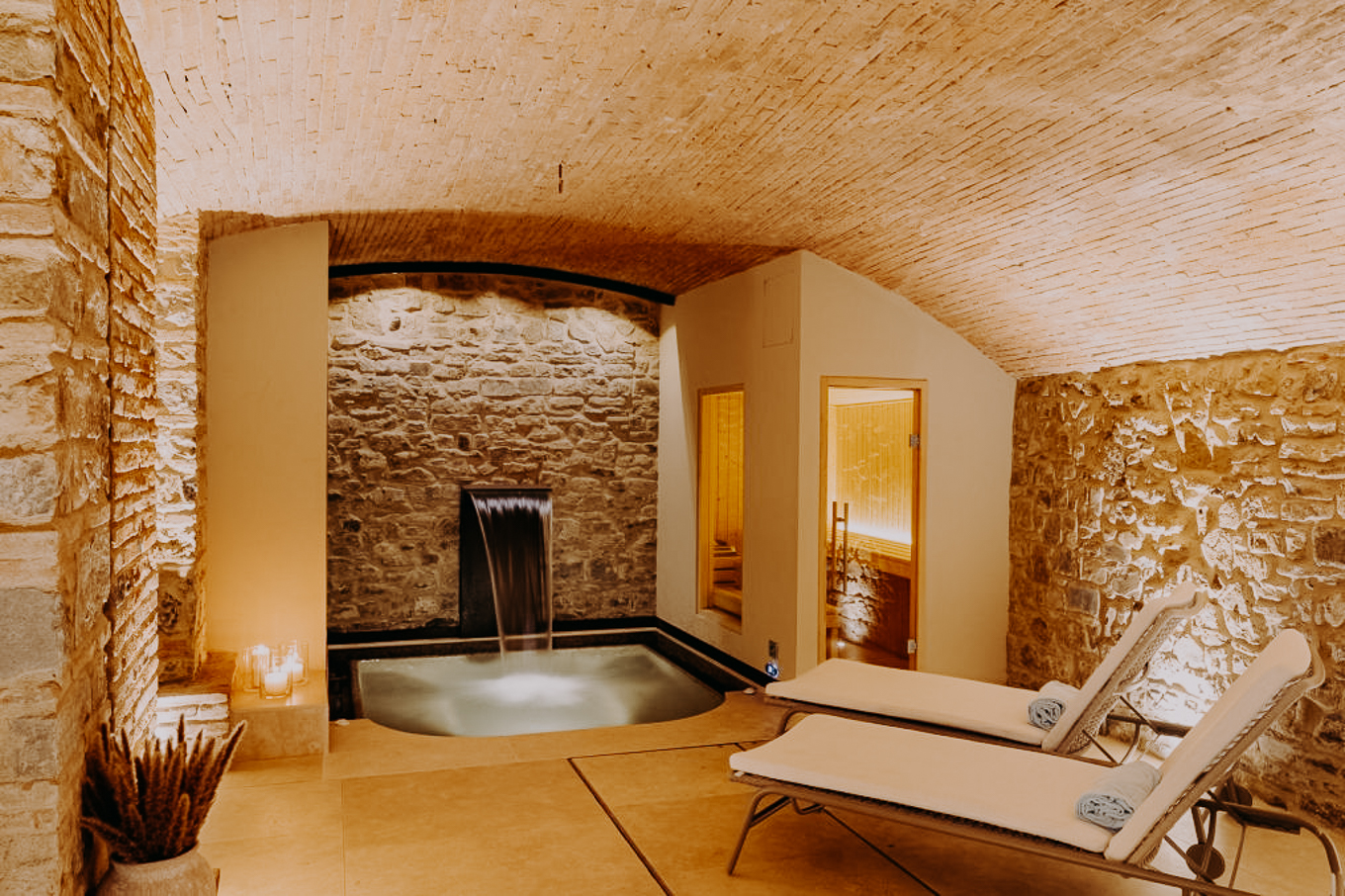
The estate's concierge organises a range of experiences both on the property and beyond: spa treatments in the estate's wellness centre with its stone walls and barrel-vaulted ceiling, cooking classes in the villa, hot air balloon flights over the Chianti, painting lessons, driving experiences with luxury cars, and horse riding in the surrounding countryside. Wine and food tastings, excursions to Florence's museums and monuments, and tailor-made cultural programming are also available on request. The Virtuoso and XO Private partnerships mean that high-level travel logistics — including private aviation — can be arranged for guests arriving from international destinations.
What is Impruneta known for, and is it worth visiting during a wedding stay?
Impruneta is a historic comune on the Florentine hills south of the city, famous above all for two things: the Basilica di Santa Maria all'Impruneta, which houses two miraculous icons attributed to Saint Luke and was a significant pilgrimage destination throughout the Renaissance, and the production of terracotta — the particular clay of the Impruneta hills was used for the tiles of Brunelleschi's Duomo dome and remains a living craft tradition in the area. For guests who want to explore beyond Florence during a wedding weekend, Impruneta and the surrounding Chianti hills provide a genuine and unhurried Tuscan experience at their most local and least touristic.