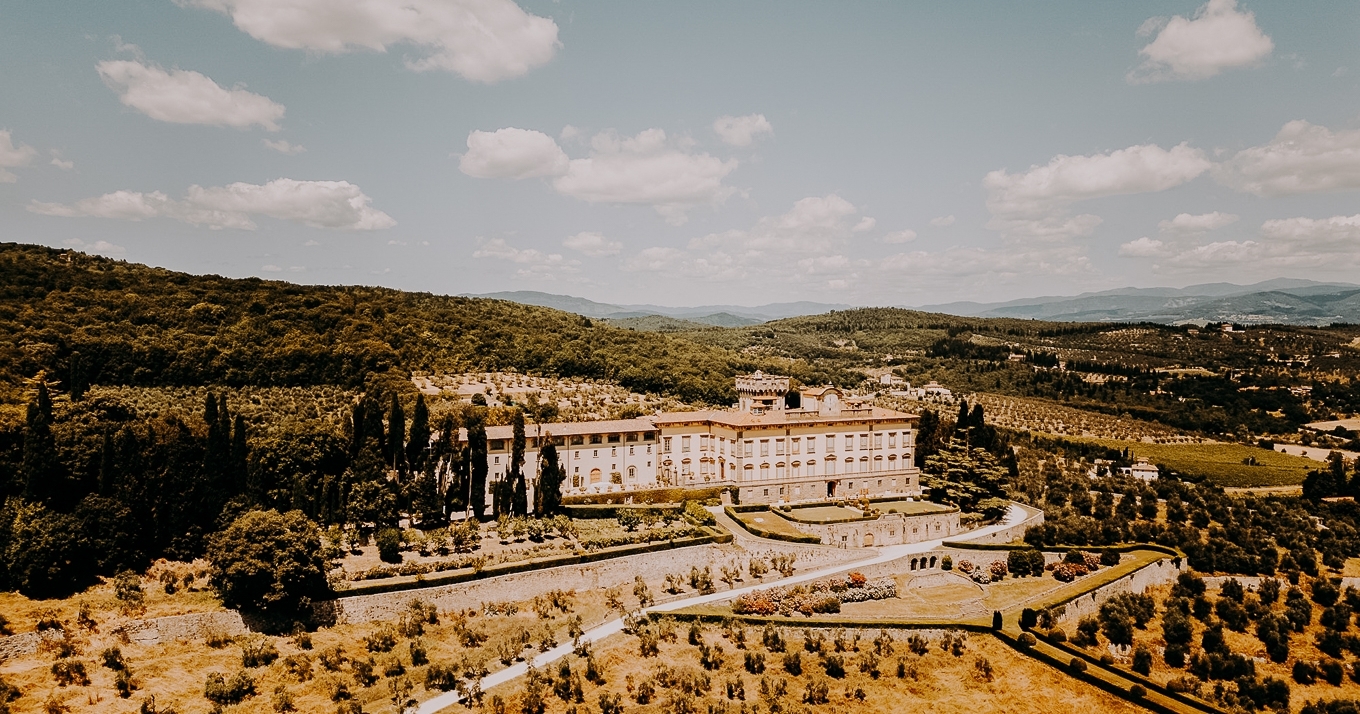
The Family That Built Martini & Rossi Now Grows Seven Vineyards in the Chianti Colli Fiorentini: Getting Married at Torre a Cona
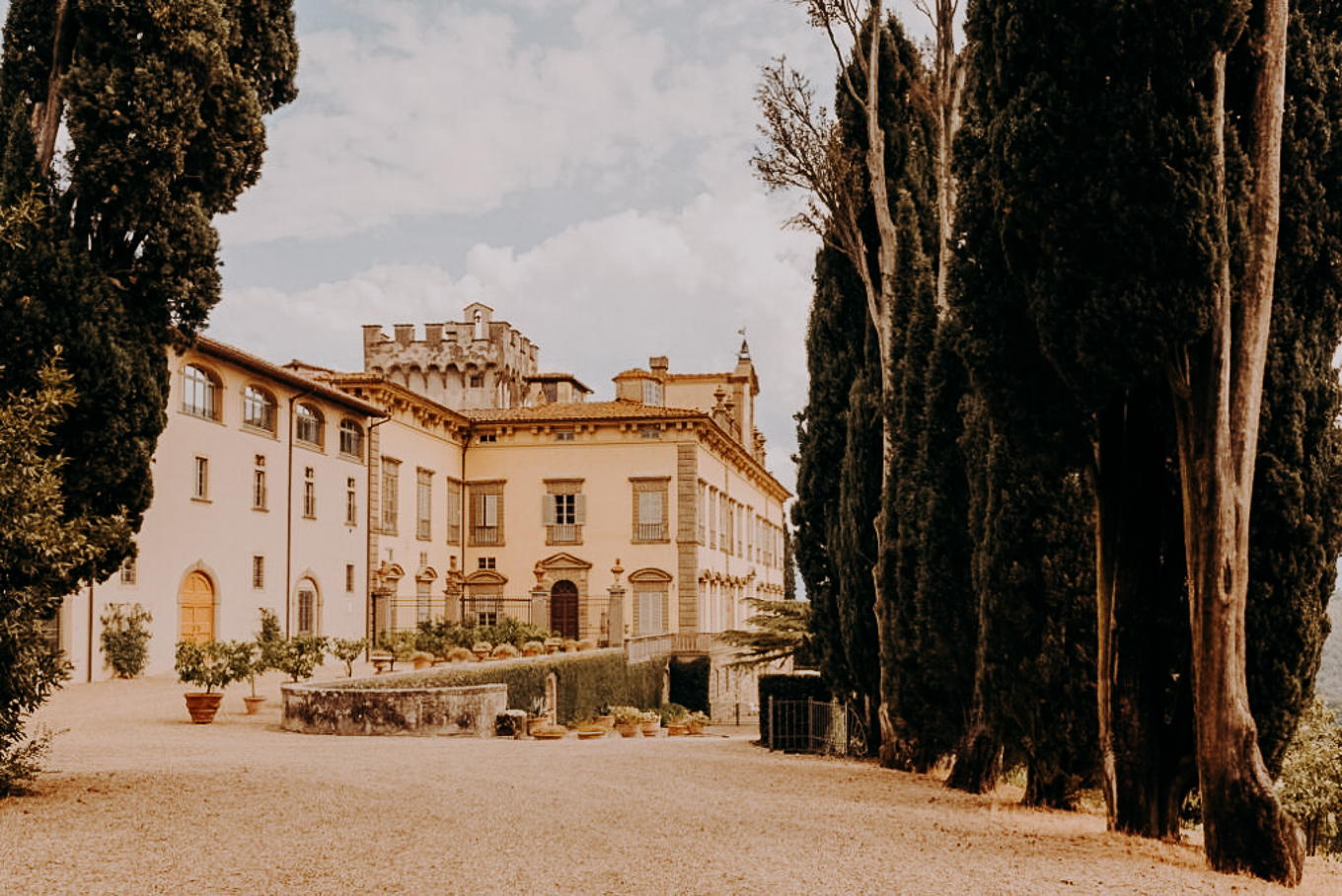
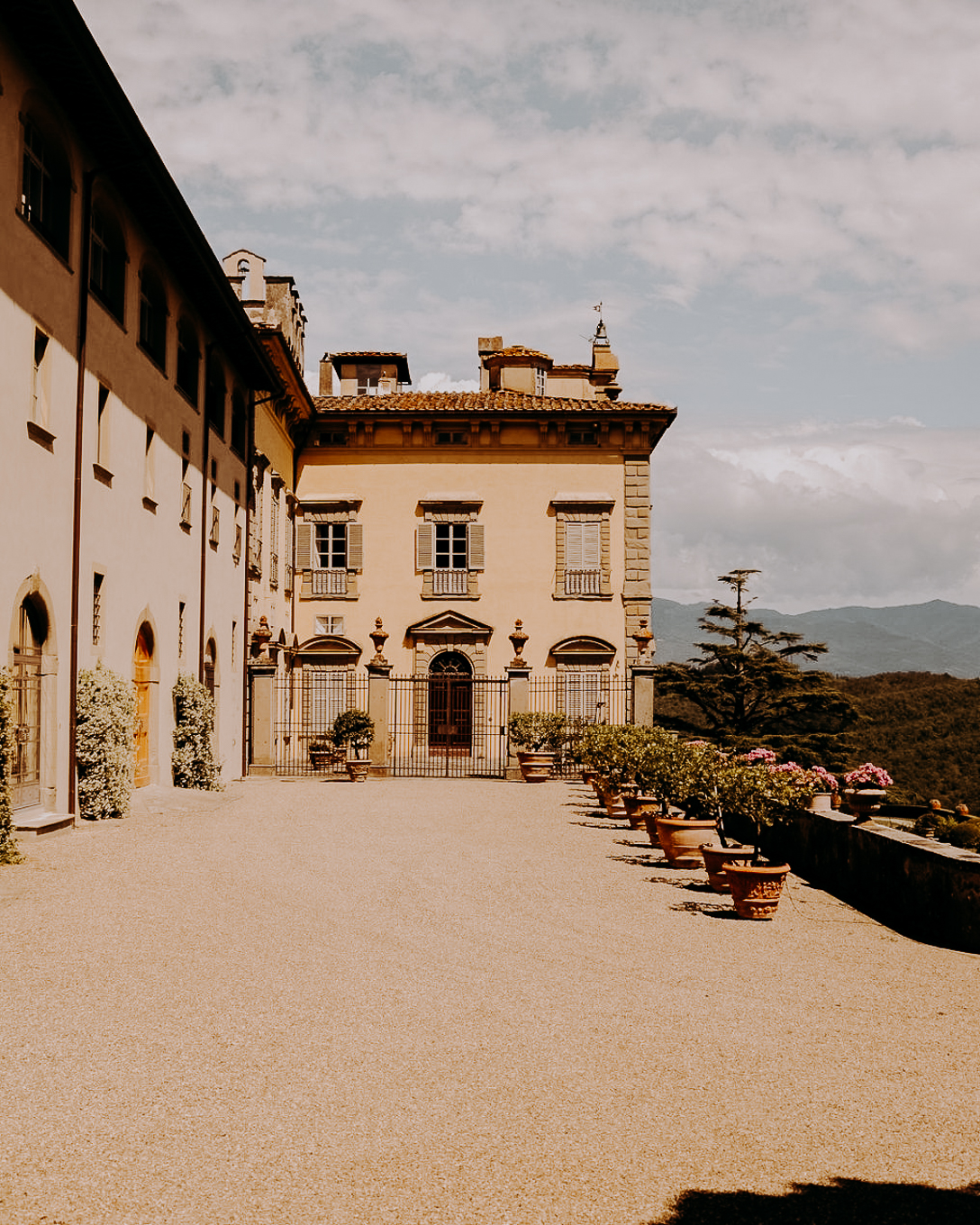
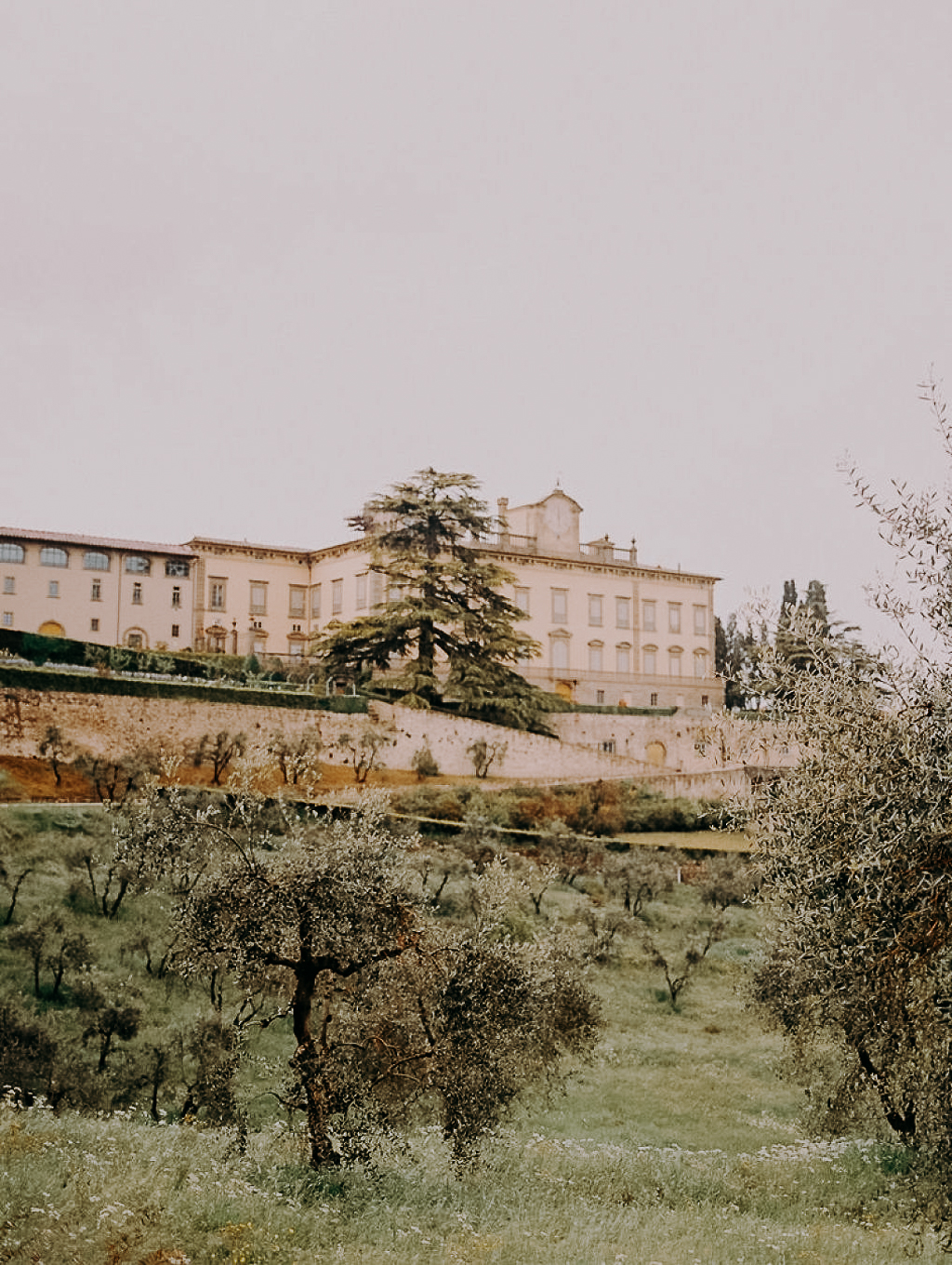
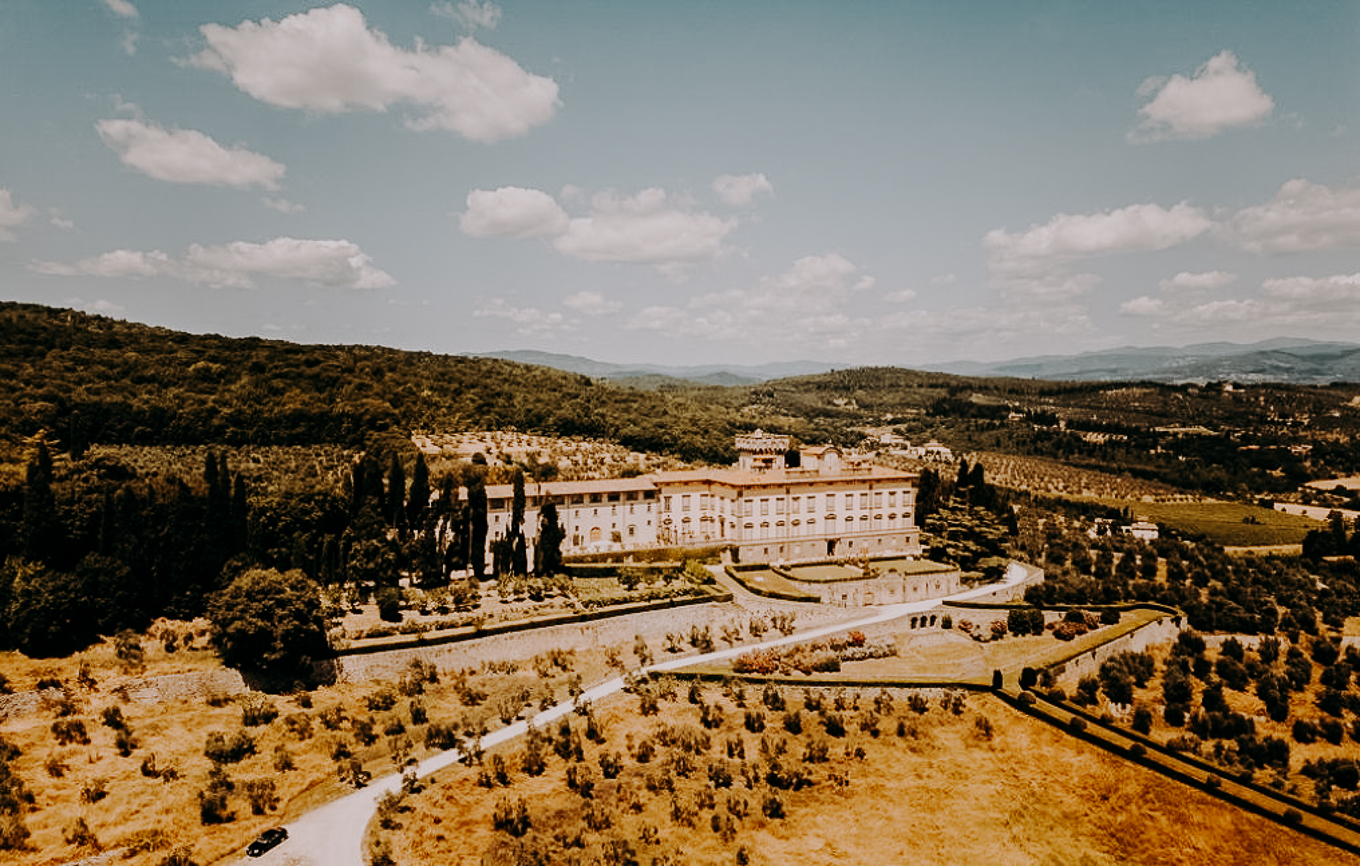
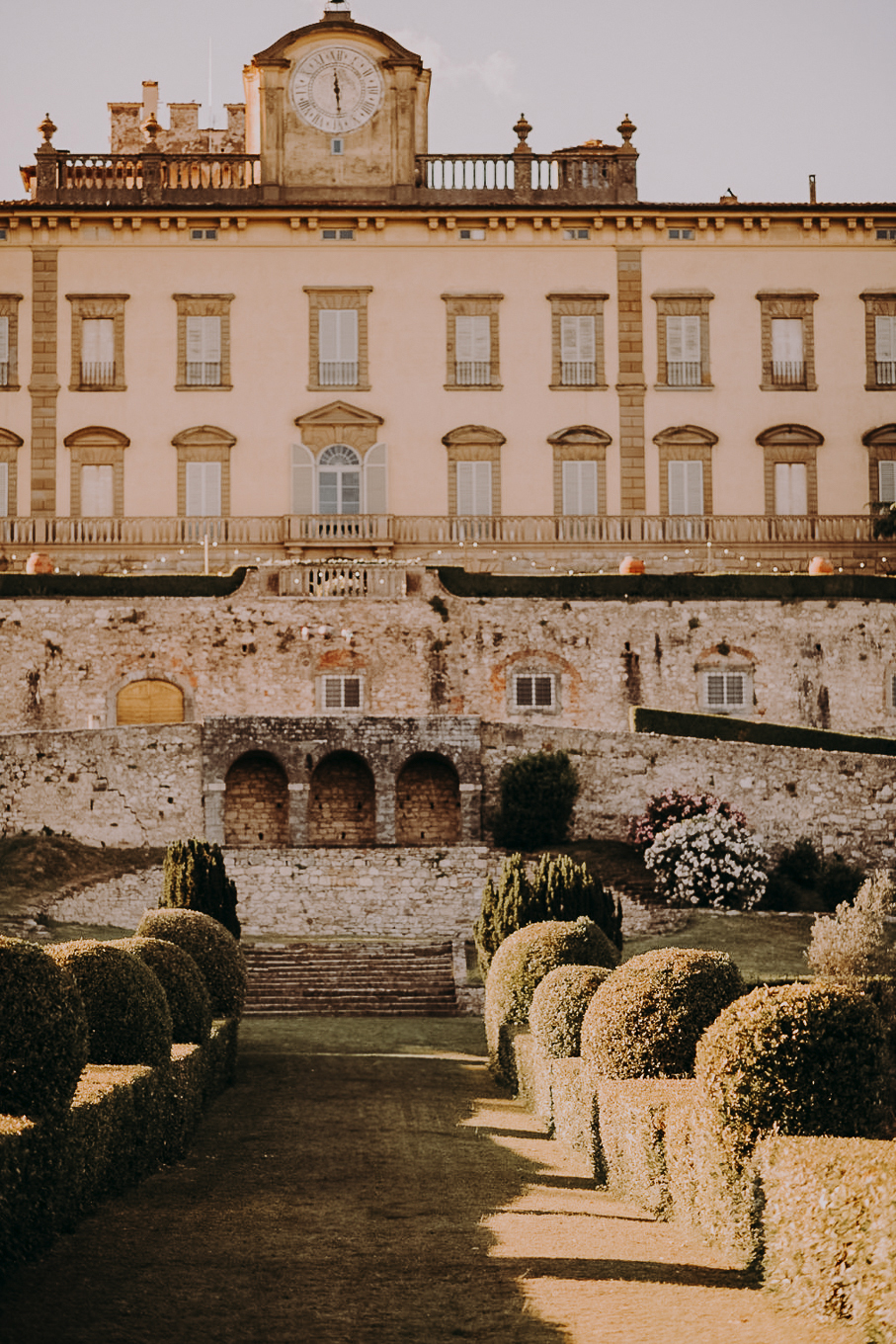
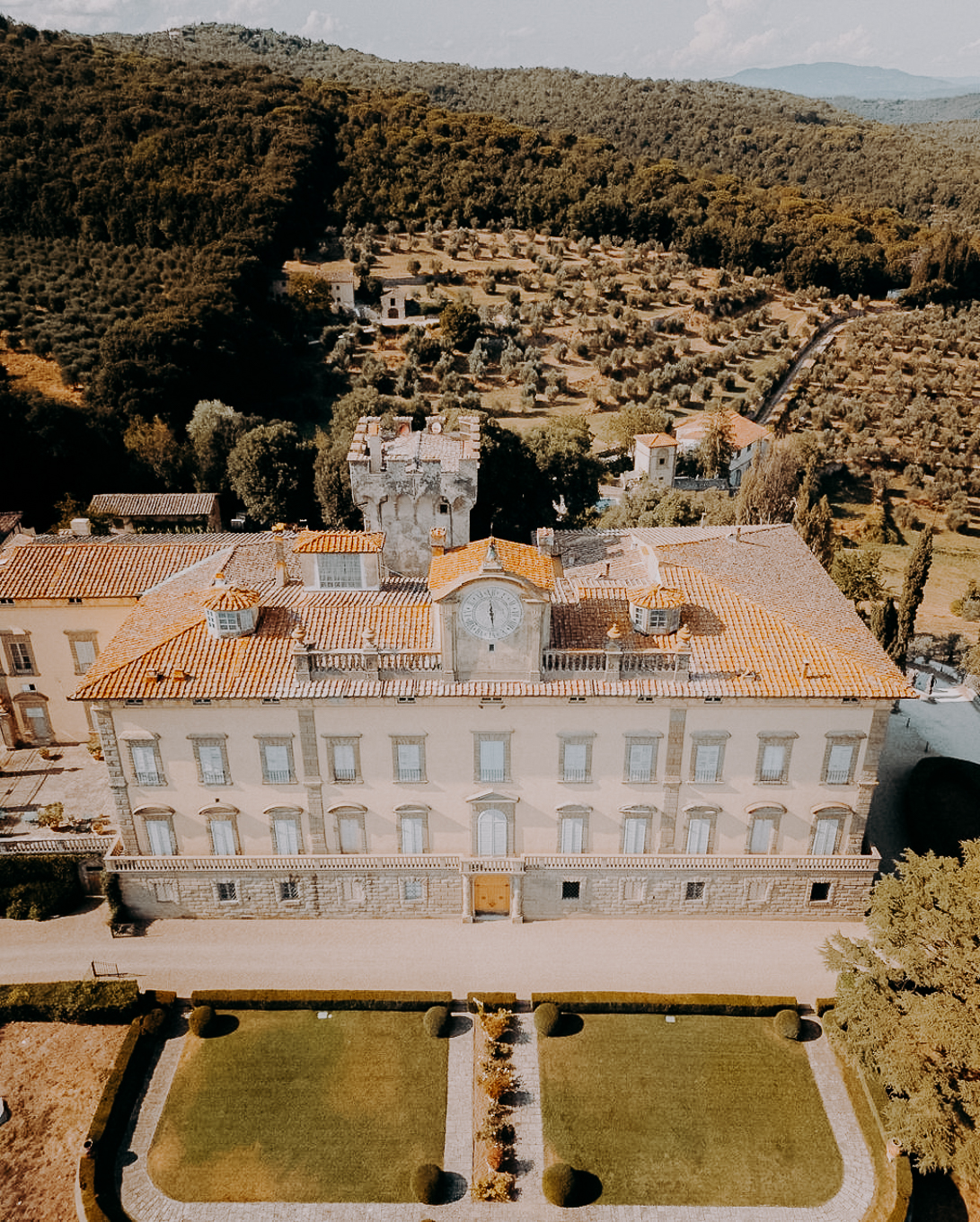
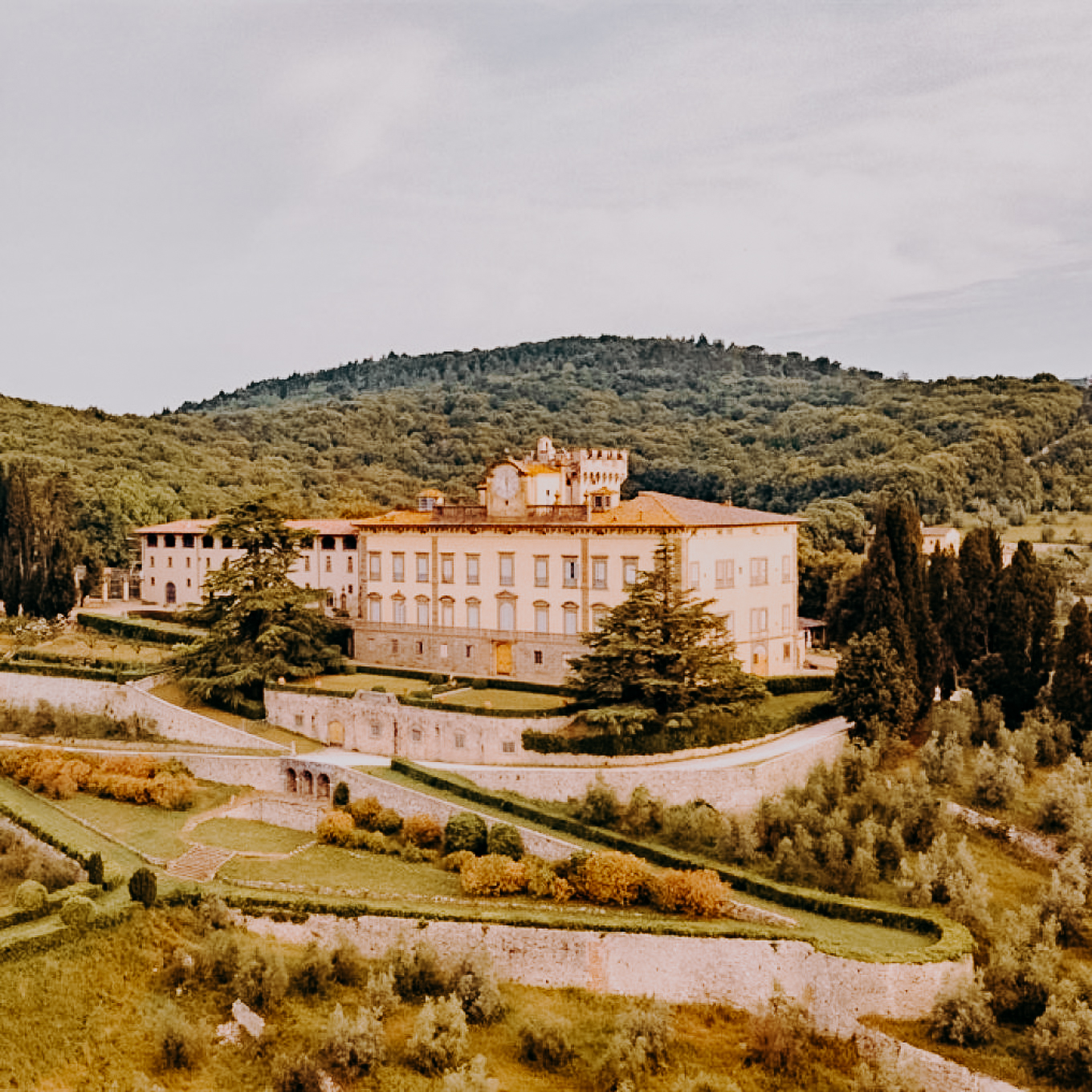
Luigi Rossi was born in 1828 and arrived in Turin from the countryside without a penny. Within decades he had become an expert liqueur maker and entrepreneur, and the company he co-founded — Martini & Rossi — became one of the most recognised drink brands in the history of Italian production. In 1935, his grandson Napoleone Rossi di Montelera purchased Torre a Cona: an eighteenth-century villa at Rignano sull'Arno in the Chianti Colli Fiorentini, originally the property of the Rinuccini family and already, by the time of purchase, one of the most historic wine estates between Florence and the Arno valley. The family's passion for wine and the vine runs in direct continuity from Luigi's first liqueur workshops to the current generation — Ludovica, Niccolò, and Leonardo Rossi di Montelera — who manage the estate today according to a philosophy of deliberate restraint: only seven vineyards, limited production, and the conviction that the limit is itself a value. They also produce Vermouth, in direct and intentional homage to the company that funded the family's rise. For international couples planning a destination wedding in Tuscany who want a wine estate with thirty rooms in an eighteenth-century villa, its own osteria, and a family story that stretches from the poorest origins to one of Italy's most globally recognisable brands, Torre a Cona in the Florentine hills offers something genuinely singular.
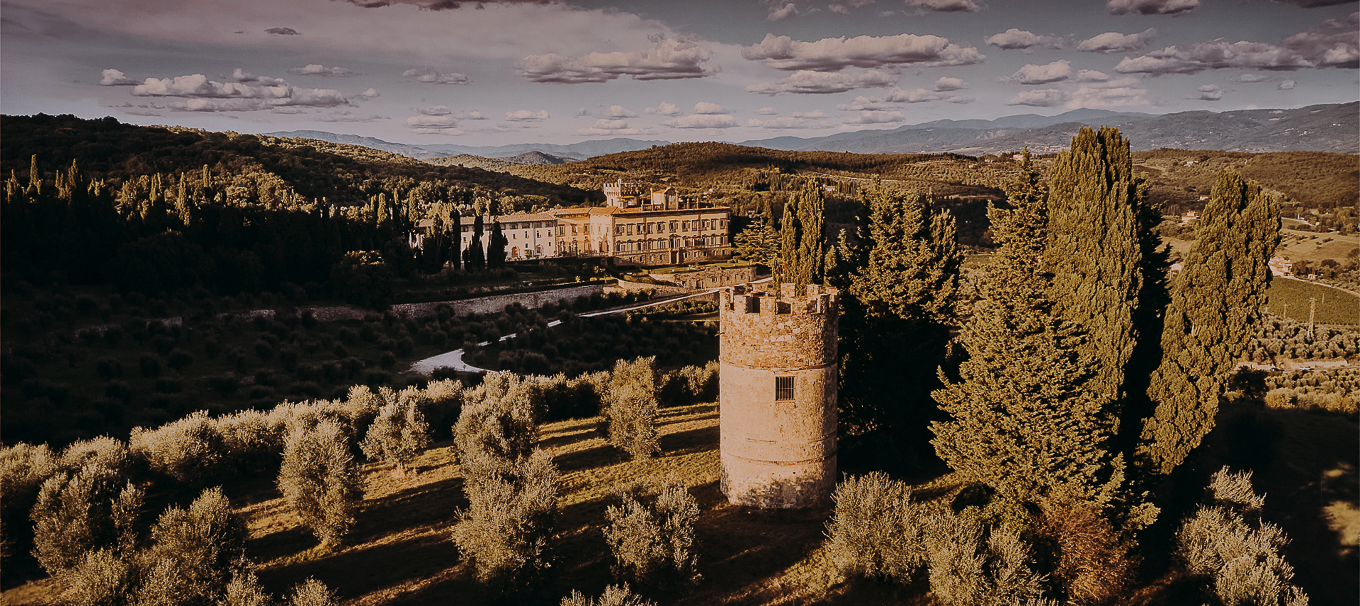
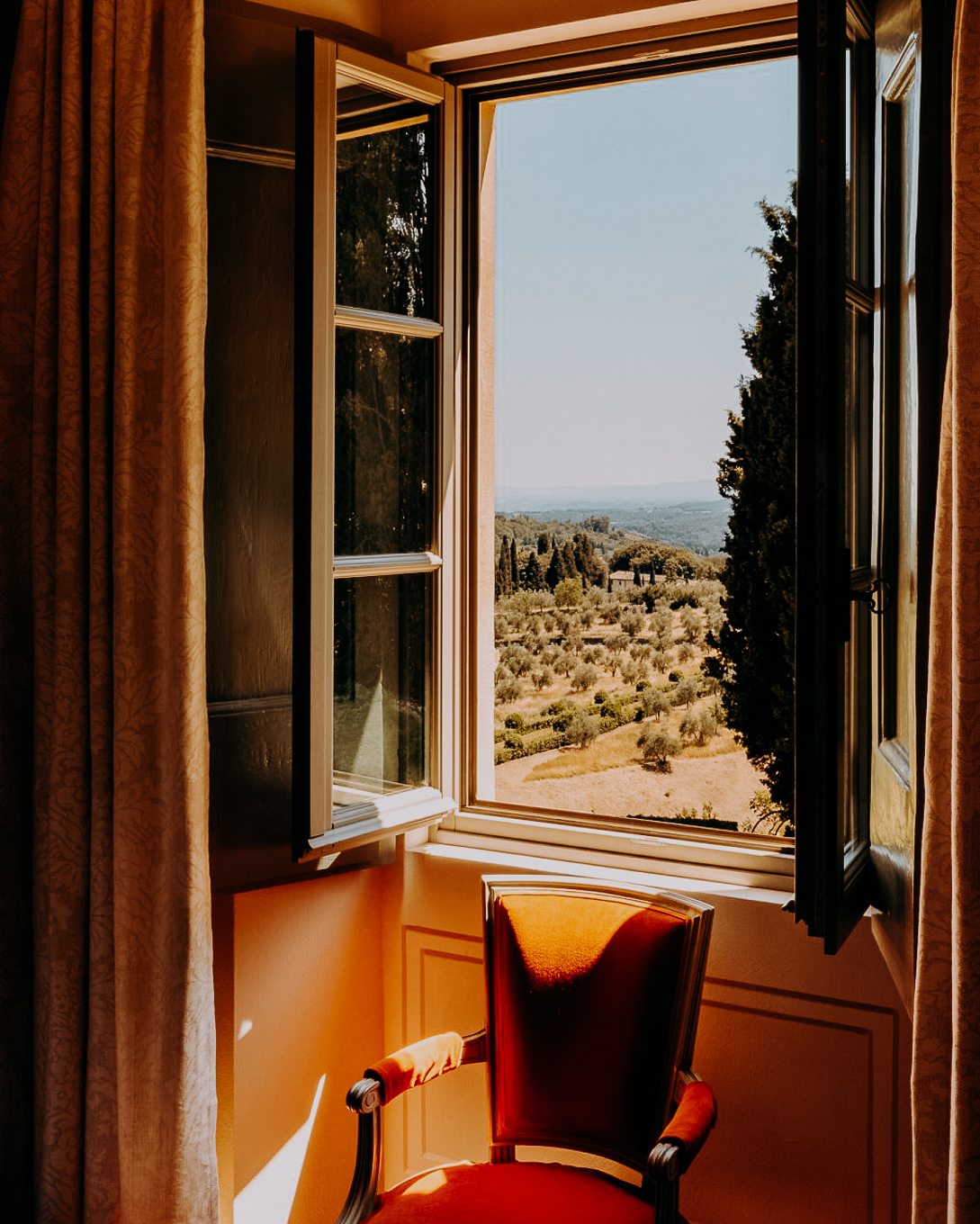
I photograph weddings across Tuscany and the Florentine wine country as a wedding photographer in Tuscany, and the Chianti Colli Fiorentini zone — the arc of hills that runs between Florence and the Arno valley, producing wines that are specifically of the Florentine territory rather than the more internationally famous Chianti Classico corridor — has a quality of landscape and light that is genuinely its own. Torre a Cona sits in this zone with the authority of an estate that has been cultivating the same seven vineyards for decades, knowing precisely what this specific microclimate produces and building an entire wine portfolio around that knowledge.
From 1310 to Today: The Rinuccini, the Padoa, and the Rossi di Montelera
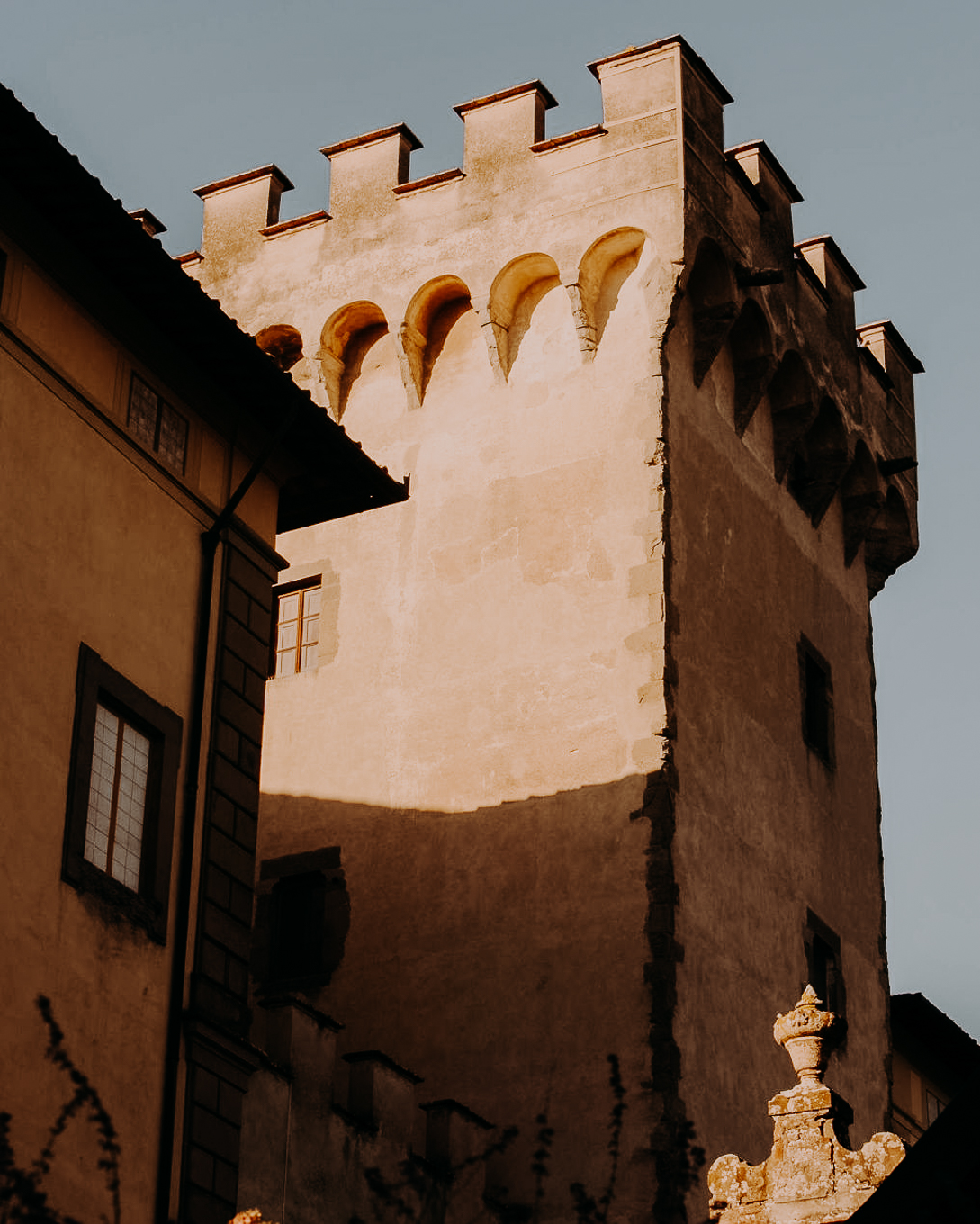
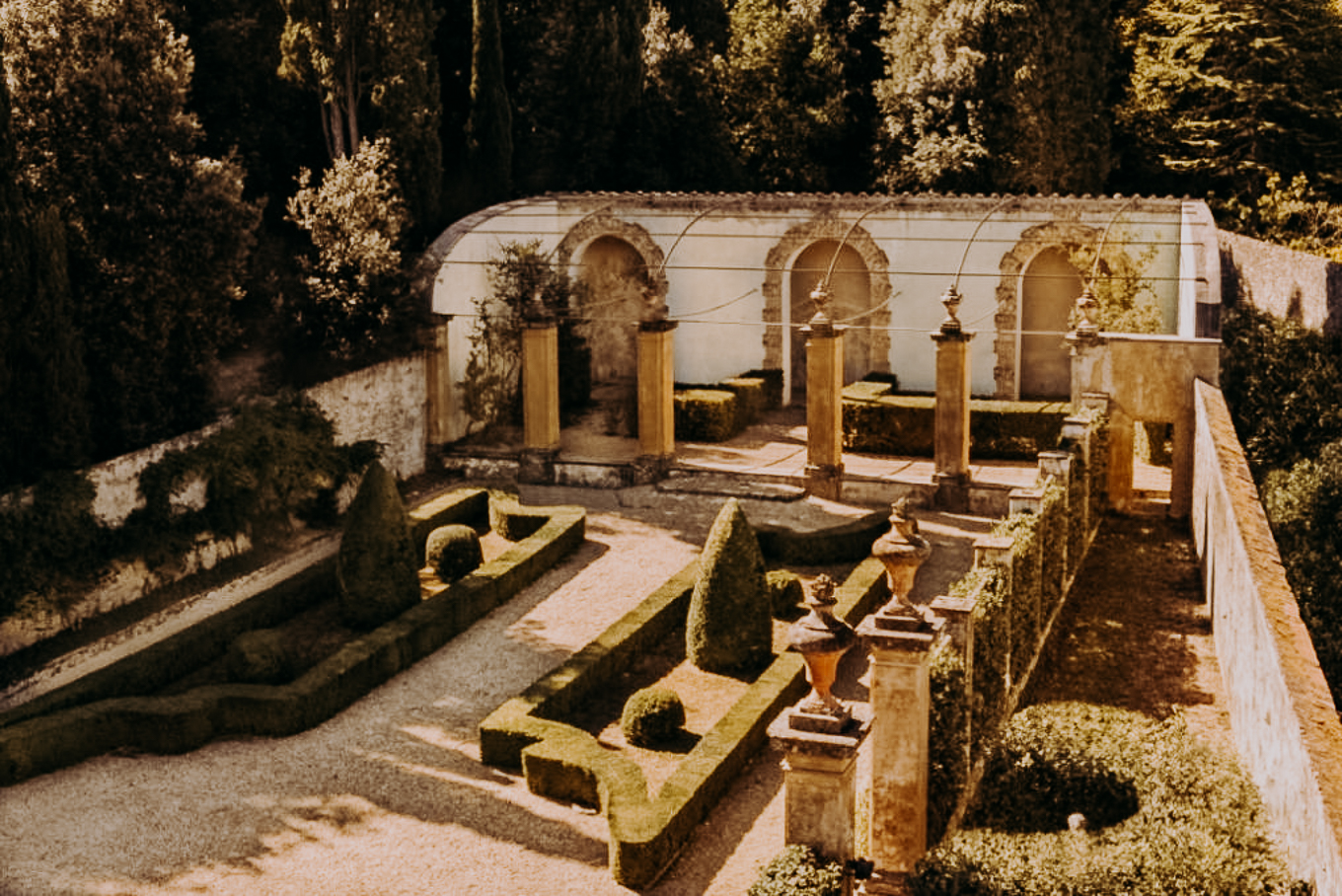
The estate's documented history begins with the Rinuccini family, whose presence at Torre a Cona is recorded from 1310 and whose ownership is confirmed in ancient images of the property predating the seventeenth century — which means the earliest structures on this site predate the current eighteenth-century villa by several centuries. In 1882, Leone Emilio Padoa purchased the estate and, the following year, began the modernisation of the cellar and agricultural buildings with an eye to contemporary agricultural methods — a family that approached the property as a working agricultural investment rather than a noble residence. Their heraldic insignia are still present on the property, commemorating their restoration work.
In 1935, Napoleone Rossi di Montelera arrived. His family's background was not aristocratic but entrepreneurial: Luigi Rossi, born in the countryside in 1828, had built a liqueur and wine business in Turin that became, through the partnership that produced the Martini & Rossi brand, one of the most internationally distributed Italian drink companies in history. The acquisition of Torre a Cona by Napoleone was the wine family's return to the land — to the agricultural source of the passion that Luigi had commercialised and globalised from a Turin workshop. Three generations later, the estate is in the hands of Ludovica, Niccolò, and Leonardo, who manage the vineyards, the hospitality, and the wines with the same conviction that the best expression of this microzone comes not from expansion but from precision.
The Seven Vineyards and the Philosophy of Limits
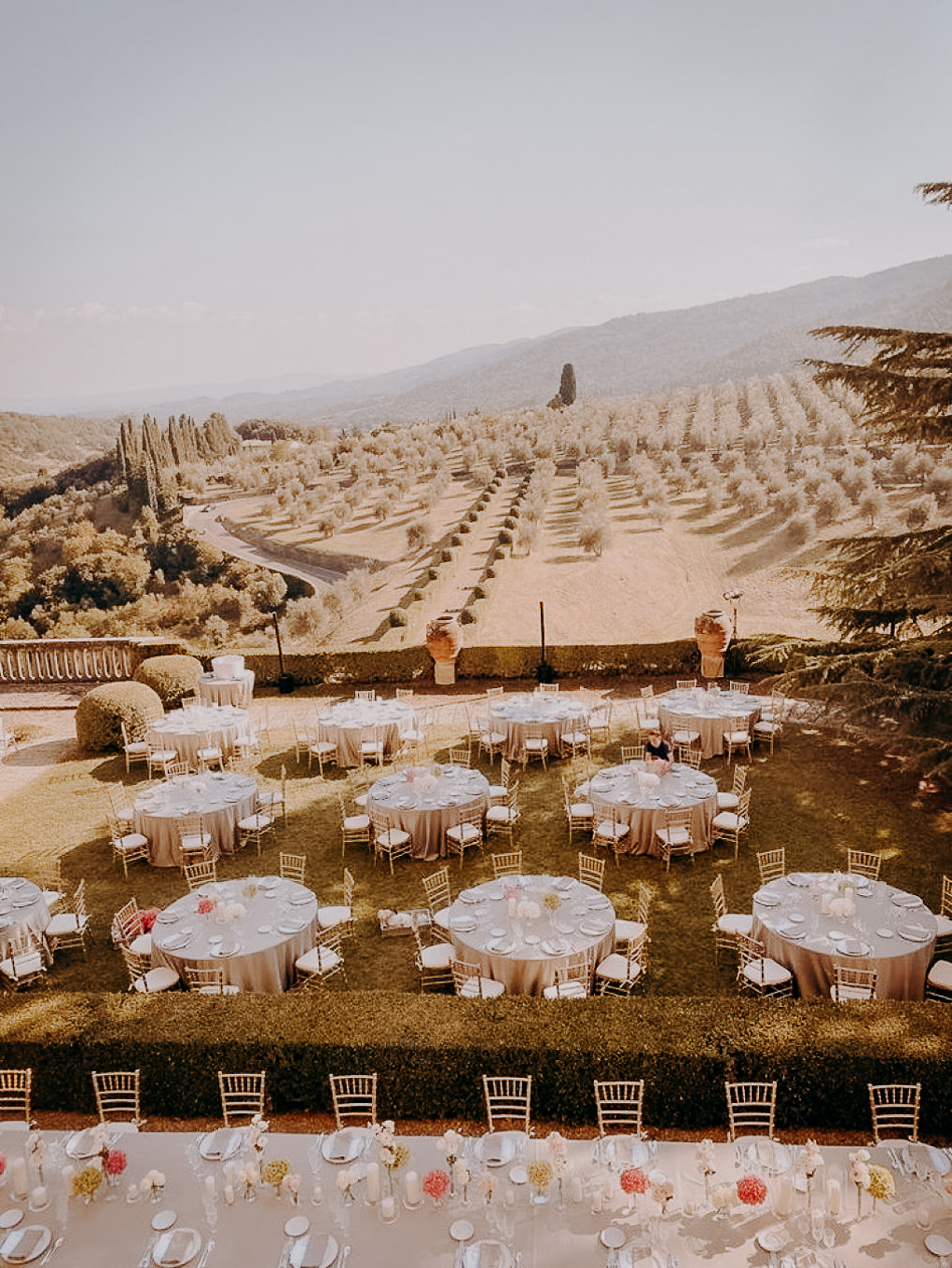
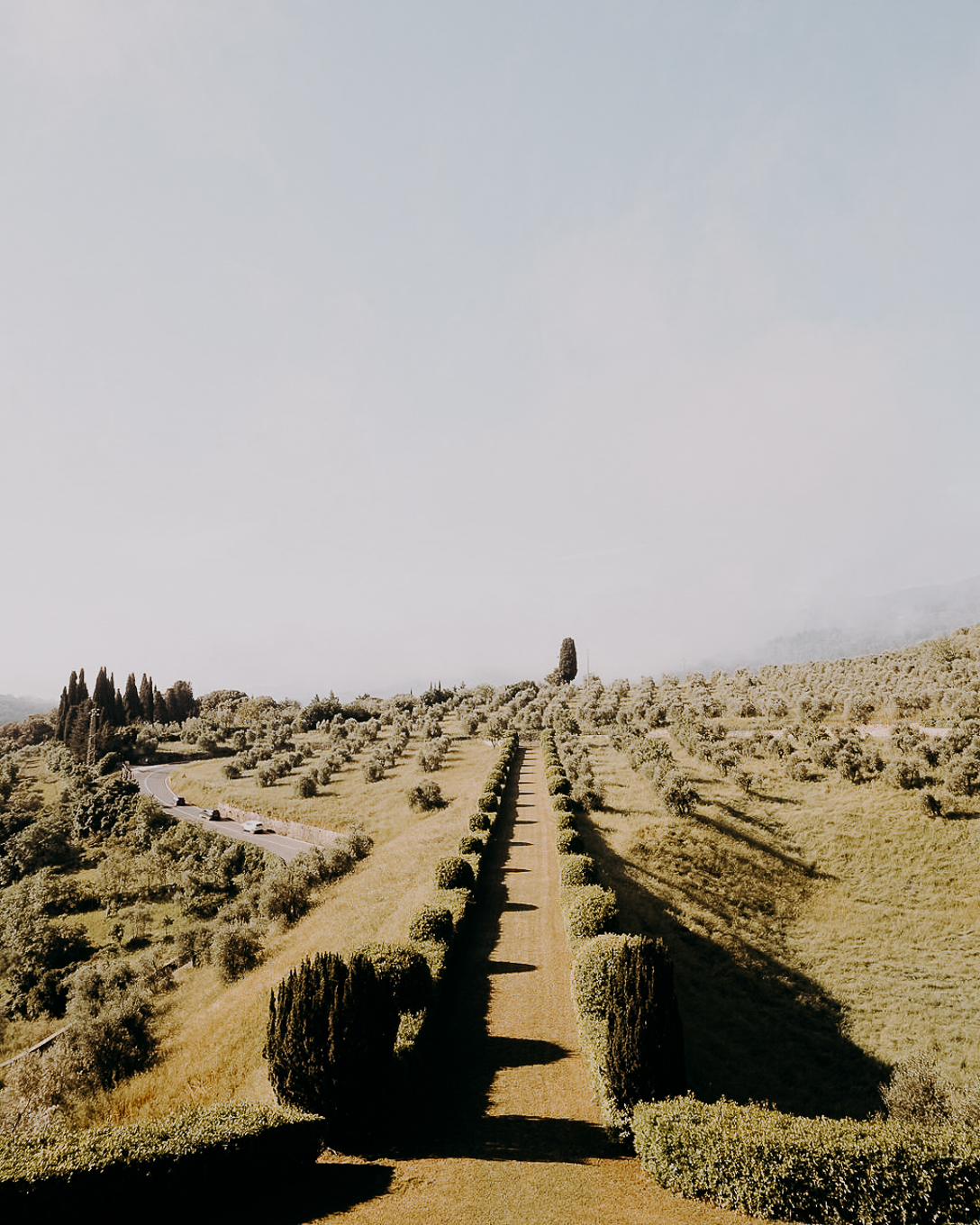
Torre a Cona grows wine from seven vineyards and no more. The estate's stated philosophy — il limite è un valore, the limit is a value — applies equally to the wine programme and to the hospitality. The wines produced from these seven plots represent, in the estate's own words, the distinctive characteristics of a microzone that is unique in the Tuscan viticultural panorama: the specific combination of microclimate and biodiversity that Rignano sull'Arno and the Chianti Colli Fiorentini zone produce at this position between the Arno valley and the Florentine hills. The wine portfolio includes Chianti Colli Fiorentini, single-vineyard Chianti selections, monovitigno wines from Merlot and Colorino — the rare indigenous Tuscan grape that gives this zone some of its most distinctive red wines — various Vin Santo expressions, and, directly referencing the family's Martini & Rossi heritage: Vermouth. For a wedding dinner where the wine served was made from the seven vines visible from the terrace, and where the dessert Vin Santo connects to a winemaking tradition that predates the villa itself, the table at Torre a Cona expresses the full depth of this estate's agricultural identity.
Thirty Rooms in an Eighteenth-Century Villa, Curated by the Contessa
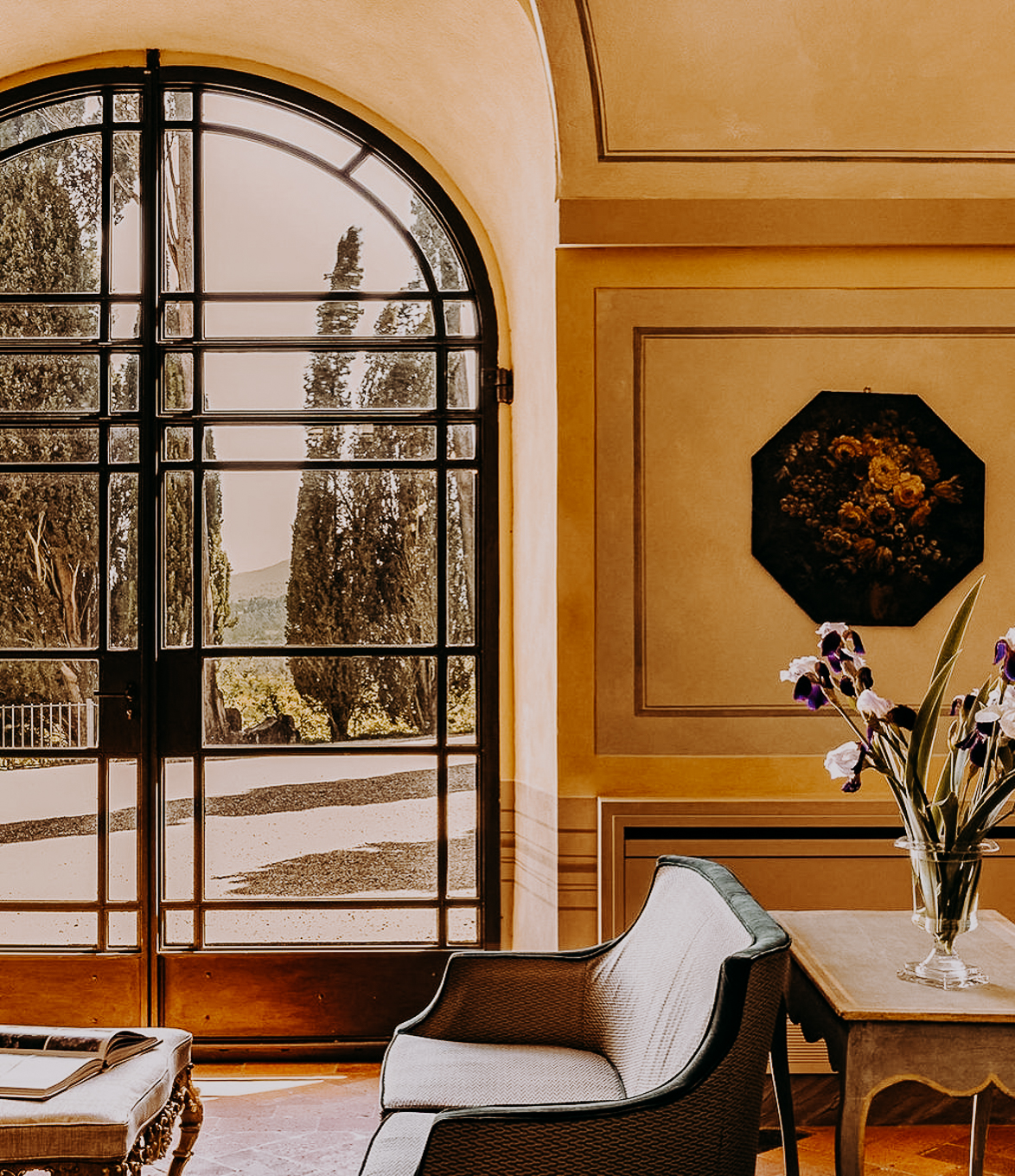
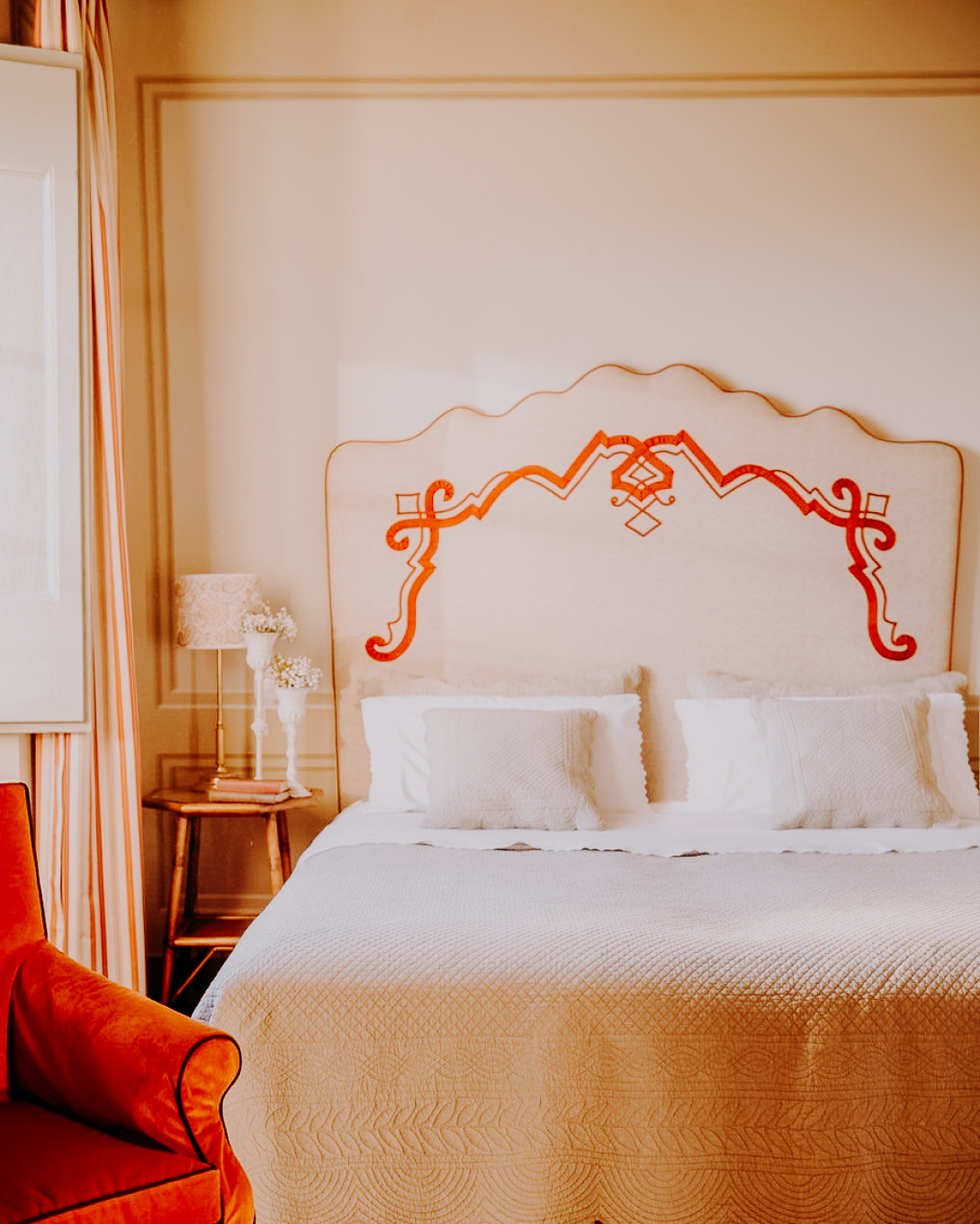
The hospitality at Torre a Cona is built around thirty elegant hotel rooms: twenty in the historic eighteenth-century villa's first and second floors along the west wing, and ten in the estate's dependencies. Every room carries original decorative elements alongside deliberate design choices. The furnishings were curated by the Contessa: precious fabrics, paintings, antique prints, and pieces of antiquariato give each room the specific character of a place that has been inhabited and accumulated rather than designed to a formula. Soft colours recalling the Tuscan countryside — the greens and ochres and warm whites of the Florentine hills — run through the palette. The result is accommodation that feels genuinely inhabited, like staying in a family house of considerable taste and age rather than in a hotel that happens to occupy a historic building.
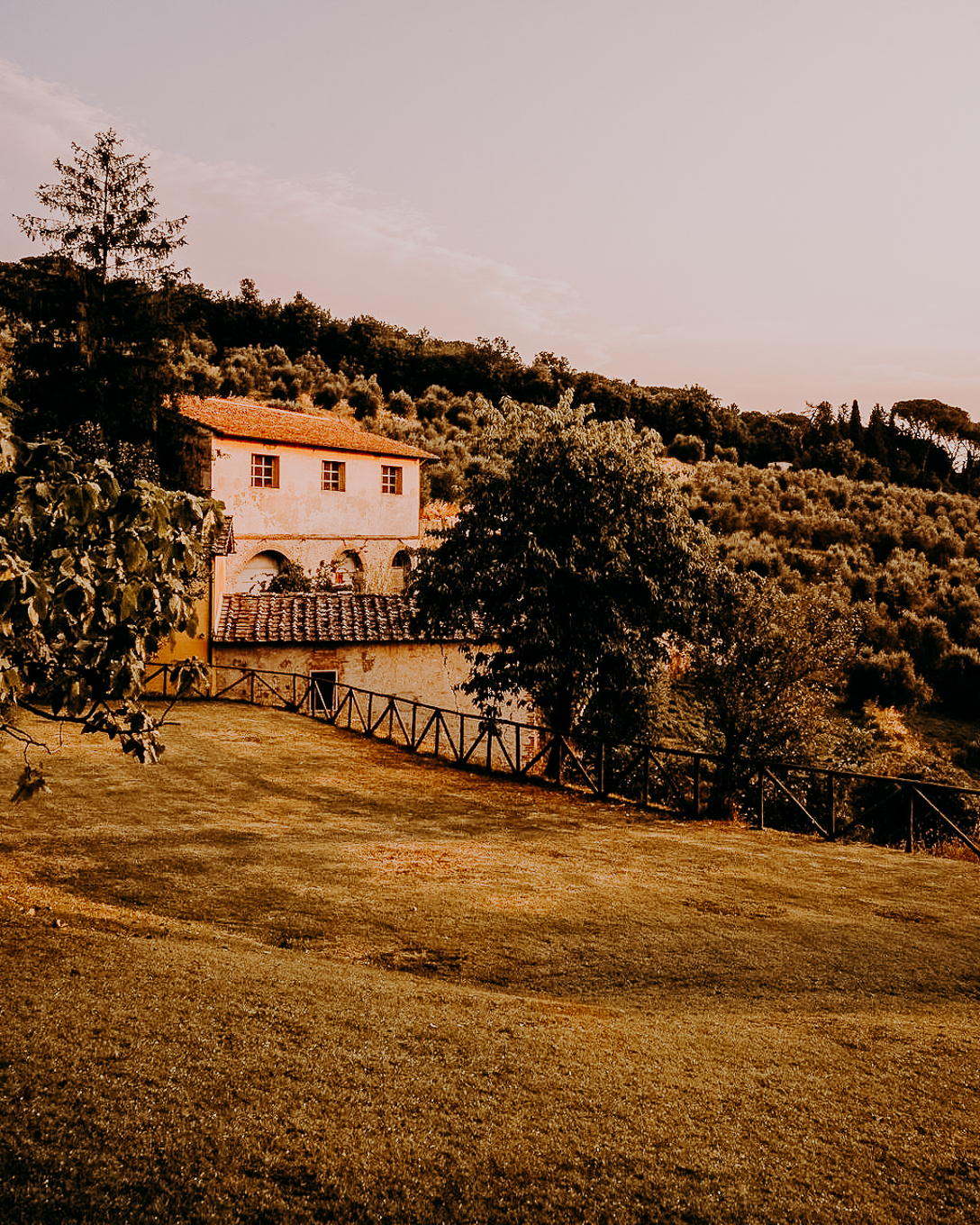
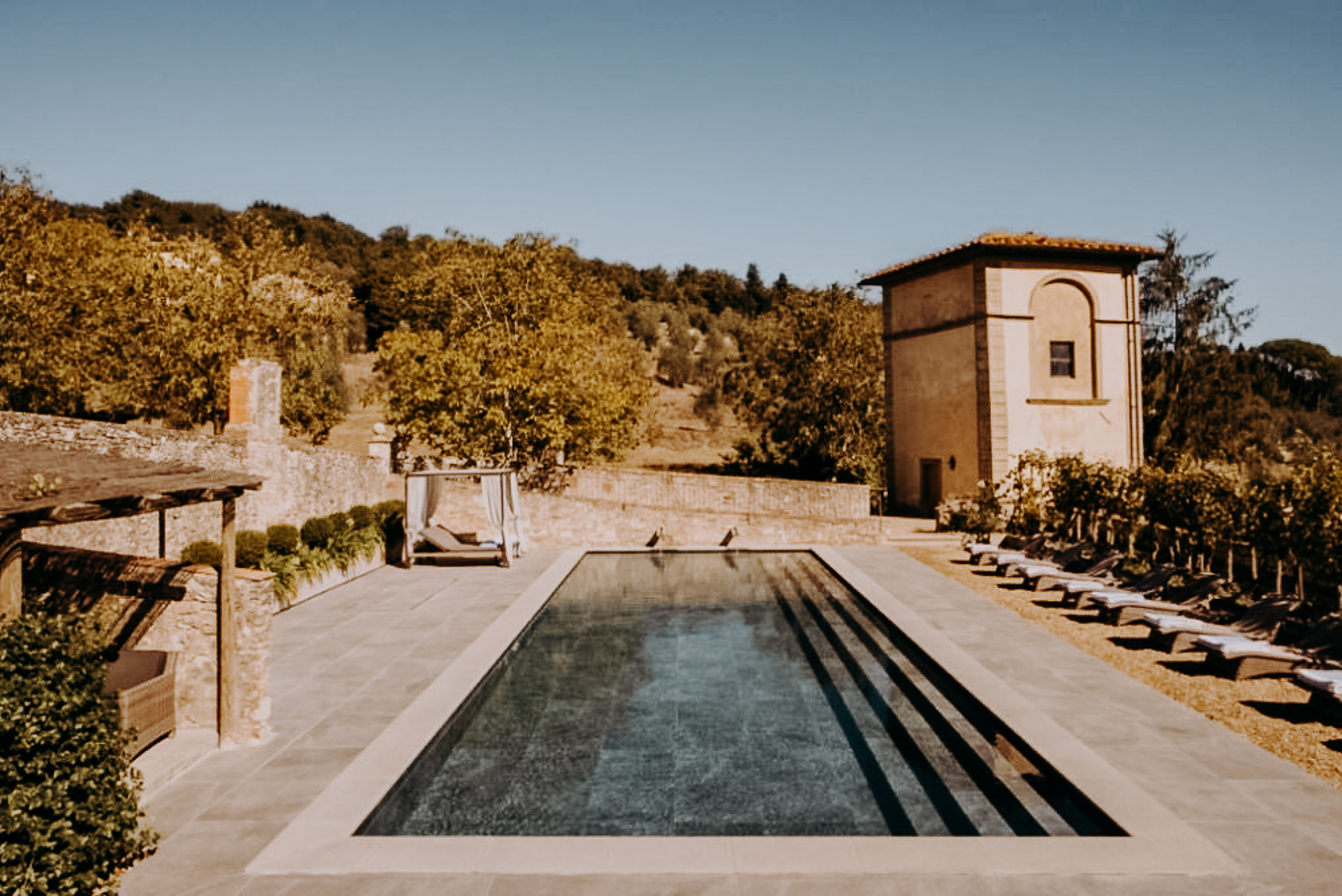
La Colonica provides a second and entirely distinct accommodation option within the estate: a large red farmhouse in traditional Tuscan rural style, paired with a stone hay barn, that can accommodate approximately twenty people and is available either as a unified rental or as separate individual apartments. La Colonica has its own panoramic pool for the exclusive use of its guests, and large outdoor spaces that give a wedding party the particular freedom of a completely self-contained residential experience within the broader estate. For the wedding's core group — the closest family, the bridal party — La Colonica offers that quality of collective privacy that a hotel floor or a block of rooms cannot replicate.
The Osteria and the Kitchen
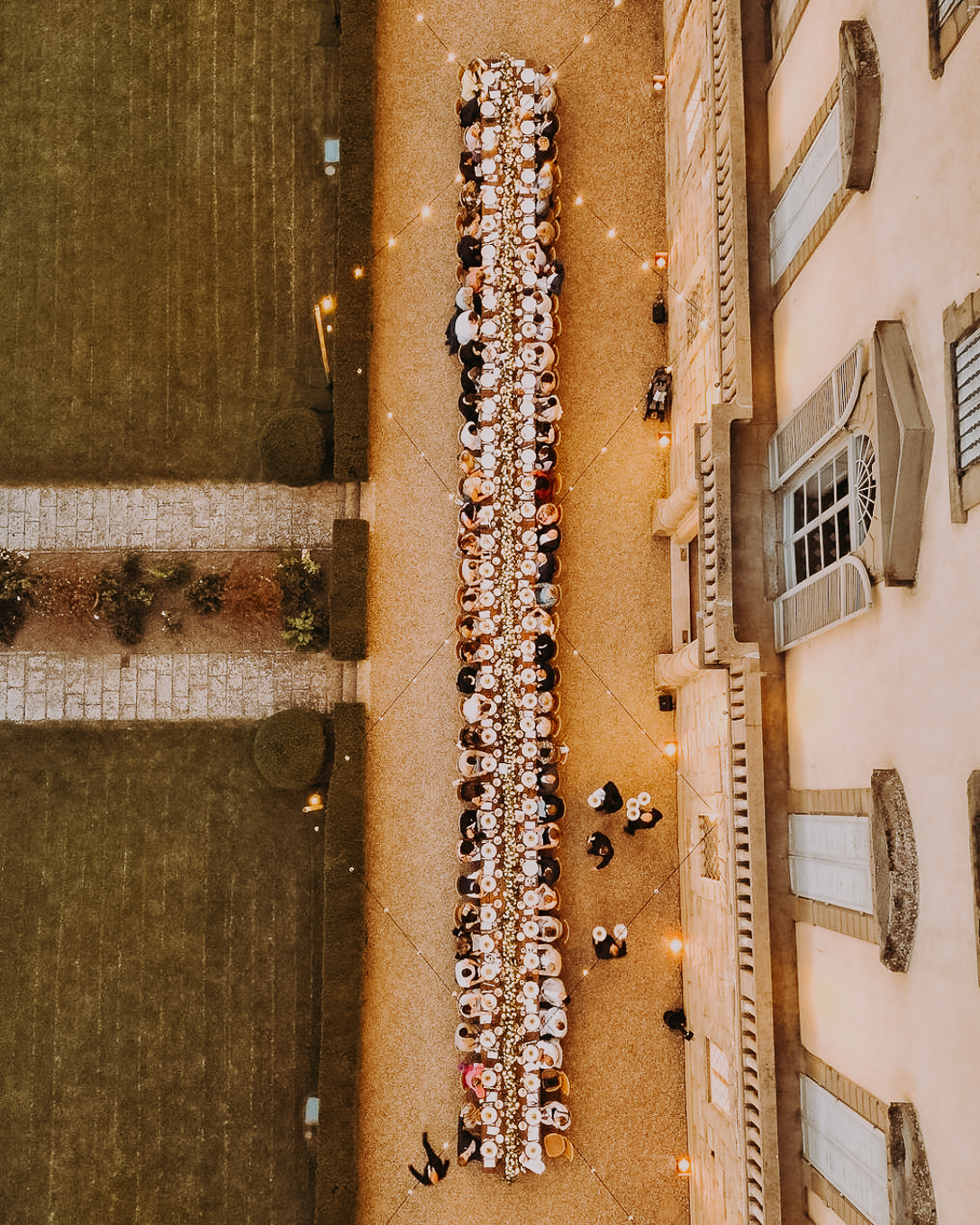
The Osteria at Torre a Cona is the estate's in-house restaurant — the space where the wines from the seven vineyards meet the food of the Florentine countryside in a setting that the estate describes as one of authentic pleasure. The kitchen draws on the traditions of the Chianti Colli Fiorentini territory, and the combination of the estate's own wine production with the Osteria's cooking gives the wedding dinner a coherence between what is in the glass and what is on the plate that reflects the family's long-standing dual commitment to viticulture and hospitality. The Osteria is available to hotel guests as well as to couples celebrating their wedding at the estate.
Luigi Rossi arrived in Turin without a penny and built one of the most recognised drink brands in the world. His family then bought a wine estate in Tuscany and started making Vermouth. Is there a better argument for the value of restraint and precision over scale?
Seven vineyards. Thirty rooms. One Osteria. The limit is a value at Torre a Cona — in the wine and in the hospitality. Photographing inside that philosophy means finding the specific and ignoring the general: the light on this specific vine row, this specific morning, this specific hour.
How Francesco worksGetting to Torre a Cona: Practical Information for International Couples
Torre a Cona is located at Località Torre a Cona, 50067 Rignano sull'Arno, in the province of Florence. The estate sits in the Chianti Colli Fiorentini zone — the arc of hills between Florence and the Arno valley that produces the wines most specifically associated with the Florentine territory. Florence is accessible within a comfortable drive; Florence Airport serves European routes. The position of the estate between Florence and Siena, in the immediate south of the Florentine hills, gives guests access to the city's cultural programme and to the broader Chianti landscape without committing to either entirely. For guests who want to taste the wines of the Chianti Colli Fiorentini zone as a complement to the better-known Chianti Classico, the estate's guided cellar visits and wine tasting experiences provide the most authoritative possible introduction to the specific character of this appellation.
Torre a Cona: Questions From Couples Planning a Wedding in the Florentine Hills
How does the legal wedding process work for foreign couples getting married at Torre a Cona?
Foreign nationals wishing to marry legally in Italy must begin the documentation process through the Italian consulate in their country of residence several months before the wedding date, with requirements varying by nationality. Whether a civil ceremony can take place directly on the estate or requires a visit to the Comune di Rignano sull'Arno is something to confirm with the Torre a Cona team. The estate's hospitality infrastructure — thirty rooms, the Osteria, the estate's own wine — makes it a naturally complete venue for a multi-day destination wedding celebration. A locally based wedding coordinator experienced with international couples is the most reliable guide through the administrative process.
Who are the Rossi di Montelera family and what is their connection to Martini & Rossi?
The Rossi di Montelera family traces its entrepreneurial origins to Luigi Rossi (1828-1892), who arrived in Turin from the countryside without resources and built a liqueur and wine business that became part of the Martini & Rossi partnership — one of the most internationally recognised Italian drink brands in history. Napoleone Rossi di Montelera, Luigi's grandson, purchased Torre a Cona in 1935, returning the family to its agricultural and vinicultural roots. The current generation — Ludovica, Niccolò, and Leonardo — manages the estate with a philosophy of precision over scale: seven vineyards, limited production, and a wine portfolio that includes Vermouth as a direct reference to the family's founding product.
What is the Chianti Colli Fiorentini and how does it differ from Chianti Classico?
The Chianti Colli Fiorentini is a DOC appellation specifically associated with the hills immediately south and southeast of Florence — the arc of terrain between the Arno valley and the Florentine hills. It is geographically and stylistically distinct from the Chianti Classico zone (which lies further south between Florence and Siena): while Chianti Classico is the more internationally recognised appellation, the Colli Fiorentini zone produces wines of considerable character from a territory that is specifically Florentine rather than generically Sienese. The estate describes its microzone as unique in the Tuscan viticultural panorama for its specific combination of microclimate and biodiversity.
What is La Colonica and can it be reserved exclusively for the wedding party?
La Colonica is a large red farmhouse in traditional Tuscan rural style, paired with a historic stone hay barn, located within the estate grounds with full access to all common areas and services. It accommodates approximately twenty people and can be rented as a single residential unit or divided into individual apartments. La Colonica has its own panoramic swimming pool for the exclusive use of its guests and large outdoor spaces. For the wedding party's core group — closest family, bridal party — the combination of the Colonica's residential privacy and the broader estate's hotel infrastructure gives the celebration a genuinely flexible accommodation arrangement.
Why does Torre a Cona produce Vermouth, and what does it taste like?
The estate produces Vermouth as a direct and intentional reference to the Rossi di Montelera family's founding business legacy — Martini & Rossi, whose vermouth is among the most globally distributed of any Italian drink brand. Torre a Cona's Vermouth is a natural expression of the family's historical connection to this category of production, made in the context of an estate that also produces Chianti Colli Fiorentini, single-vineyard Chianti selections, Merlot, Colorino, and Vin Santo. The specific character of the estate's Vermouth is best explored directly through a guided tasting at the cellar, where the wine and the Vermouth programme can be understood in the context of the seven vineyards and the microclimate that defines them all.