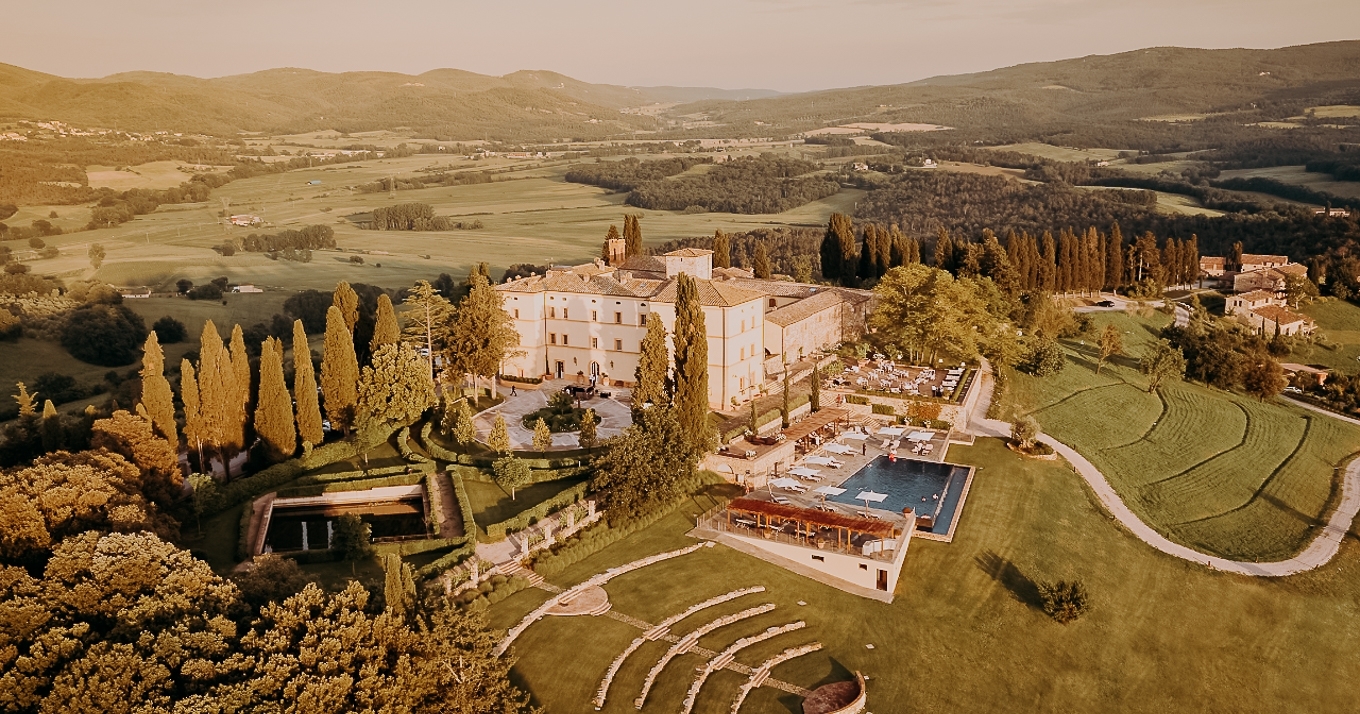
Getting Married in an Etruscan Amphitheatre: Castello di Casole, a Belmond Hotel, Tuscany
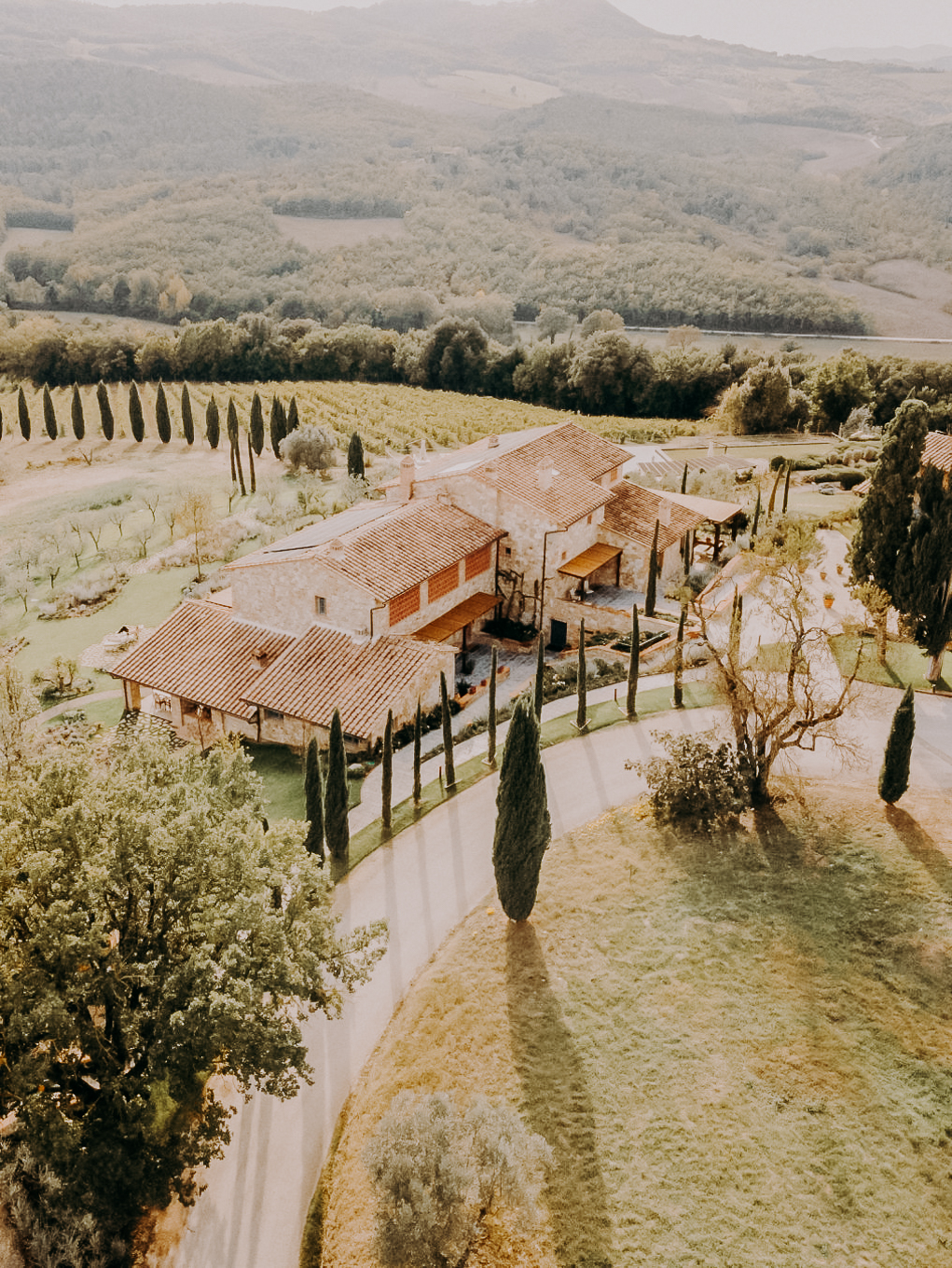
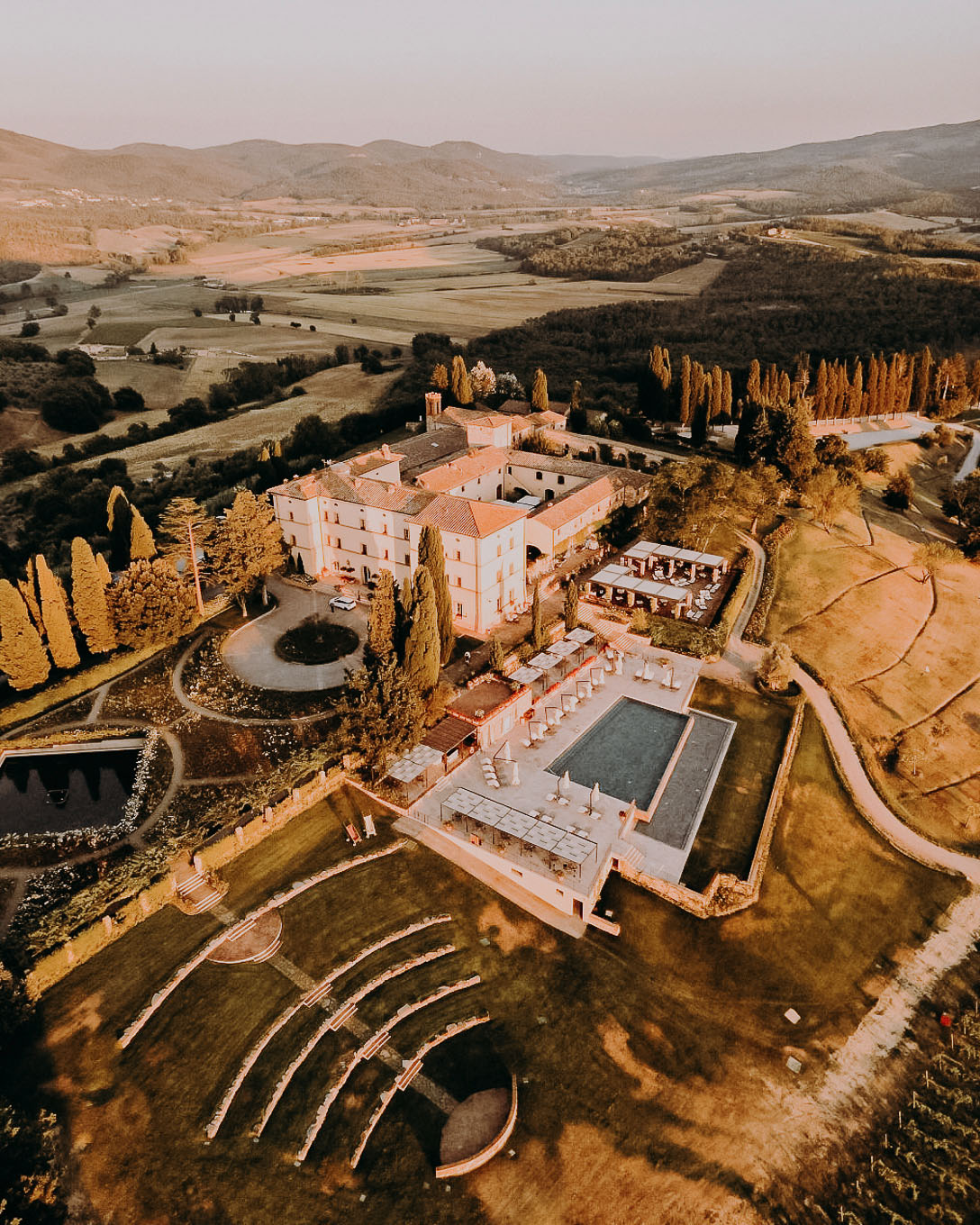
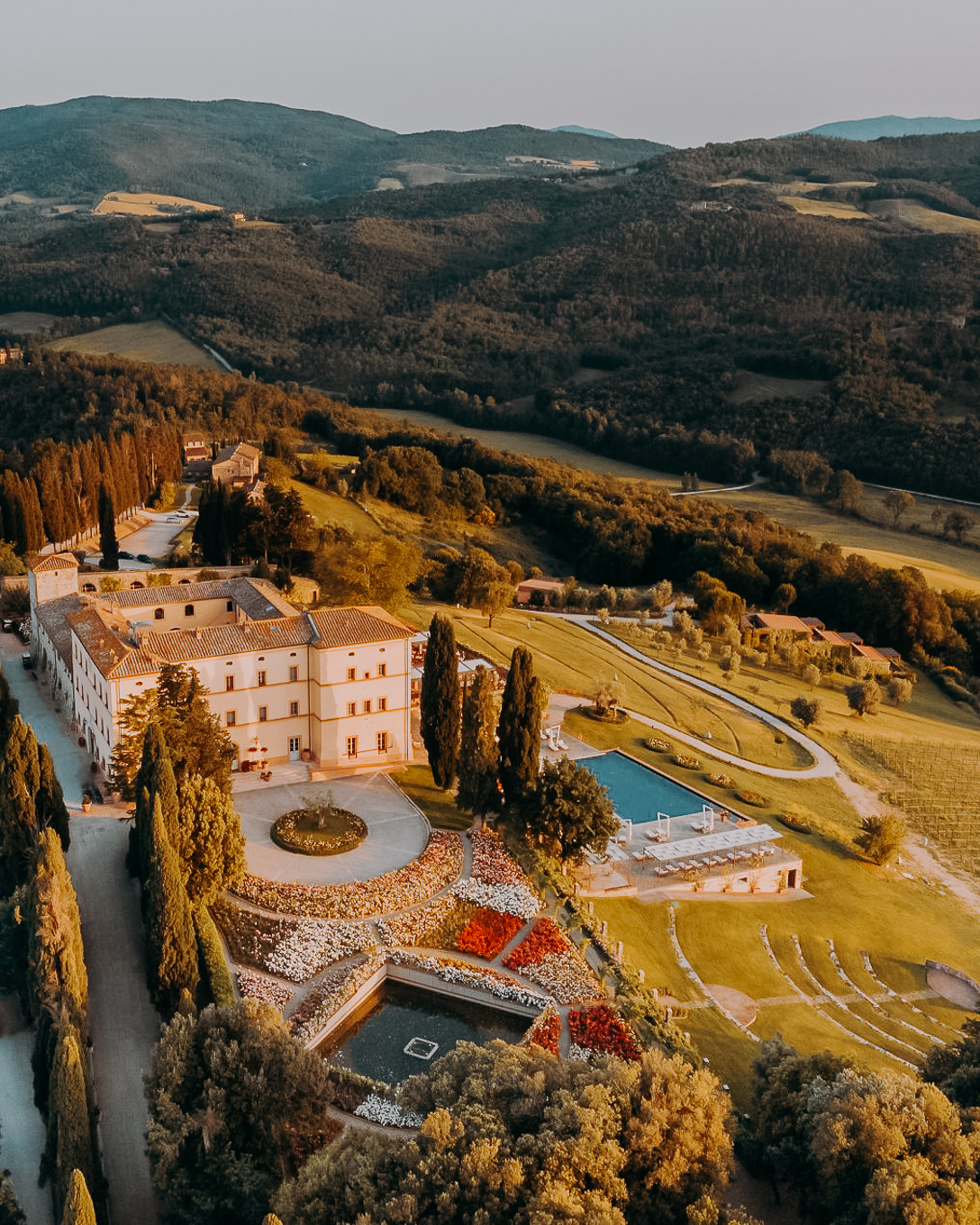
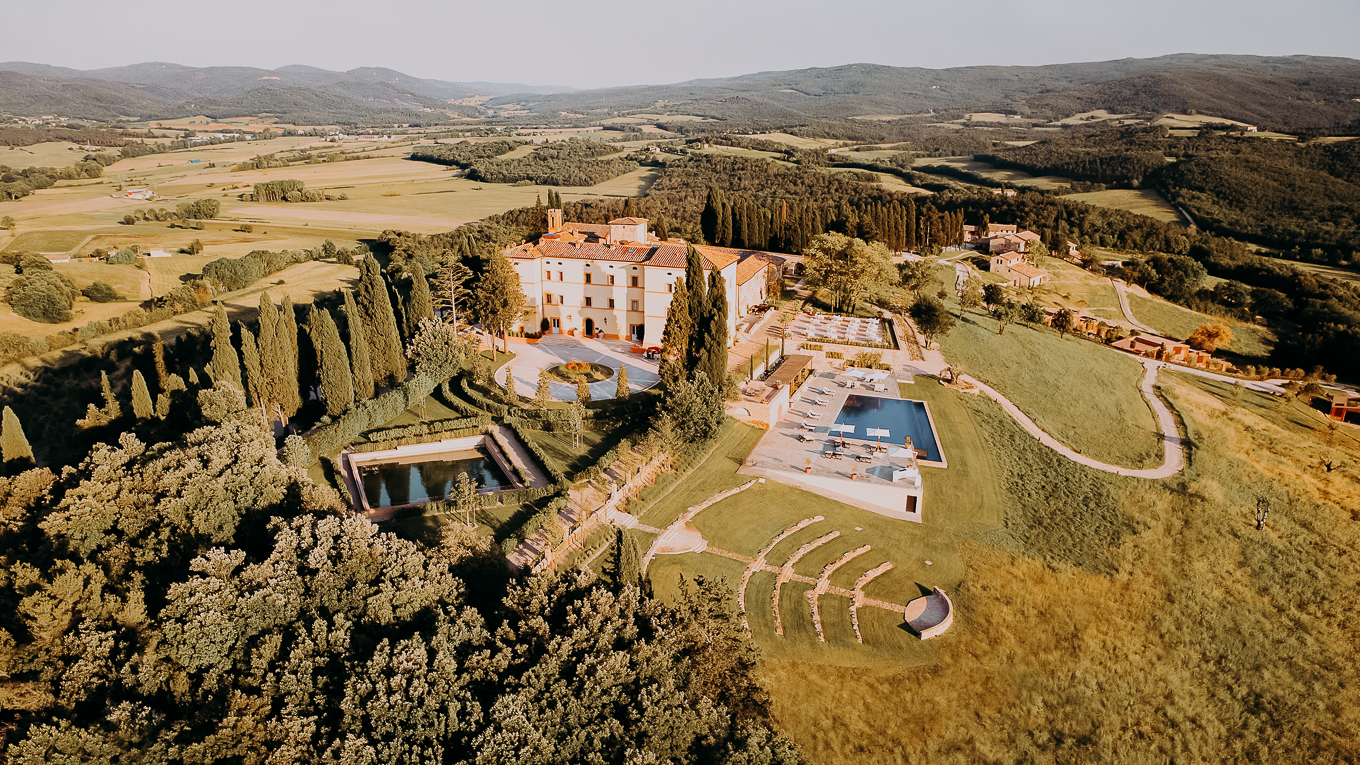
Among the oldest structures on the estate of Castello di Casole is an ancient Etruscan amphitheatre. It predates the medieval castle built here in 998 AD by the better part of a millennium. The site itself — a hilltop at Casole d'Elsa in the province of Siena — has been inhabited since the Bronze Age, and the Etruscan civilisation that flourished here from roughly the eighth century BC left behind artefacts that are now on display inside the hotel that occupies the same ground. A wedding ceremony in this amphitheatre is not a theatrical gesture or an architectural conceit. It is a ceremony in the oldest gathering space on an estate whose human occupation covers more than two thousand five hundred years. For international couples planning a destination wedding in Tuscany who want to stand in a place where people gathered before the Roman Empire existed and before the medieval castle above them had been imagined, Castello di Casole — a Belmond Hotel on fifty-five acres of Sienese hills, with thirty-nine rooms and suites, twenty-five acres of organic vineyards, an infinity pool, a Baroque chapel, and a rose cultivar bred specifically for the property — is the most archaeologically deep wedding venue in this guide.
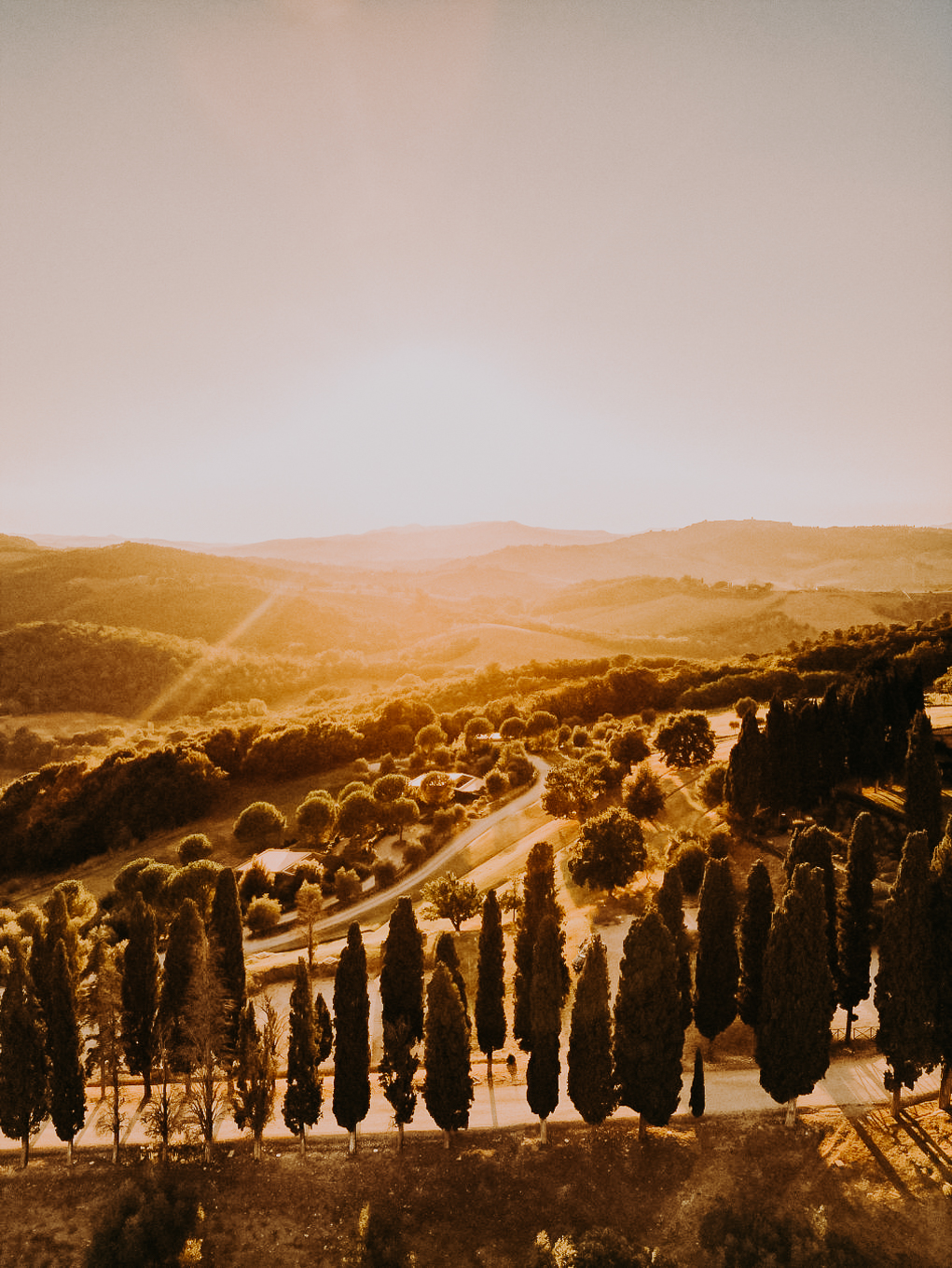
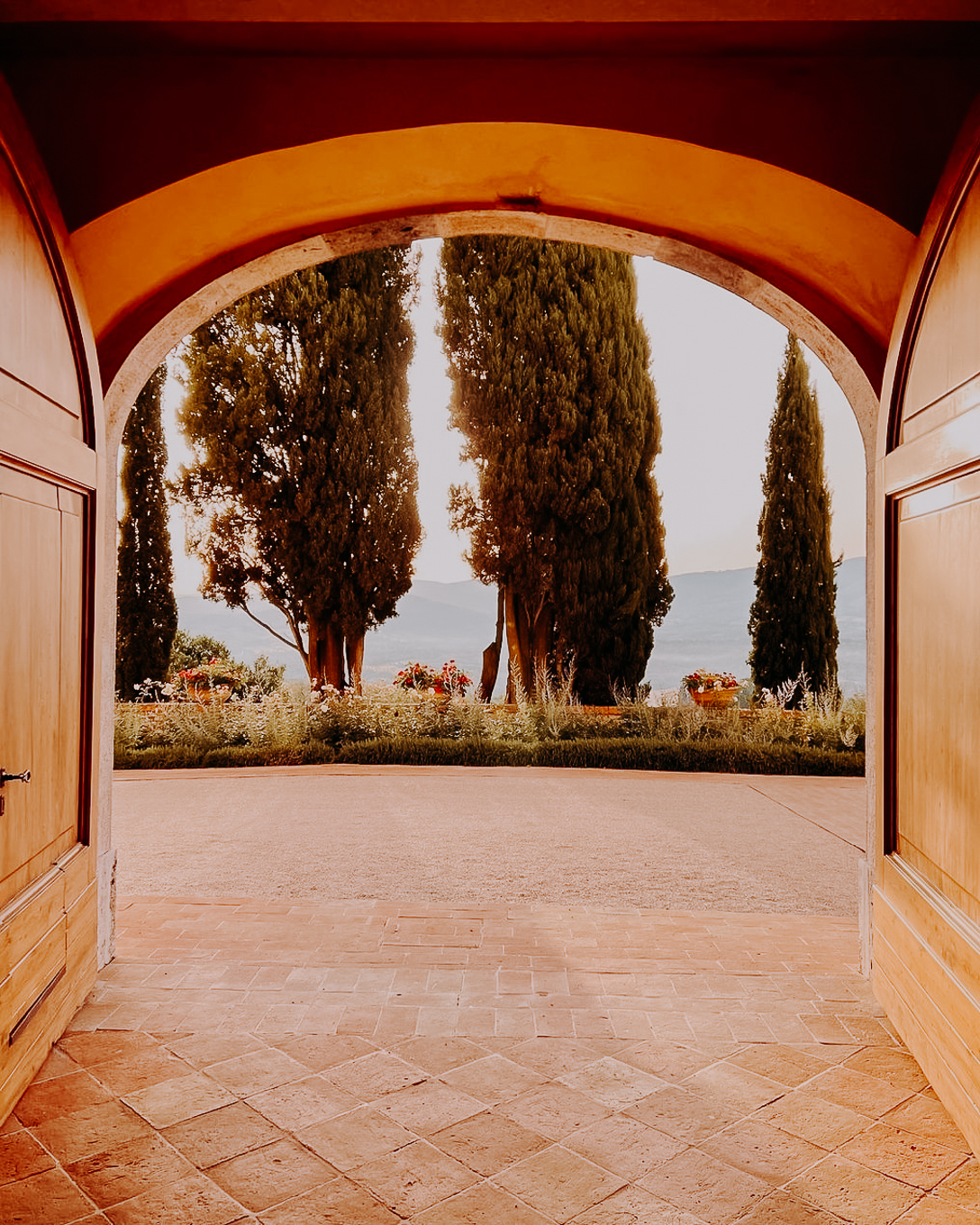
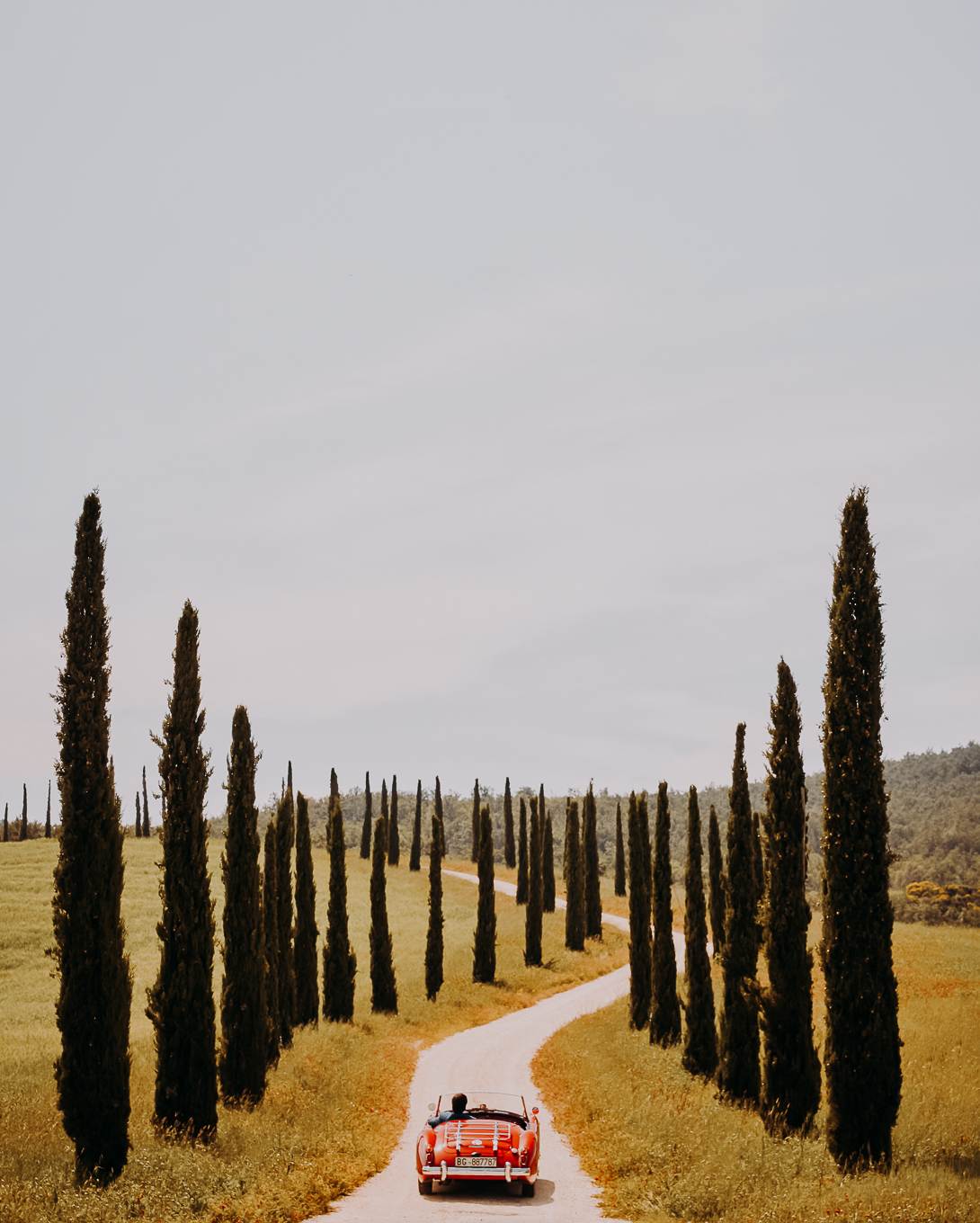
I photograph weddings across Tuscany as a wedding photographer in Tuscany, and the area around Casole d'Elsa — the Elsa valley between Siena, San Gimignano, and Volterra, ringed by the Metalliferous Hills to the south and the Sienese clay badlands to the north — produces a quality of light and a depth of landscape that is entirely its own. The Sienese countryside here has none of the softness of the Chianti and all of the grandeur of a territory that was fortified, contested, and farmed for centuries before the Renaissance gave Tuscany its most recognisable visual identity.
The Castle of 998 AD, the Bargagli Family, and the Etruscan Collection
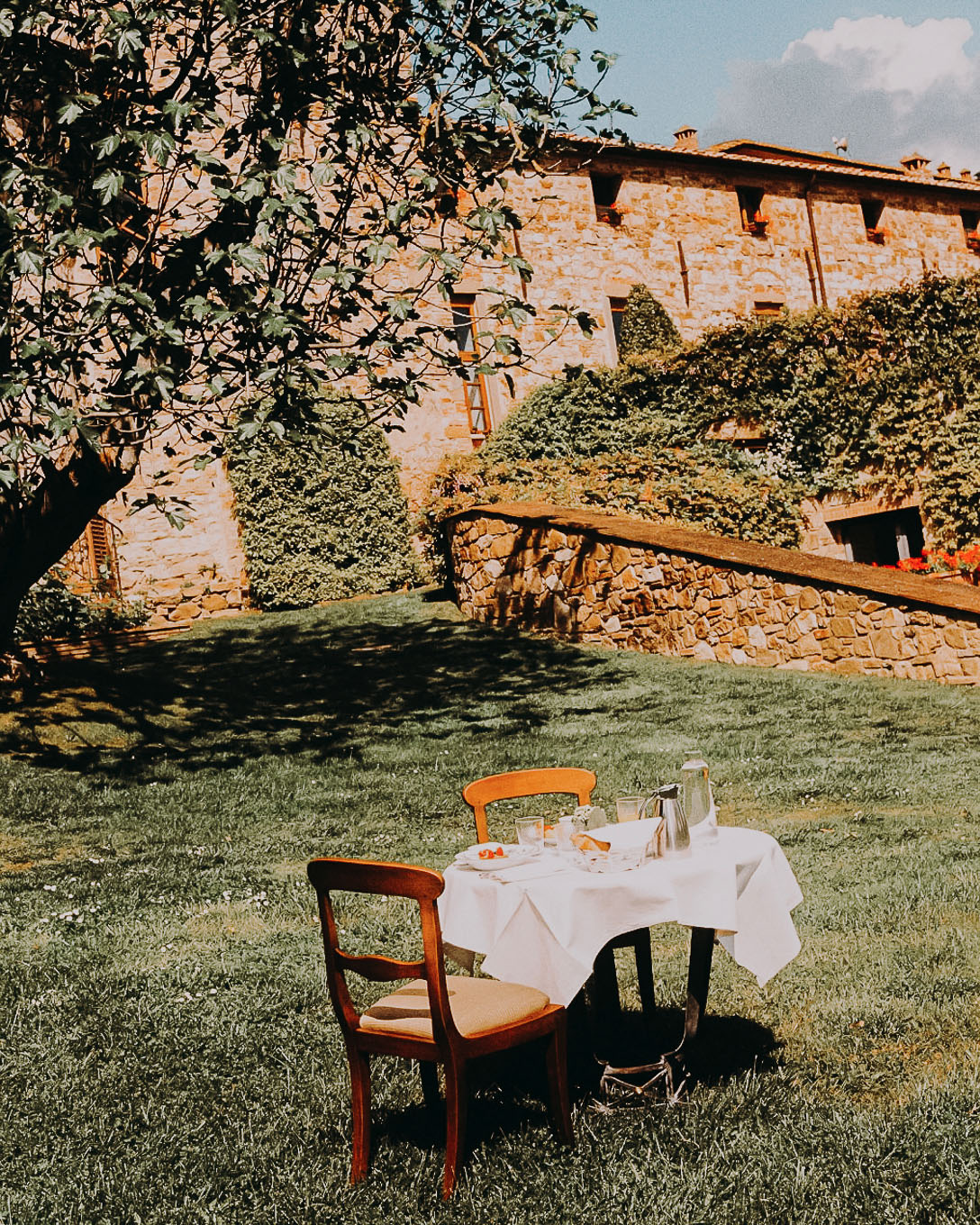
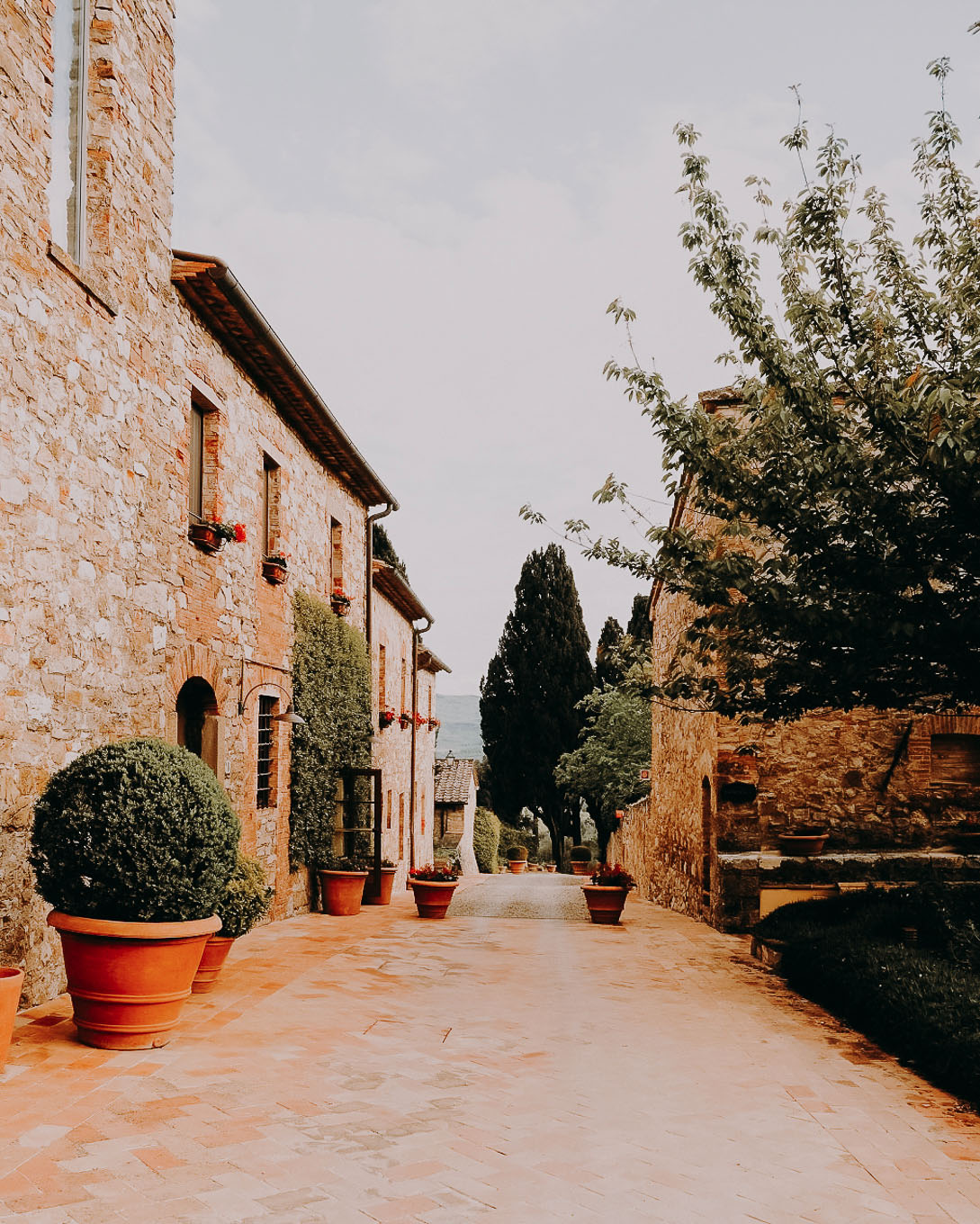
The medieval castle at the centre of the estate was built in 998 AD — in a period when the political landscape of Tuscany was still organised around fortified hilltop positions rather than the merchant republics of Florence and Siena that would emerge in the following centuries. Its owners chose this specific hilltop for its commanding views across the region — the panoramic logic that every military and commercial power in this part of Italy has always understood. During the nineteenth century, the noble Bargagli family cultivated the lands and expanded the estate, giving it the scale and the agricultural identity — the vineyards, the olive groves, the ordered agricultural landscape — that Belmond subsequently restored and extended. The restoration used traditional methods and reclaimed materials: wood beams, ceramic tiles, and terracotta found throughout the estate were incorporated into the rebuilt interiors, preserving the physical continuity between the medieval structure and the contemporary hotel that now inhabits it. The Etruscan artefacts excavated from the grounds during this process are now on display in the hotel — making Castello di Casole the only wedding venue in this guide that functions simultaneously as a hotel and an archaeological museum.
Three Ceremony Spaces: The Chapel, the Amphitheatre, and the Wine Cellar
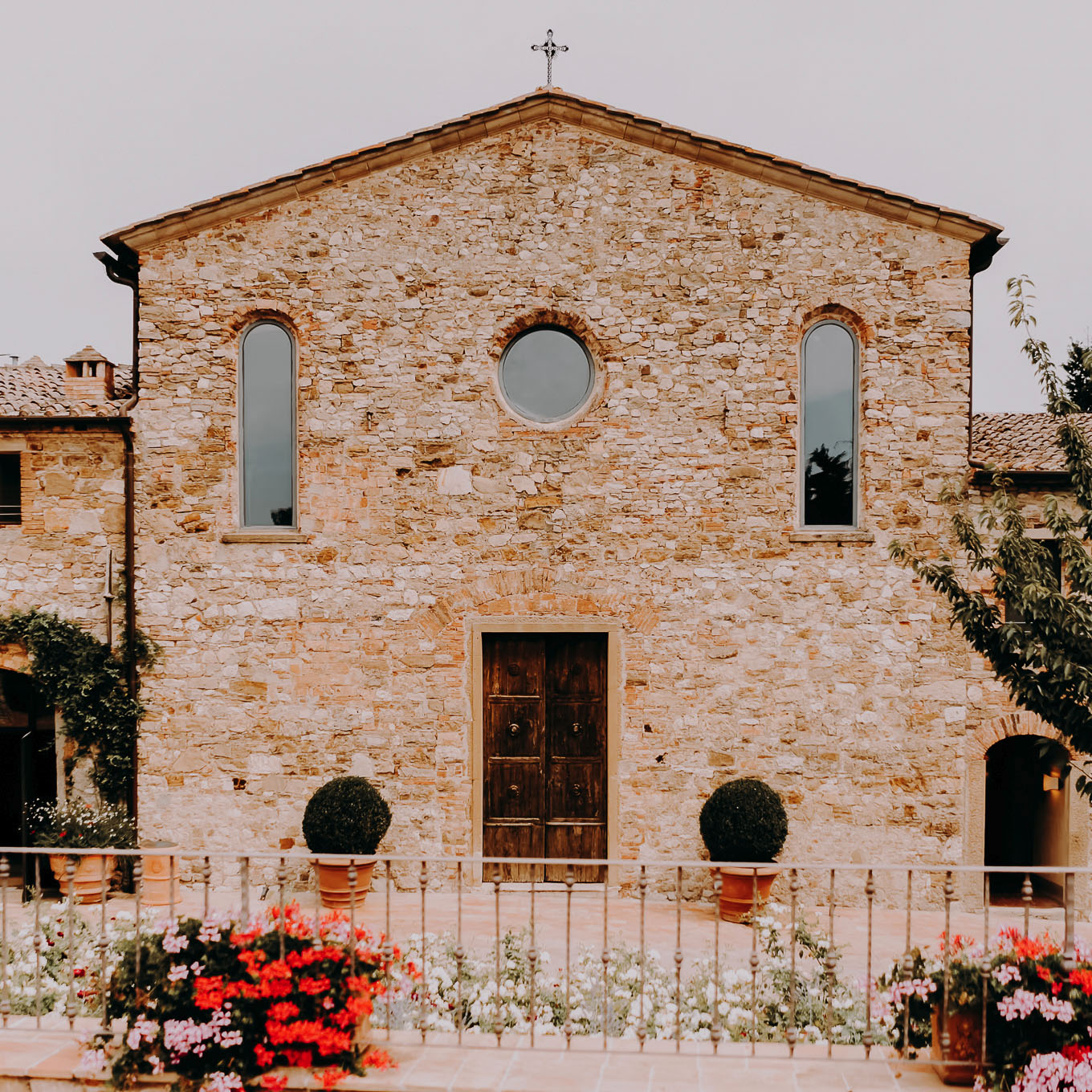
Castello di Casole offers three distinct ceremony and event venues across the estate, each with an entirely different character. The San Tommaso Chapel — fully restored, described by Belmond as a stunning venue perfect for intimate ceremonies — accommodates up to thirty guests. For couples who want the concentration and the spiritual weight of a small, consecrated space, the chapel gives the ceremony its most classically Tuscan and most architecturally intimate setting. The Etruscan amphitheatre is the outdoor alternative: an open-air gathering space that is one of the oldest structures on the estate, where the particular quality of sitting in a space that was built for communal assembly before the medieval period gives a ceremony a historical depth that no amount of floral architecture or lighting design could manufacture. The wine cellar completes the trio: an indoor venue in the agricultural infrastructure of the estate, with the particular enclosed atmosphere that a working cellar always carries and the proximity of the wine barrels that visually connect the celebration to the production identity of the property.
The Ulpaia Wines, the Olive Oil, and the Rose
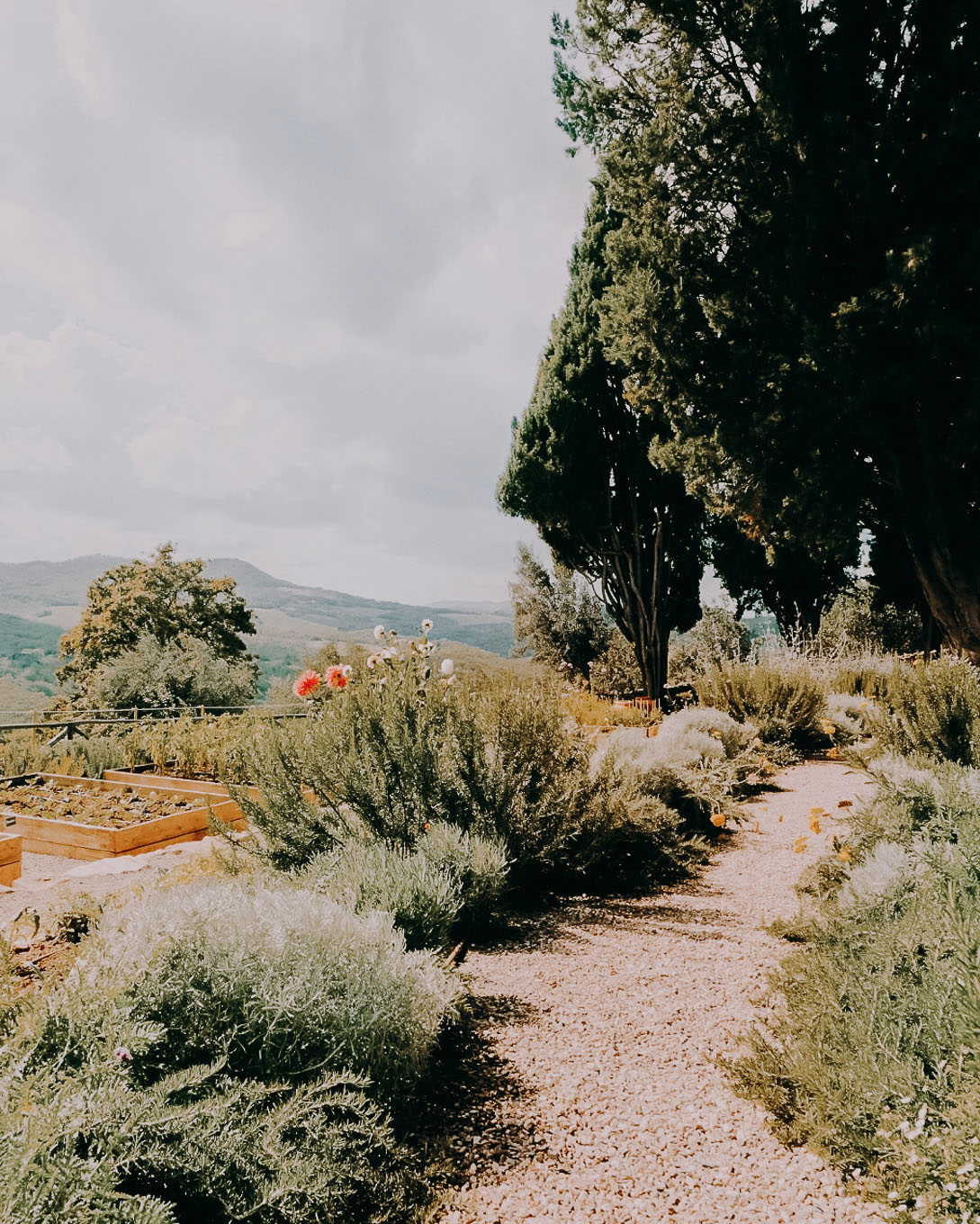
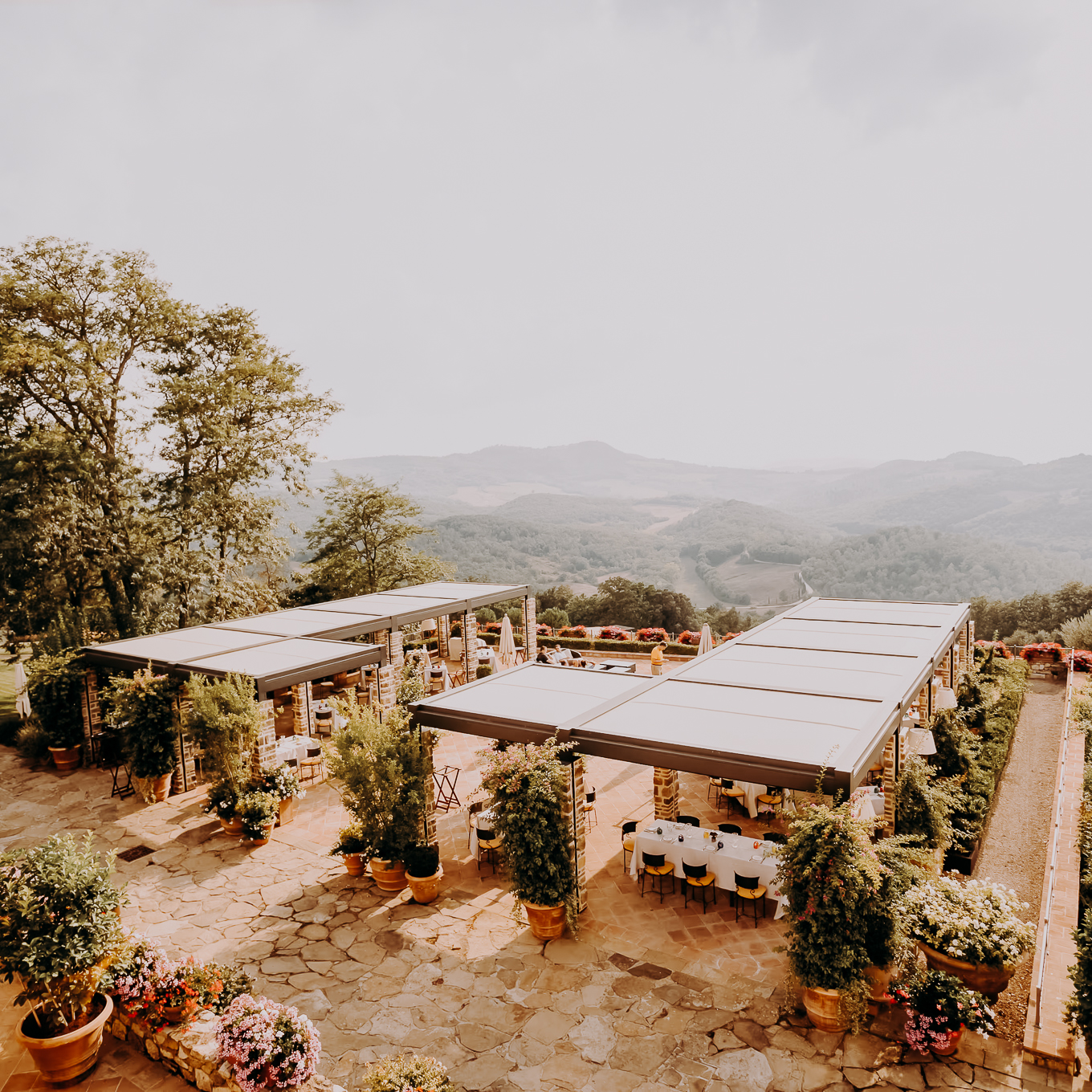
The agricultural identity of Castello di Casole is not decorative but operational. Twenty-five acres of organic vineyards in thirteen distinct plots — planted with Cabernet, Sangiovese, Merlot, and Petit Verdot — produce the estate's own private-label wines under the name Ulpaia. Thirty acres of olive groves produce 2,500 bottles of private-label extra virgin olive oil annually, harvested each autumn and used exclusively at the estate with a dedicated allotment for owners and guests. The constraint is deliberate and specific: 2,500 bottles is not a commercial quantity. It is the quantity a thirty-acre grove produces when farmed for quality rather than volume, and the estate's decision to keep it exclusive rather than expanding production to a market scale is a direct statement about the priority of the guest experience over revenue. The estate also produces its own honey on site. And in the rose garden, among the cultivars and species planted on the grounds, there is one that belongs specifically to this property: La Rosa Castello di Casole, a cultivar created in partnership with the rose house Rose Barni, existing nowhere else in the world.
Thirty-Nine Rooms, Two Villas, and the Limonaia Suites
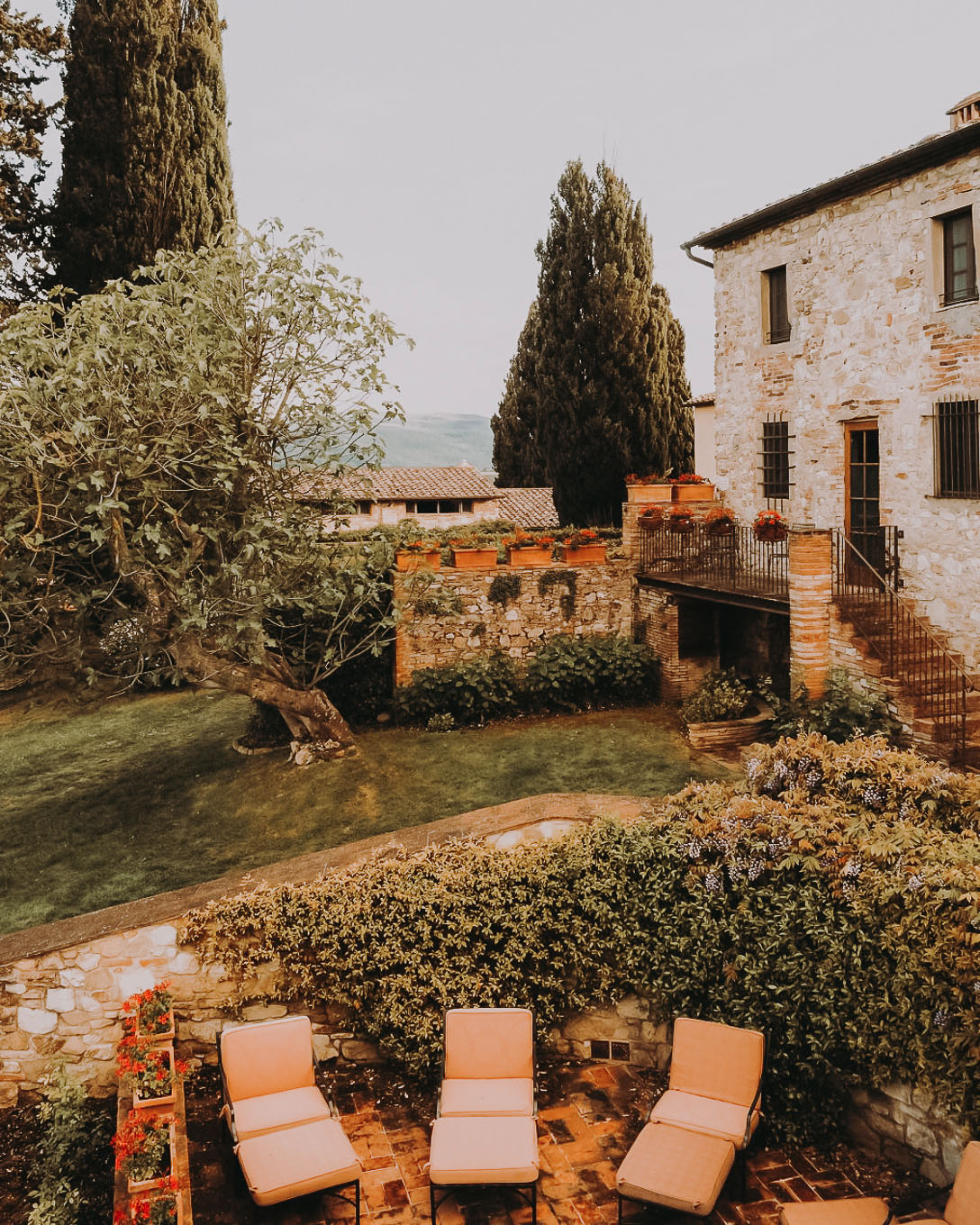
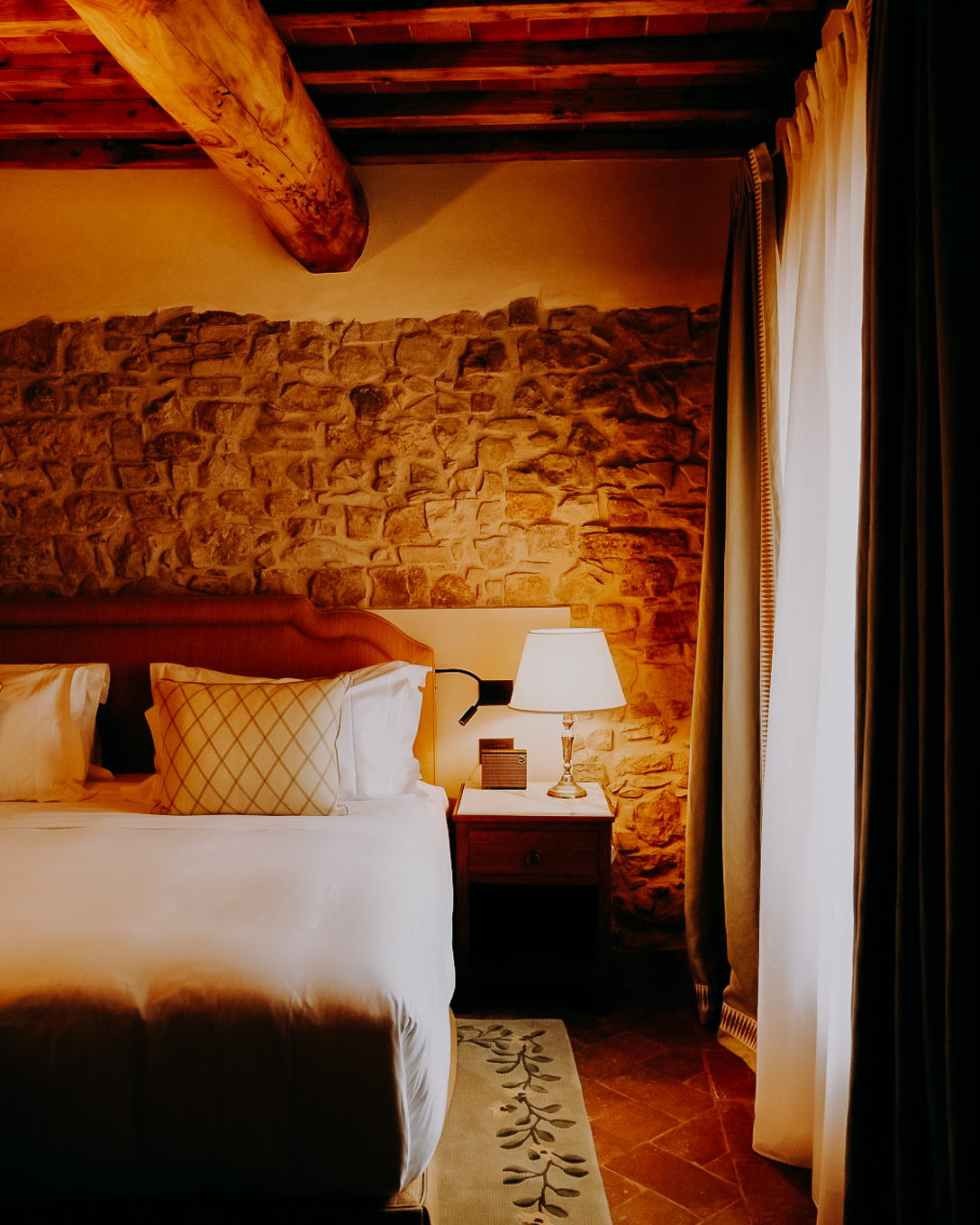
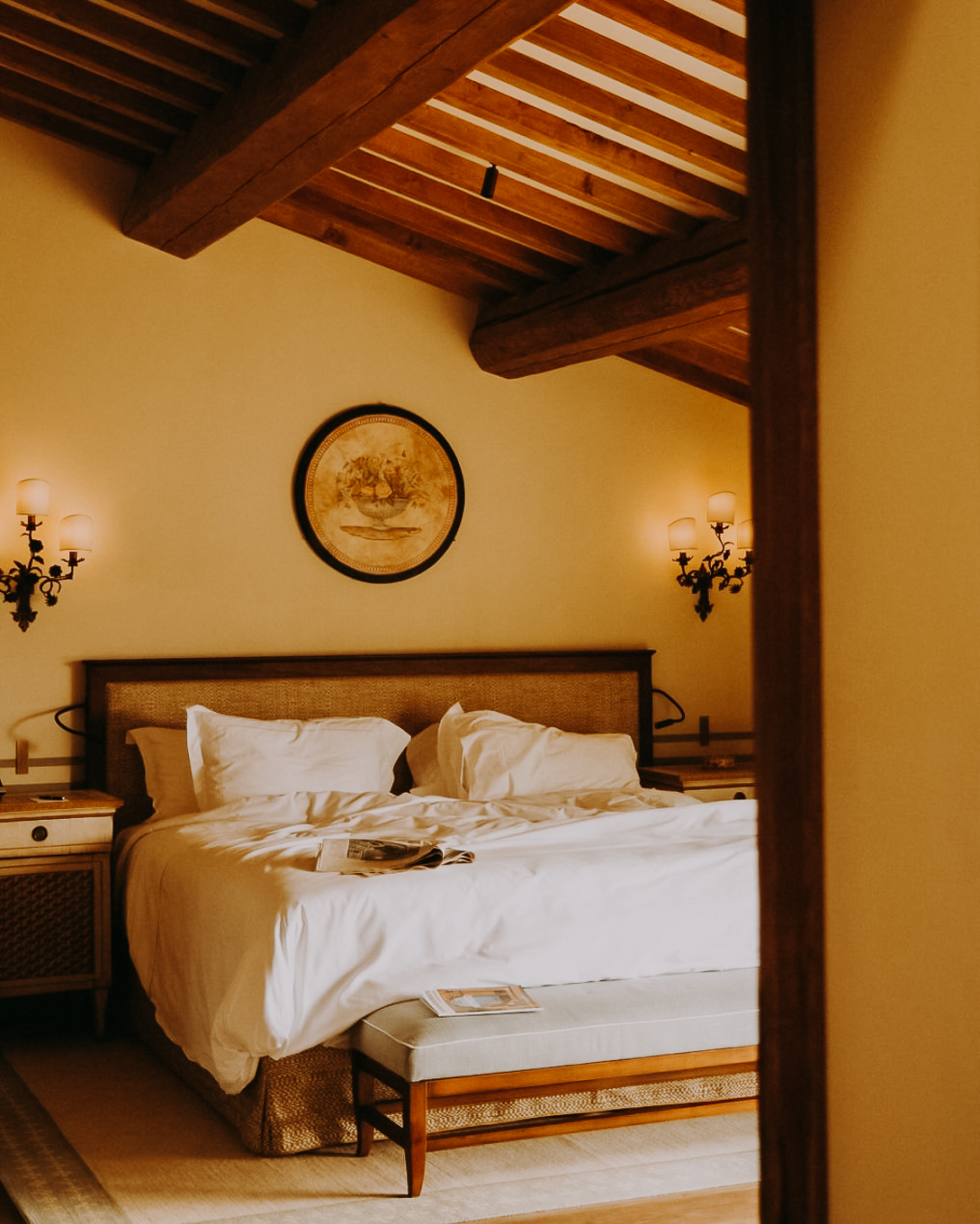
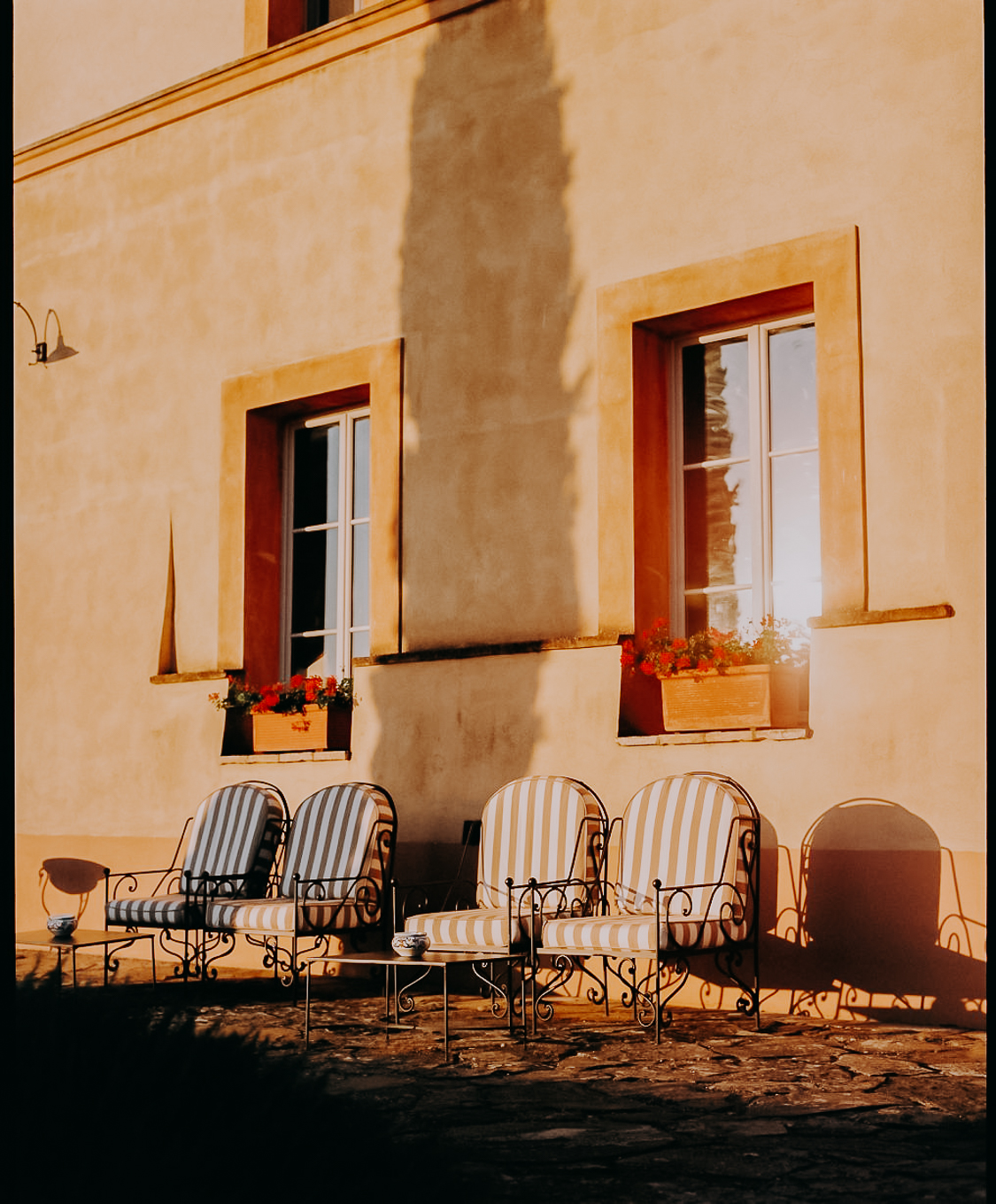
The accommodation at Castello di Casole comprises thirty-nine rooms and suites, plus two villas. Among the suites, the five Limonaia Suites occupy the converted lemon house — the agricultural structure that once sheltered citrus trees through the Sienese winters, now transformed into accommodation filled with natural light from the large windows that gave the original structure its thermal character, each suite opening onto a private garden terrace. The Etruria Suite category offers one-bedroom apartments with expansive outdoor terraces and views — the blend of rustic and contemporary that defines the estate's design approach throughout. The restoration across all spaces used reclaimed materials, preserving the physical evidence of what the buildings were before they became hotel rooms: the terracotta, the wood beams, the stone that communicates with every surface it is part of.
Ristorante Tosca, Bar Visconti, and the Essere Spa
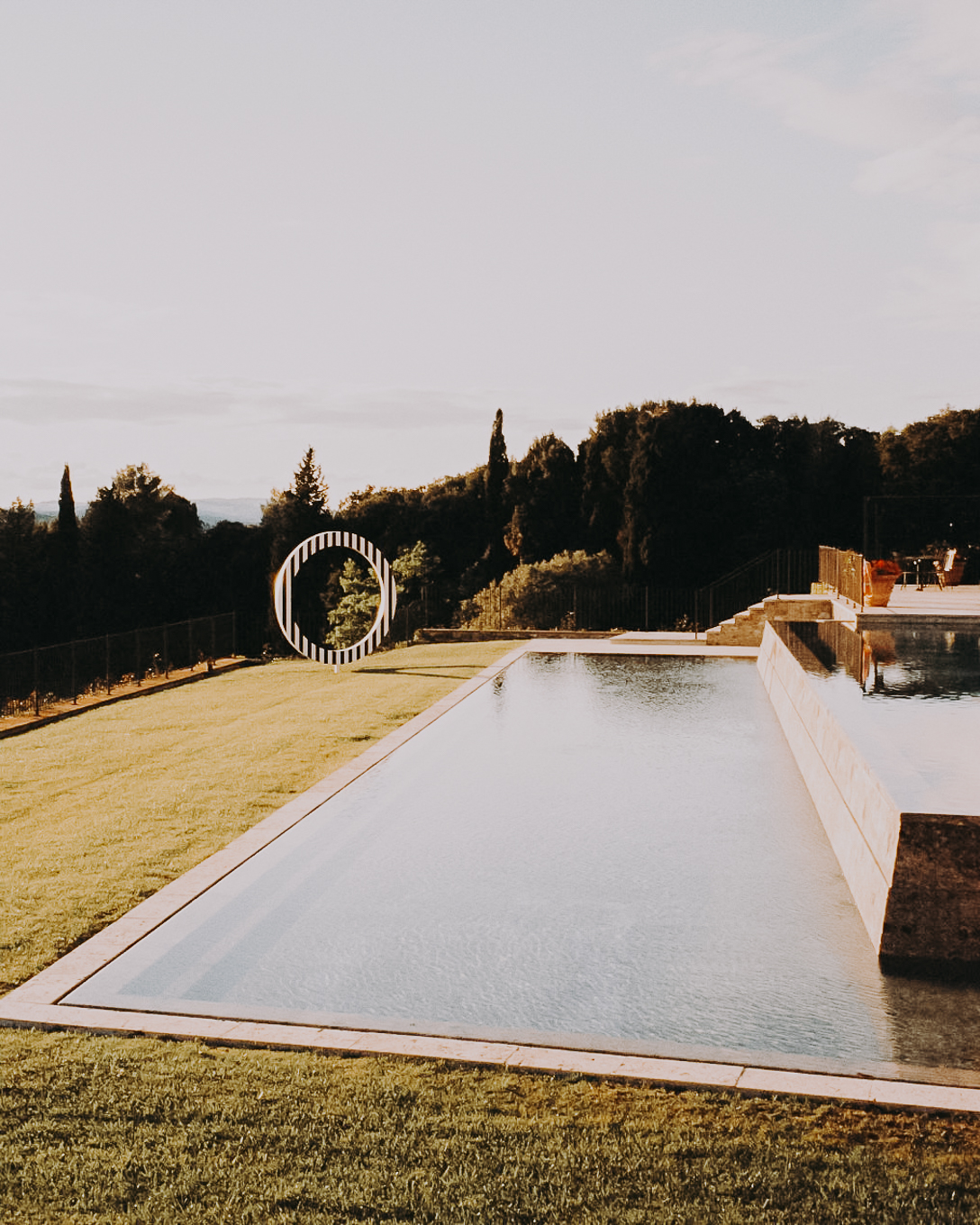
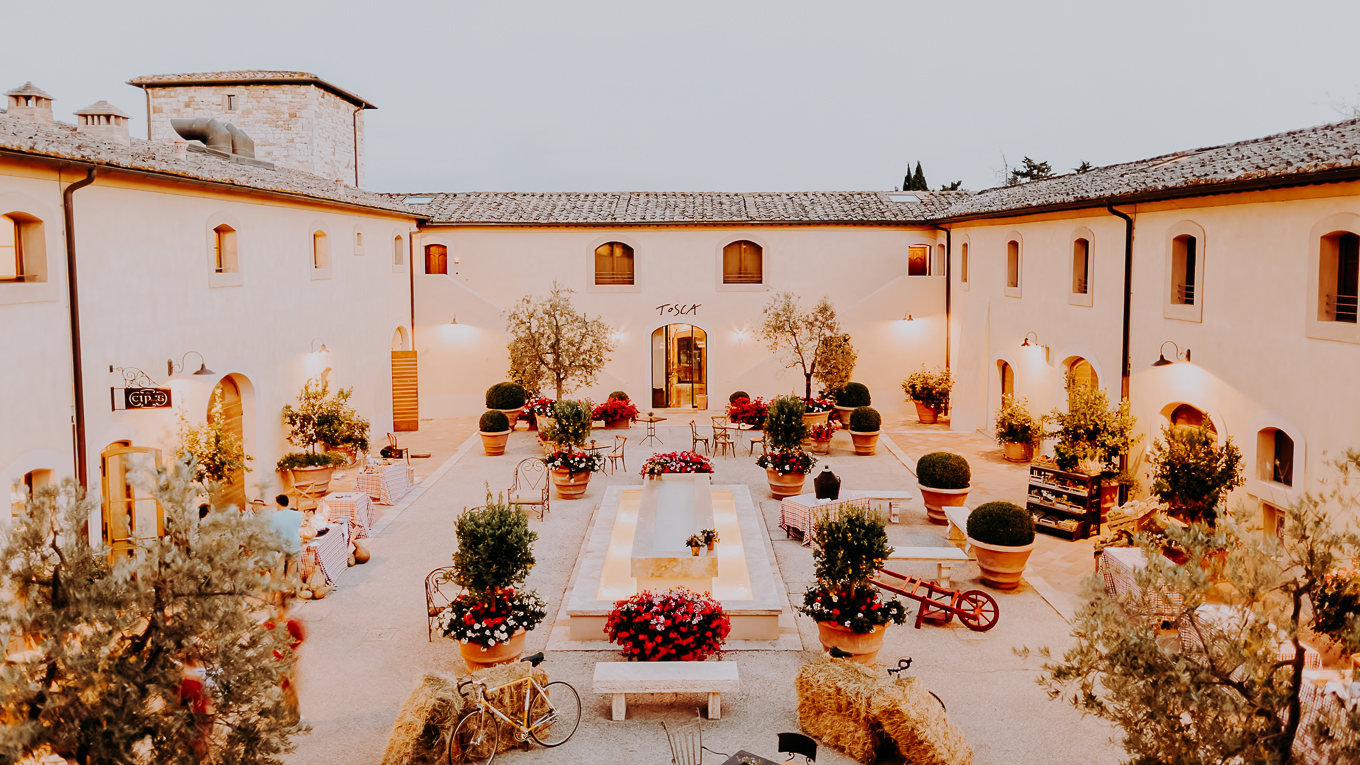
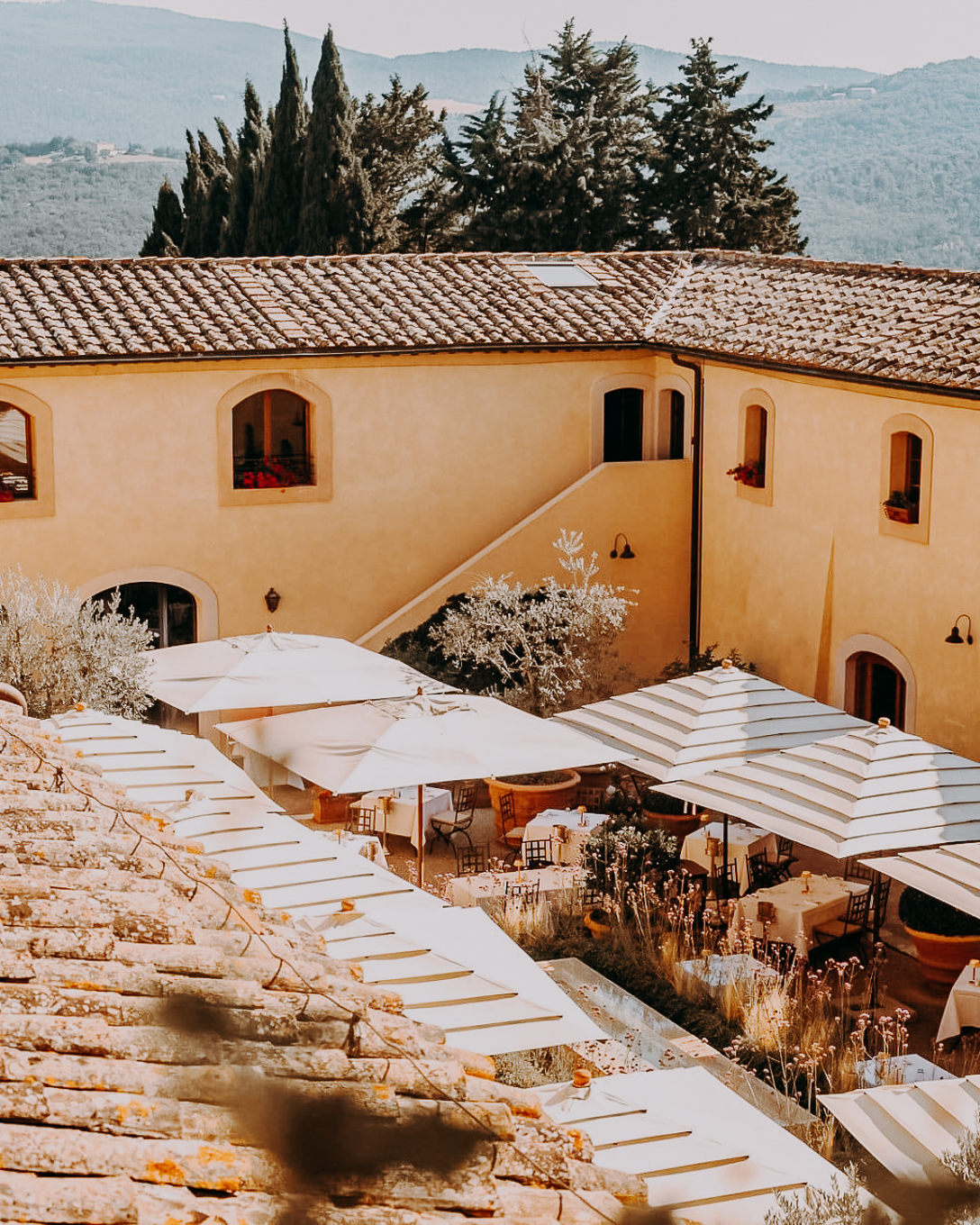
The restaurant at Castello di Casole is called Tosca — a sophisticated and yet relaxed dining room decorated with vibrant Italian textiles and sparkling Murano chandeliers, where old-world Tuscan favourites are served with a contemporary interpretation. The bar is named Bar Visconti, with elegant marble details and frescoed walls. The Essere Spa sits at the heart of the hilltop estate, with barrel-vaulted ceilings adding dramatic architectural presence to a treatment programme that draws on local grapes and rosemary — materials grown within the estate grounds — in a specifically Sienese wellness identity that differentiates this spa from the generically luxurious wellness centres of international resort hotels. The infinity pool at the edge of the hilltop is heated and overlooks the vistas of the Sienese countryside in all directions.
How many wedding venues have an Etruscan amphitheatre, a medieval castle, an archaeological collection, and a rose cultivar bred specifically for the property?
The honest answer is: this one. Photographing inside that combination — from the amphitheatre where ceremonies go back further than any other ceremony space in this guide, to the wine cellar where the Ulpaia barrels are resting, to the rose garden with its one-of-a-kind cultivar — is the kind of work that requires very little invention.
How Francesco worksGetting to Castello di Casole: Practical Information for International Couples
Castello di Casole is located at Località Querceto, 53031 Casole d'Elsa, in the province of Siena. Florence Airport (Peretola) is 67 kilometres away, approximately one hour by car. Siena is accessible to the south, as are the Etruscan city of Volterra and the medieval tower town of San Gimignano, both of which make exceptional day excursions for guests arriving for a multi-day wedding celebration. The estate is also recognised by Provincia di Siena as a Model Game Reserve, which means its fifty-five acres of grounds include managed wildlife habitat — a quality of natural environment that the more densely cultivated wine estates of the Chianti Classico cannot offer. Activities available for guests and wedding parties include truffle hunting, cooking classes, biking across the estate's trails, stargazing from the hilltop, and tennis on courts managed in partnership with LUX Tennis.
Castello di Casole: Questions From Couples Planning a Luxury Destination Wedding in Tuscany
How does the legal wedding process work for foreign couples getting married at Castello di Casole?
Foreign nationals wishing to marry legally in Italy must begin the documentation process through the Italian consulate in their country of residence several months before the wedding date, with requirements varying by nationality. Belmond's dedicated event planning team manages the full organisation of weddings at Castello di Casole and can coordinate with local authorities regarding civil ceremony requirements. Whether the legal formalities take place on the estate or require a visit to the Comune di Casole d'Elsa is something to confirm directly with the Belmond events team. Belmond also maintains a dedicated event planning portal (belmondevents.com) for event professionals and planners coordinating destination weddings at the property.
What is the capacity of the San Tommaso Chapel for a wedding ceremony?
The San Tommaso Chapel accommodates up to thirty guests for intimate ceremonies. It is fully restored and described by Belmond as perfect for this scale of celebration. For larger guest lists, the Etruscan amphitheatre provides the outdoor open-air ceremony setting, and the wine cellar provides an indoor alternative, both without the capacity constraints of the chapel. The three venues can be used individually or in combination to serve different moments of the wedding day — ceremony, aperitivo, and dinner — each in a different historical and architectural environment.
What is the Ulpaia wine and can it be served at the wedding dinner?
Ulpaia is the private-label wine produced at Castello di Casole from twenty-five acres of organic vineyards in thirteen distinct plots, planted with Cabernet, Sangiovese, Merlot, and Petit Verdot. The wine is made exclusively from the estate's own grapes and is served at the hotel's restaurant and bar. For a wedding dinner where the wine comes from the vineyards visible from the terrace, serving Ulpaia gives the celebration a direct agricultural connection to the specific land and microclimate of this Sienese hilltop. Wine selection for wedding events is coordinated through the Belmond events team.
What is La Rosa Castello di Casole and where can it be seen on the estate?
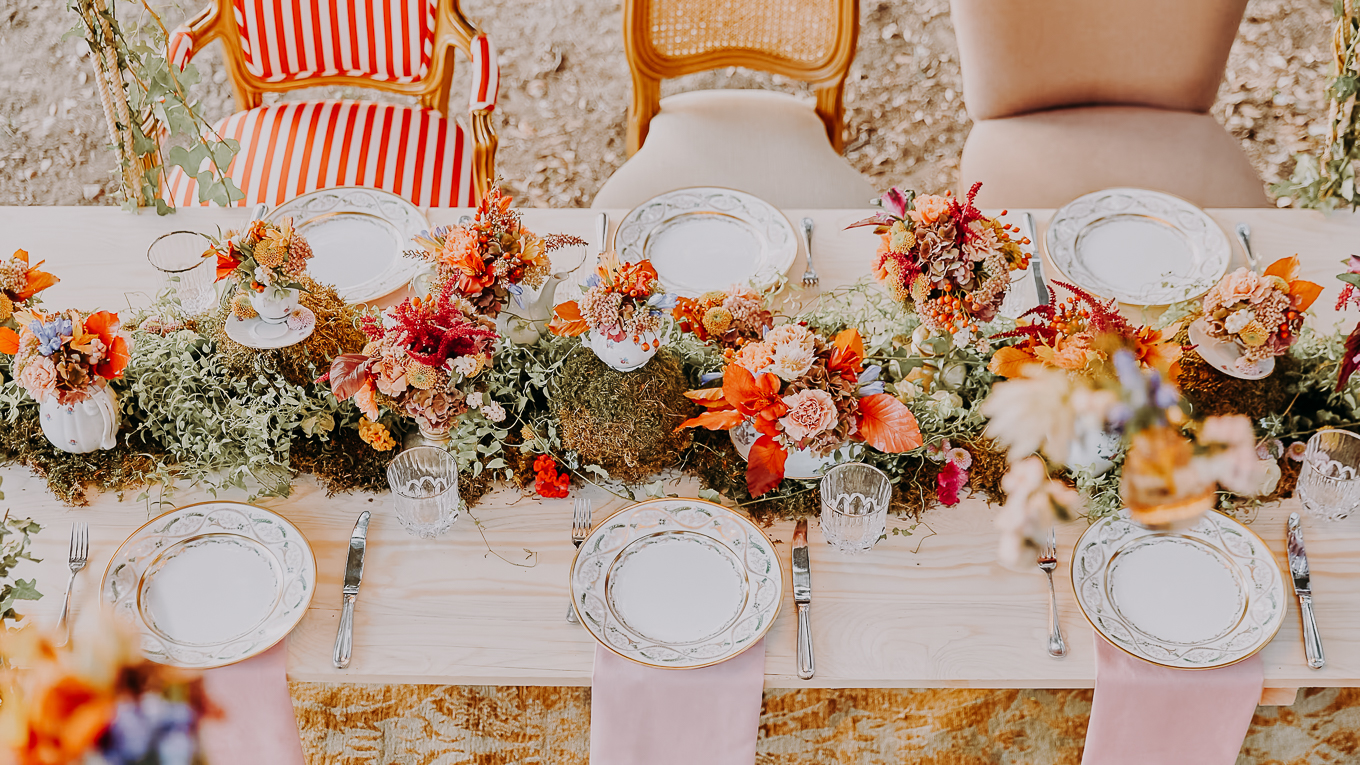
La Rosa Castello di Casole is a rose cultivar created specifically for the estate in partnership with Rose Barni — one of Italy's most respected rose breeding houses. It grows in the rose garden of the estate and does not exist anywhere else in the world. For a wedding where floral arrangements can incorporate a rose that belongs exclusively to the property, the cultivar gives the decoration a site-specific identity that no florist's catalogue could replicate. The rose garden itself is described by Belmond as a magical spot for meandering and daydreaming — a natural setting for the kind of unhurried portrait session that makes the best images of the day.
What activities are available for the wedding party during a multi-day stay at the estate?
The estate offers a comprehensive activity programme for guests: truffle hunting in the surrounding Sienese countryside, cooking classes, biking across the estate's trails and beyond, stargazing from the hilltop (the Sienese hills, well away from major urban light pollution, offer exceptional night sky conditions), and tennis on courts managed with LUX Tennis. The Essere Spa provides treatments infused with local grapes and rosemary. The estate's fifty-five acres function as a Model Game Reserve, recognised by Provincia di Siena, giving guests a natural environment for walking and wildlife observation that goes beyond the manicured garden experience of smaller properties.