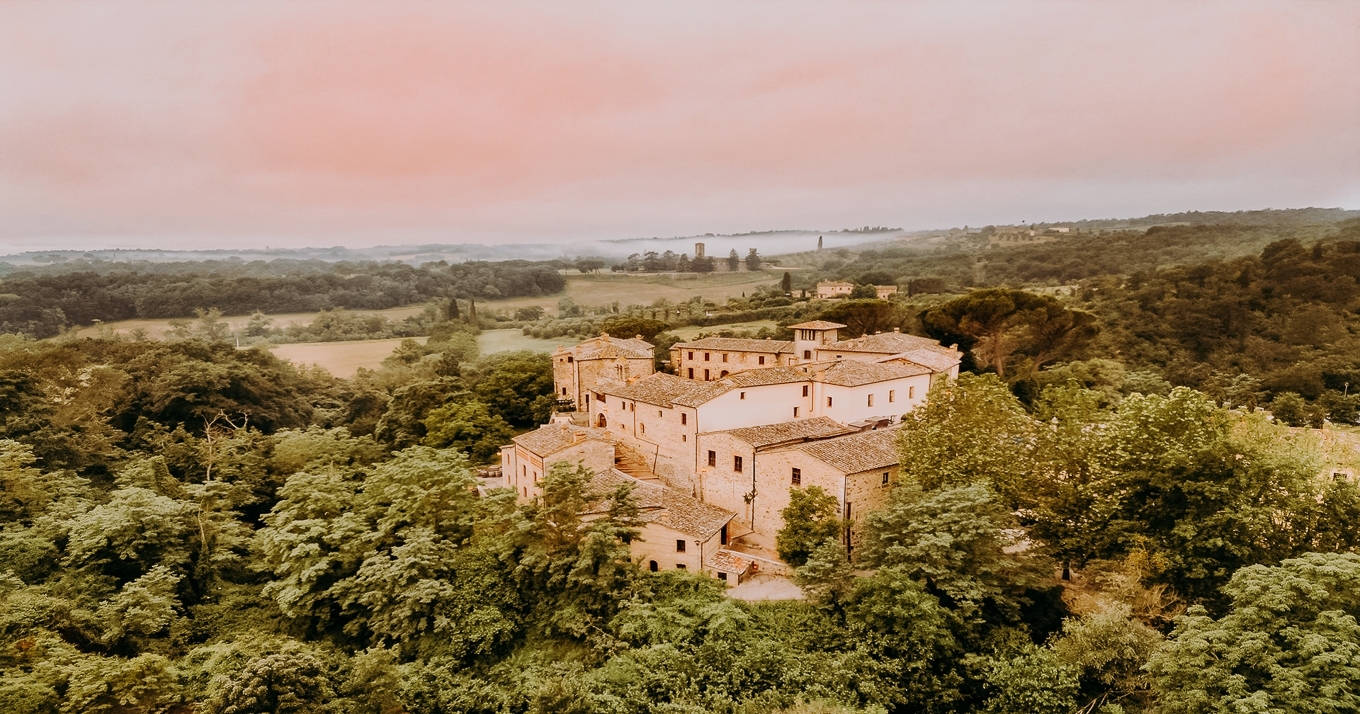
Castel Monastero: A Destination Wedding Inside a Medieval Hamlet Near Siena
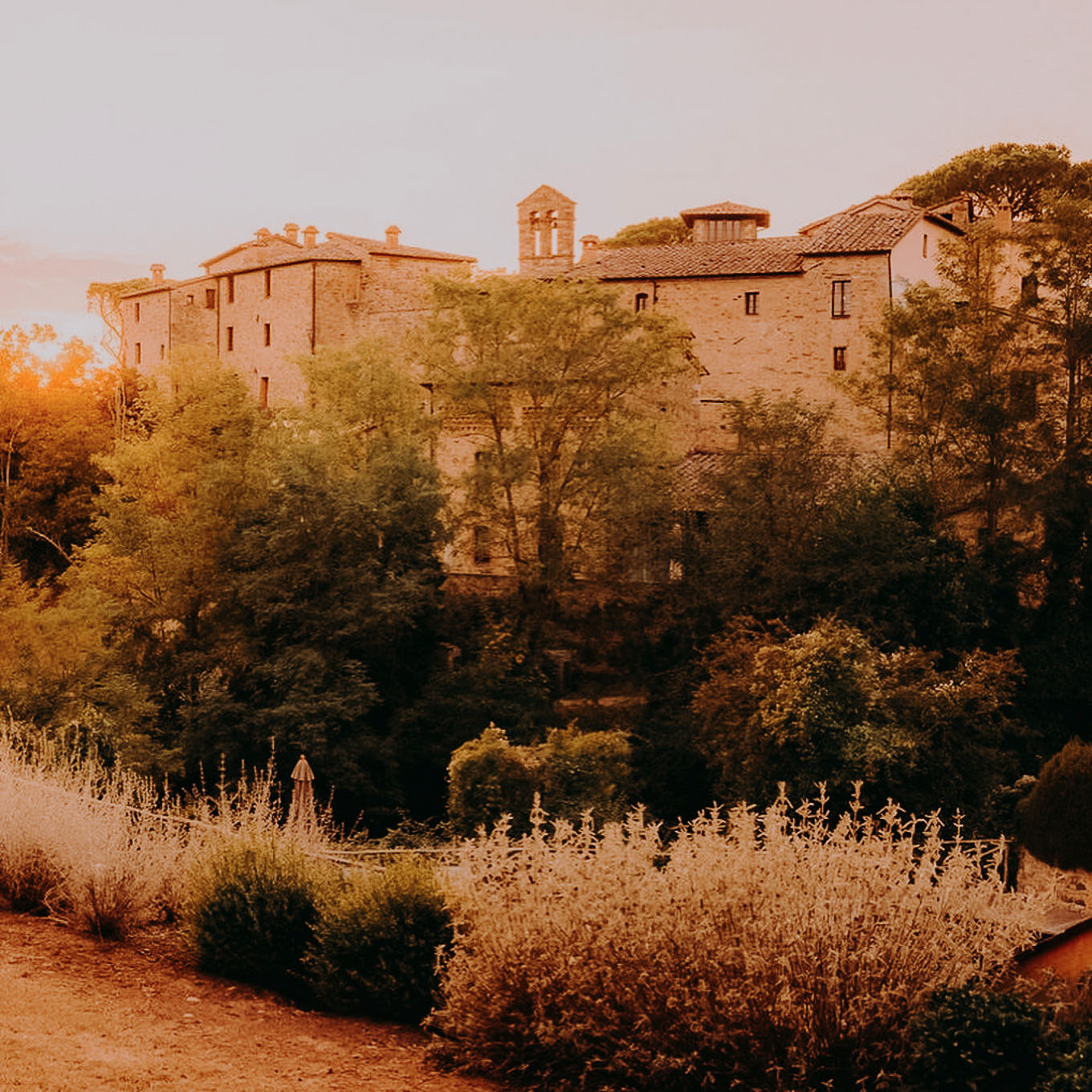
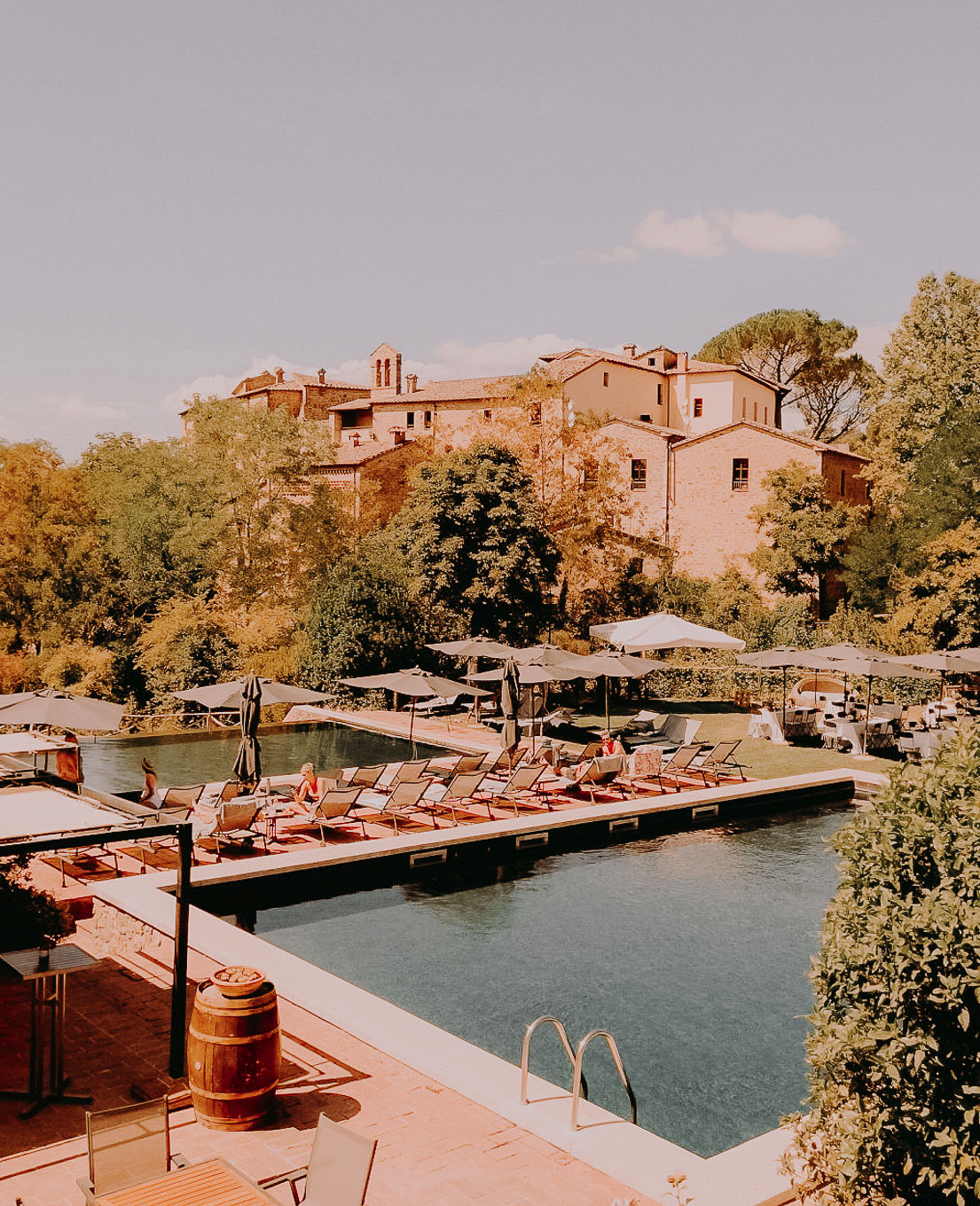
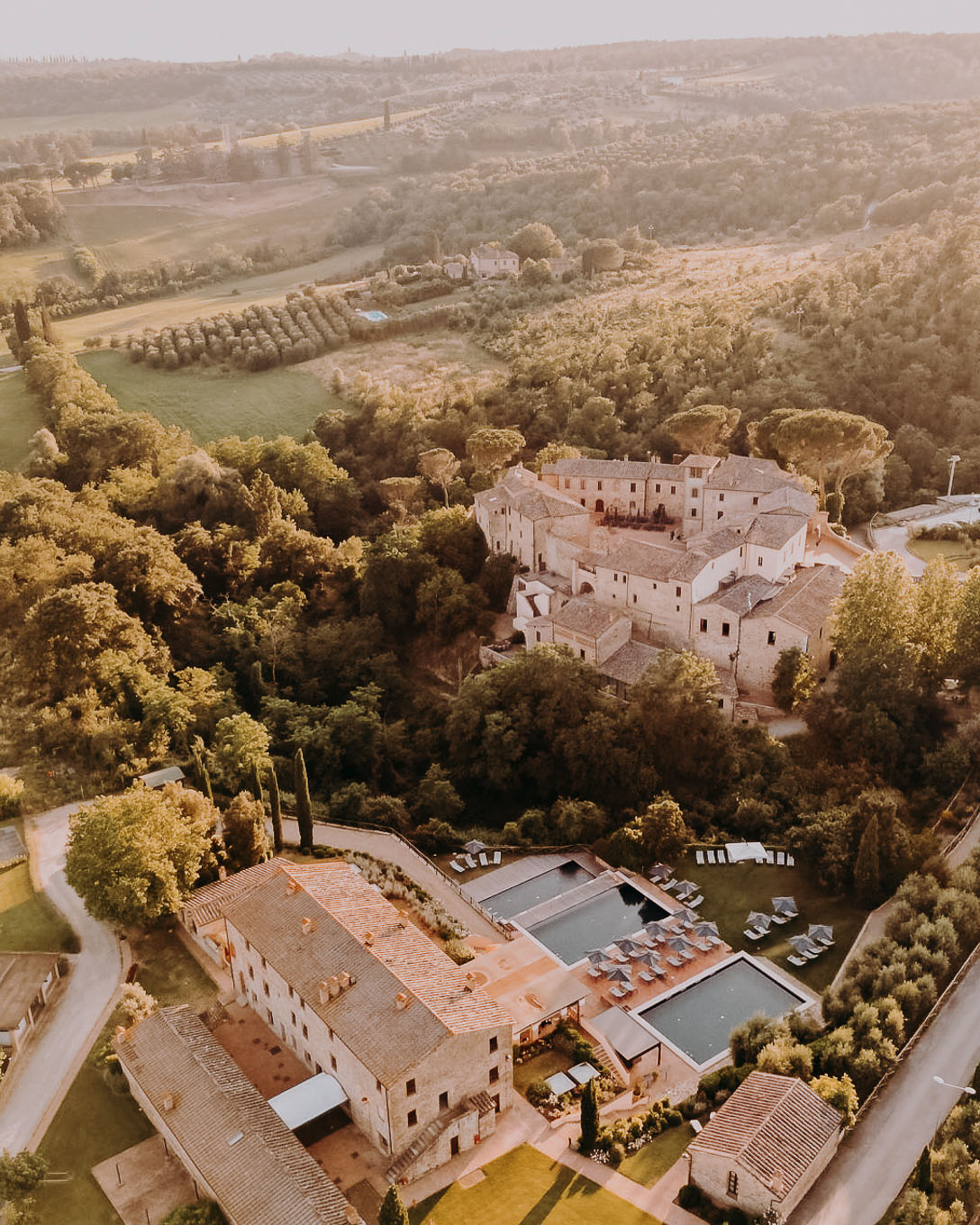
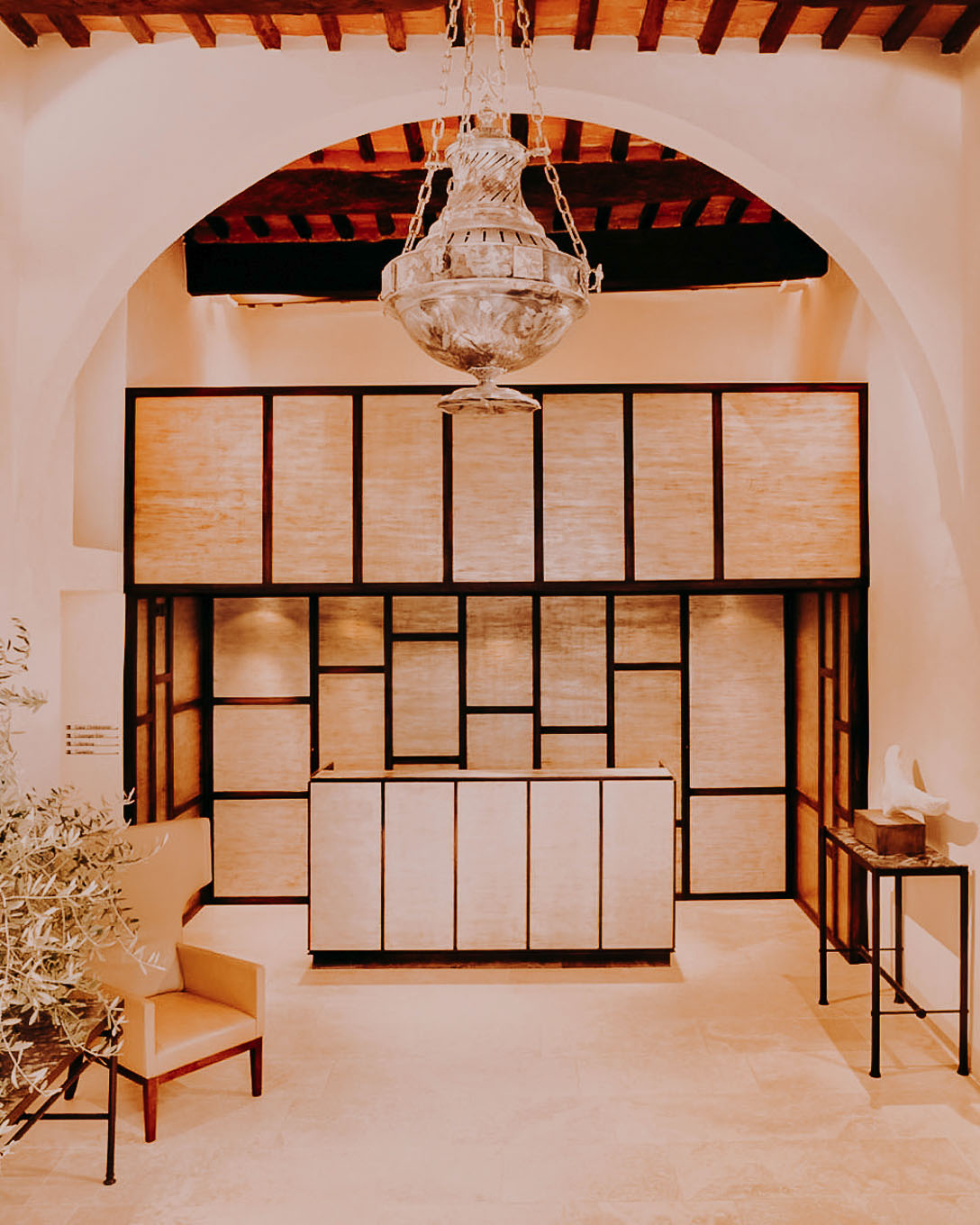
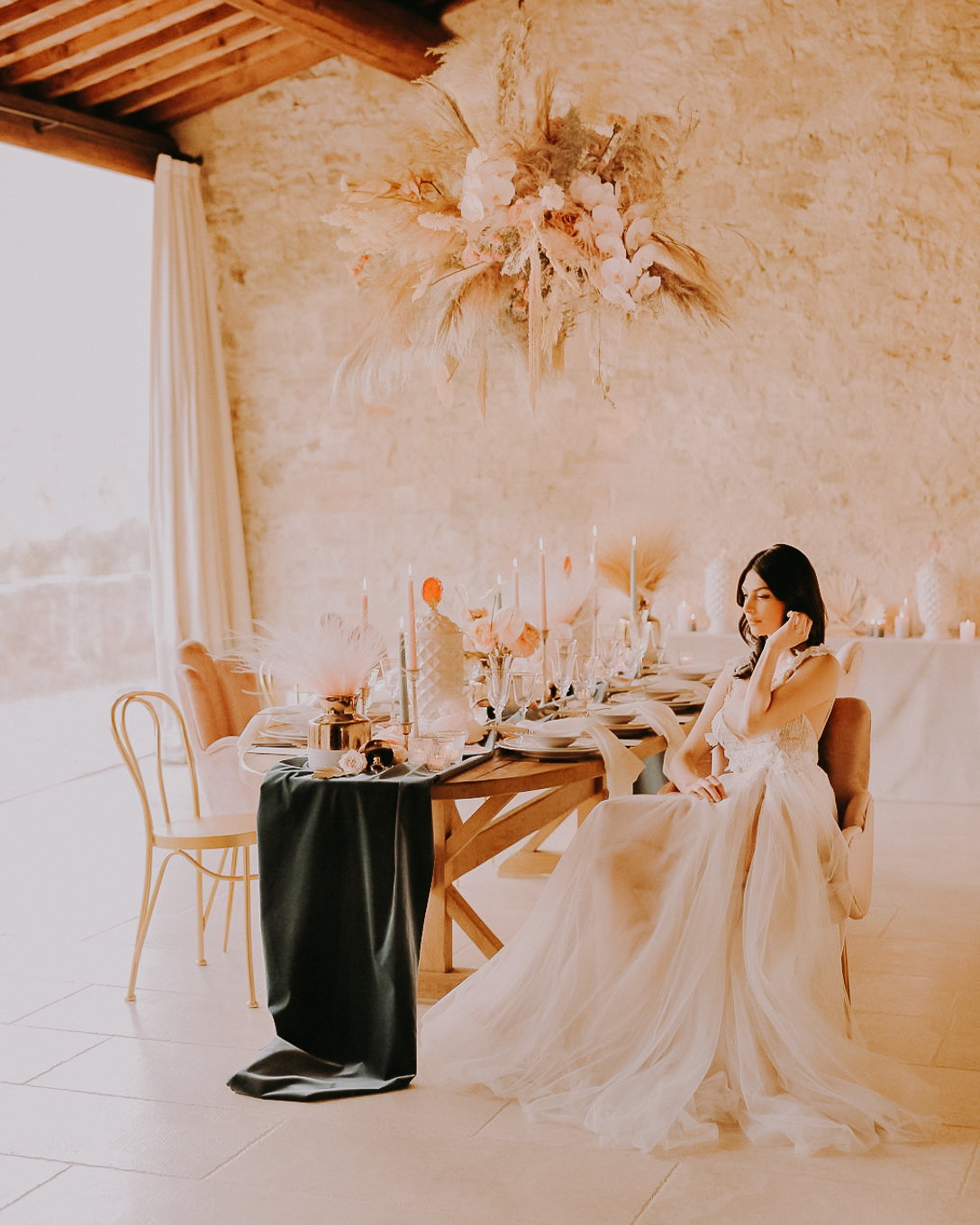
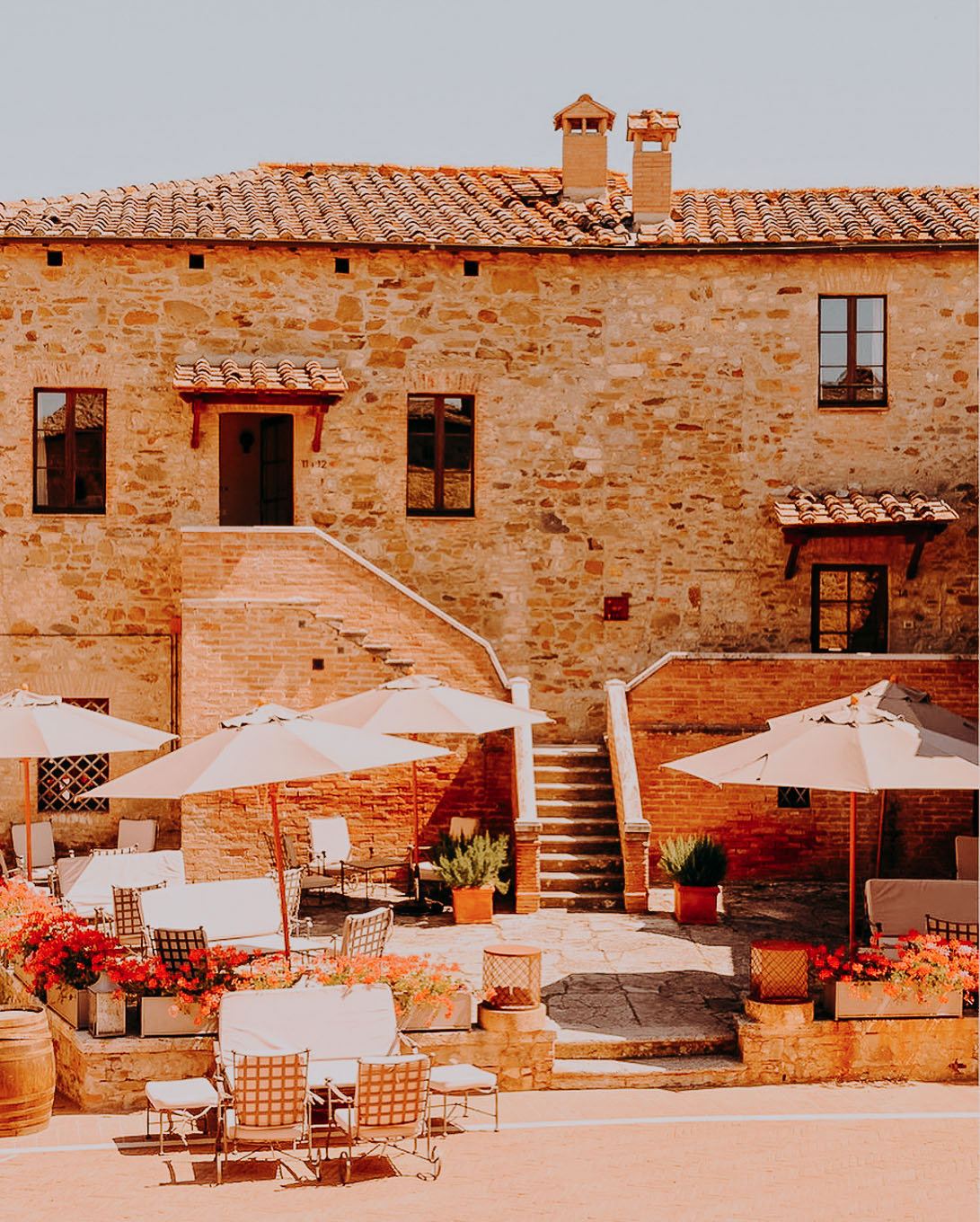
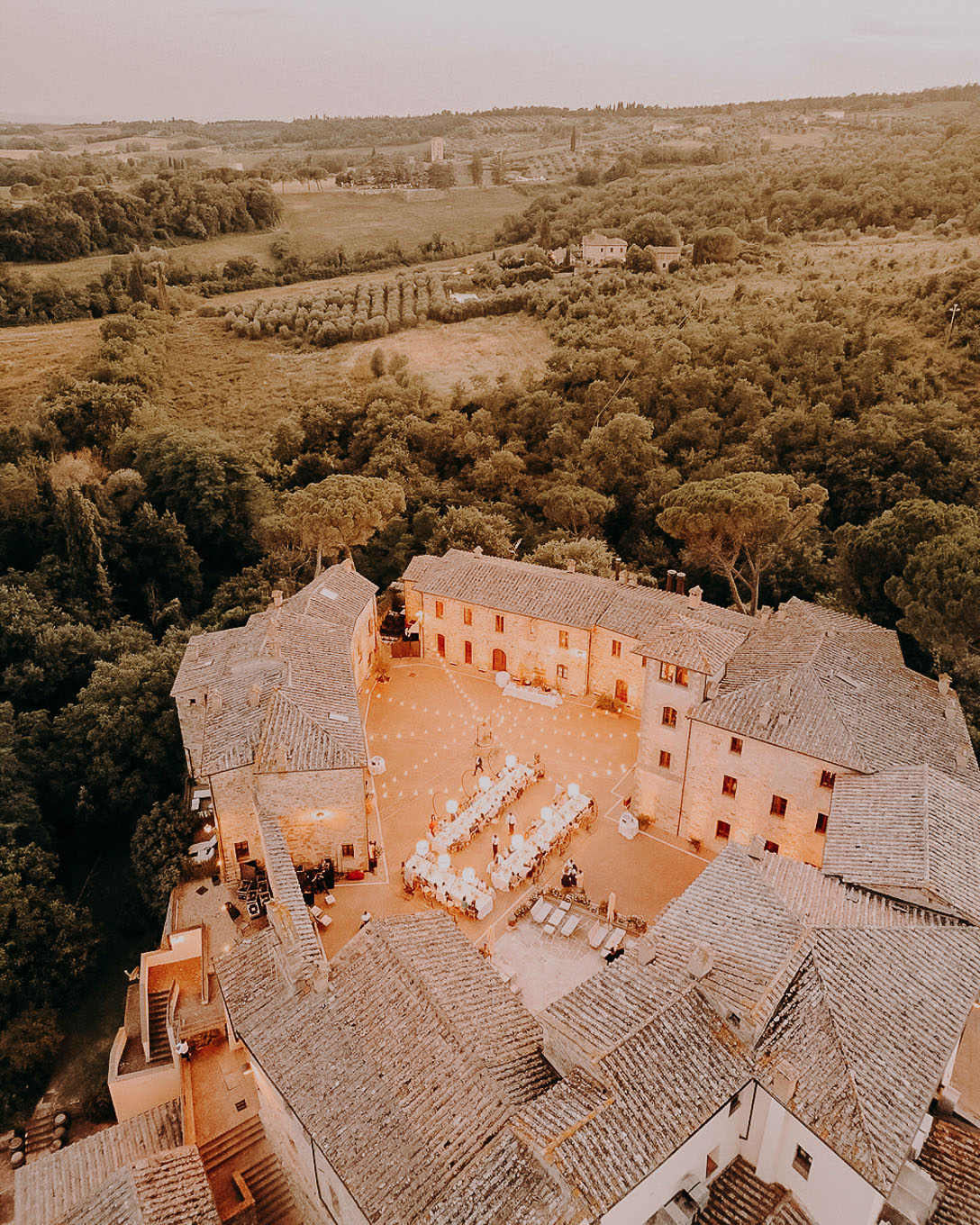
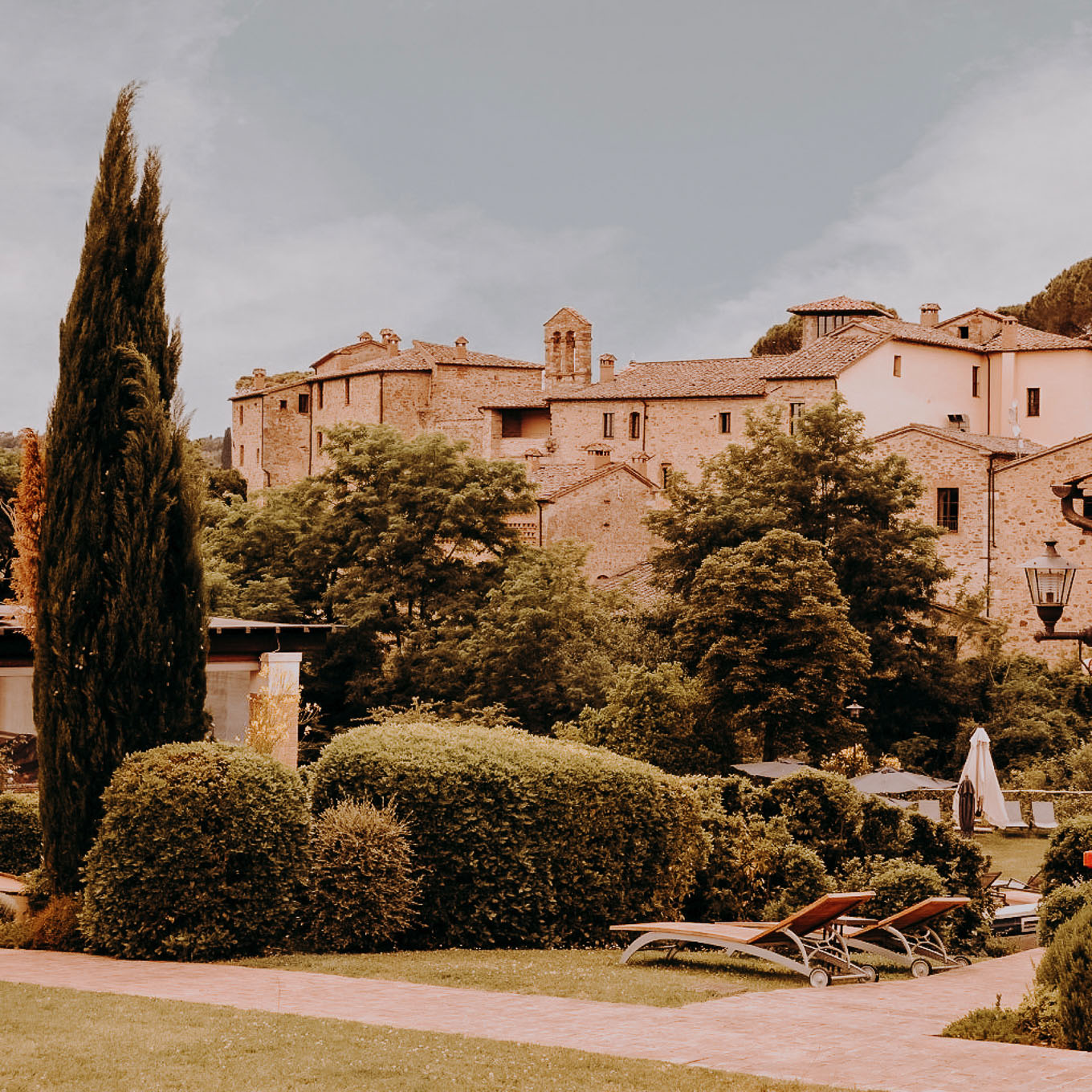
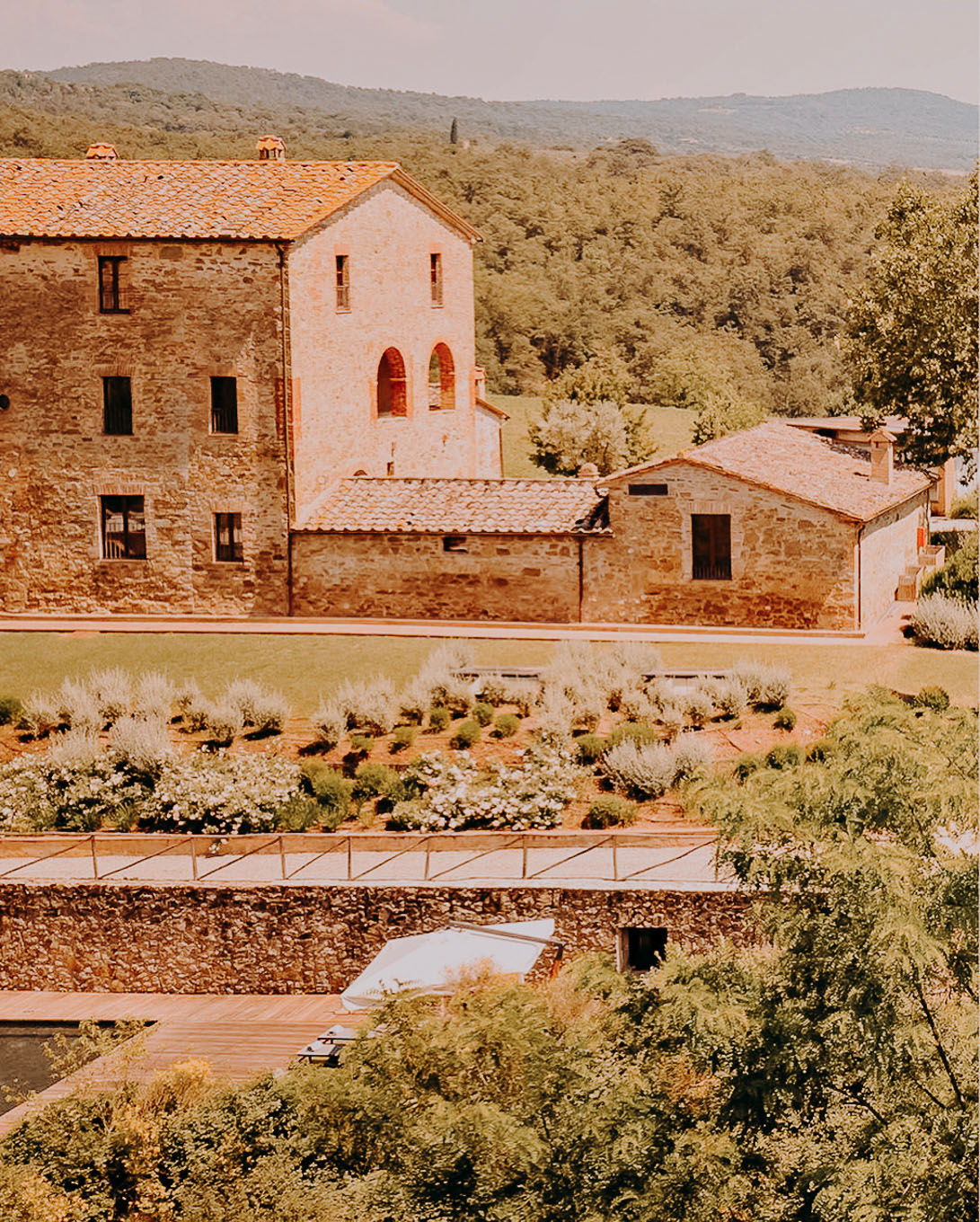
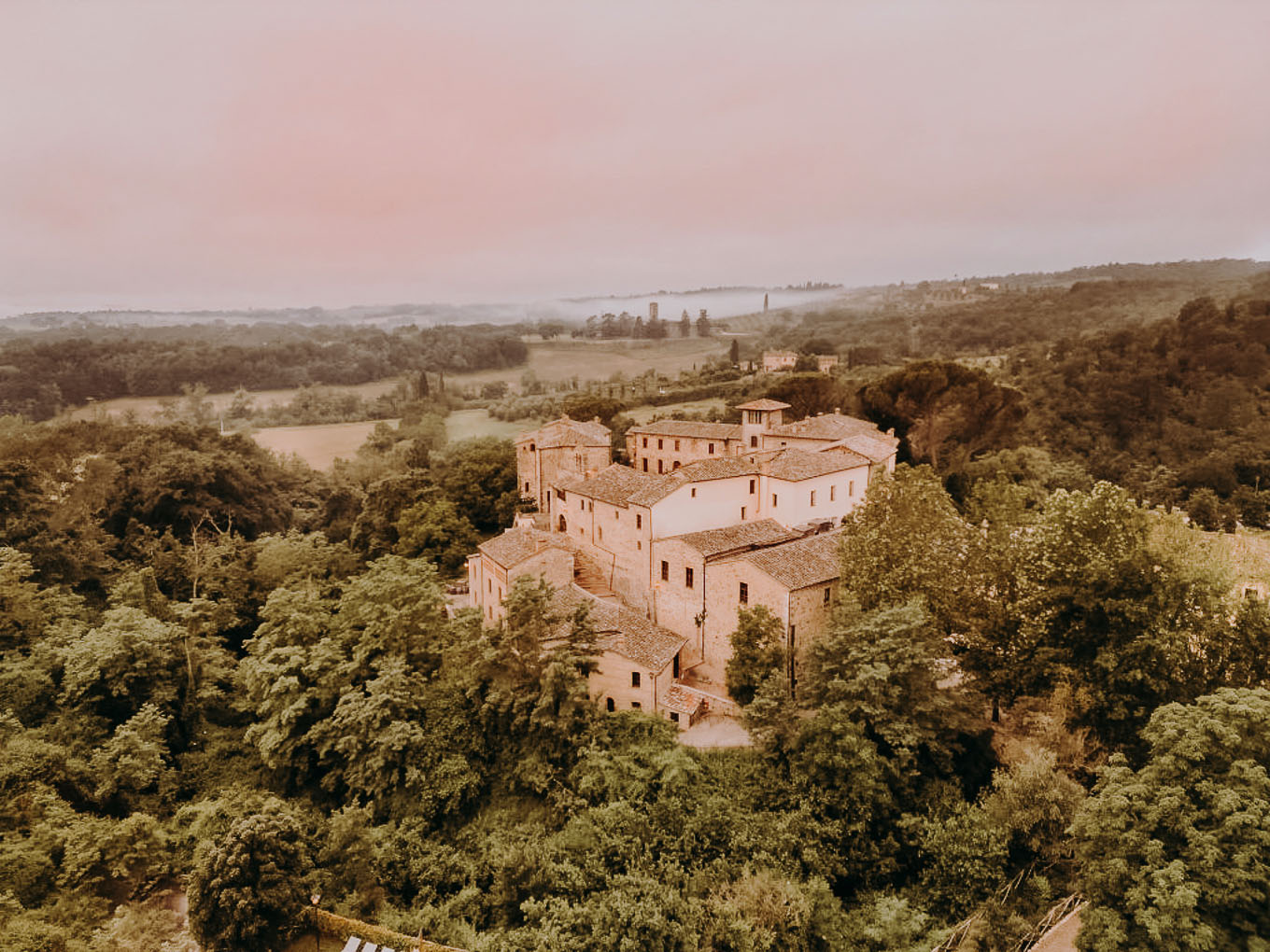
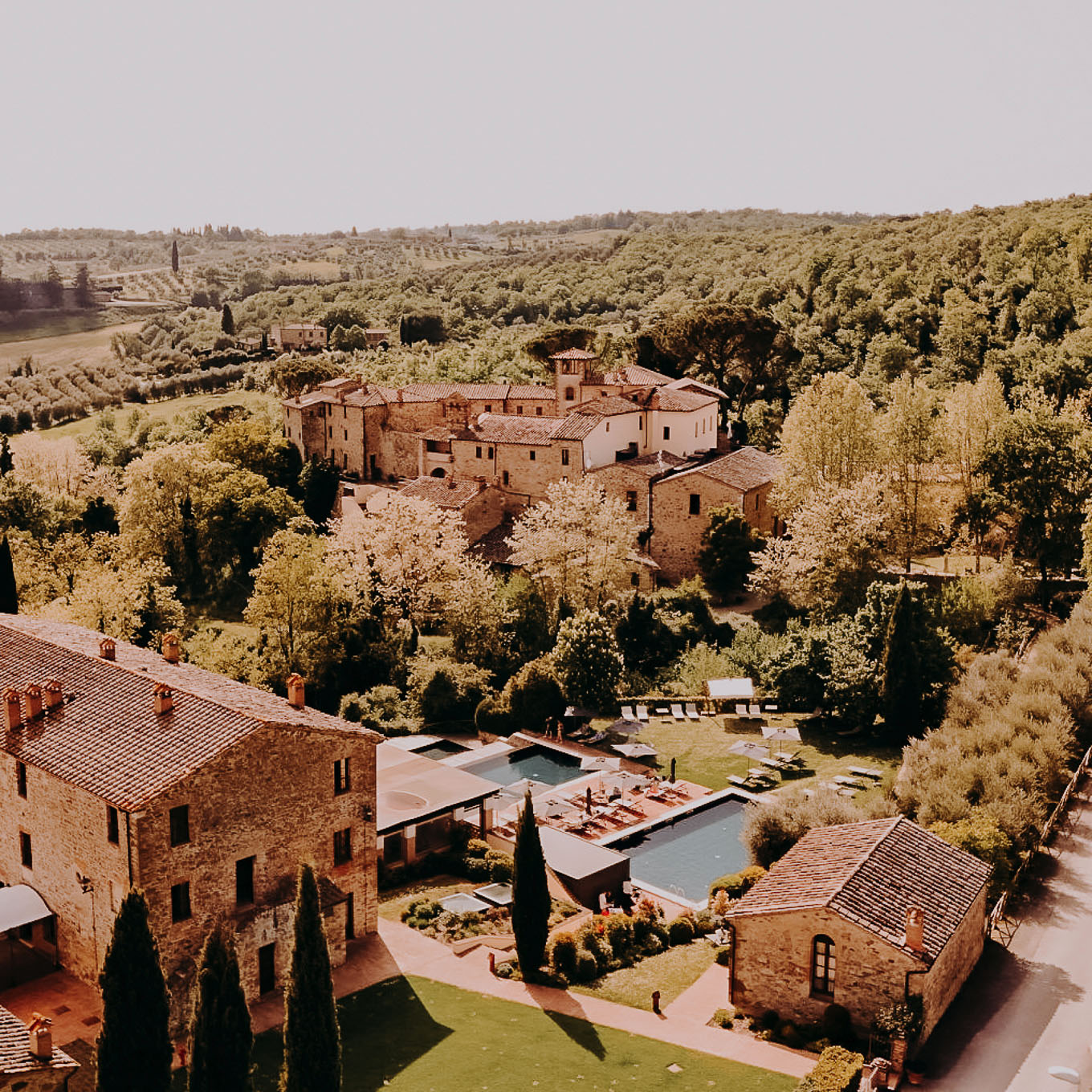
Most couples who write to me about a destination wedding in Tuscany picture a single villa on a hill with one long view. Castel Monastero is not that. It is an entire hamlet near Siena — a restored medieval monastery and the small stone village that grew up inside its walls — set in the green folds of Chianti. I'm Francesco Caroli, an Italian wedding photographer, and after years of working with international couples I've come to think of this place less as a venue and more as a village you borrow for a few days. If you want to see how I read this landscape with a camera, my work as a wedding photographer in Tuscany lives elsewhere on this site; here I want to tell you what it is actually like to marry within these walls.
There is one detail I always point out to couples on a first visit. Enclosed within the walls stands a little church that has been here since the 11th century, dedicated to Saint Jacob and Saint Christopher. Saint Christopher is the patron of travellers; Saint James is the saint of pilgrims. I find it quietly fitting that two people flying in from opposite sides of the world should say their vows in a chapel watched over by the protectors of everyone who journeys far to reach somewhere that matters.
Ten Centuries Written Into the Stone
Castel Monastero wears its history without performing it. The castle is first recorded in 1044 under the older name of Sarna, and from around 1050 it begins to appear as "Monastero," tied to the nearby Berardenga Abbey — the name itself fuses the two lives this place has led, fortress and monastery, in a single word. For a long stretch from the early 12th century it belonged to a branch of the Berardenghi family, and by 1202 it had passed into the administration of the Commune of Siena. It was besieged, unsuccessfully, by the Florentines in 1208, and taken in 1270 by Guido di Montfort, who held it as an outpost against Siena. Later the noble Sienese Chigi Saracini family bought it and turned a contested stronghold into a country house, a place for hunting and for harvesting the vines on its land.
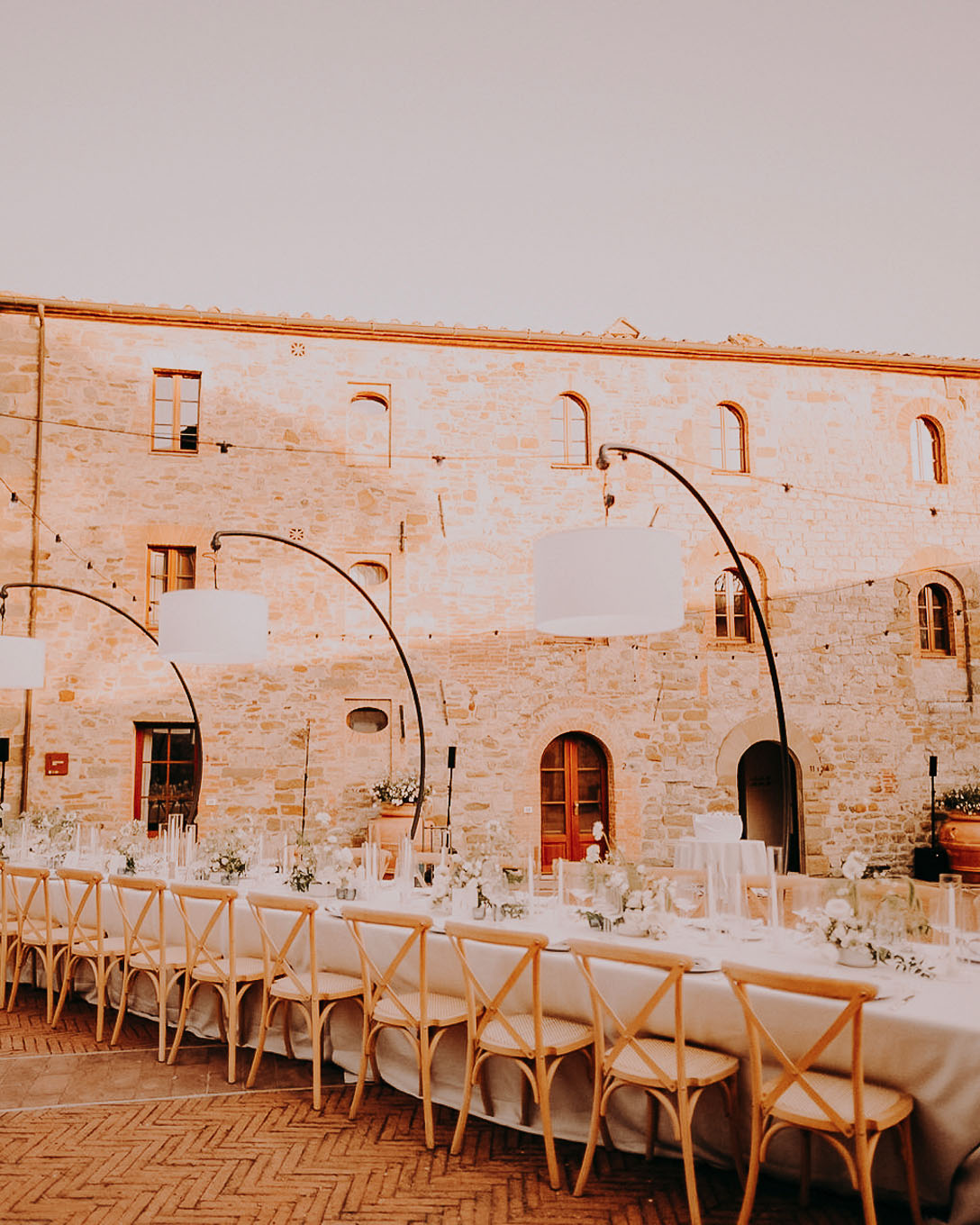
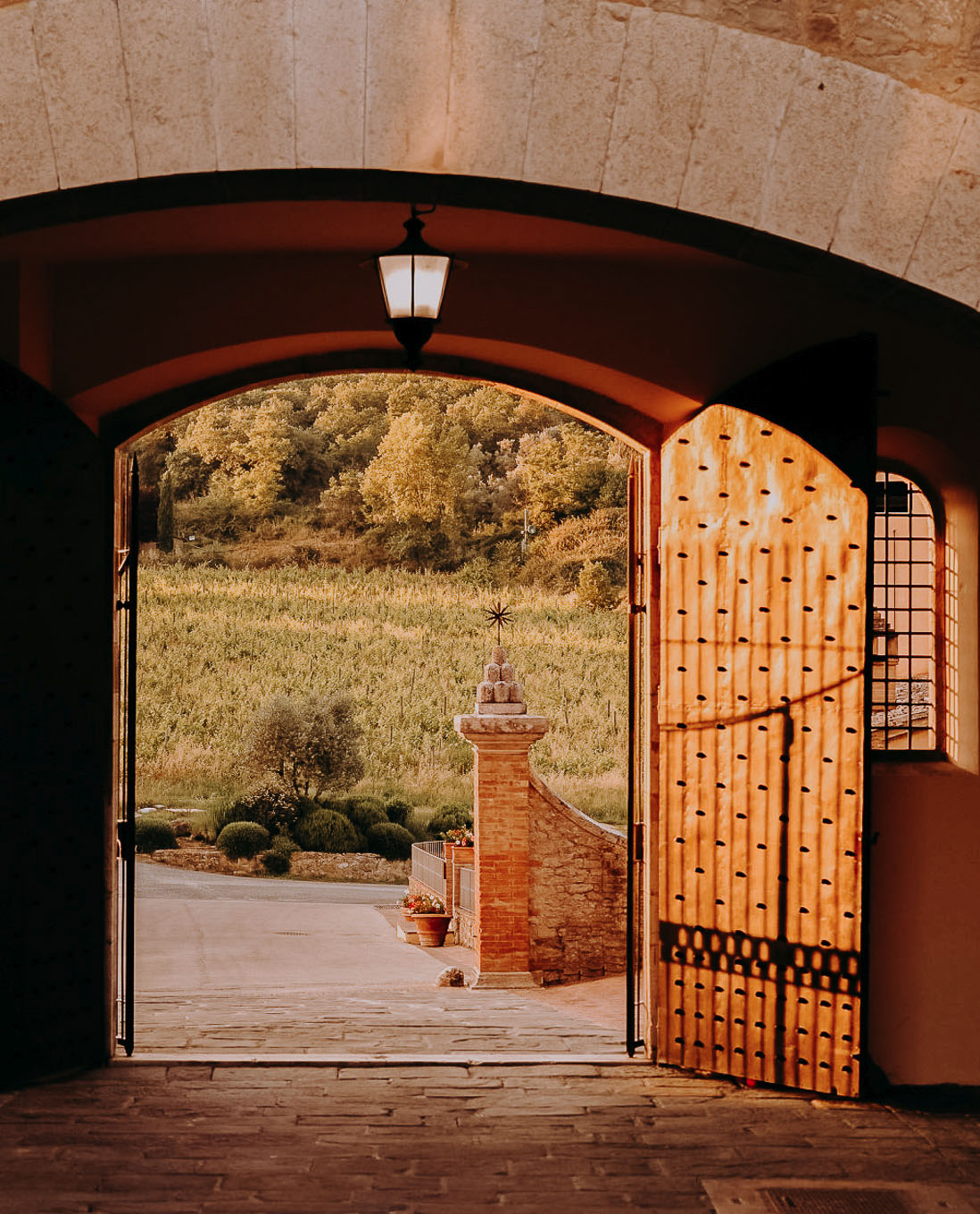
I mention all of this not to give you a history lecture, but because it changes how the place photographs. Walls built to keep armies out now frame a couple walking to dinner; a square that once organised the daily rhythm of a working monastery becomes where your guests gather at dusk. Almost ten centuries of use have worn the stone smooth, and that patina is the one thing a brand-new venue can never manufacture, no matter the budget.
Can a single photograph hold a place that took a thousand years to build?
Sometimes it can't — which is why some couples ask me to film the day as well as shoot it, so the walls and the light get to move.
See the films I make in TuscanyThe Square, the Church and the Choice of Where to Say Yes
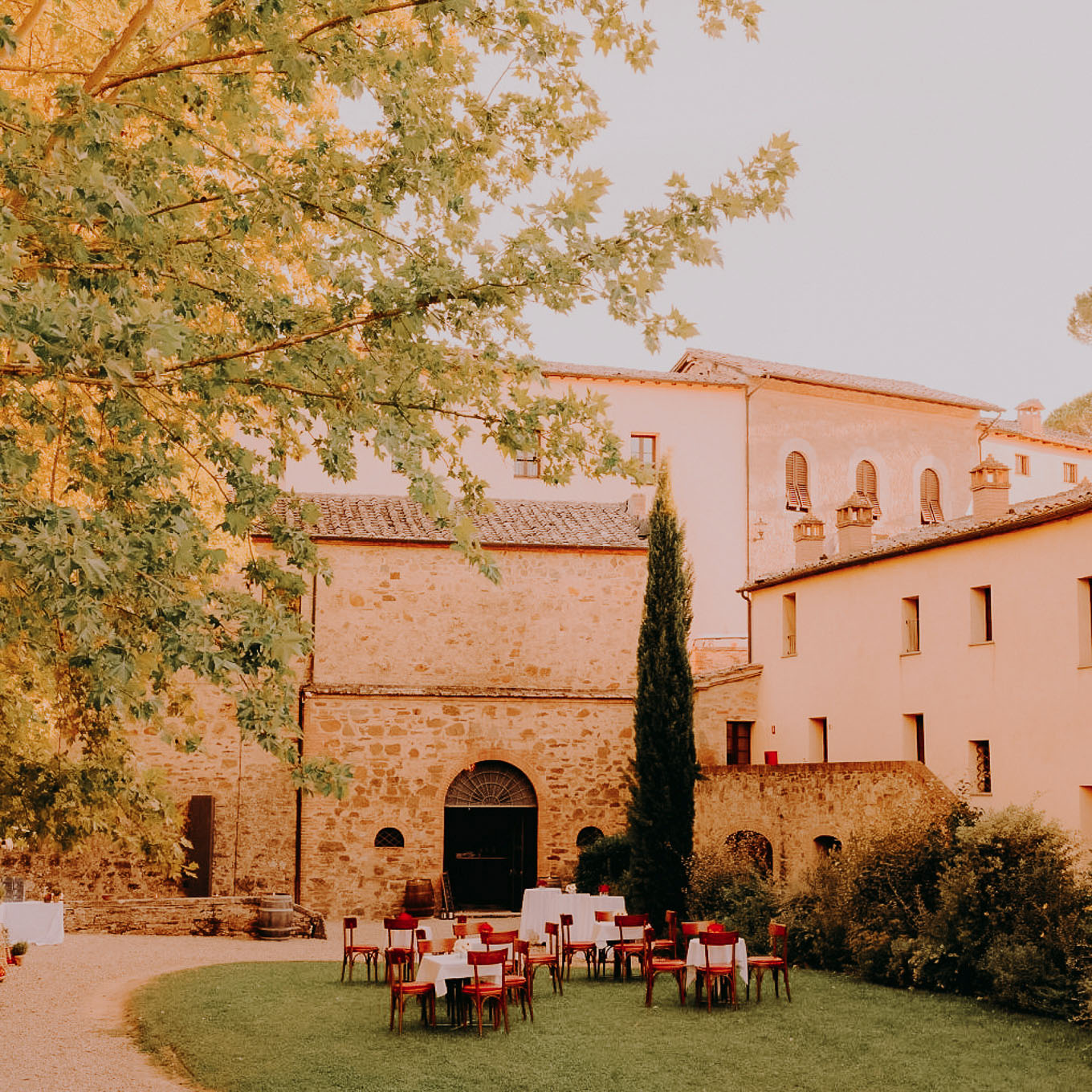
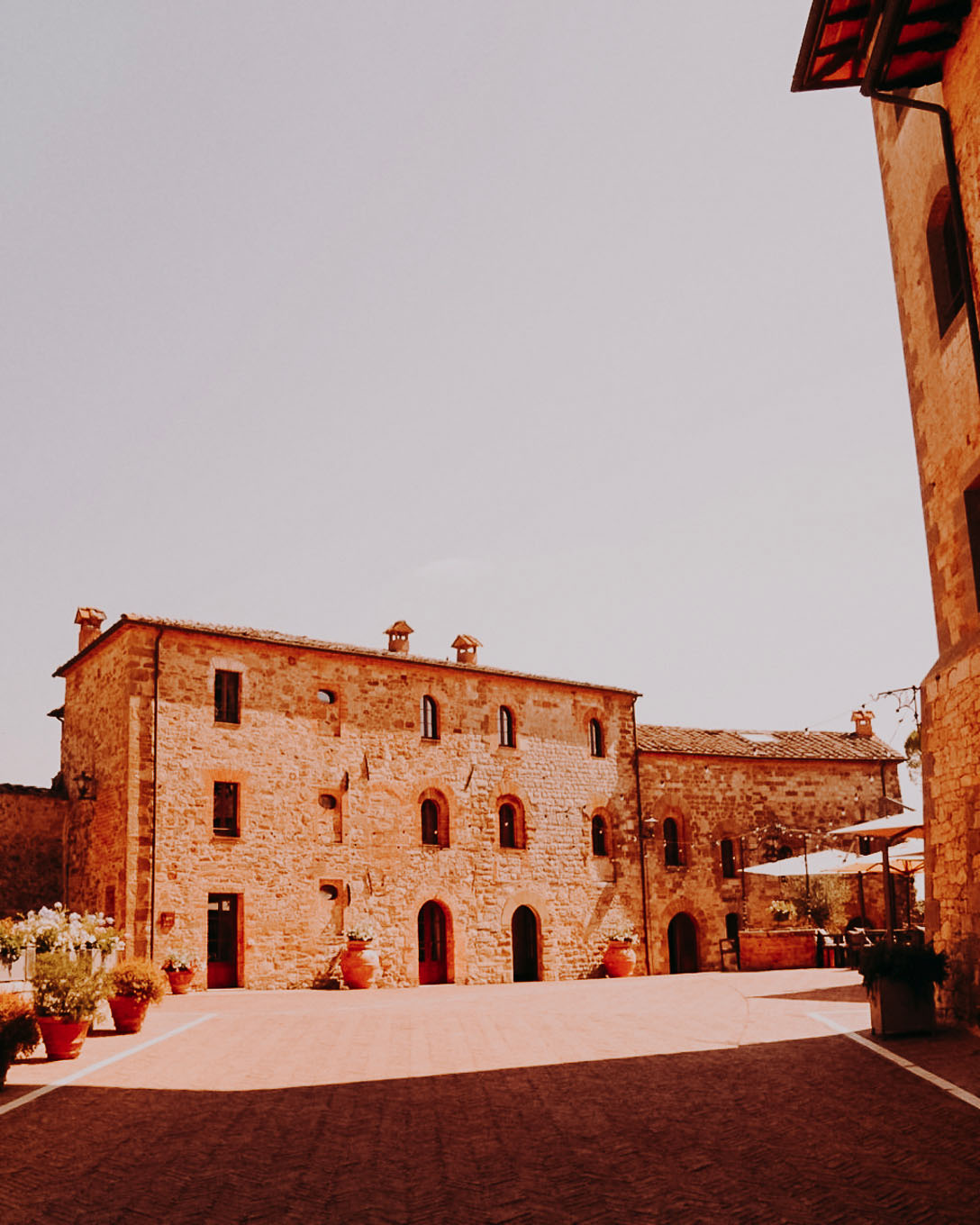
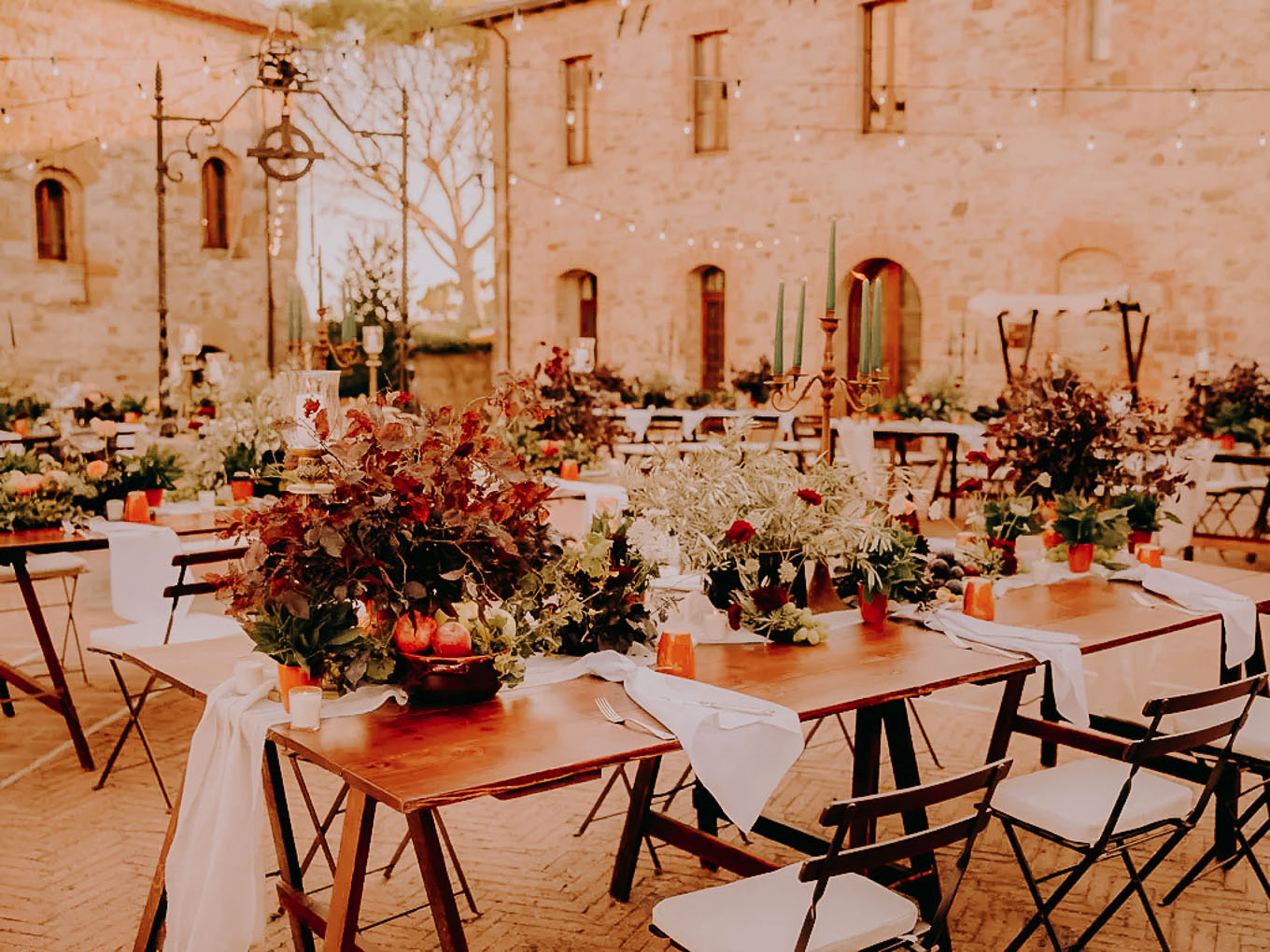
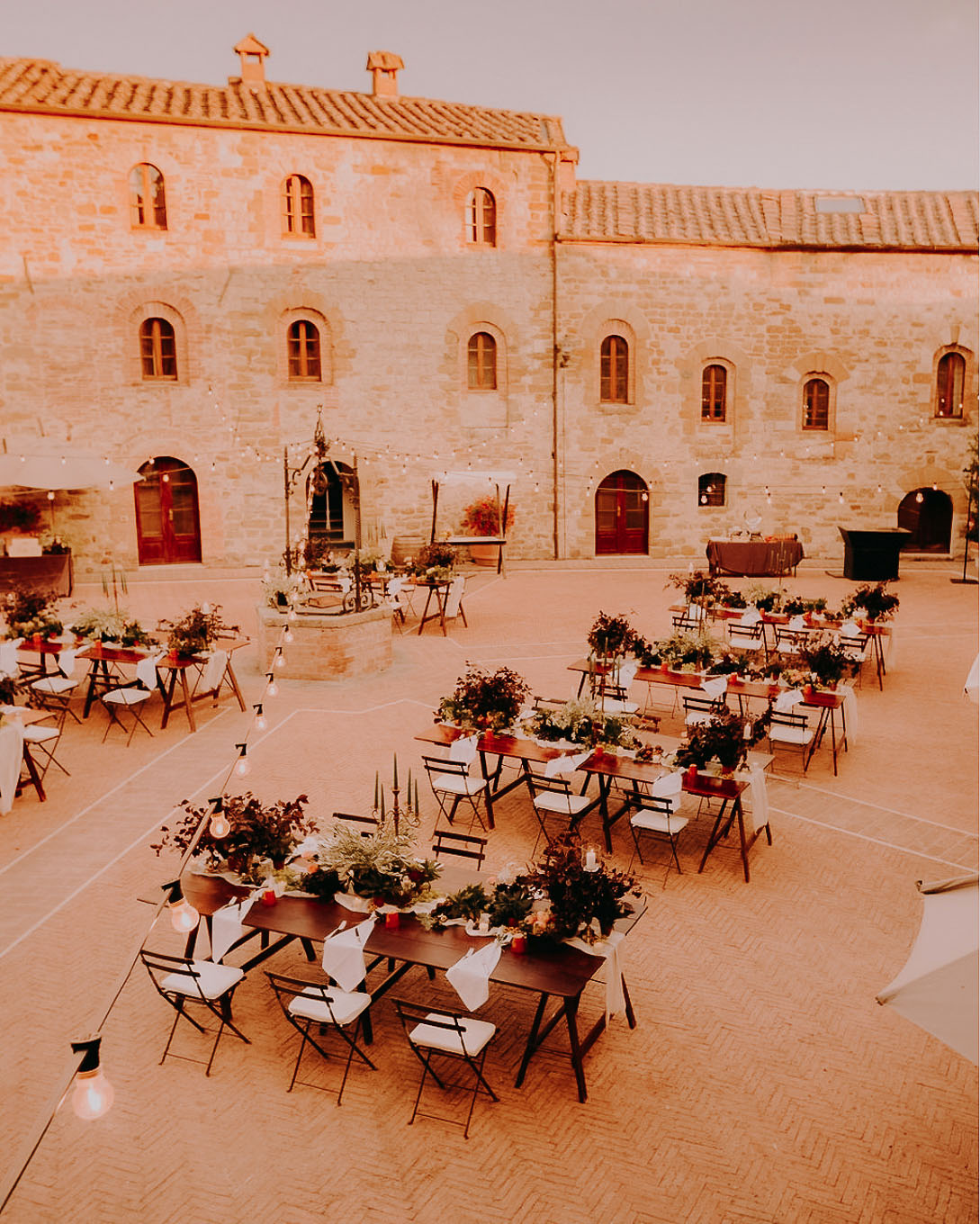
What sets Castel Monastero apart from most Tuscan venues is that it offers several genuinely different settings inside one set of walls. The iconic square at the heart of the hamlet is the natural centre of gravity — it is where the signature restaurant, Contrada, opens onto the stone, and where an aperitivo tends to drift, almost on its own, into the evening.
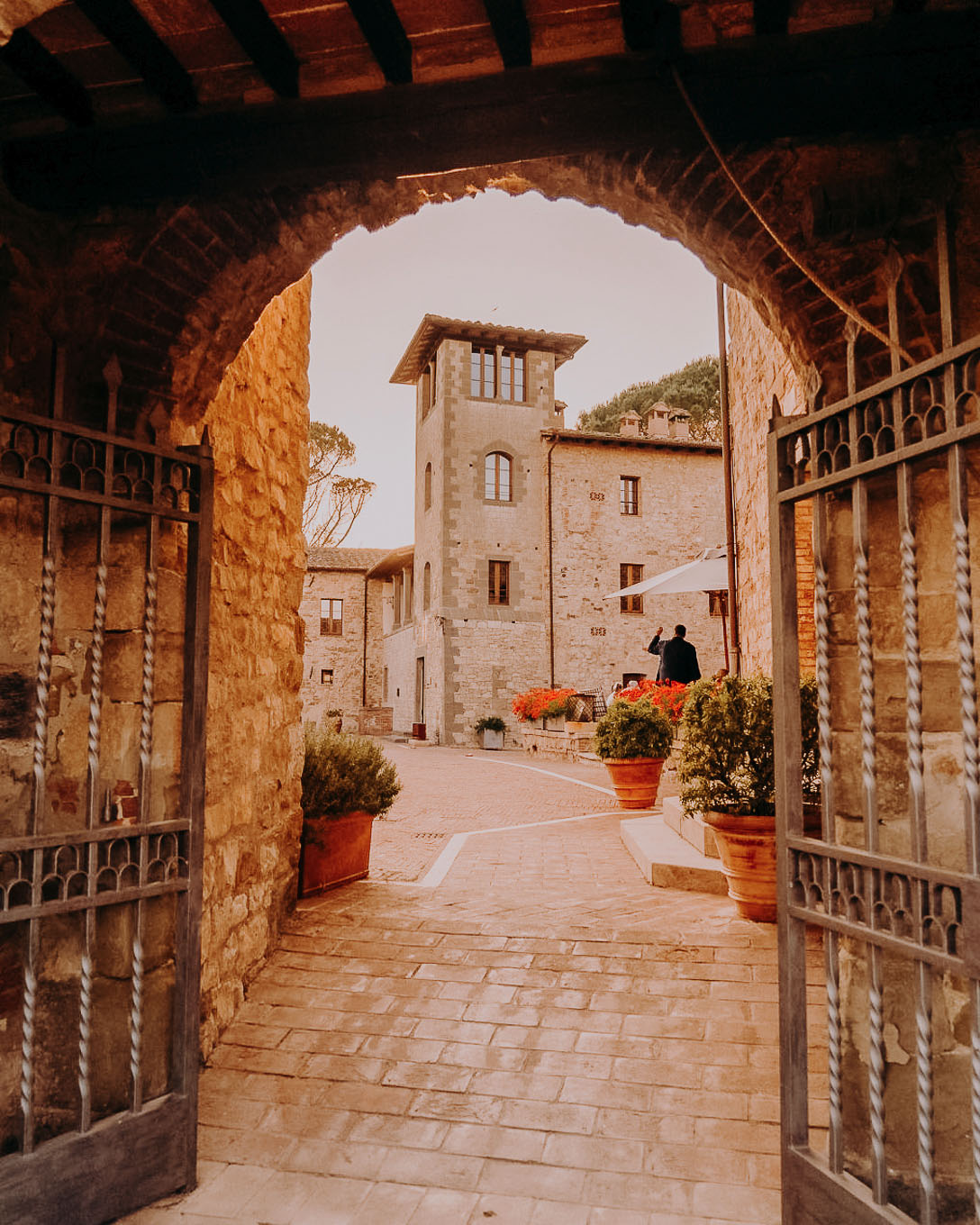
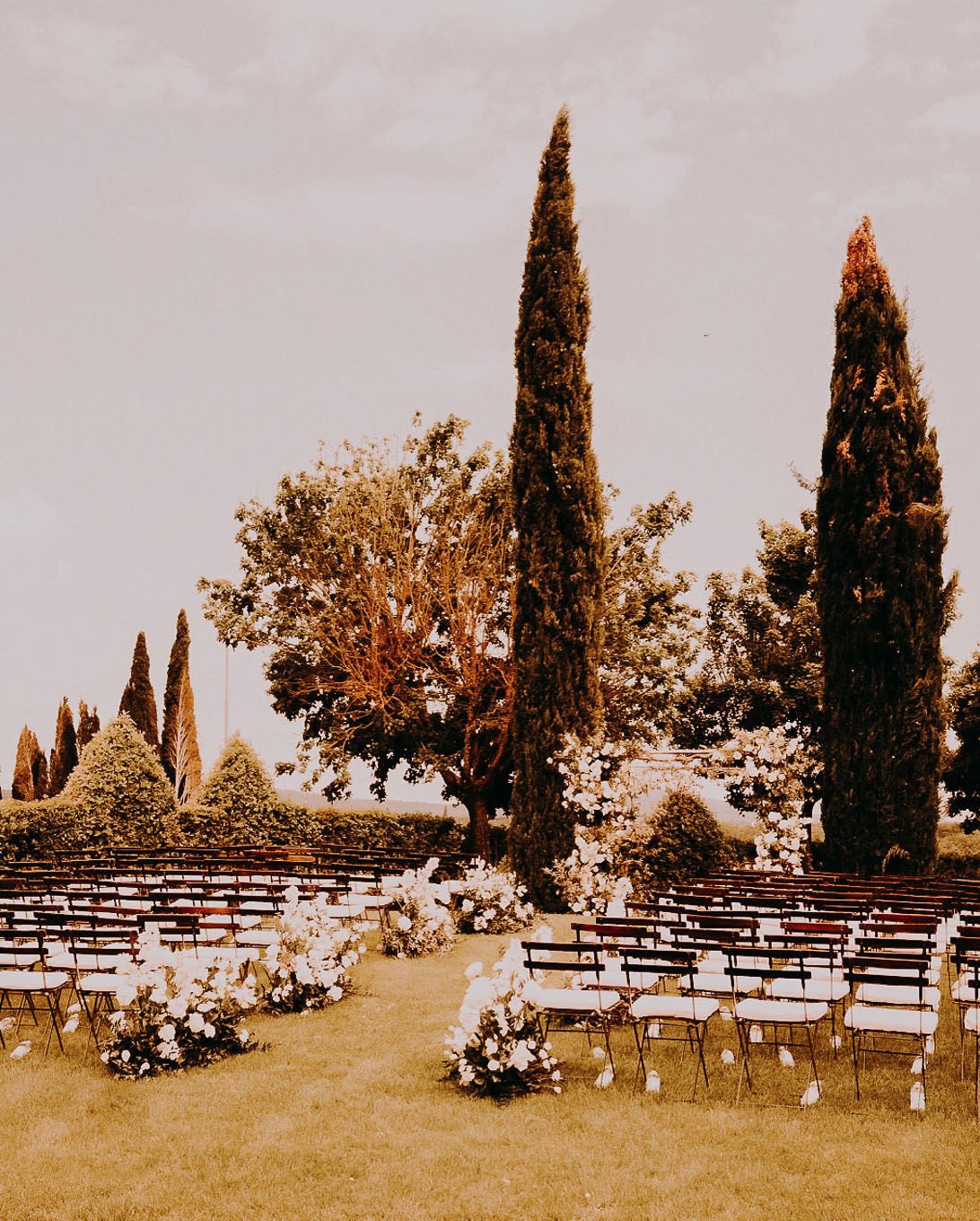
For the ceremony itself you have real choices. The 11th-century church of Saint Jacob and Saint Christopher seats up to around fifty guests; its exterior keeps the monastic plainness of an old country parish, while the interior was carefully restored in the 18th century, so you step from rough stone into something warmer and more ornate — a contrast I love to photograph, because the doorway between the two does half the work for me. If your guest list is larger, the Romanesque church of Badia Monastero stands just two kilometres away. And for a symbolic ceremony — the route most of my international couples take — almost any corner of the village will serve, from a quiet stone arch to an open terrace facing the hills.
Where the Legal Wedding Actually Happens
This is worth understanding early, because it catches people off guard. A legally binding civil ceremony in Italy must take place in an authorised civil setting, not simply wherever you like. Castel Monastero's event manager works with two nearby options: the 18th-century chamber inside the town hall of Castelnuovo Berardenga, about seven kilometres away — an ivory room finished with gilded friezes — or the neoclassical Villa Chigi Saracini on the edge of the same town, a 19th-century villa with large rooms and a lawn set in an old park. Many couples settle the legal formalities in one of these and keep the personal, emotional ceremony — the one they actually want remembered in pictures — inside the hamlet as a symbolic celebration. It is a clean division of labour, and in practice it works beautifully.
Dining in a Monastery, Sleeping in a Village
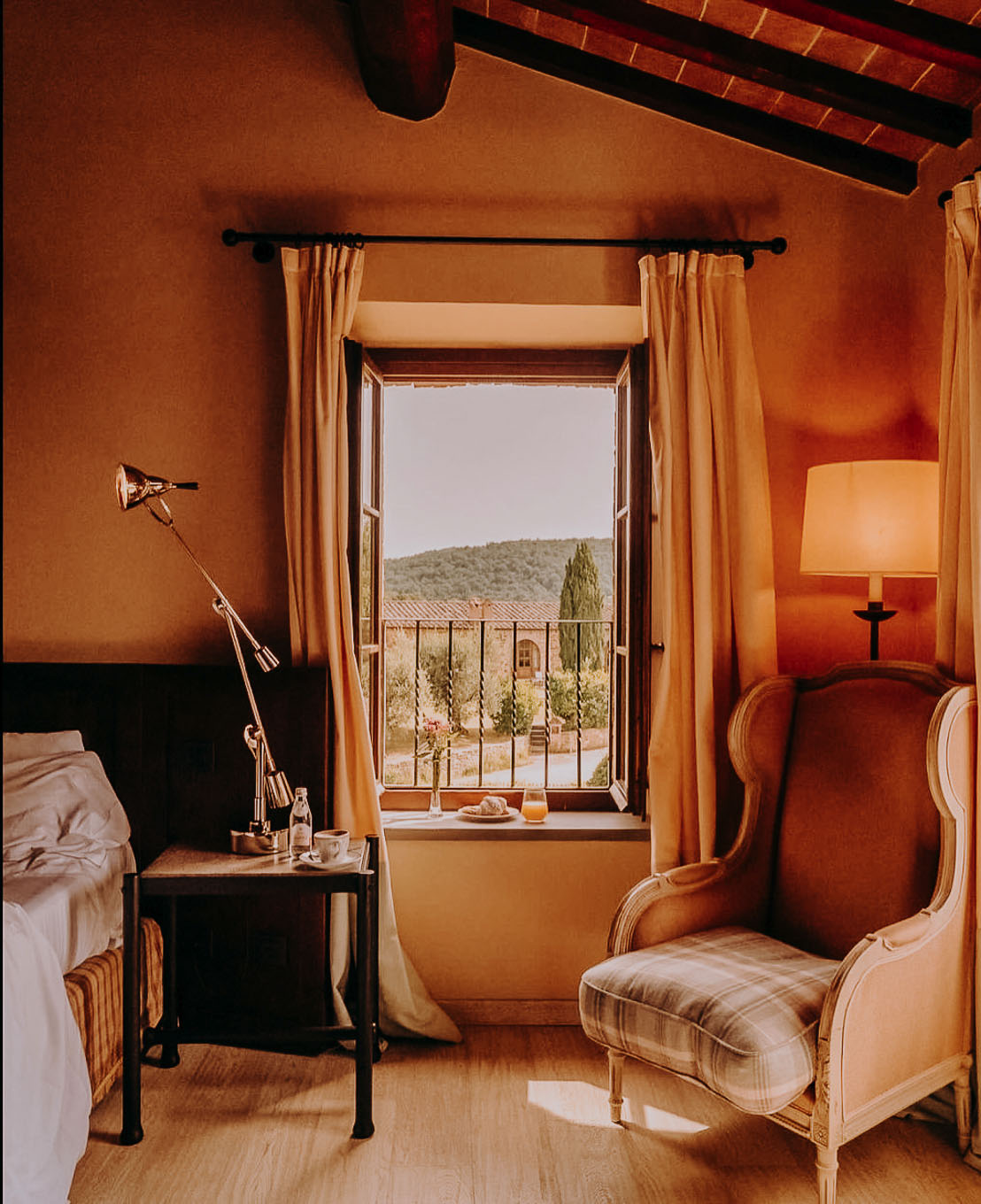
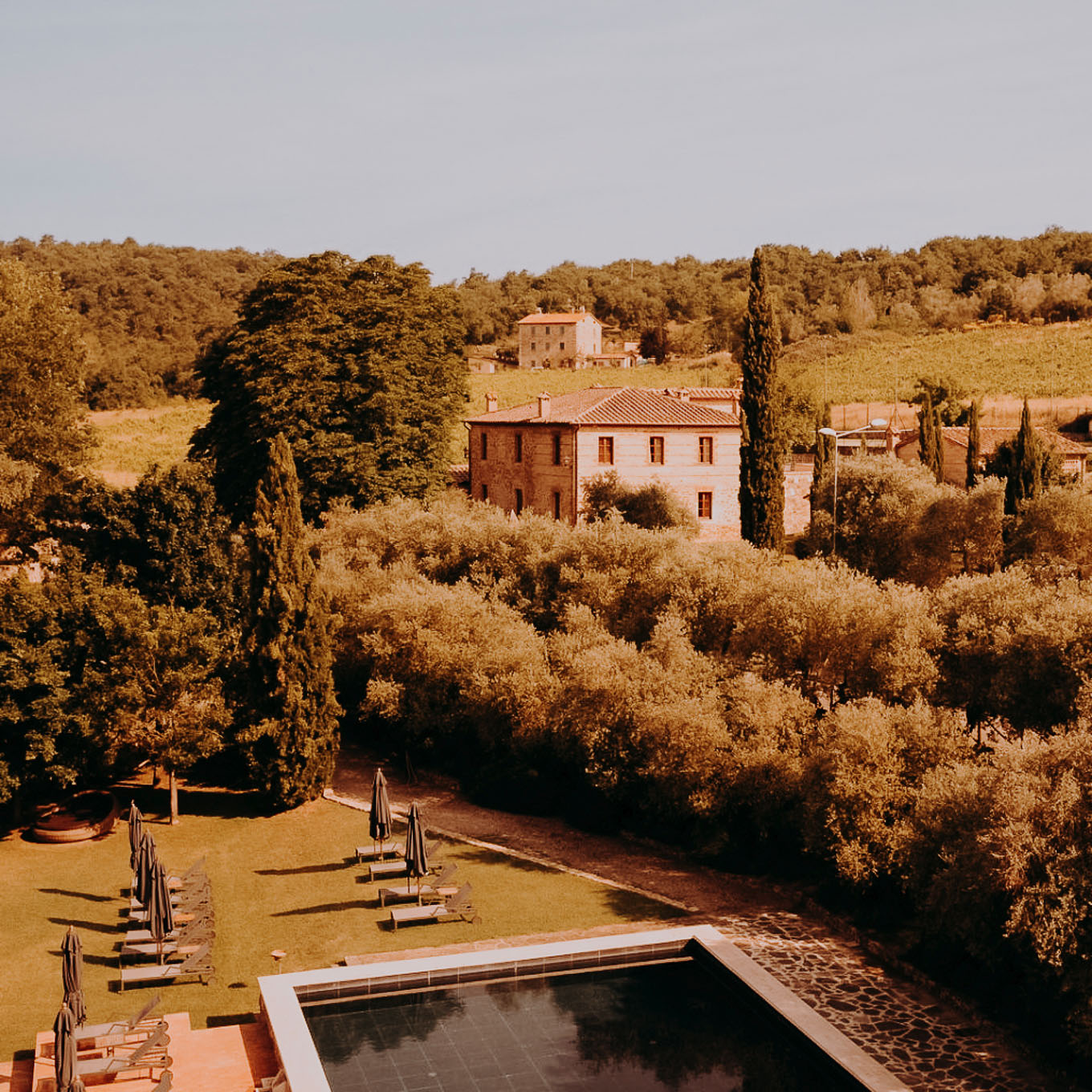
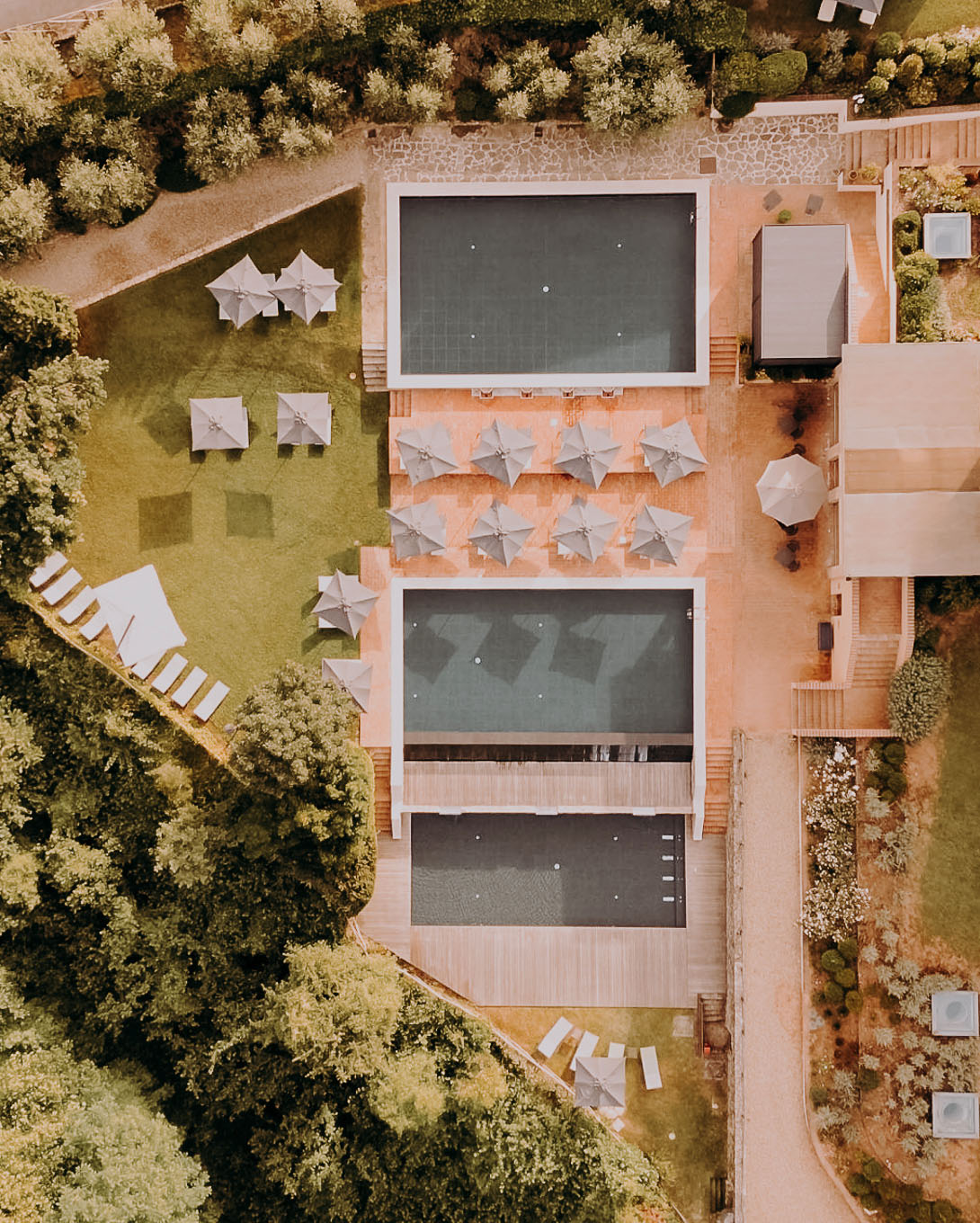
Two restaurants anchor the food here. Contrada, the signature restaurant on the square, cooks a seasonal menu drawn from the surrounding land. Cantina sits in the property's medieval wine cellar and spills out onto a garden terrace — the kind of low, stone-walled room that keeps the late part of an evening intimate even with a full guest list. Between the rooms and suites of the monastery and its hamlet, the resort can host up to 140 guests on-site, which means the wedding party essentially takes over the village rather than scattering to hotels at midnight. That single fact changes the texture of a day more than almost anything else: nobody is watching the clock for a transfer.
Because Castel Monastero is also a wellness retreat — Spa Monasterii, with its treatments, its yoga, its deliberate quiet — the days around the wedding tend to stretch out. I've watched more than one couple turn a single ceremony into a long weekend, families arriving early, no one in any hurry to leave. For a photographer, those unhurried hours are where the honest pictures live.
Is a wedding really one day — or the three days nobody thinks to photograph?
The arrivals, the slow spa morning, the breakfast after: at a place built for staying, the best frames are usually the ones no schedule asked for.
Get in touch about your dateGetting to Castel Monastero: Practical Notes for International Couples
For couples and guests arriving from abroad, Castel Monastero sits in the province of Siena, close to Castelnuovo Berardenga. Siena itself is the nearest city, roughly half an hour away by car, and makes an easy base or a sightseeing day for guests with time to spare. The closest airport is Florence, a little over an hour away by road; Pisa is a further option to the west, and Rome's airports, though a few hours south, open up the widest range of long-haul international connections. Because the hamlet sits out in the countryside, I always tell guests to arrange transfers or car hire rather than count on public transport — the reward for that small piece of planning is the silence and the views the moment you arrive. For your planner and your drivers, the address is Loc. Monastero D'Ombrone 19, 53019 Castelnuovo Berardenga (SI).
The Questions That Come Up Before a Castel Monastero Wedding
How does the legal side of marrying in Italy work for a foreign couple?
A legally binding civil marriage in Italy is conducted by Italian authorities, and the paperwork depends heavily on your nationality and on the type of ceremony you choose. Most foreign couples need to produce a sworn declaration of no impediment (often arranged through your own country's consulate or embassy in Italy) along with other documents, and this is best started several months before the date rather than weeks. The civil ceremony itself would take place at the town hall of Castelnuovo Berardenga or another authorised setting nearby; Castel Monastero's event manager is used to walking international couples through the timing and the documents. My honest advice: confirm the exact requirements for your two passports early, because that single detail shapes the whole calendar.
Can we reserve the entire hamlet just for ourselves?
With up to 140 guests able to stay on-site across the rooms and suites of the monastery and its hamlet, many couples effectively take over the whole property for their celebration. If your guest list runs larger than the in-house capacity, the venue is happy to recommend additional accommodation nearby. It's the kind of detail worth raising with the events team at the very first enquiry, because exclusive-use availability tends to be the thing that determines which weekends are realistic.
We're not Catholic — can we still use the church?
The little church of Saint Jacob and Saint Christopher is a consecrated Catholic church, so a religious wedding there follows the Catholic process: documentation arranged through your home parish and diocese, and enough lead time to move it between countries. Couples of another faith, or of none, almost always choose a symbolic ceremony in one of the village's corners and handle the legal civil ceremony separately. From where I stand with a camera, a symbolic ceremony is often the more relaxed and expressive of the two anyway — there's no registrar's script to keep to.
Can our dog be part of the day?
Castel Monastero presents itself as a dog-friendly property, so in principle your dog can be part of the celebration — and I'm always glad when they are, because a dog walking a couple down an aisle is a picture you can't stage. I'd still confirm the specific arrangements (which areas, the ceremony itself, overnight) directly with the venue when you book, since the practical details can vary with the size of the event.
When is the best time of year to marry here?
This is a photographer's answer rather than the venue's, but late spring — roughly May into June — and early autumn — September into October — tend to give the kindest light and the most reliable weather in this part of Chianti, with the hills either freshly green or turning gold. High summer brings heat in the middle of the day but very long, warm evenings, which can be glorious for an outdoor dinner. Winter is quiet and dramatic, with the stone and bare vines at their most austere. There's no wrong season; there's only the season that matches the kind of pictures you want to look back on.
What happens to guests who can't stay on-site?
The in-house capacity covers up to 140 guests, which is generous, but larger weddings will inevitably spill over. The venue can point you toward nearby accommodation, and Siena — around half an hour away — offers plenty of options for guests who'd like a city base. If some of your party stays off-site, I'd budget for organised transfers at the end of the night: country roads in Chianti are beautiful by daylight and best not driven unfamiliar in the dark.