Villa Gamberaia: A Wedding Inside One of the World's Most Famous Gardens, Above Florence
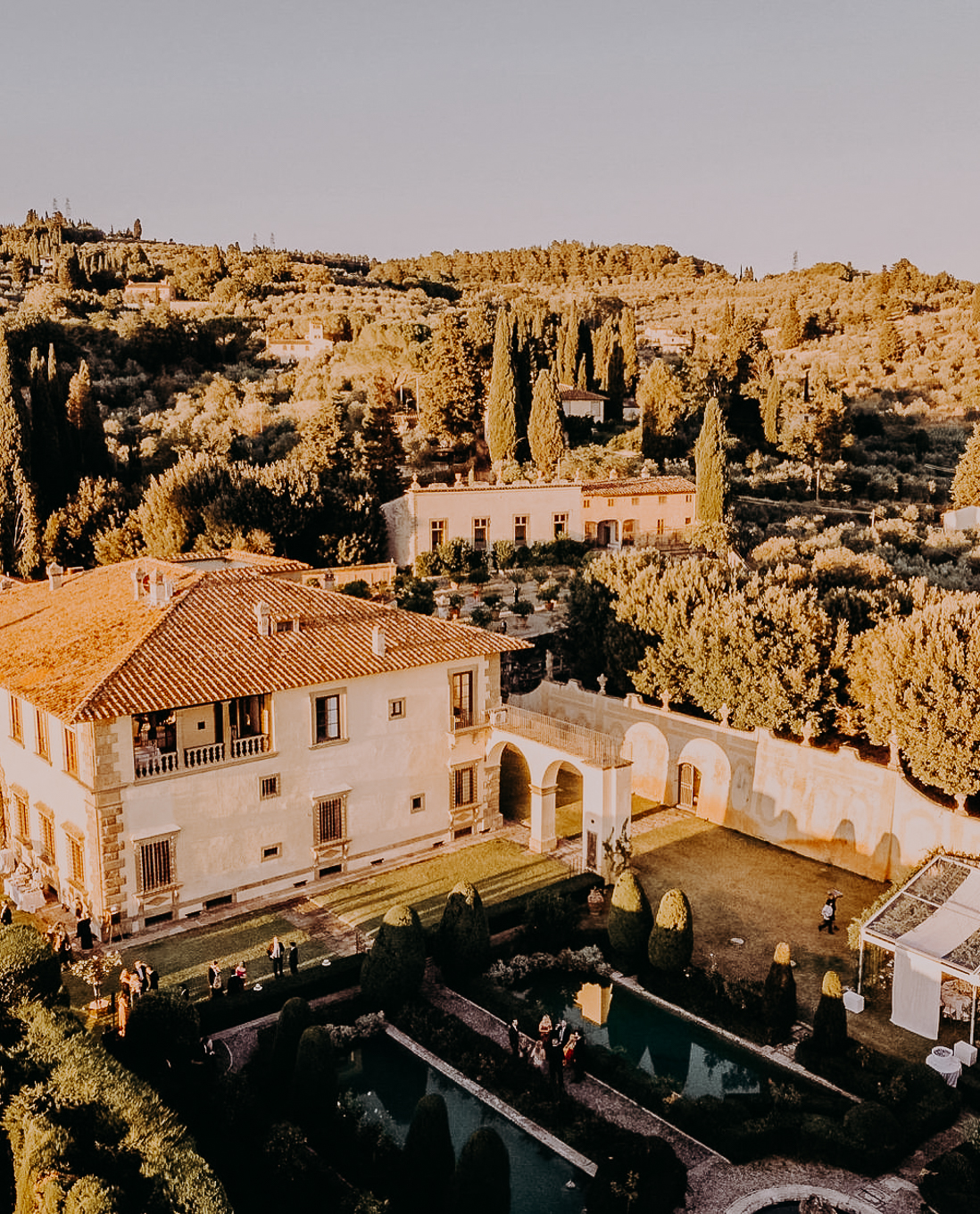
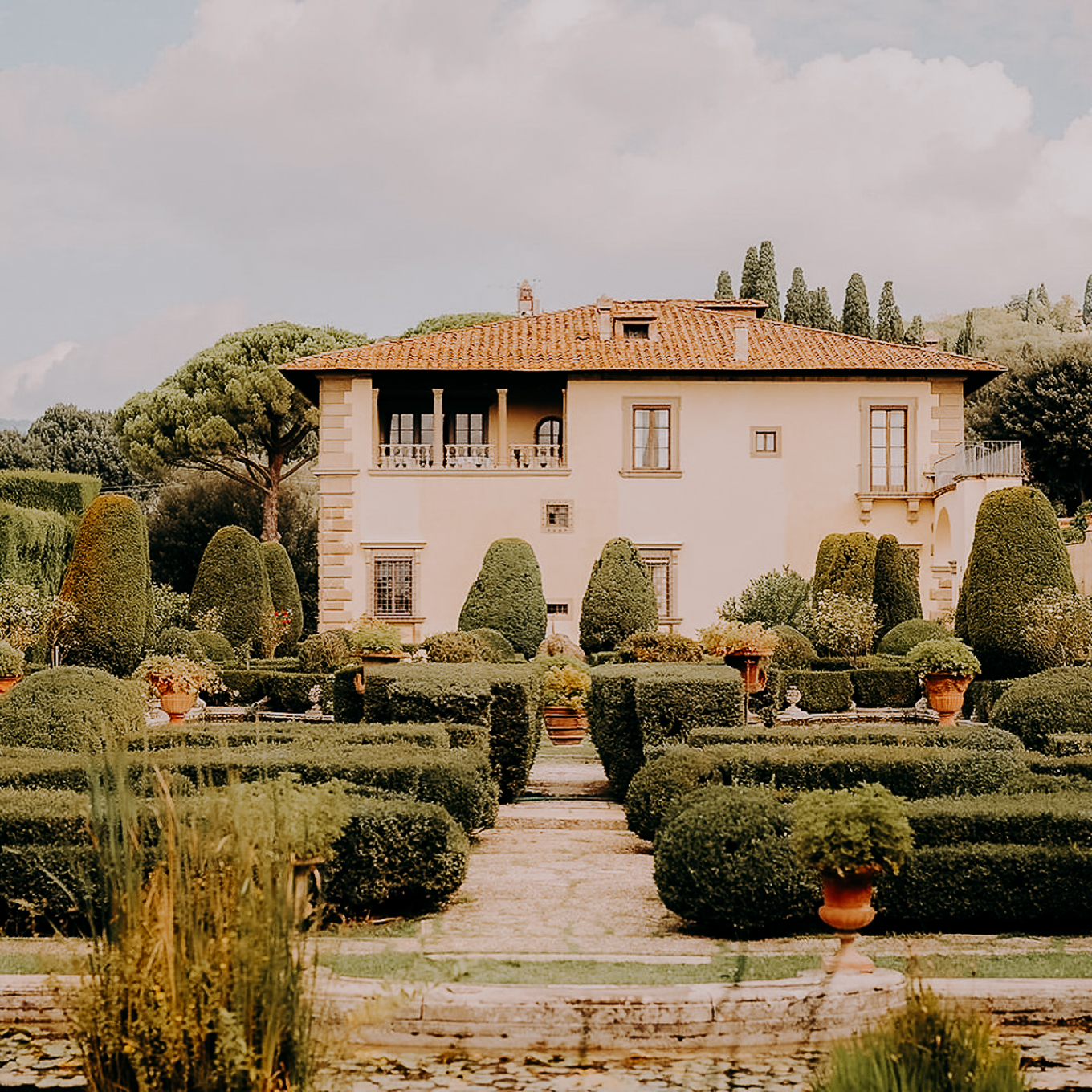
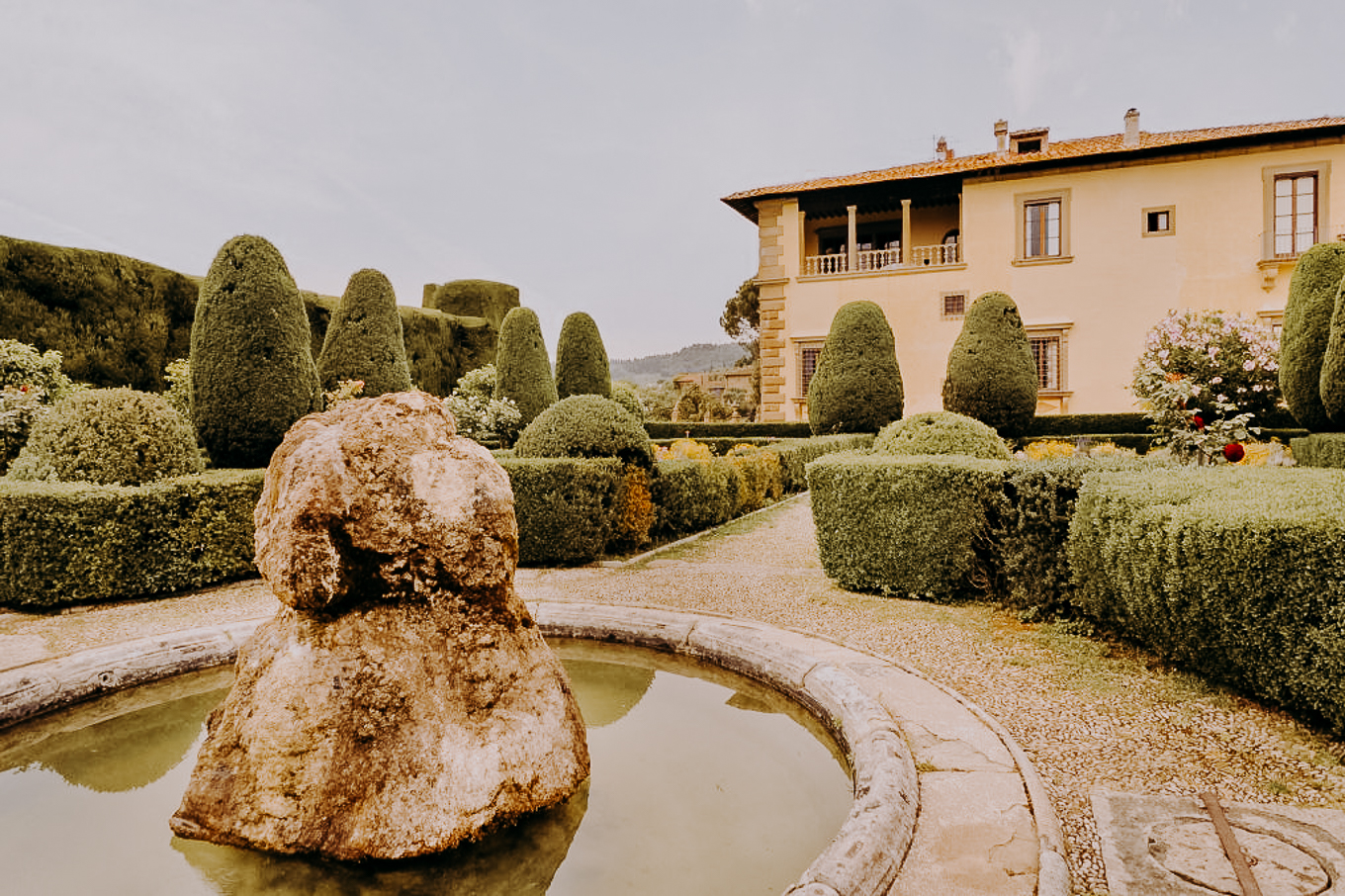
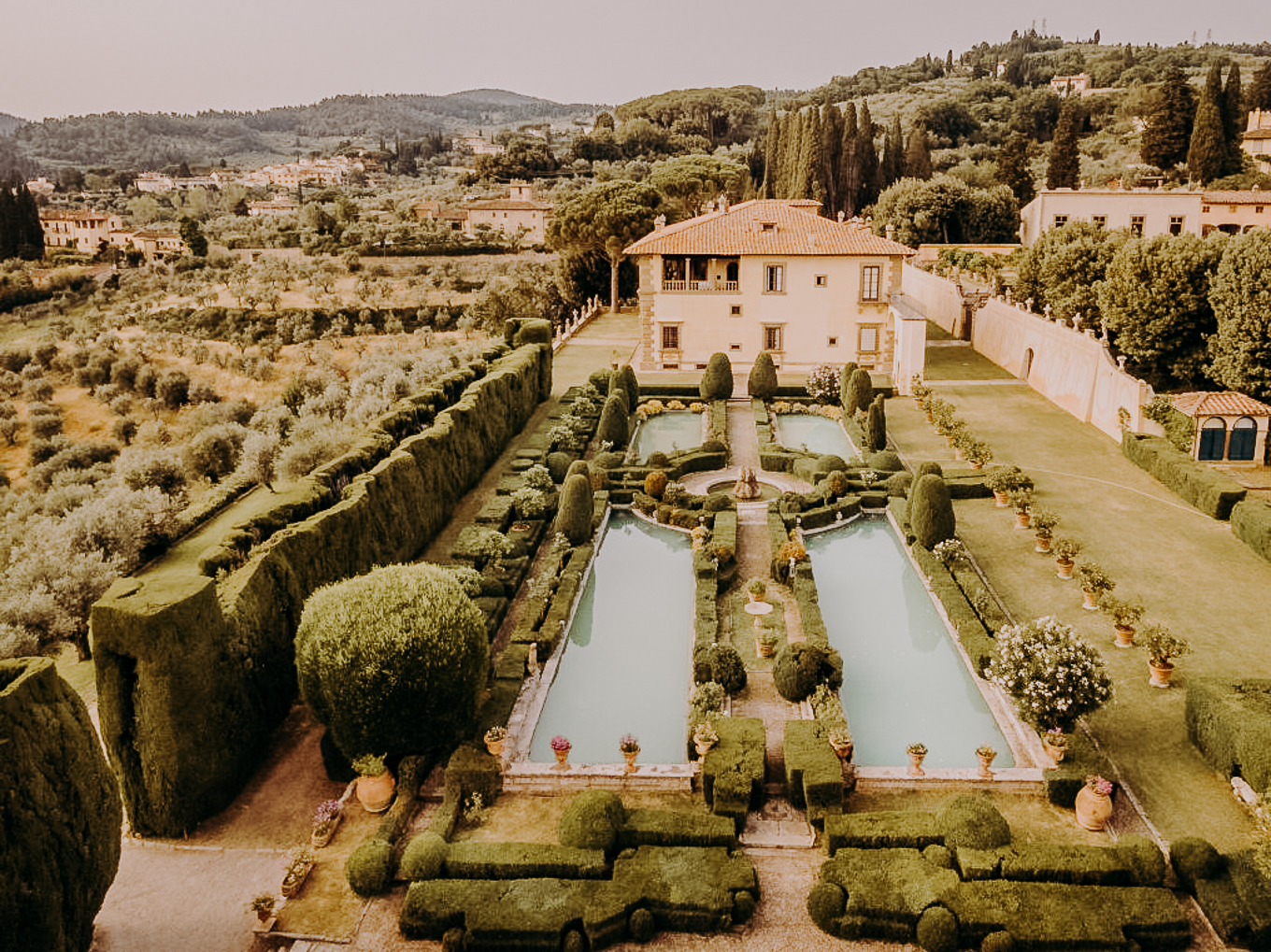
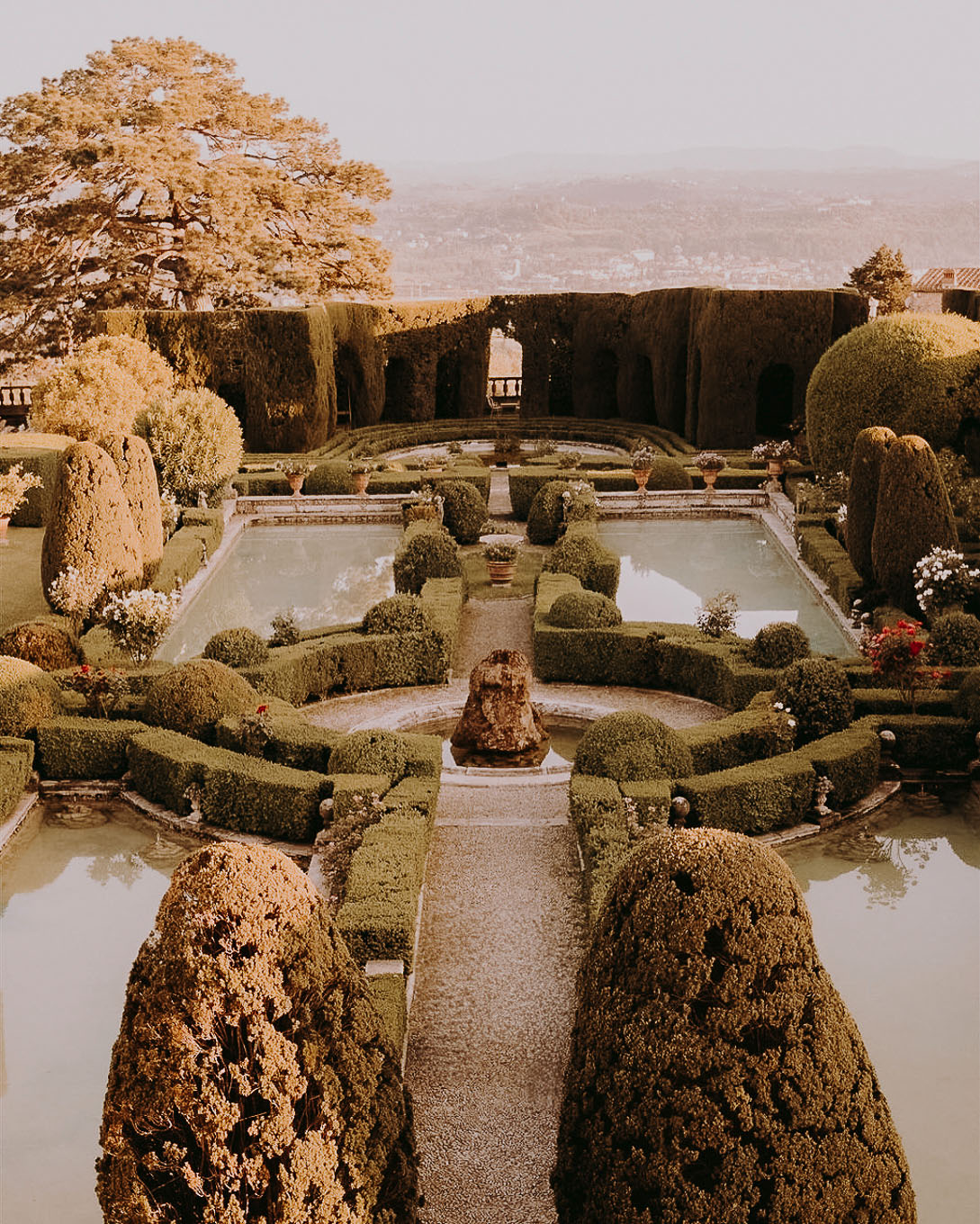
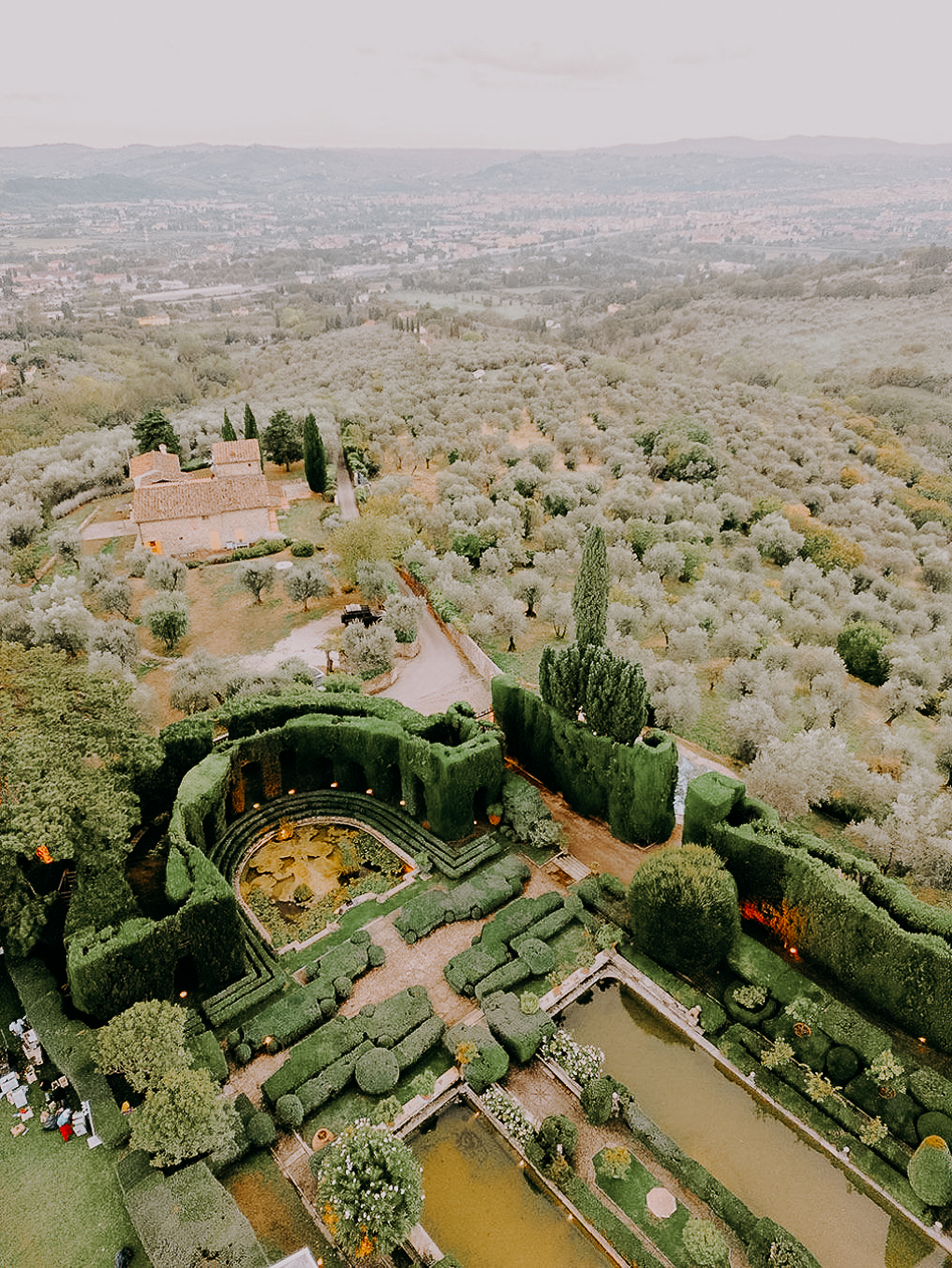
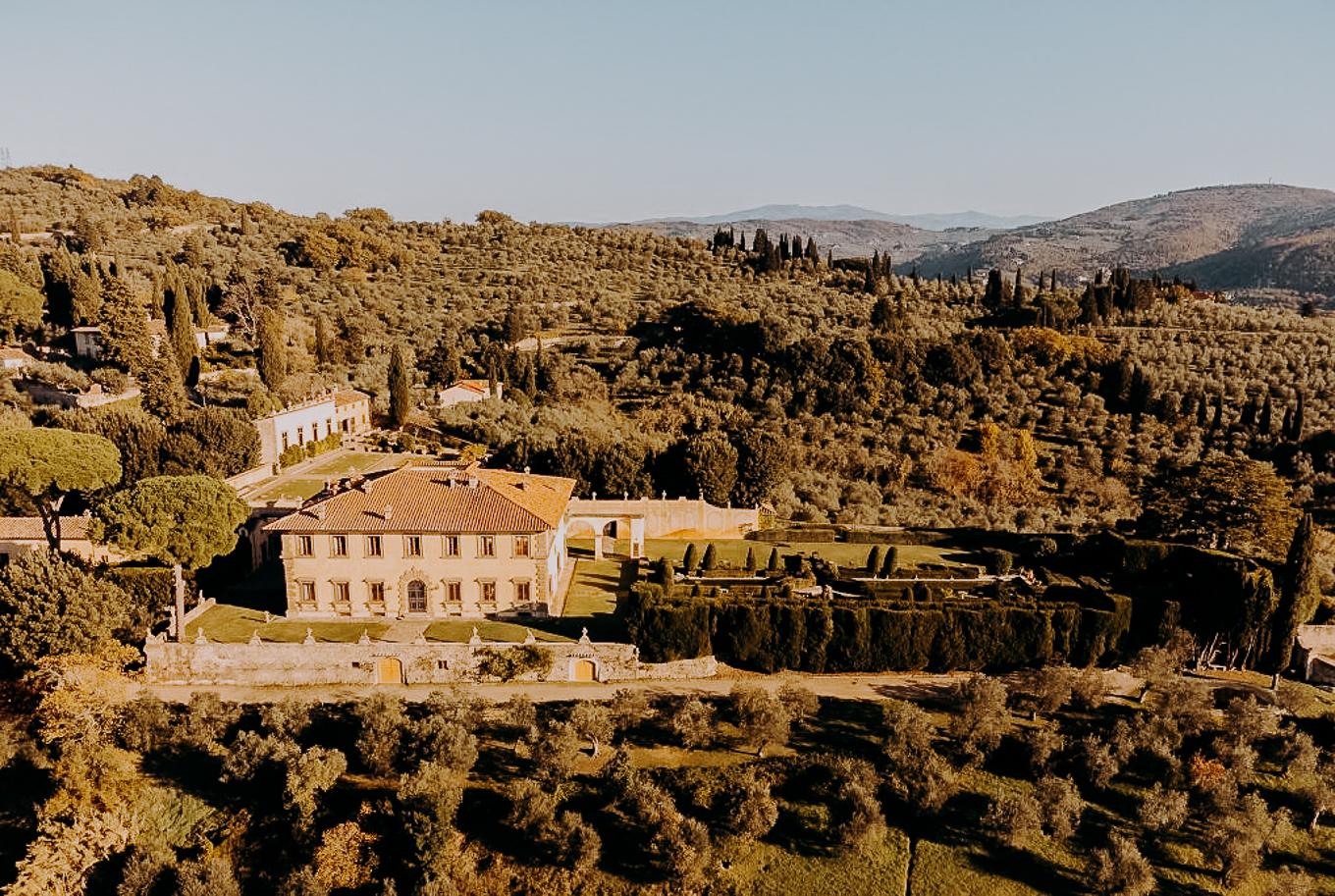
As a wedding photographer, I rarely walk into a place that has already been photographed more carefully than I ever could. Villa Gamberaia is one of those places. Set on a hillside at Settignano, just above Florence, its garden — and above all its parterre d'eau, a sequence of four still water basins held between clipped box hedges and dark cypresses — has been called one of the most beautiful in the world, and counted by the New York Times among the twenty-five finest gardens anywhere. For a couple planning a destination wedding in Tuscany, that reputation is both the draw and, quietly, the challenge. I'm Francesco Caroli, and I work across the region as a wedding photographer in Florence; what follows is what it actually means to marry inside a garden this celebrated.
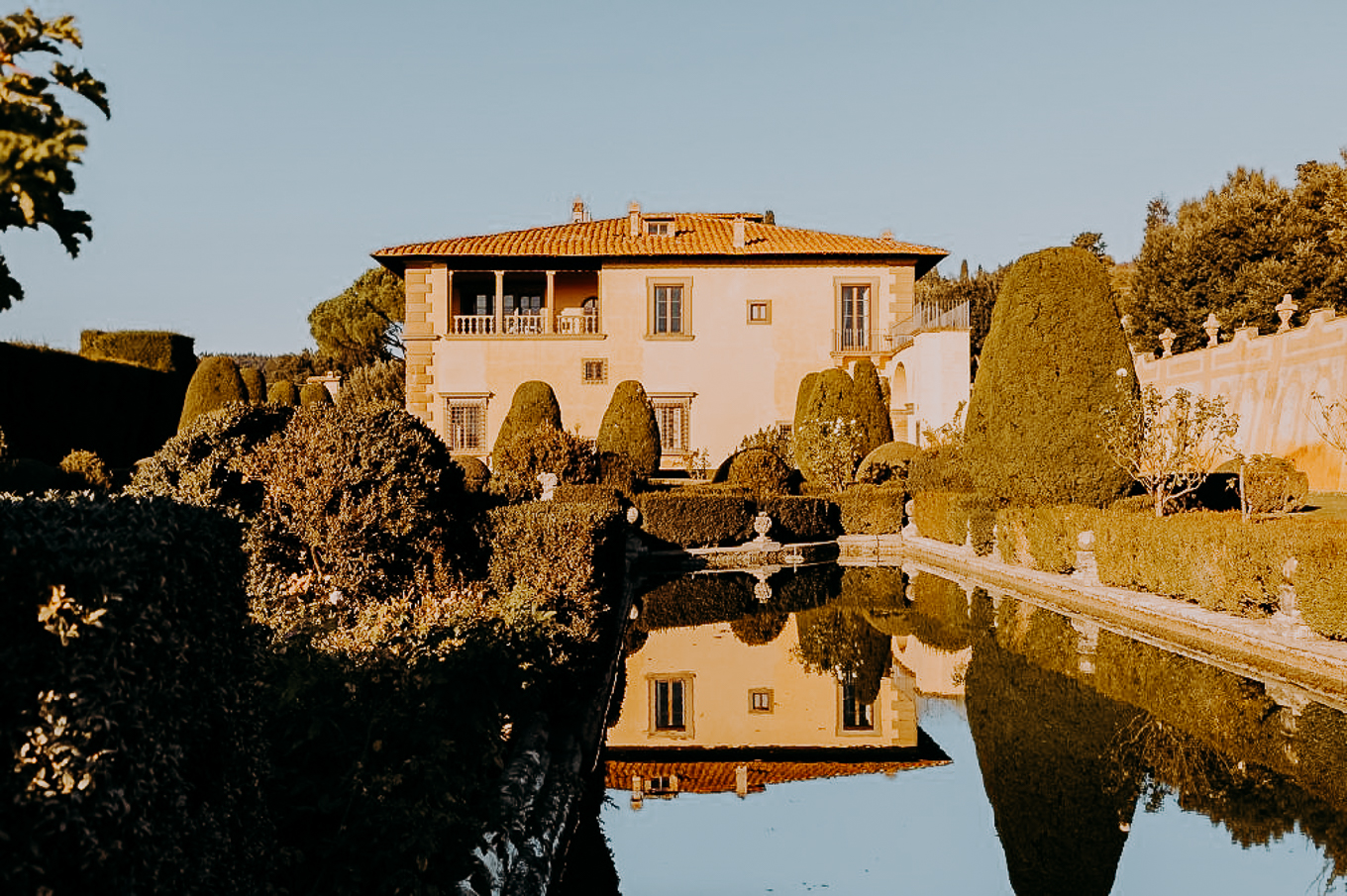
The first thing to understand is the water. Those four basins are mirrors, and on a still morning they double everything above them — the cypresses, the sky, a passing cloud, and, if I time it right, the two of you. A garden built around reflection gives a photographer something most venues can't: a second version of every scene, upside down and softer, waiting in the water. It is the reason brides have been photographed here for over a century, and it never quite repeats itself.
From a Shrimp Pond to a Renaissance Masterpiece
Begin with the name, because it is disarmingly humble. Gamberaia most likely recalls the freshwater shrimp — gamberi — once farmed in ponds on these hills. One of the most admired gardens in Italy is named, in effect, after a shrimp pond. The estate is first recorded in 1398, when the abbess of San Martino a Mensola granted a farmhouse and its land "in the place called Gamberaia." In the next century it passed to the Gamberelli family — almost certainly the source of the name, and ancestors of the Renaissance sculptors Antonio and Bernardo Rossellino, whose name the access road, Via del Rossellino, still carries today.
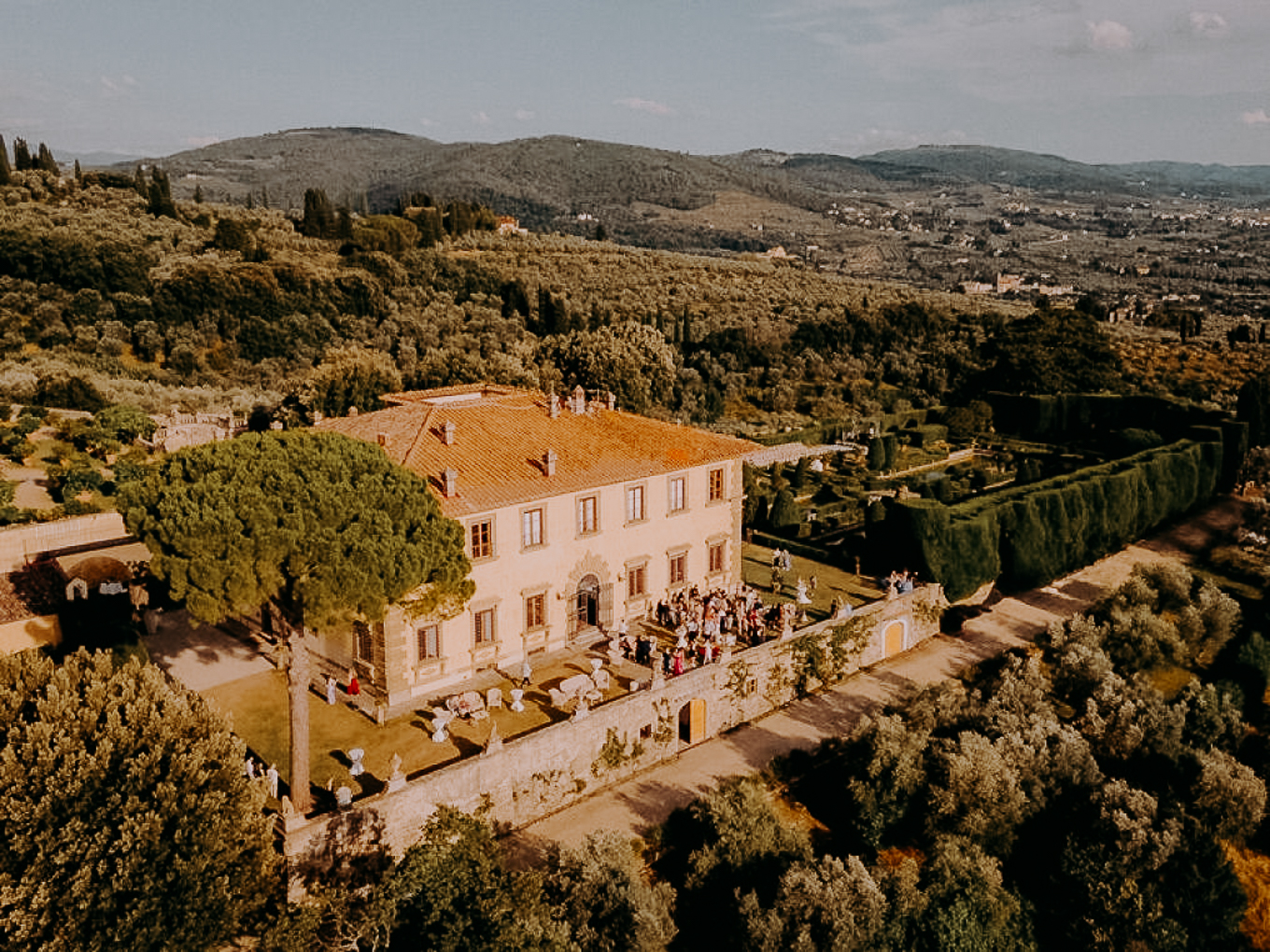
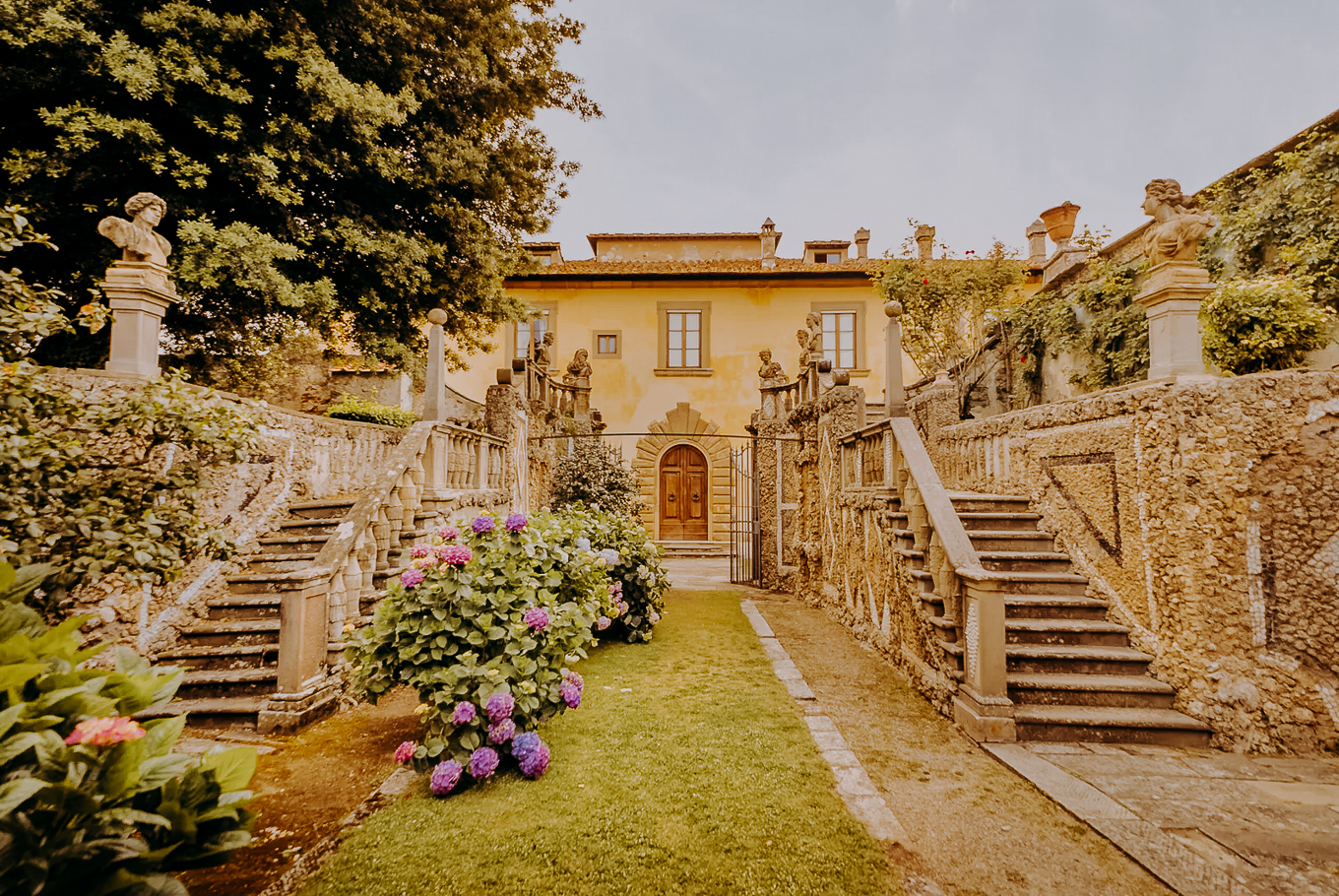
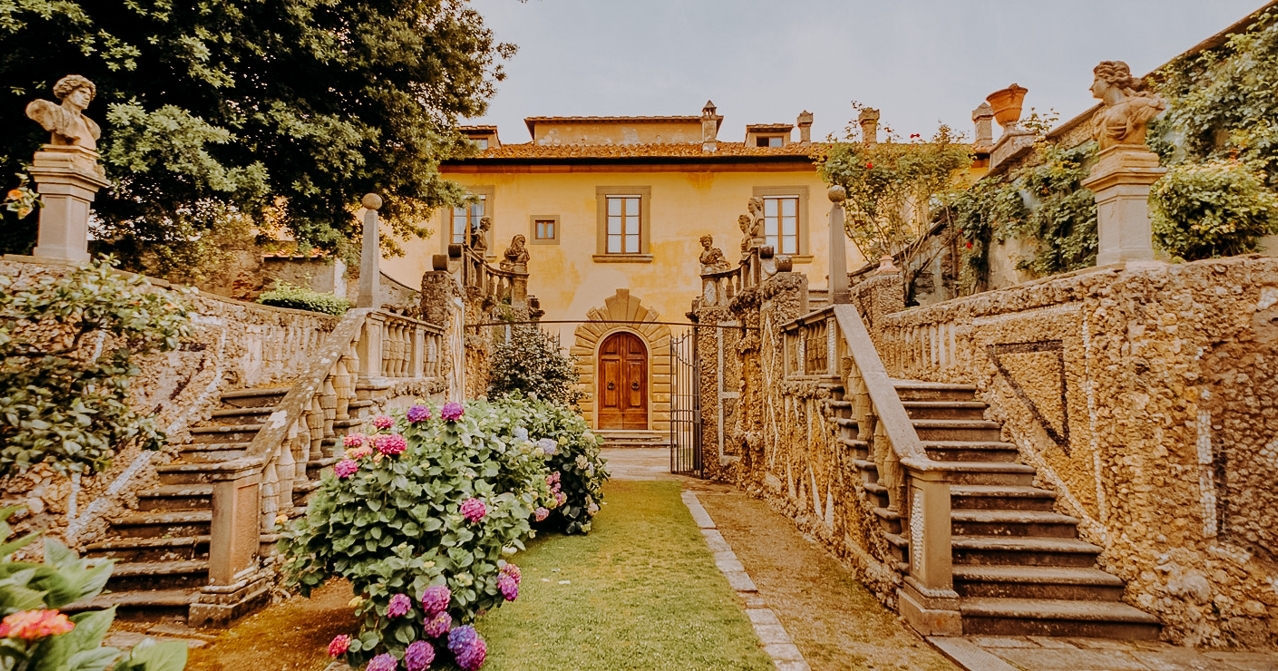
The villa and its gardens as we see them were created in the early 1600s by Zanobi Lapi, a wealthy merchant and Medici courtier. He built in the spirit of late Florentine Mannerism — fountains, grottoes and an ingenious hydraulic system, the kind of theatrical garden engineering associated with names like Ammannati and Buontalenti, where architecture becomes stage scenery. In the 18th century the Capponi and Cerretani families refined the grounds, and engravings of the period helped make Gamberaia a celebrated stop on the Grand Tour. Then came decline — until, at the turn of the 20th century, a Romanian noblewoman named Princess Jeanne Ghyka swept away the faded flowerbeds and conceived the parterre d'eau that has defined the place ever since. After wartime damage, the Florentine industrialist Marcello Marchi restored villa and gardens from 1954, and since 1994 the Marchi and Zalum families, now through a dedicated Trust, have kept it alive. A wedding here is the latest chapter in six centuries of people refusing to let this hillside fade.
Do you want a backdrop nobody recognises — or one the whole world already loves?
Some couples want privacy in an unknown place; others want a setting that needs no explanation. Gamberaia is firmly the second kind, and I photograph it accordingly.
See how I film a Tuscan weddingStaying on the Estate: The Villa and Three Historic Apartments
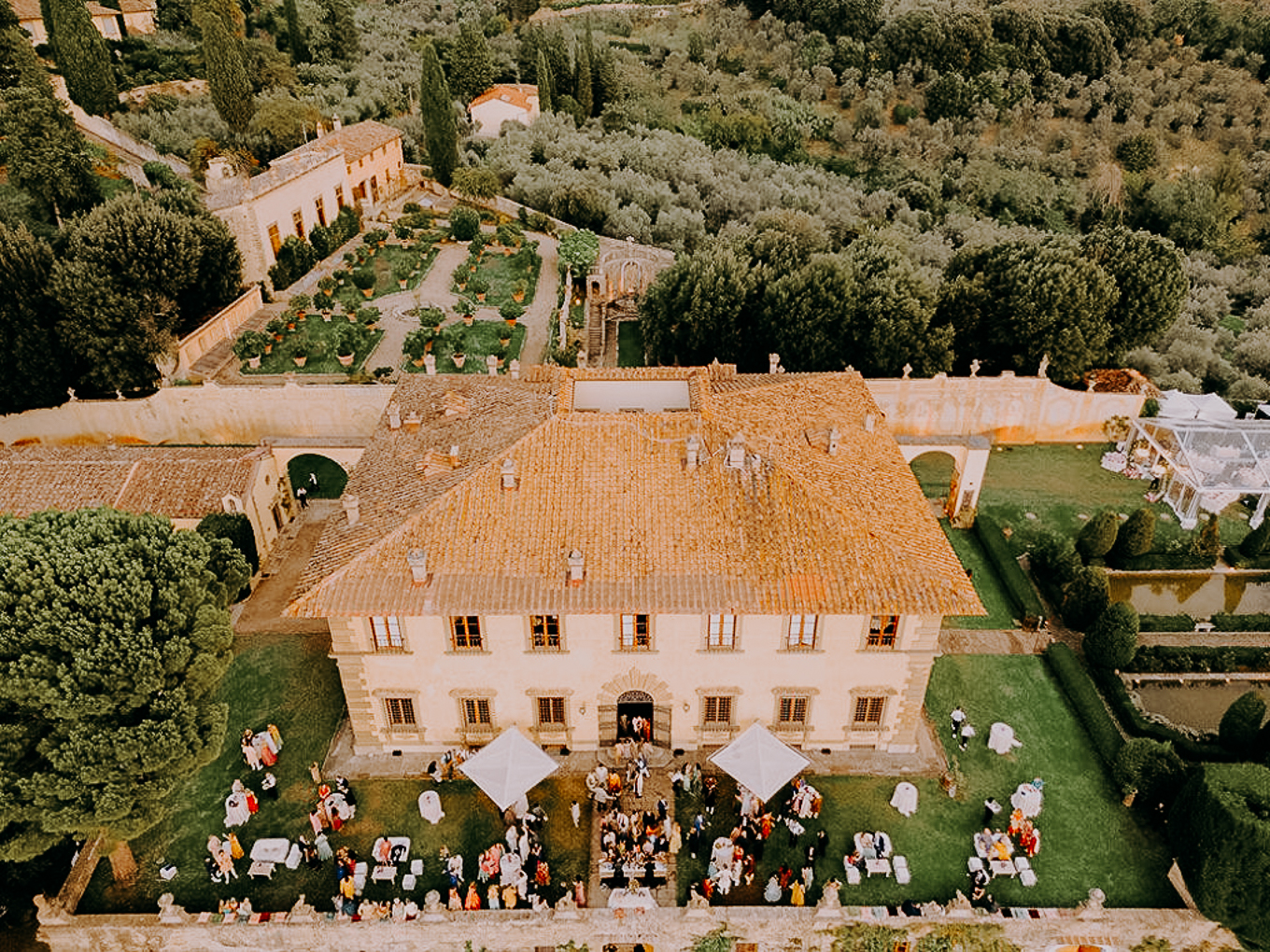
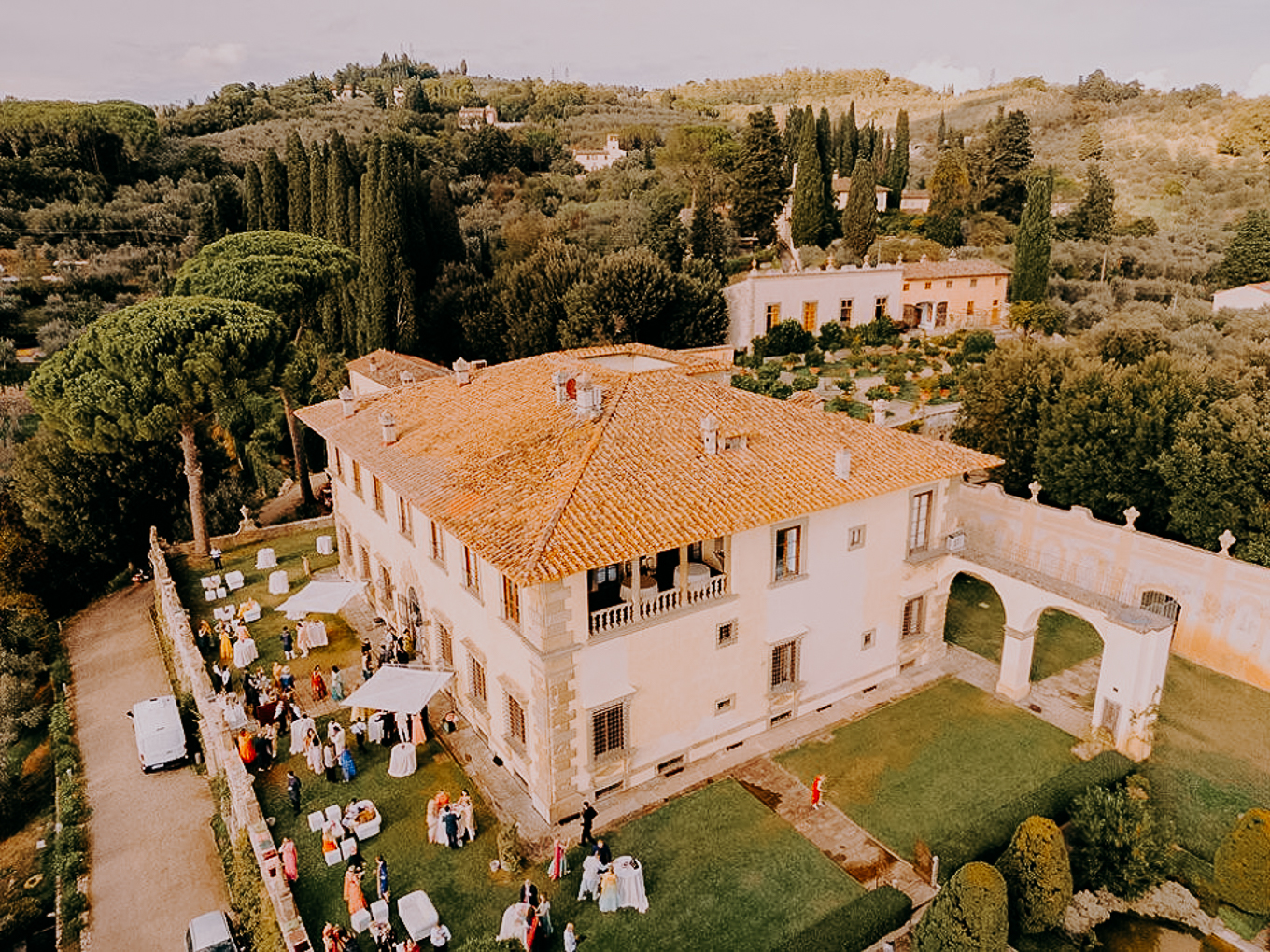
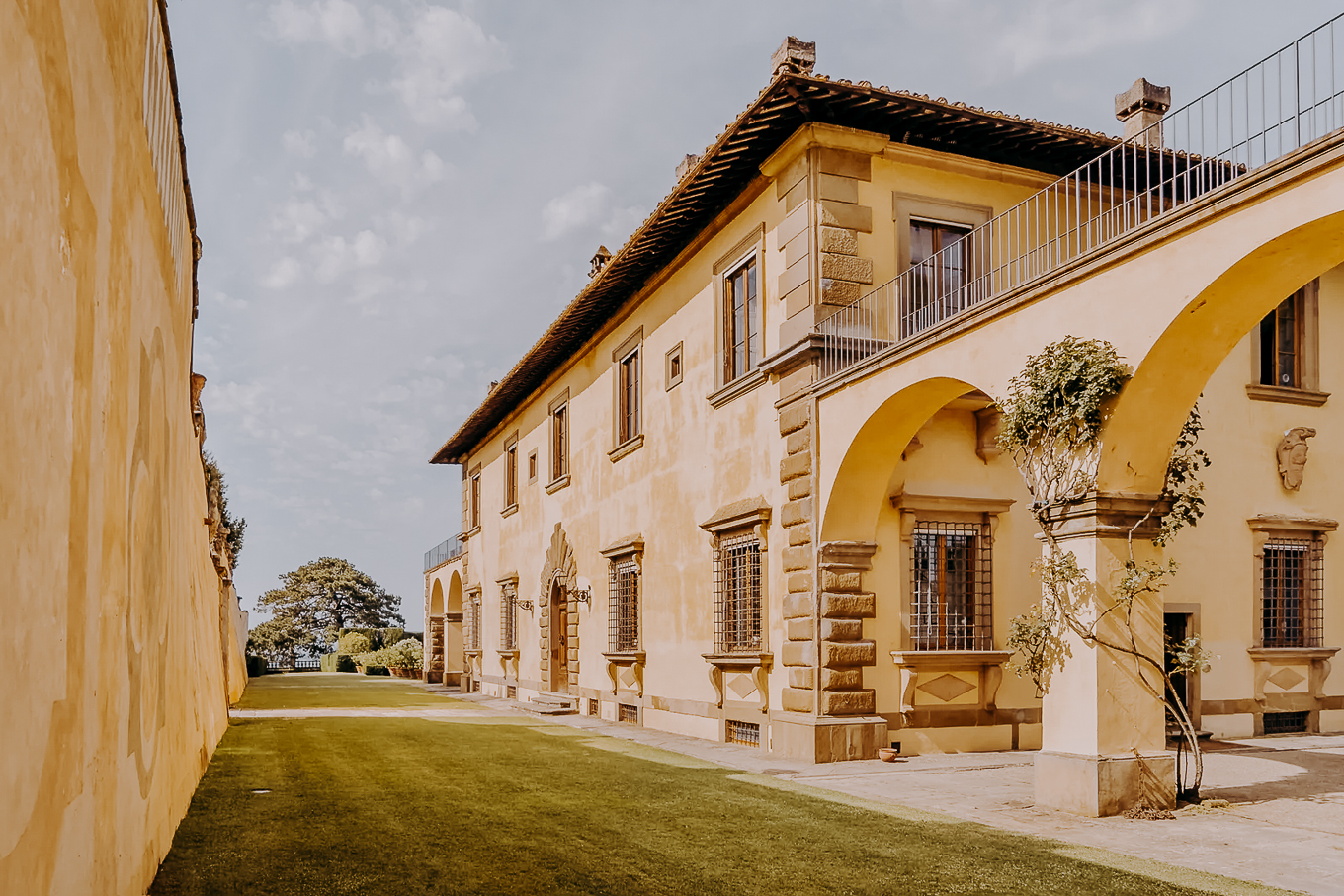
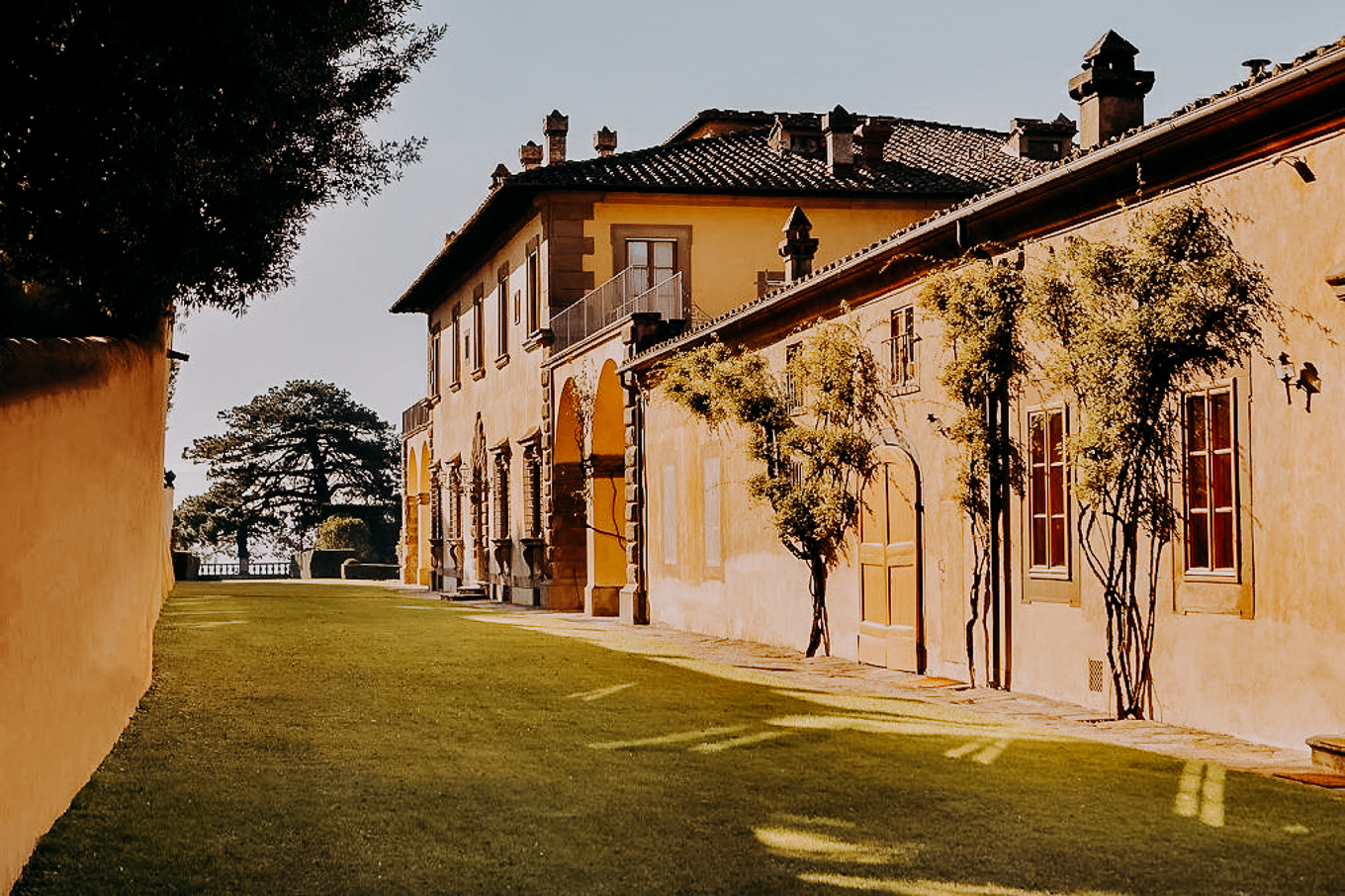
Gamberaia is not a hotel; it opens its gates as a private residence to be lived in, which is exactly how a wedding should feel here. Rented in its entirety — the main villa plus three apartments — the estate sleeps up to forty guests and includes access to two swimming pools. The villa itself accommodates up to eighteen people across nine individually decorated bedrooms, its ground floor unfolding through refined halls and an internal arcaded courtyard, with a lounge that opens straight onto the gardens and the panorama of Florence and the Arno valley below.
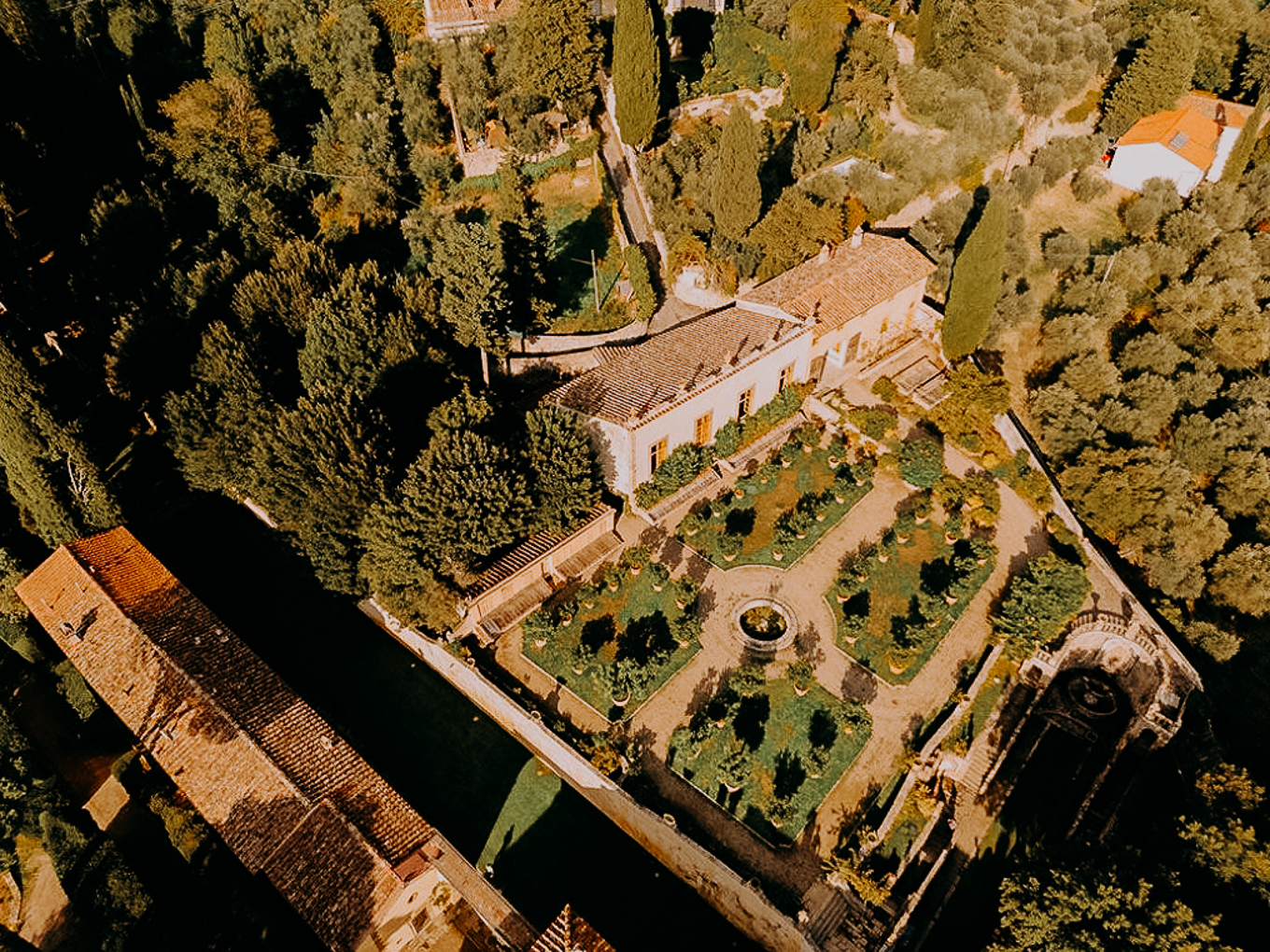
The three apartments each carry their own history. La Limonaia, beside the room where the lemon trees overwinter, is a 15th-century farmhouse that once belonged to Bernardo Rossellino's family, recently restored into suites for eight and hung with photographs from the estate's own art project. Nettuno, set on the old bowling green, sleeps six and was once a grand hall for pallacorda, an early ancestor of tennis. La Cappella, also overlooking the gardens toward Settignano and Florence, sleeps six and was originally part of the adjoining 17th-century chapel. Having your closest people sleep within these walls turns a single afternoon into a slow, shared weekend.
Where the Day Unfolds, and the Question of Privacy
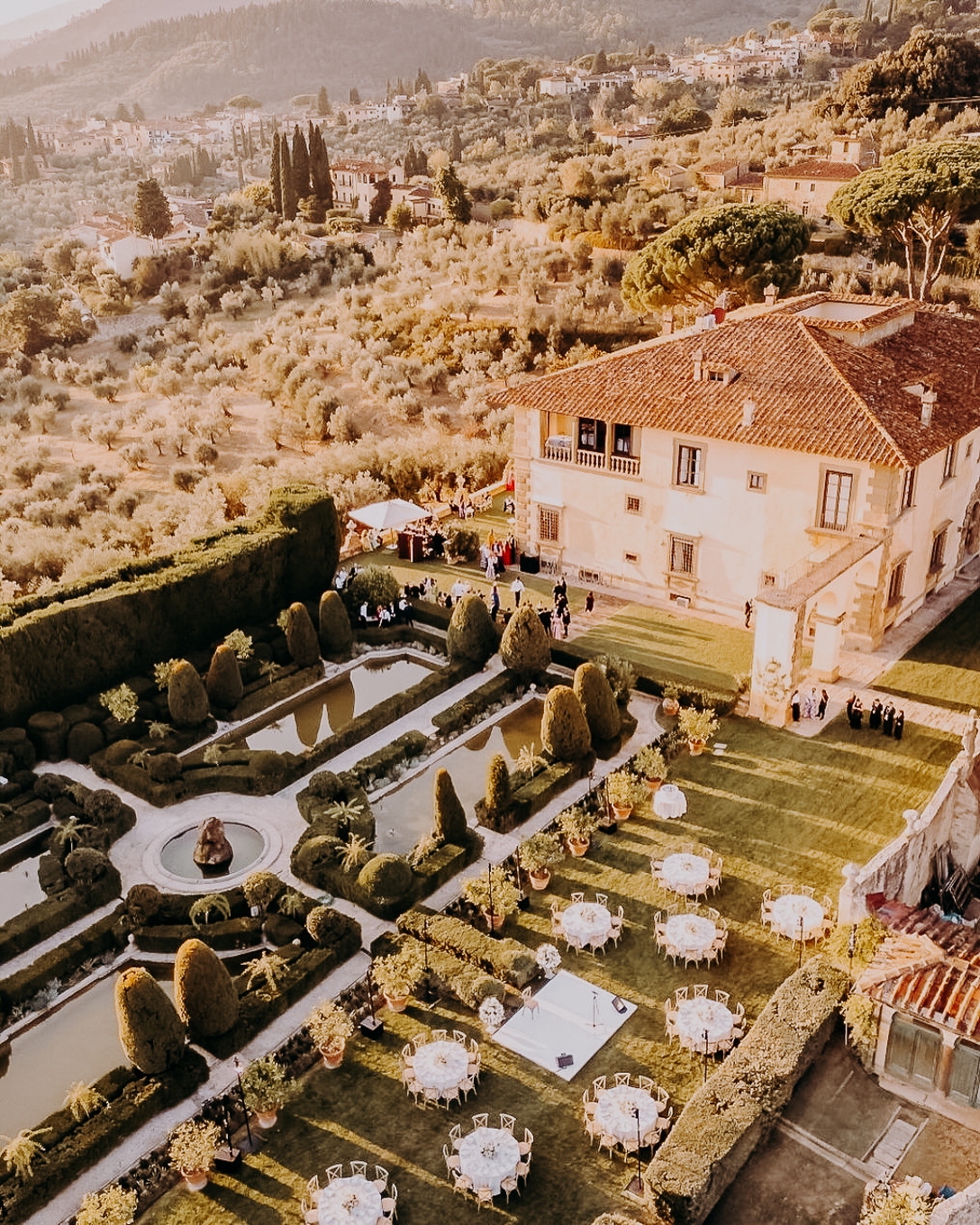
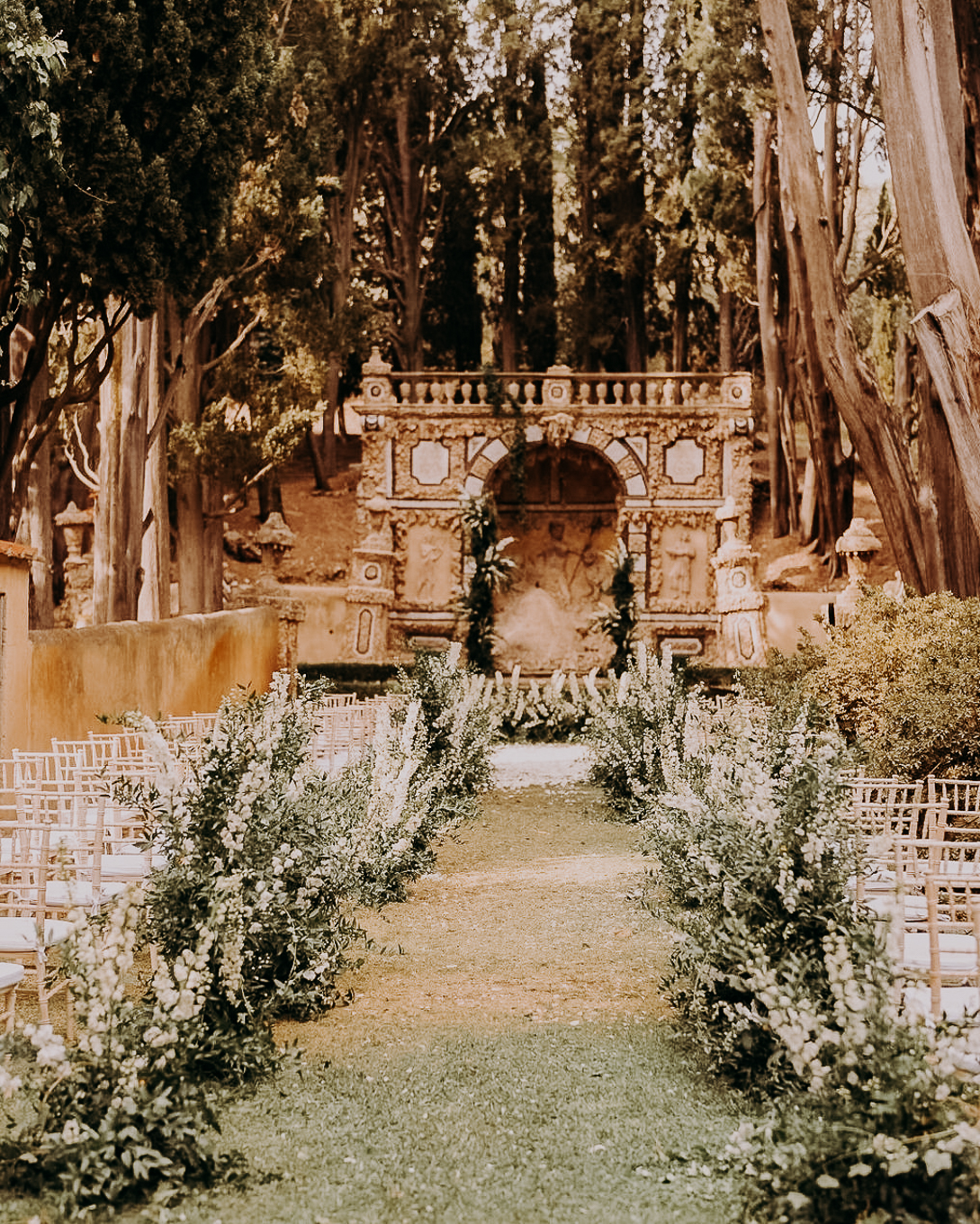
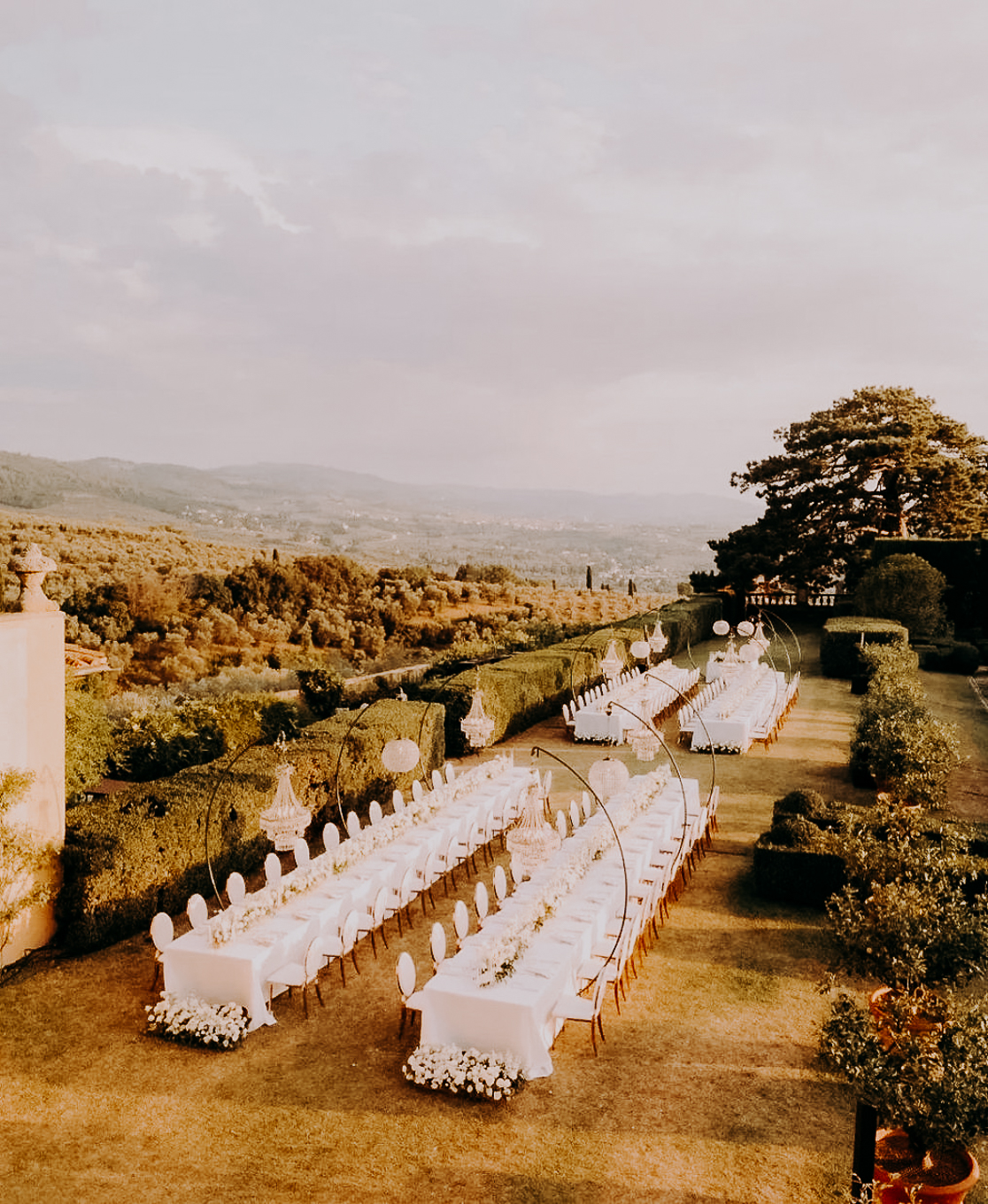
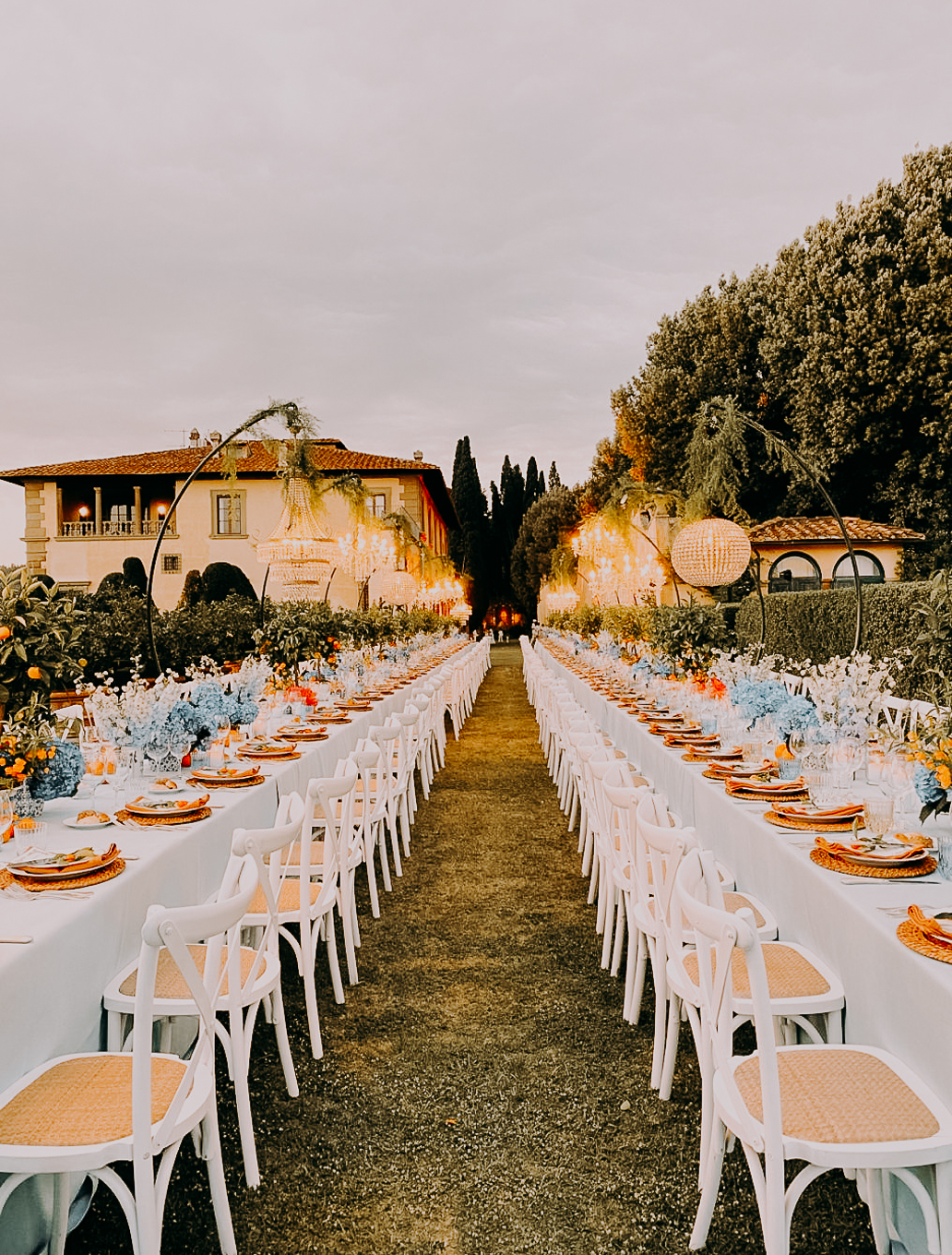
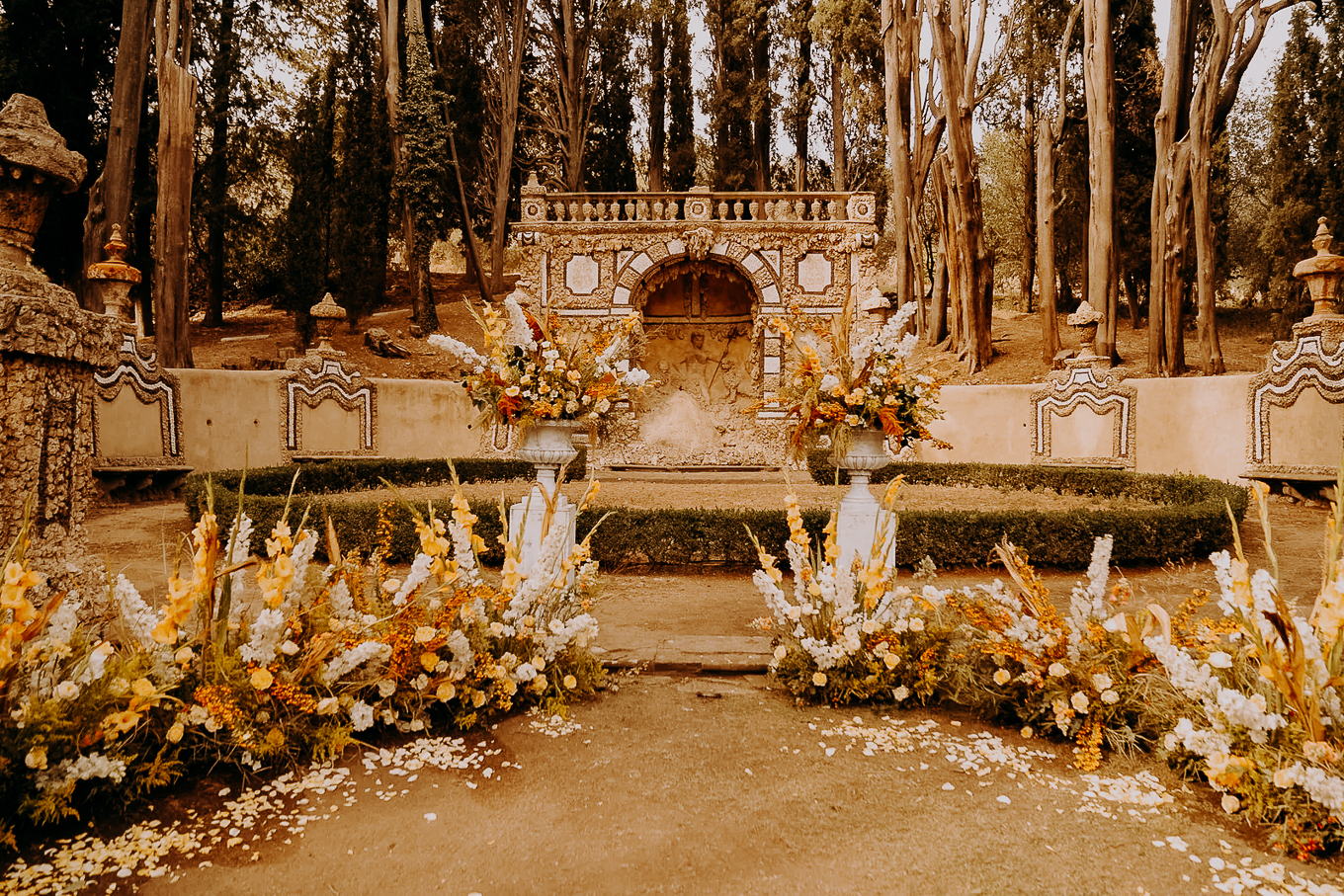
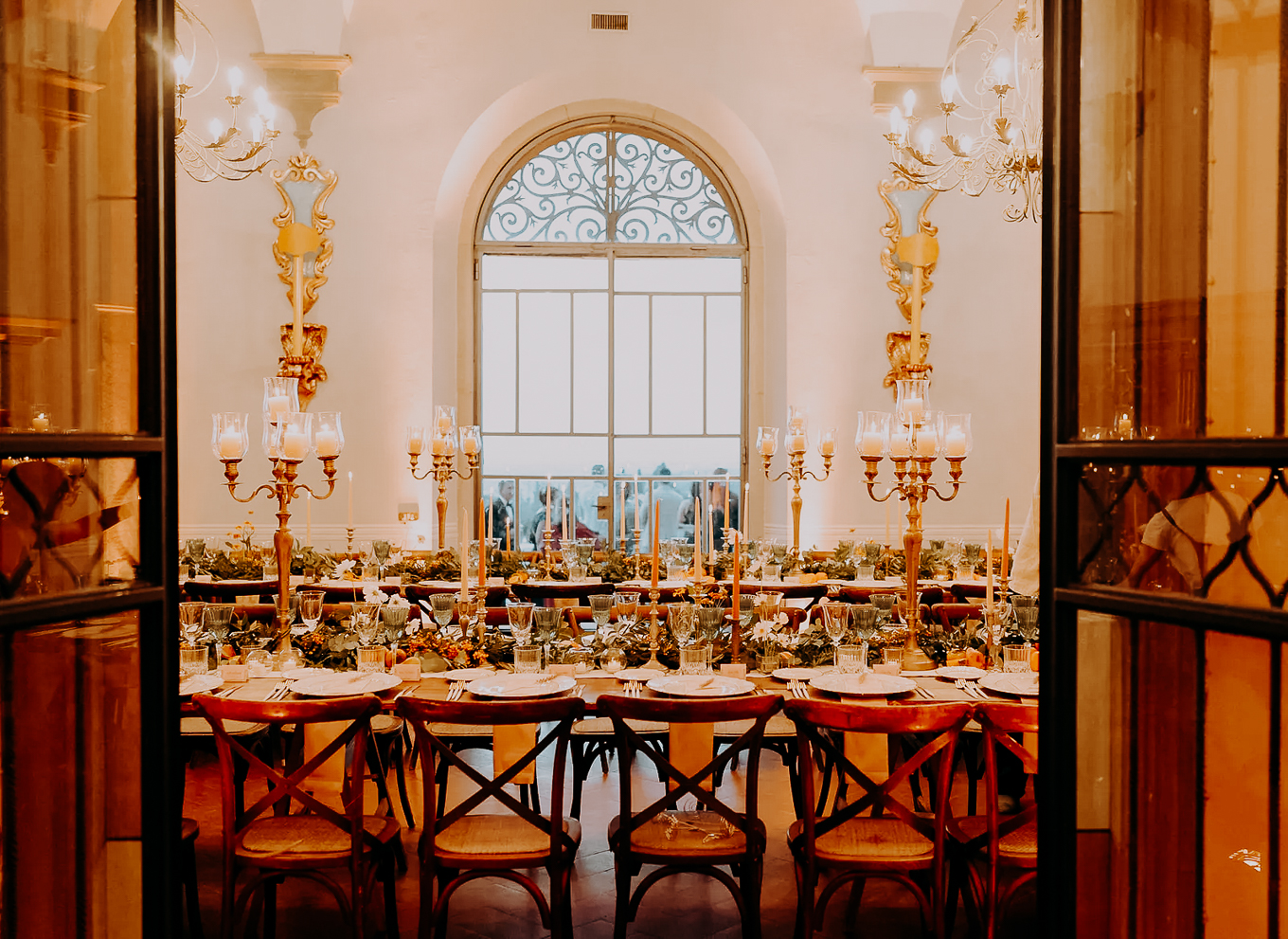
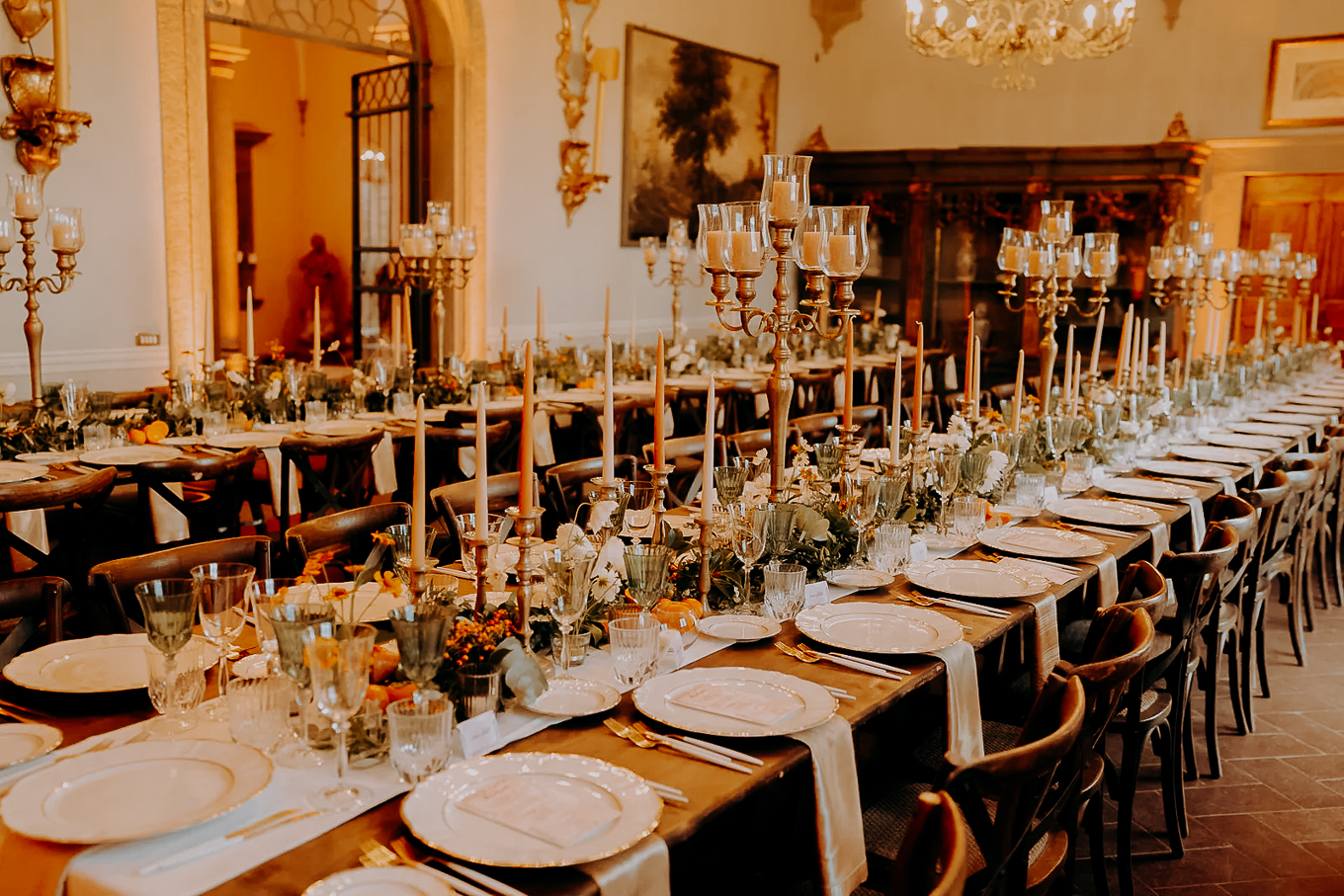
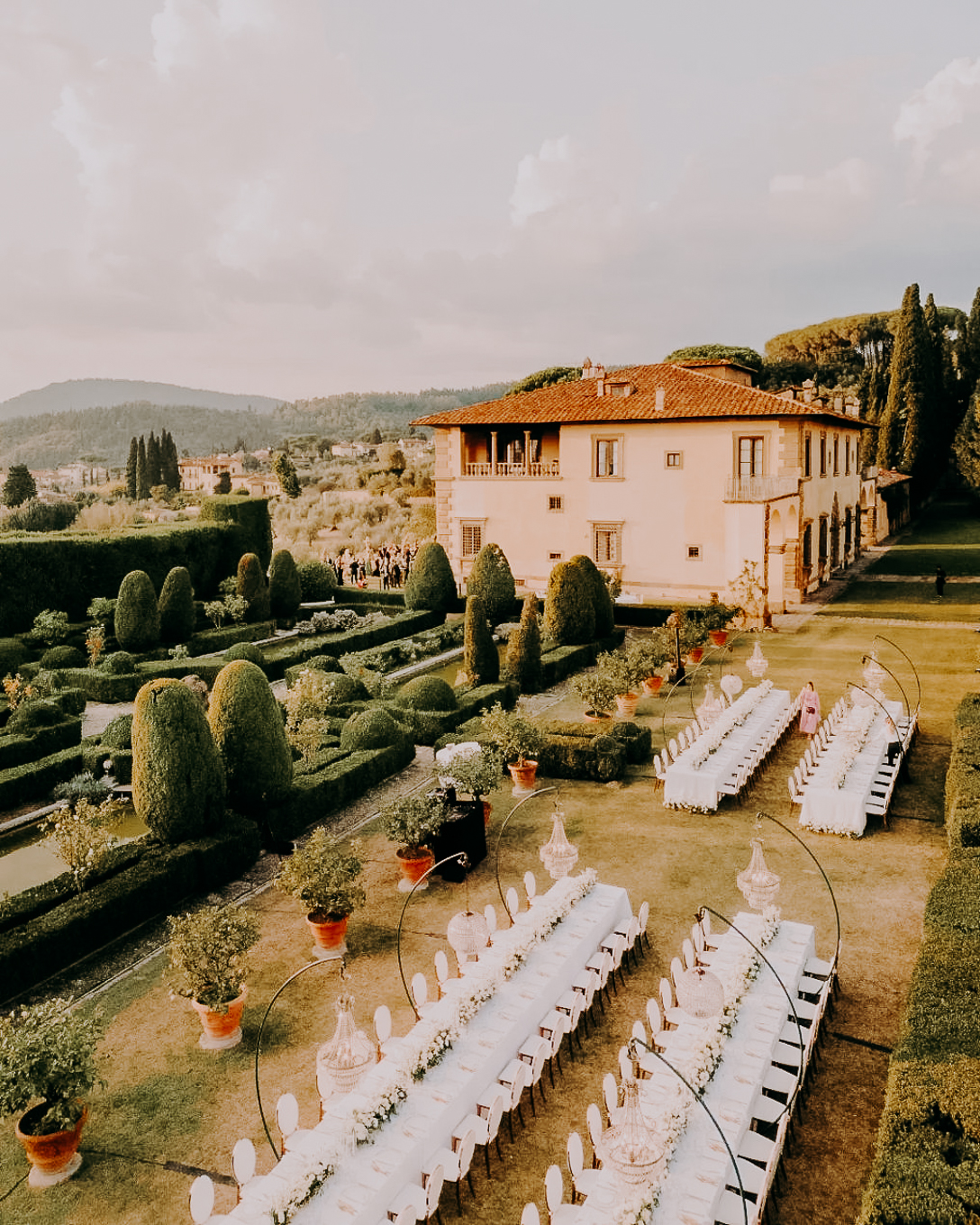
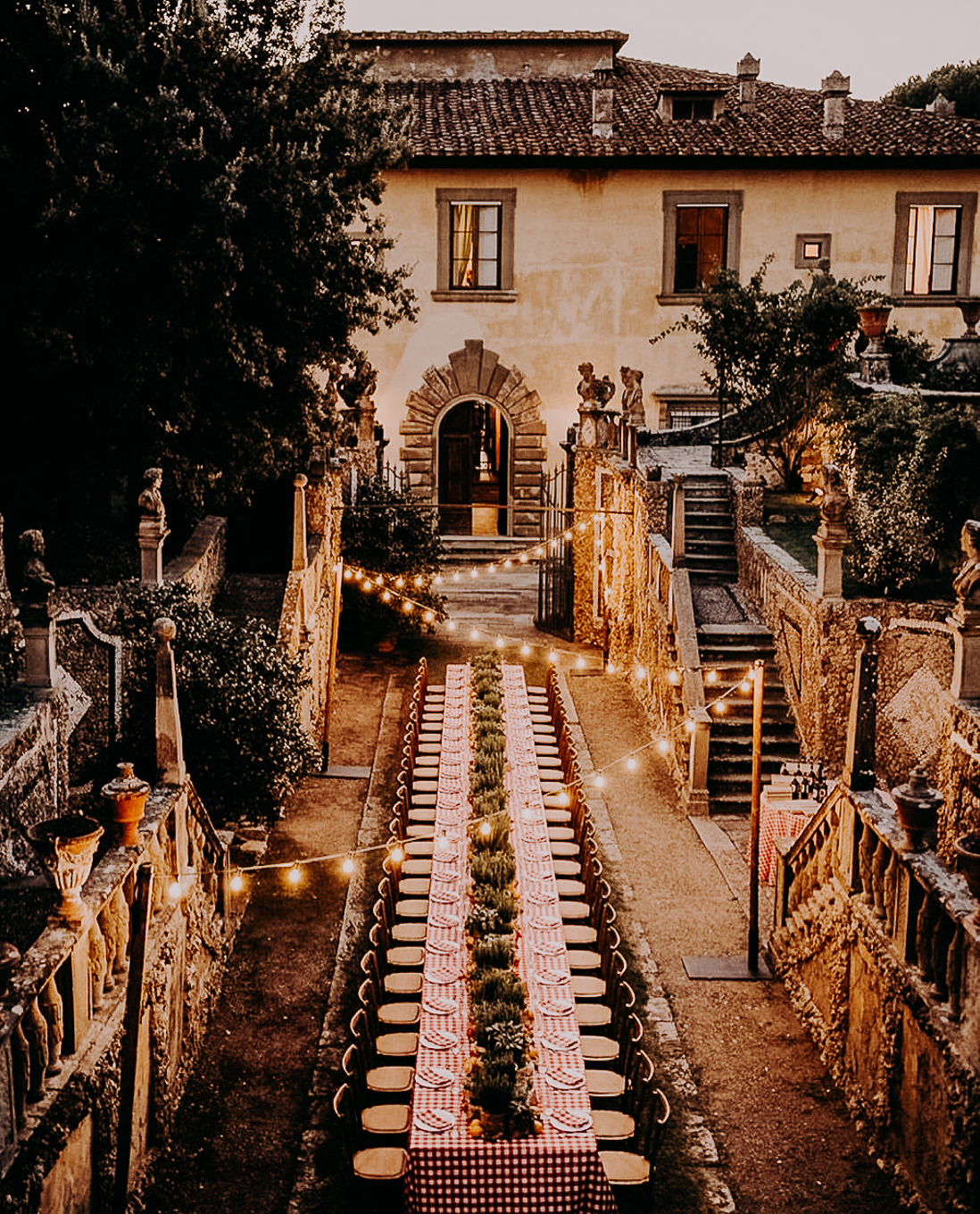
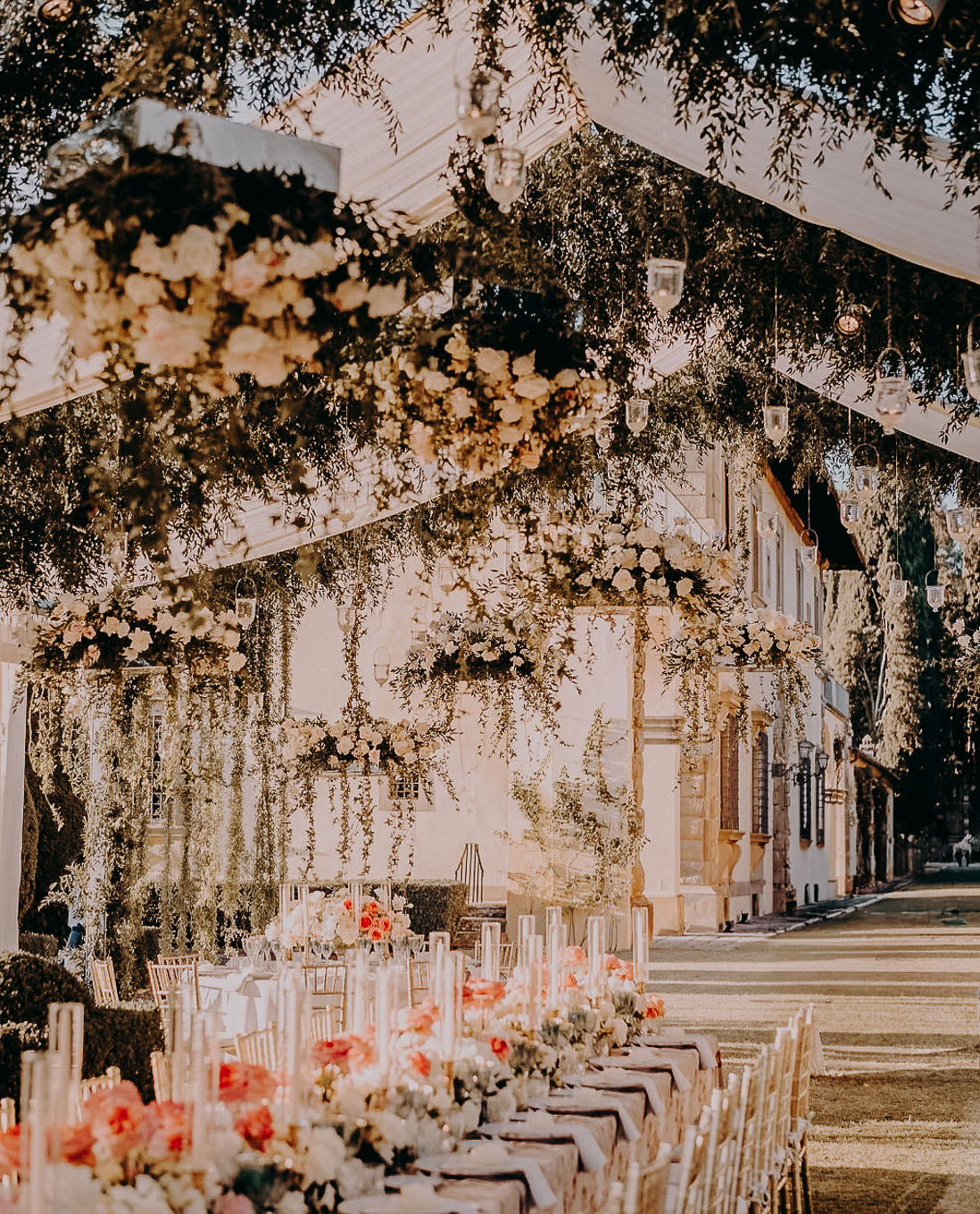
What sets a Gamberaia wedding apart is the rare combination of fame and seclusion. The gardens are visited and admired the world over, yet when you book the estate for your event, the entire property — the resplendent gardens and the historic interiors alike — is reserved exclusively for you. There is no sharing the parterre d'eau with day visitors while you exchange vows; for those hours, one of Italy's most photographed gardens belongs to two people. Ceremonies sit naturally among the cypress-lined vistas and mirrored basins, while the villa's halls and terraces hold receptions and dinners with the Arno valley glowing beyond. The estate's team handles each event with deliberate discretion, shaping the day around the place rather than imposing a template on it.
What if your wedding photographs aged like the garden — better with every passing year?
A setting this timeless doesn't date. The pictures we make here will look as composed in thirty years as on the day itself.
Get in touch about your weddingReaching Villa Gamberaia: Notes for Couples Travelling from Abroad
For international couples, the great advantage of Gamberaia is that it is both secluded and remarkably close to a major city. Settignano sits in the hills on the edge of Florence, only a short drive from the historic centre, which means guests can stay in the heart of the city and reach the villa easily, or settle into the estate and dip into Florence whenever they wish. The city's own airport is the nearest, roughly half an hour away; Pisa offers a further gateway to the west, and Rome's airports, a longer drive south, widen the choice of long-haul flights. Because the lanes around Settignano are narrow and winding, I always suggest guests arrange transfers rather than self-driving in the dark. For your planner and your drivers, the address is Via del Rossellino 72, 50135 Settignano, Florence.
Questions Couples Bring Me Before Booking Gamberaia
How does the legal side of marrying in Italy work for a foreign couple?
A legally binding civil marriage in Italy is performed by Italian authorities, and the documents required depend on your nationality. Most couples coming from abroad need a sworn declaration of no impediment to marry — usually obtained through your own country's consulate or embassy in Italy — alongside other paperwork, and it is best begun several months ahead rather than in the final weeks. At Gamberaia, most of the international couples I photograph hold a symbolic ceremony in the gardens and complete the legal formalities separately, often at a town hall in or near Florence. My honest advice is to confirm exactly what your two passports require early on, because that single detail shapes the entire timeline.
Will the famous gardens really be private during our wedding?
Yes. Although Gamberaia is celebrated and visited, booking it for your event reserves the whole estate — gardens and historic interiors — exclusively for you. That exclusivity is the point: for the hours of your wedding, you are not sharing the parterre d'eau or the terraces with anyone else. It is one of the rare places where a world-famous setting becomes, briefly, entirely yours, and it is worth confirming the exact terms of exclusive use with the estate when you enquire.
How many guests can a wedding here realistically include?
This is the most important question to settle early, and an honest one. The estate sleeps up to forty guests in exclusive use, and Gamberaia has always been admired for achieving a great deal on an intimate scale rather than for hosting vast crowds. The estate does not publish a single fixed figure for ceremony or dinner numbers, so the right number for your celebration is a conversation to have directly with their team. If you are picturing something refined and relatively contained, this is its natural register; if you are planning a very large wedding, ask about capacity before you fall in love with the photographs.
Is there a chapel or an option for a religious ceremony?
The estate has historic links to a 17th-century chapel — one of the guest apartments, La Cappella, was originally part of it — but it is best to treat a religious wedding as something to discuss specifically rather than assume. A formal Catholic ceremony carries its own requirements, with documentation arranged through your home parish and diocese and ample lead time, and there are beautiful churches in Settignano and Florence nearby. Many couples instead choose a symbolic ceremony in the gardens, which allows complete freedom over the words and ritual, and reserve the legal step for a town hall.
When is the best time of year to marry at Gamberaia?
Because the garden's structure is evergreen — box hedges and cypresses rather than seasonal flowers — Gamberaia photographs beautifully across much of the year, which is one of its quiet advantages. That said, late spring and early autumn tend to give the kindest light and the most comfortable weather on the hill above Florence, and the low sun of those seasons sits especially well on the water basins. High summer brings heat in the middle of the day but long golden evenings; winter is stark and very private. There is no wrong season here, only different moods of the same enduring composition.
What makes photographing the parterre d'eau different from any other garden?
The reflection changes everything. In most gardens I work with light and depth; here I also work with a mirror, which means composition has to account for what the water gives back as much as what stands above it. Still air at dawn or dusk turns the basins into near-perfect reflections, so the same scene reads twice in a single frame. It rewards patience and timing rather than haste, and it is the reason a Gamberaia wedding album looks unlike one made anywhere else — the garden does half the work, if you let it.