Villa Cora: A Grand Florence Wedding in a Villa Built for a Bride
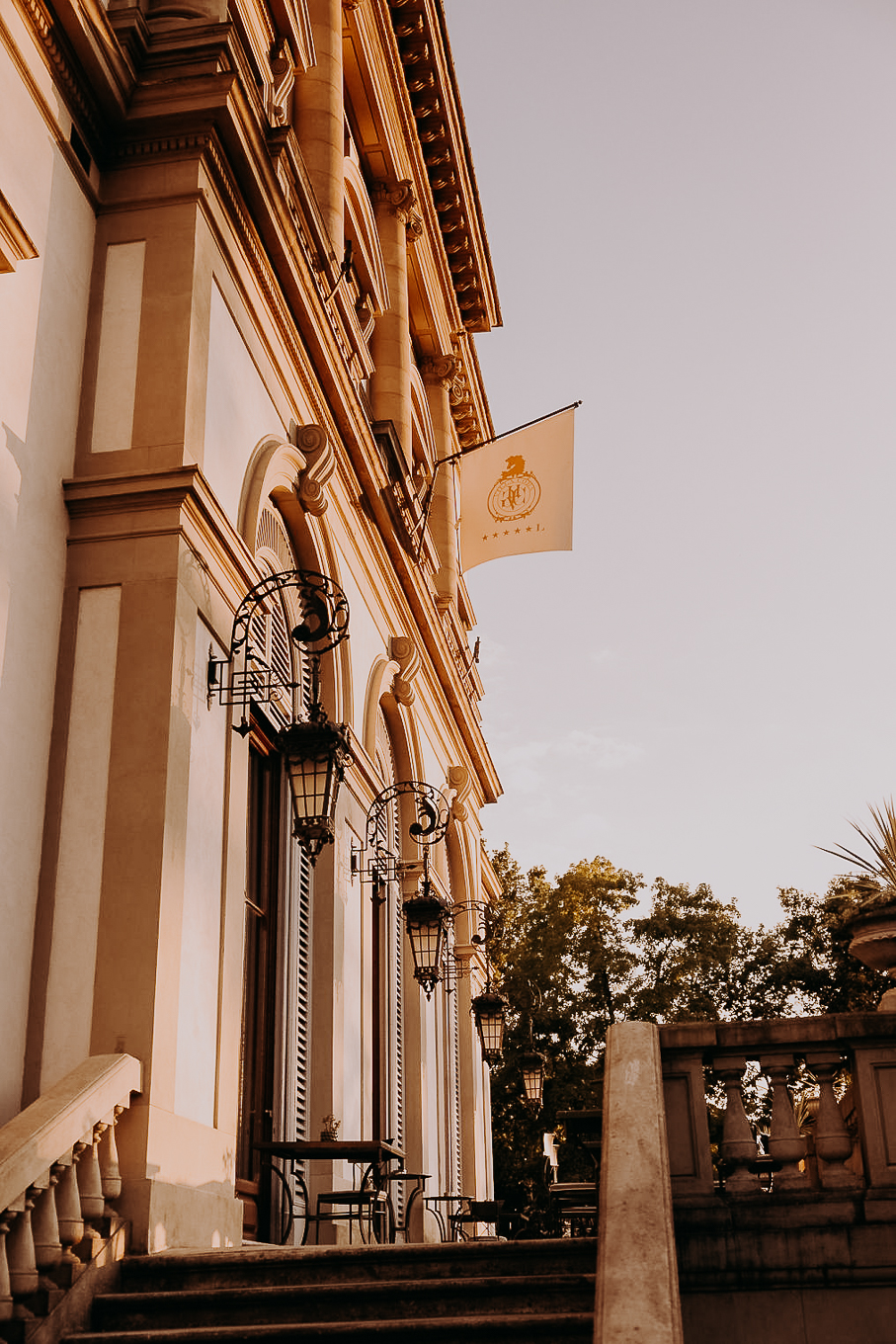
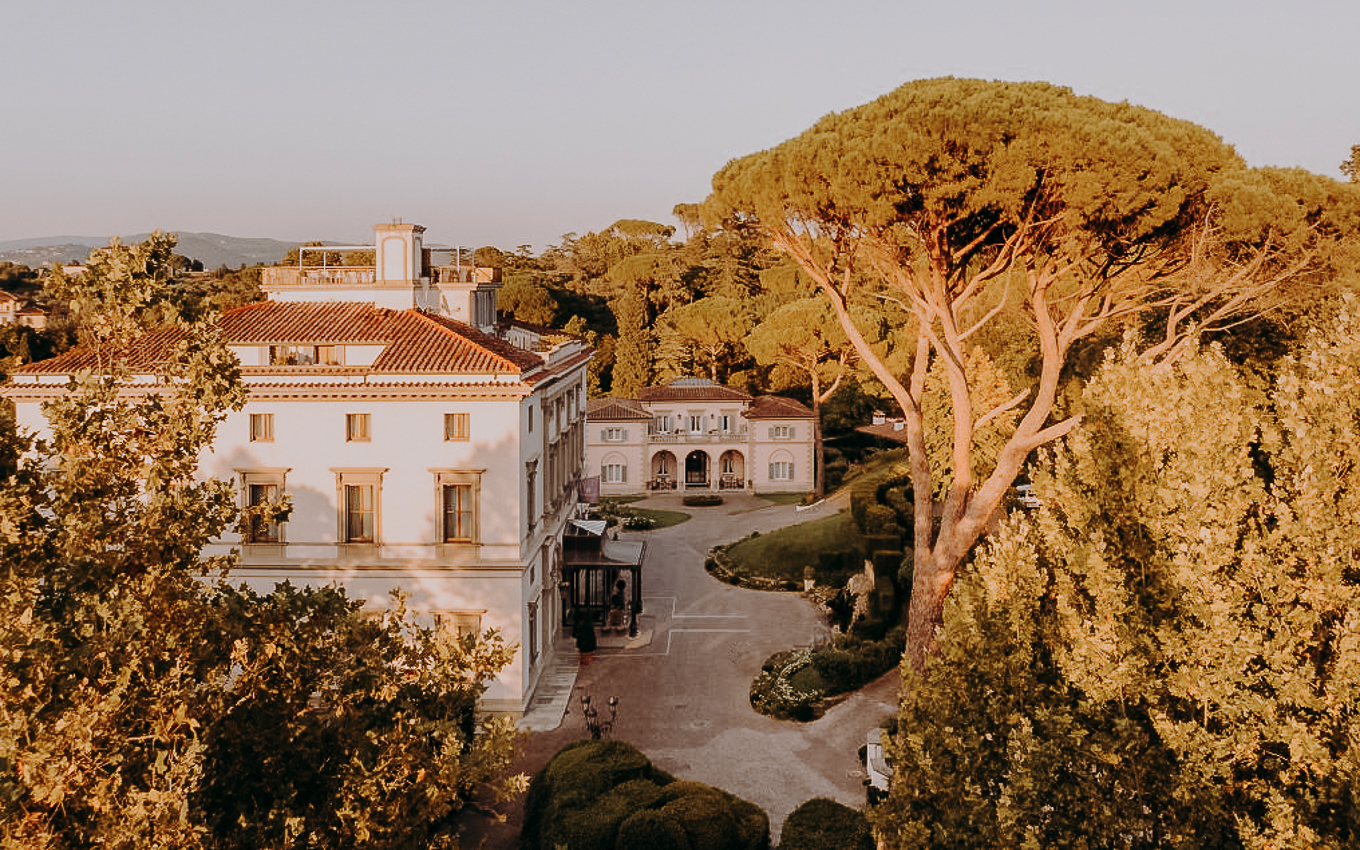
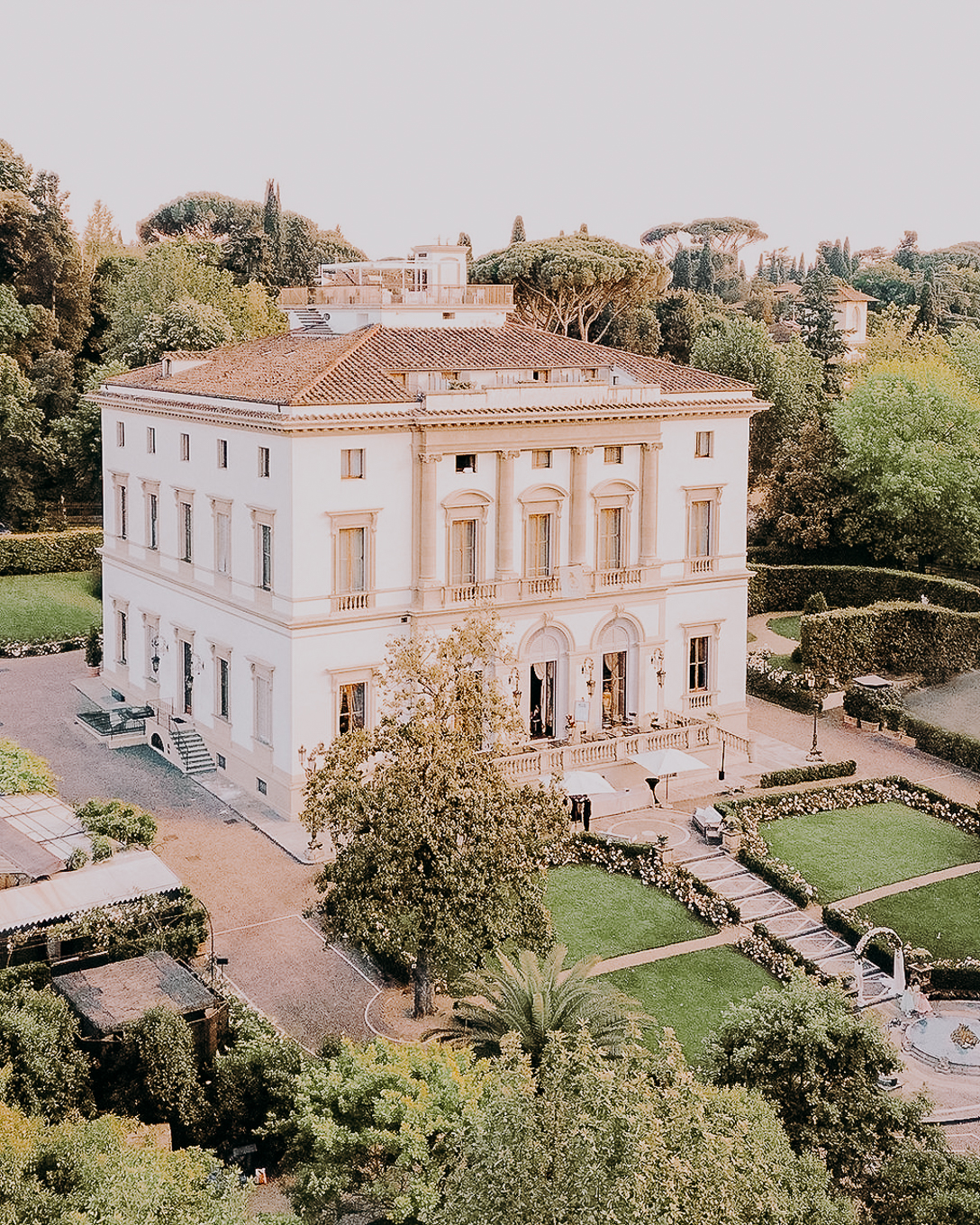
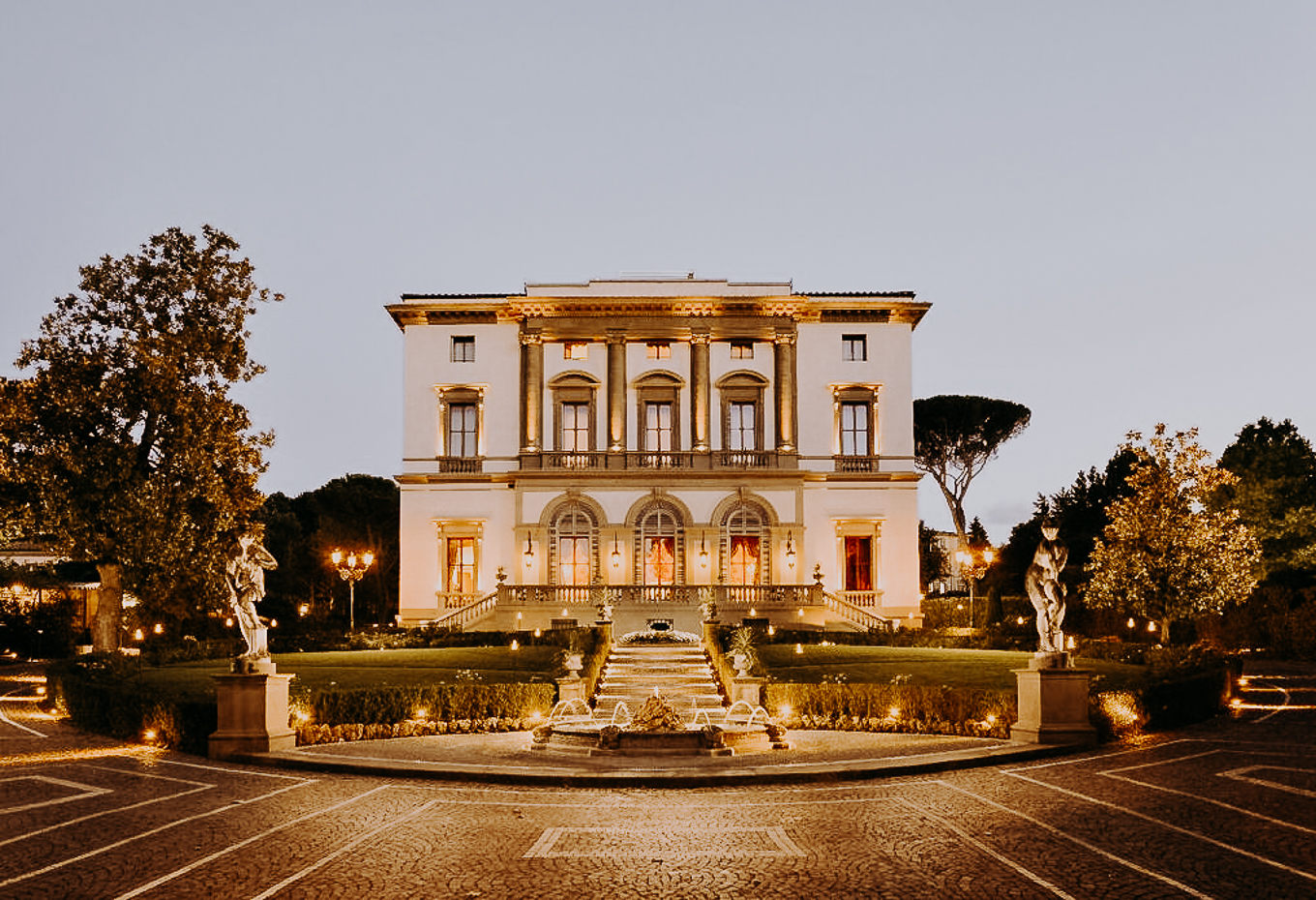
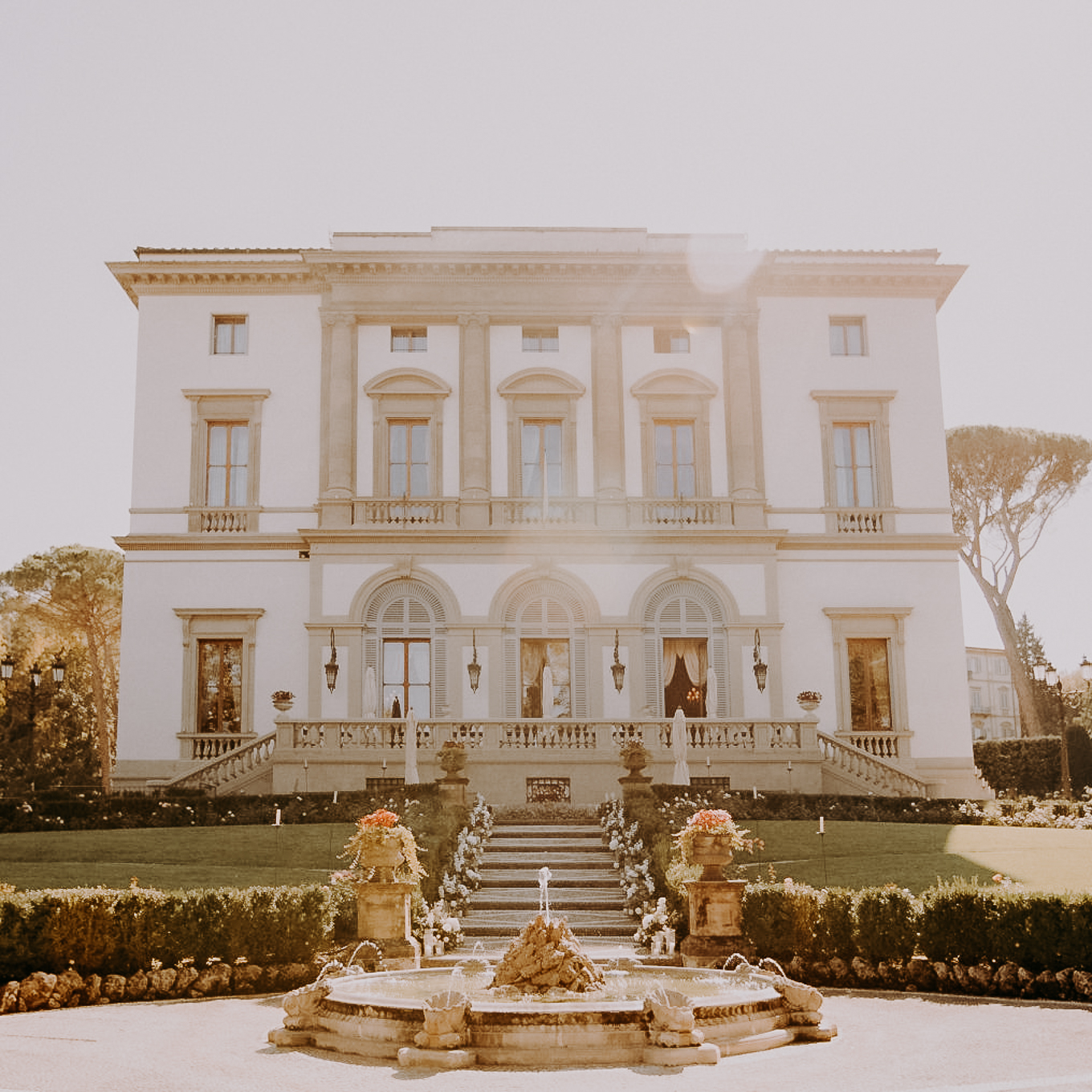
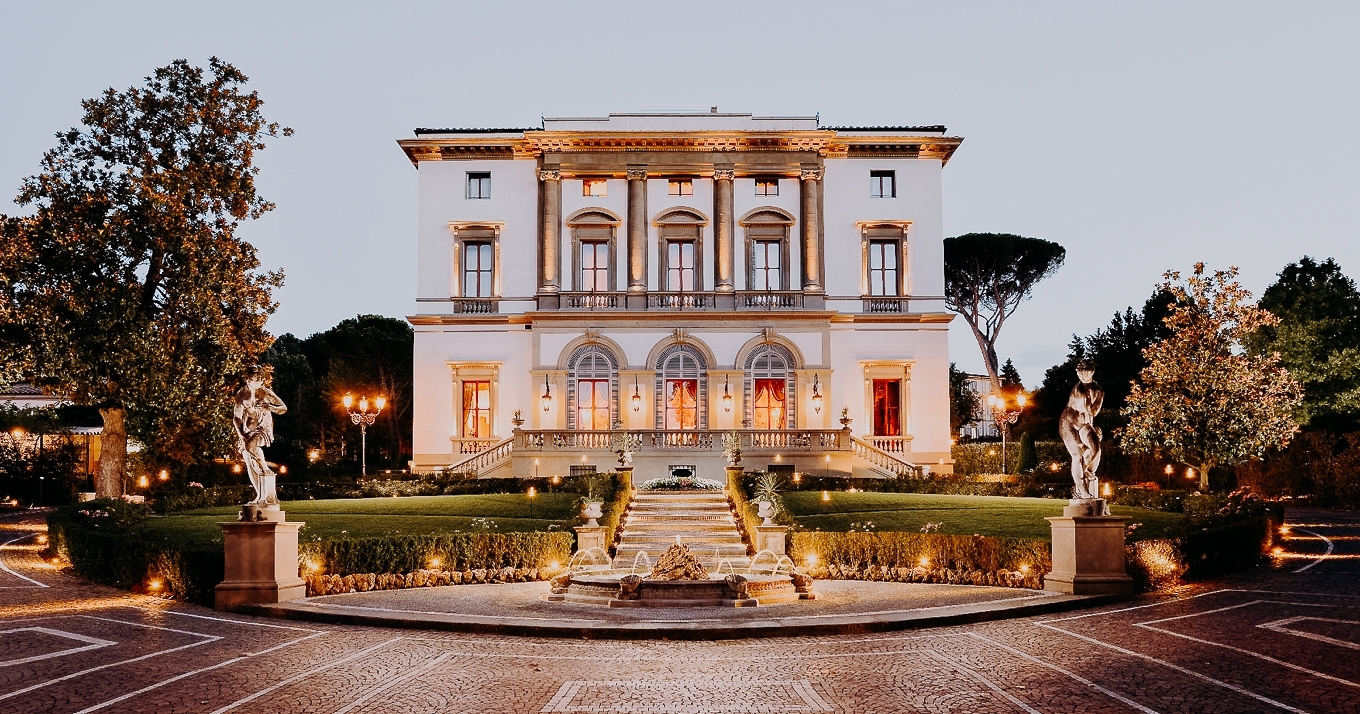
Villa Cora was, more or less, built as a wedding present. In the late 1860s, when Florence was briefly the capital of Italy, a German banker named Baron Gustave Oppenheim commissioned this neoclassical villa on the hillside above the city in honour of his young bride, Eugenia Fenzi. I'm Francesco Caroli, an Italian wedding photographer, and of all the places I work as a wedding photographer in Florence, very few wear their romantic history as openly — or as dramatically — as this one. If you are planning a destination wedding in Florence and you want true grandeur with a real story behind the marble, Villa Cora rewards a closer look.
Here is the twist that most couples never hear. The same baron who built this villa out of love later convinced himself, rightly or wrongly, that his wife had been unfaithful — and, consumed by jealousy, set out to burn the place down. He was stopped by the authorities just in time, forced to leave Florence, and made to sell. The villa then passed to Empress Eugénie, the widow of Napoleon III, who turned it into a meeting place for Florentine nobility. In other words, these walls have already witnessed love at its most extravagant and its most volatile, and have spent the past century settling, gracefully, into the far happier business of celebrating it.
The Villa of Empresses, Ambassadors and Emperors
The name we use today arrived in 1894, when a new owner, Egidio Cora, gave the residence his own. His son, Giuliano Cora, served as an ambassador and welcomed remarkable guests through these doors — among them the Japanese Emperor Akihito, to whom the hotel's Imperial Suite is still dedicated. Over the decades the villa also hosted figures such as the French pianist and composer Claude Debussy. In the late 1960s it became an exclusive grand hotel; after a meticulous restoration it reopened in 2010, and in 2016 it joined the prestigious collection of The Leading Hotels of the World. To marry at Villa Cora is to step, briefly, into that lineage — to hold your day in rooms that have entertained the elite of three different centuries.
This matters for more than name-dropping. A place accustomed to hosting empresses tends to know how to look after people, and that institutional memory of service is something you feel rather than read about — it is, in my experience, what separates a genuinely grand venue from one that merely looks the part in photographs.
Would you rather your venue had no past — or one more dramatic than your own?
Some couples want a blank, modern canvas. Others want walls that have seen a century of passion. If you are the second kind, we should talk about how to film a day in a place like this.
See how I film a Florence weddingMarble, Murano Glass and Frescoed Halls
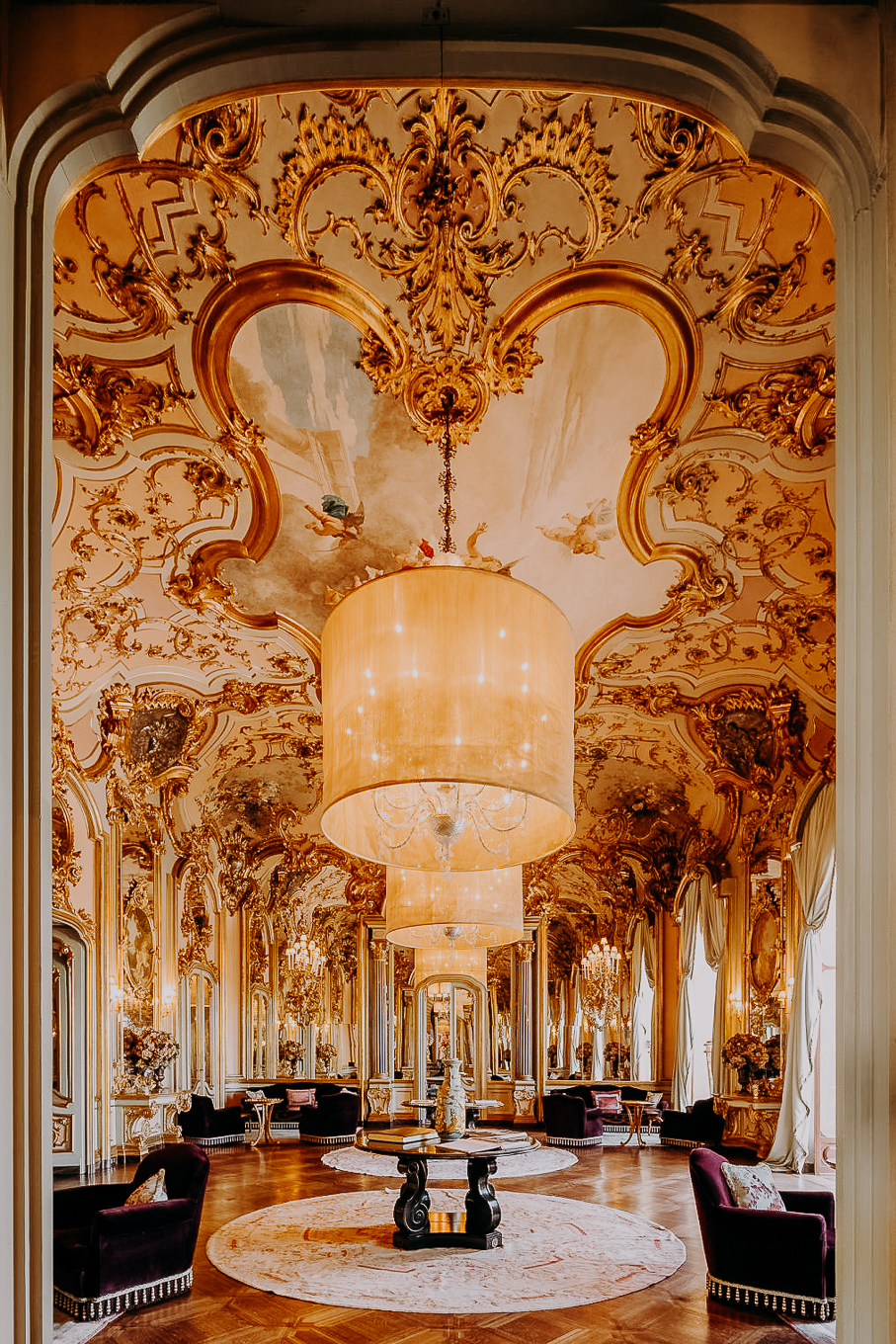
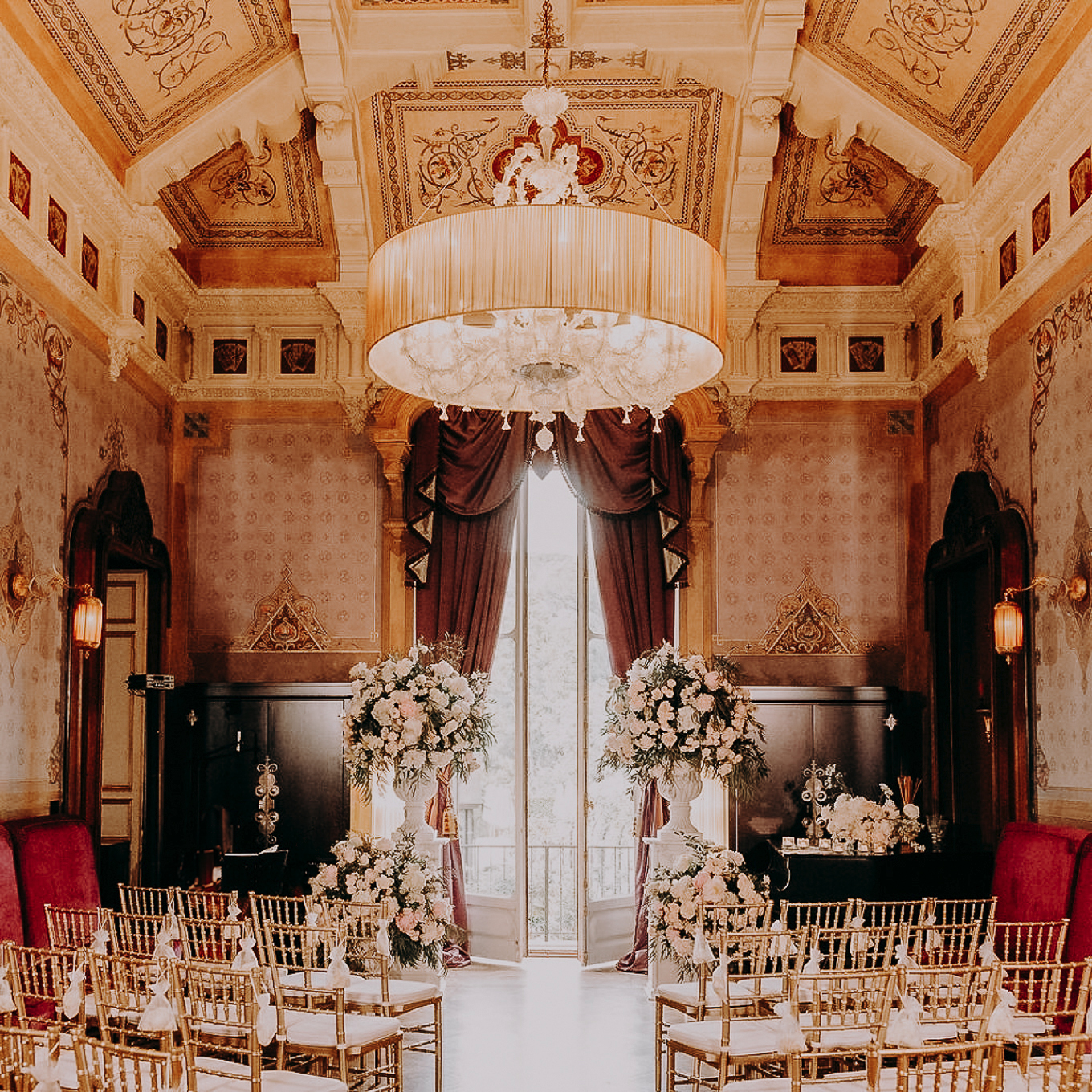
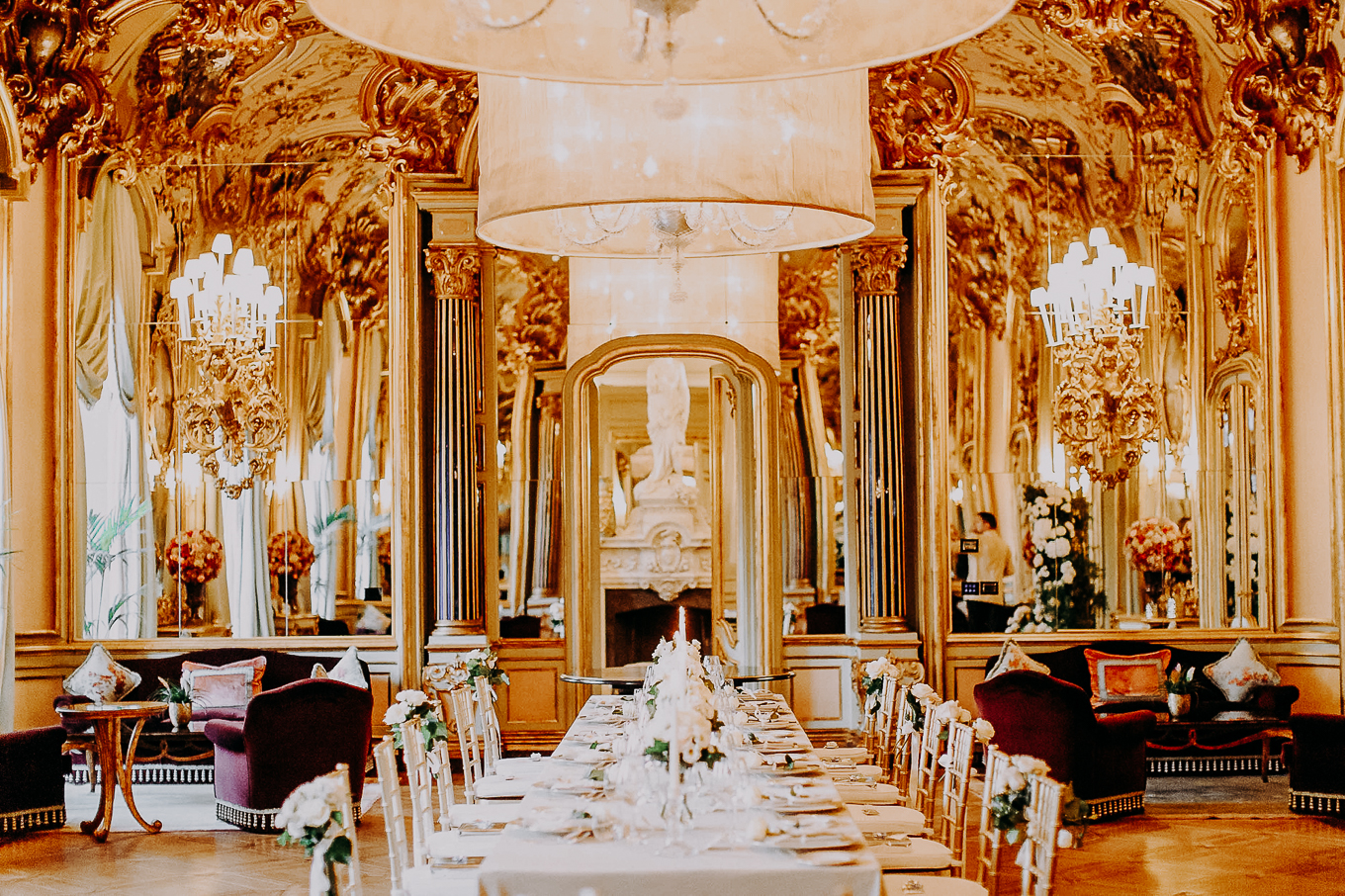
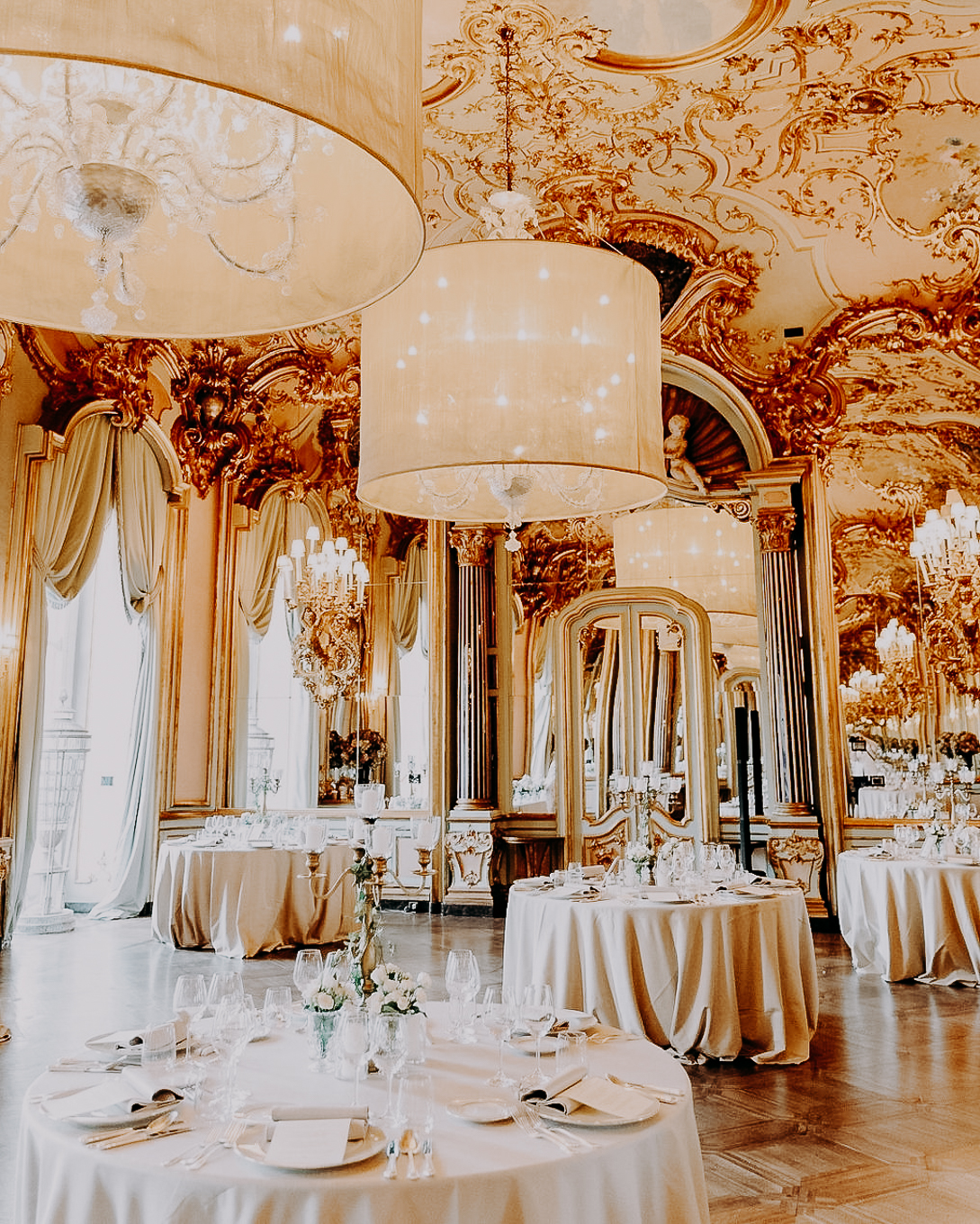
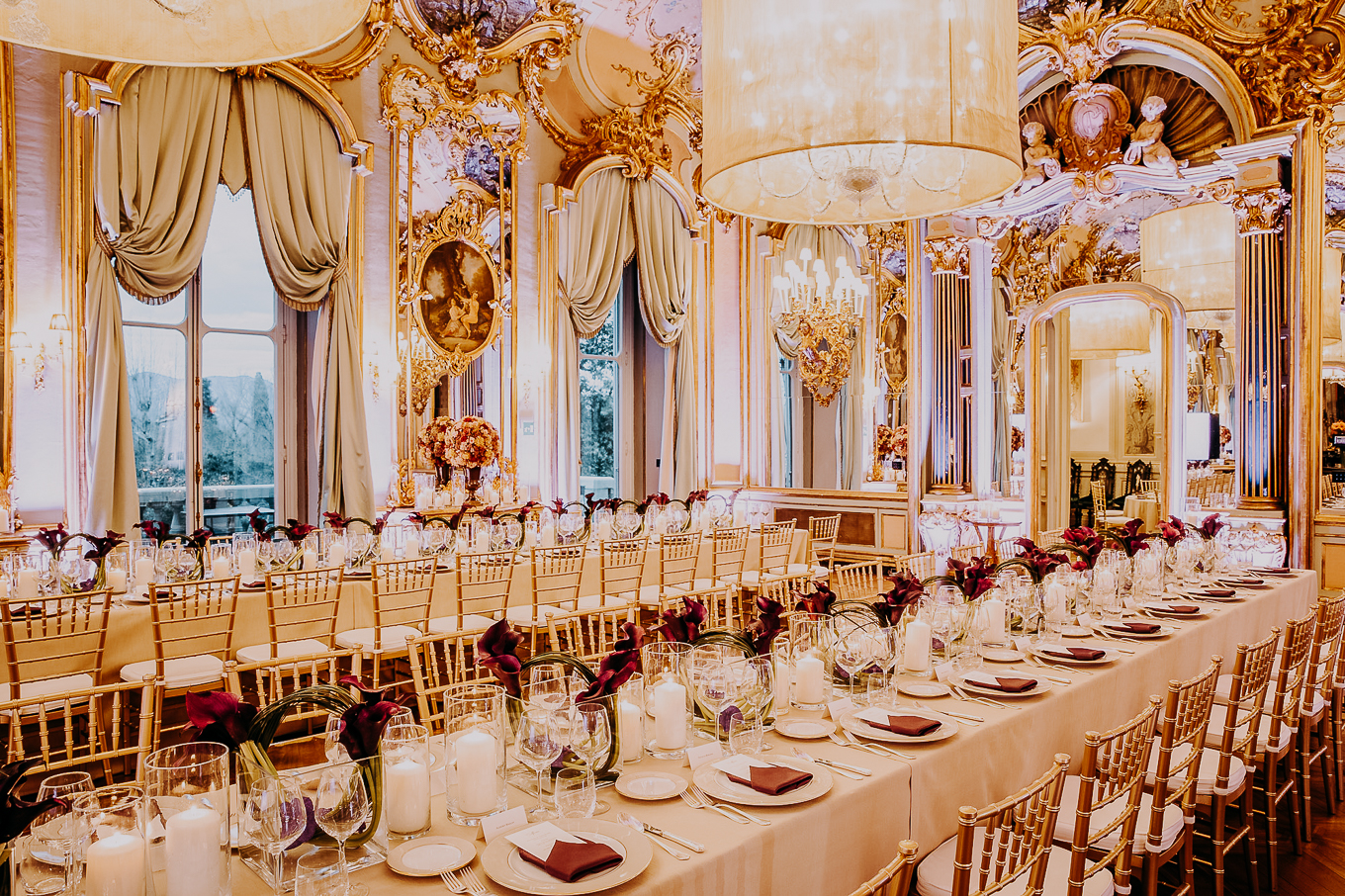
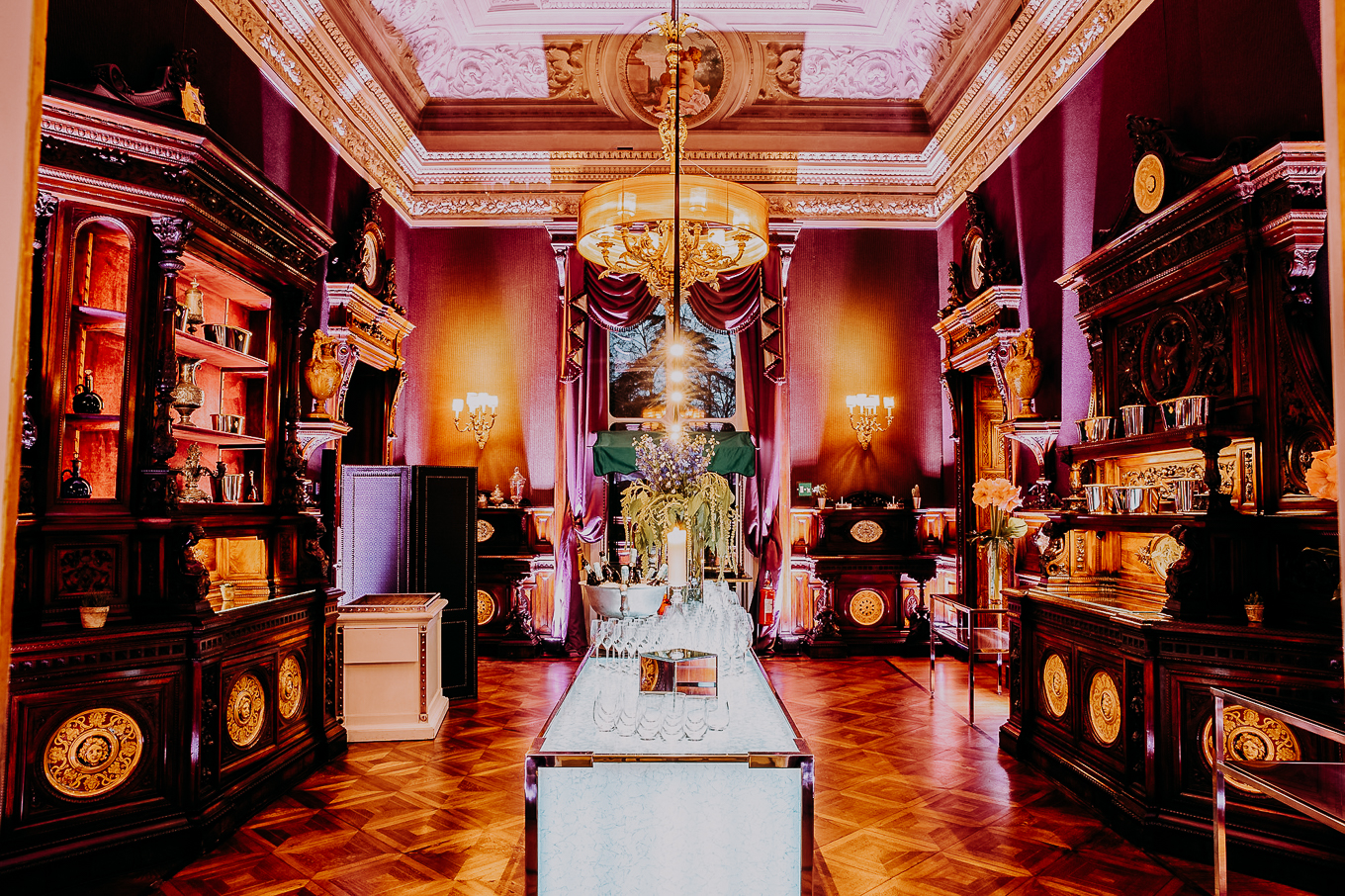
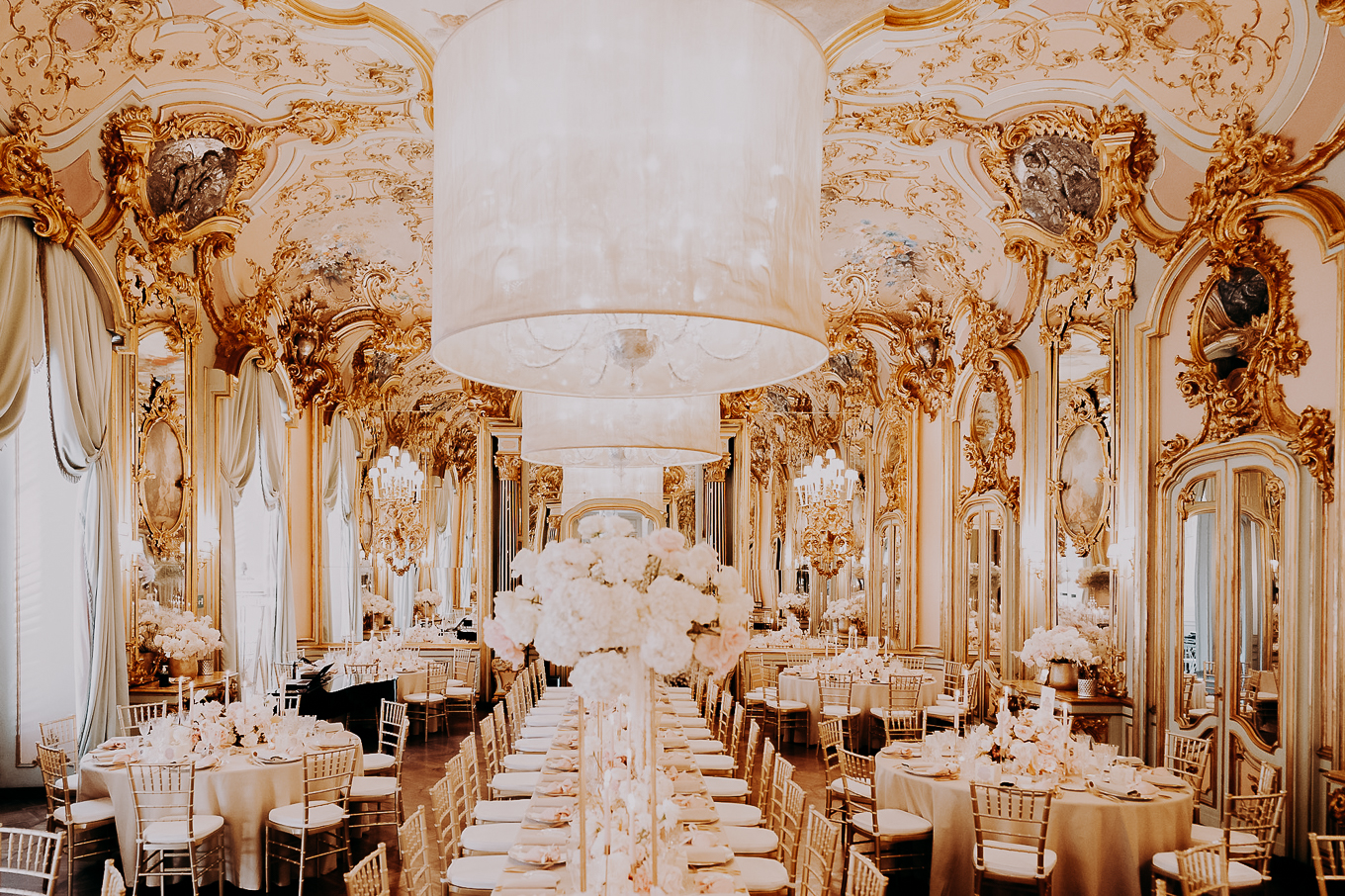
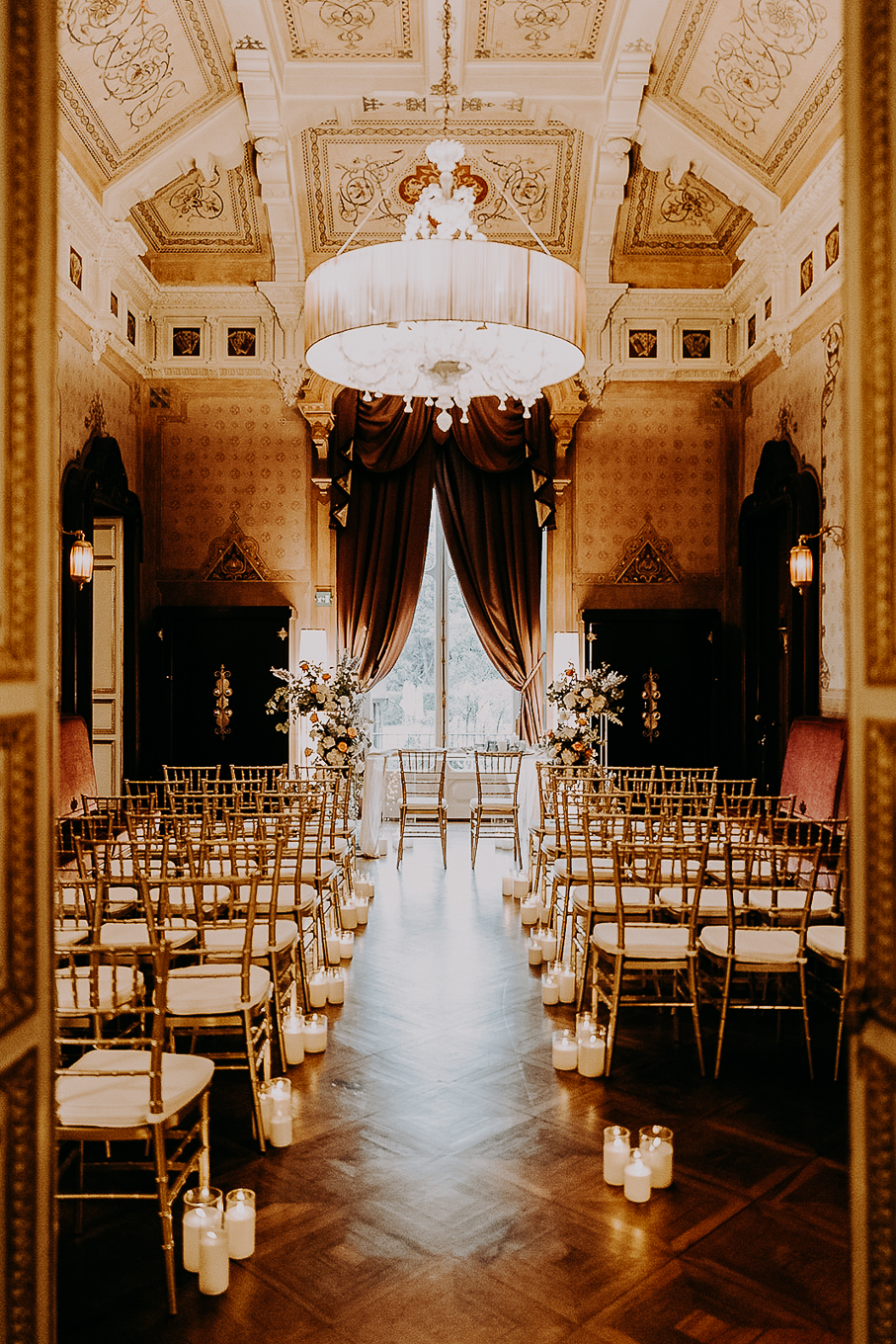
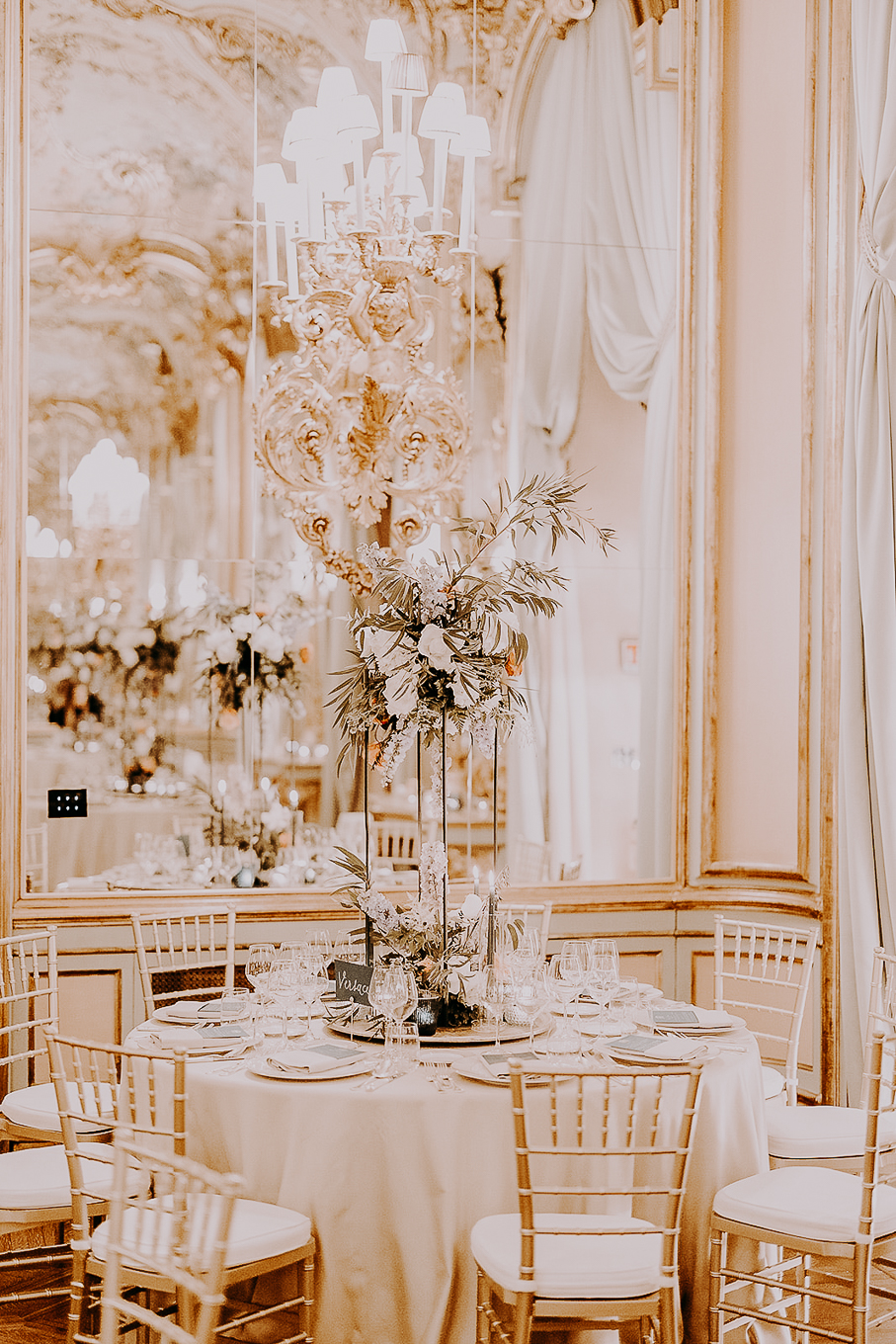
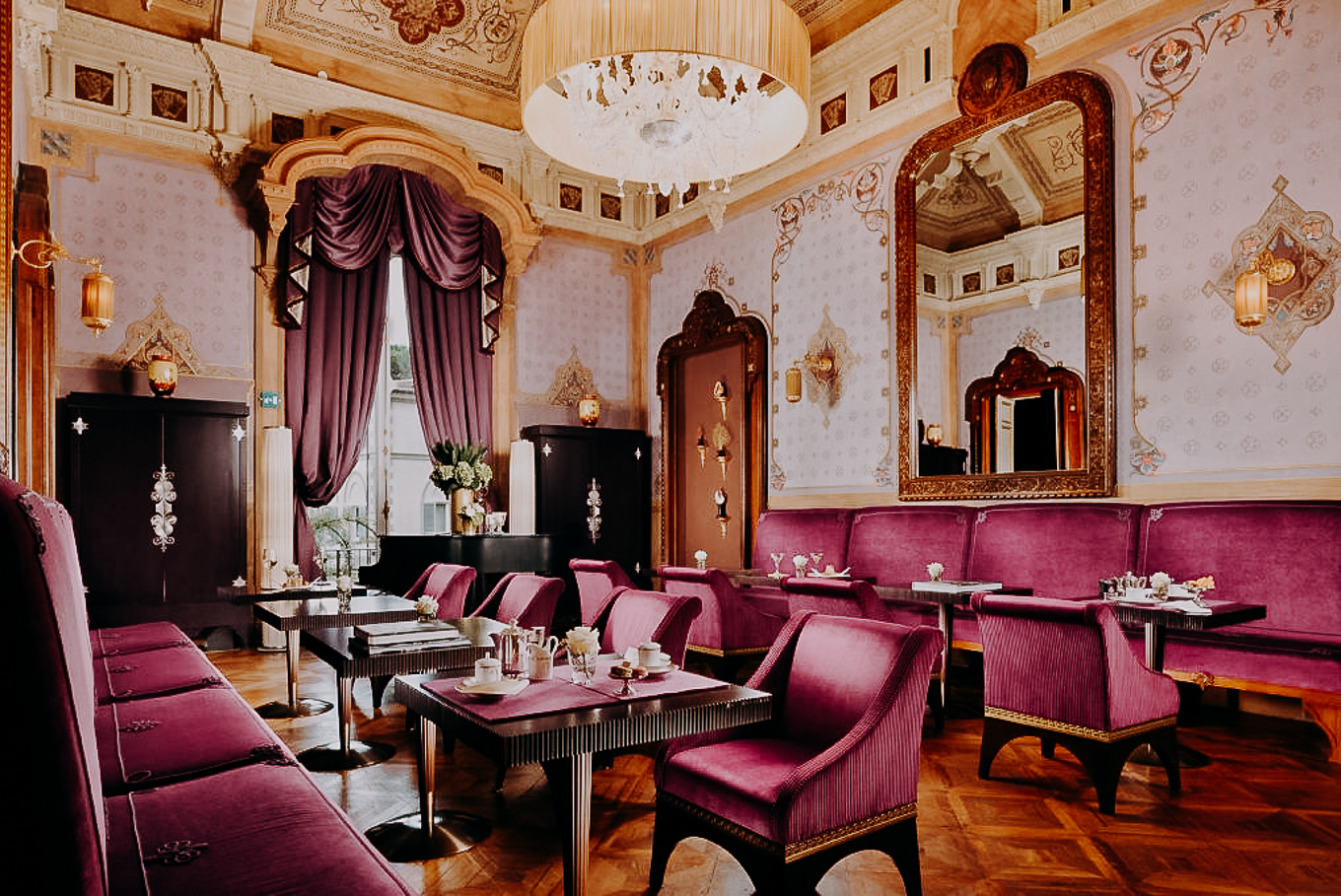
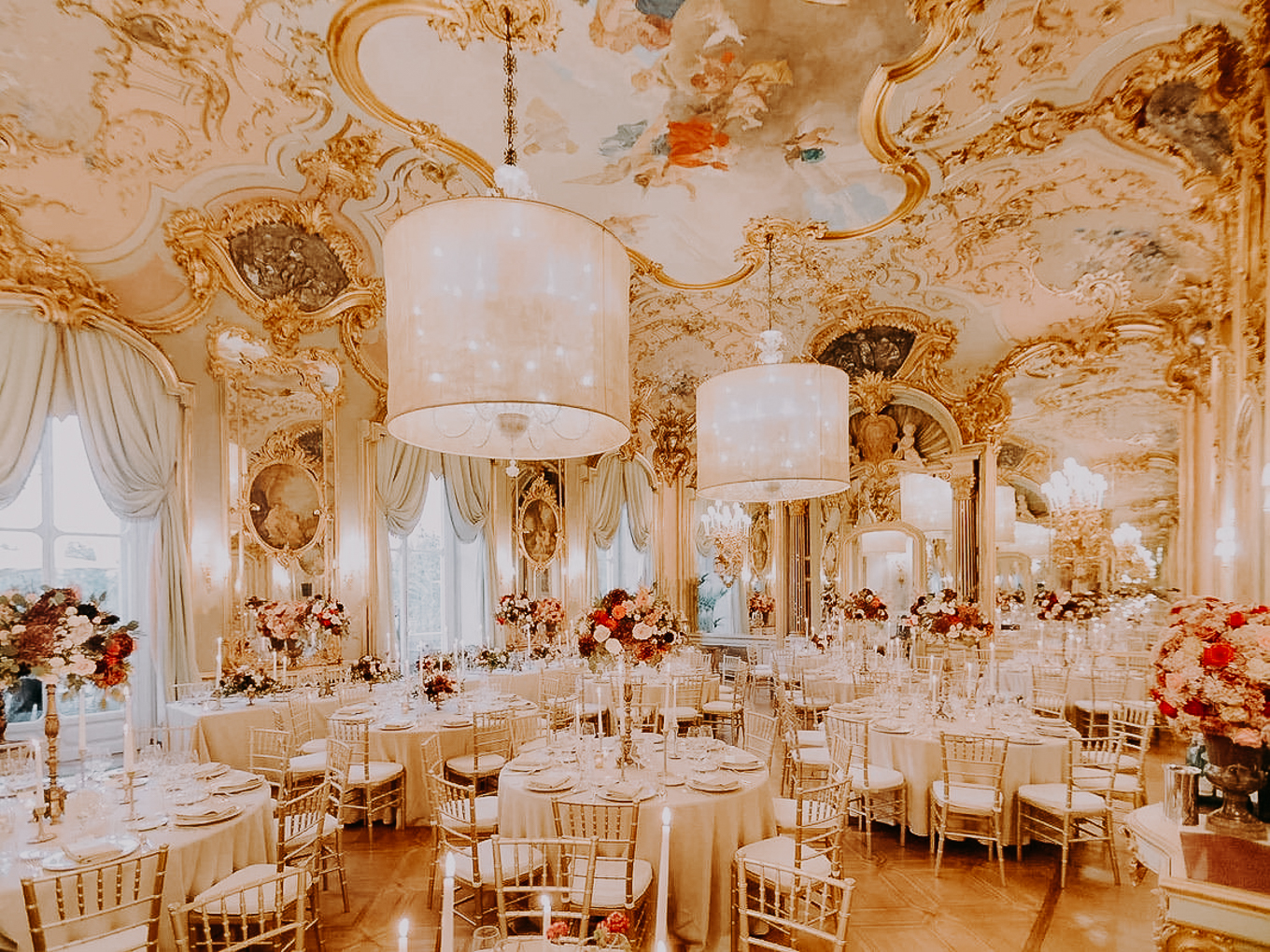
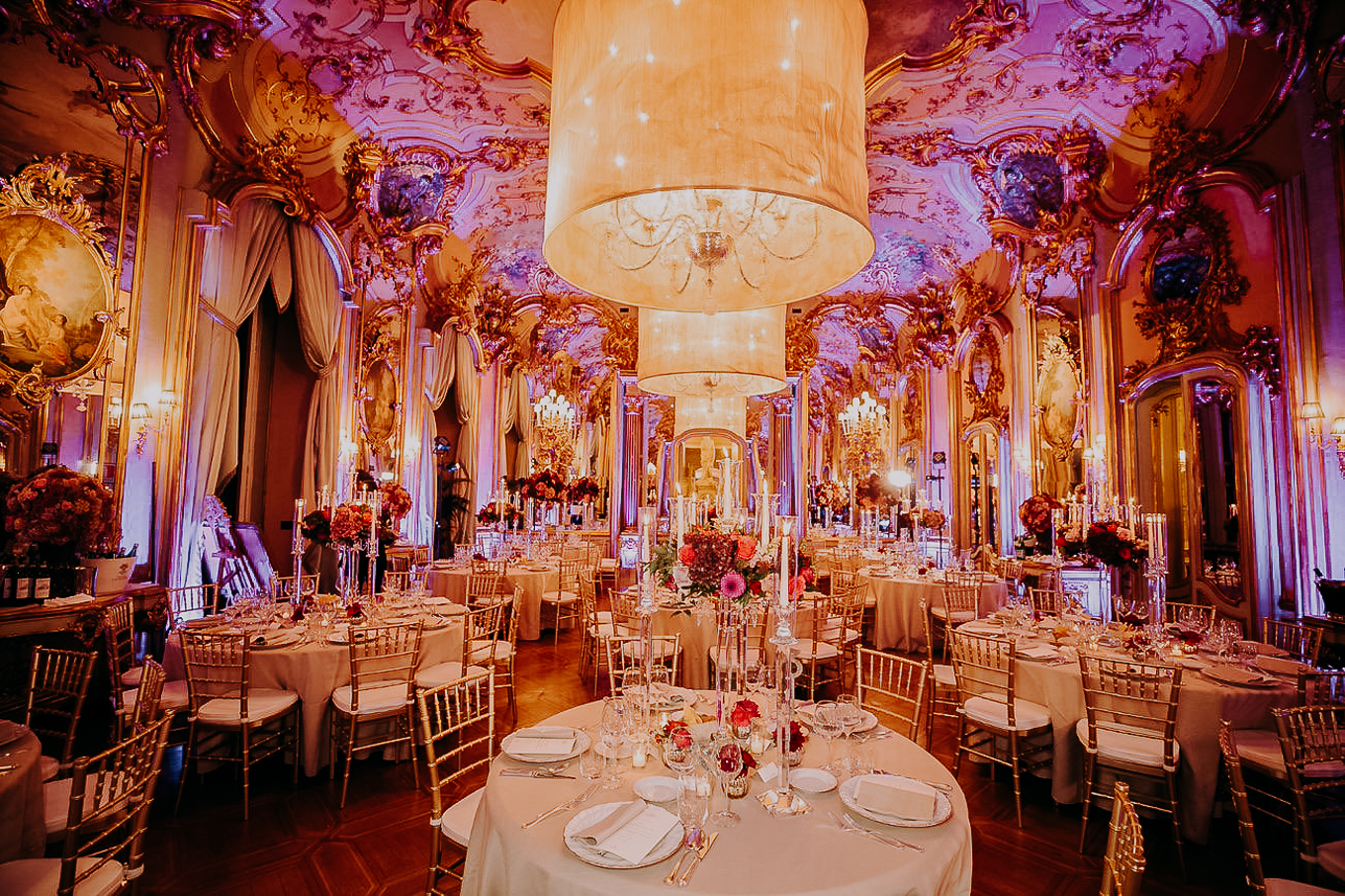
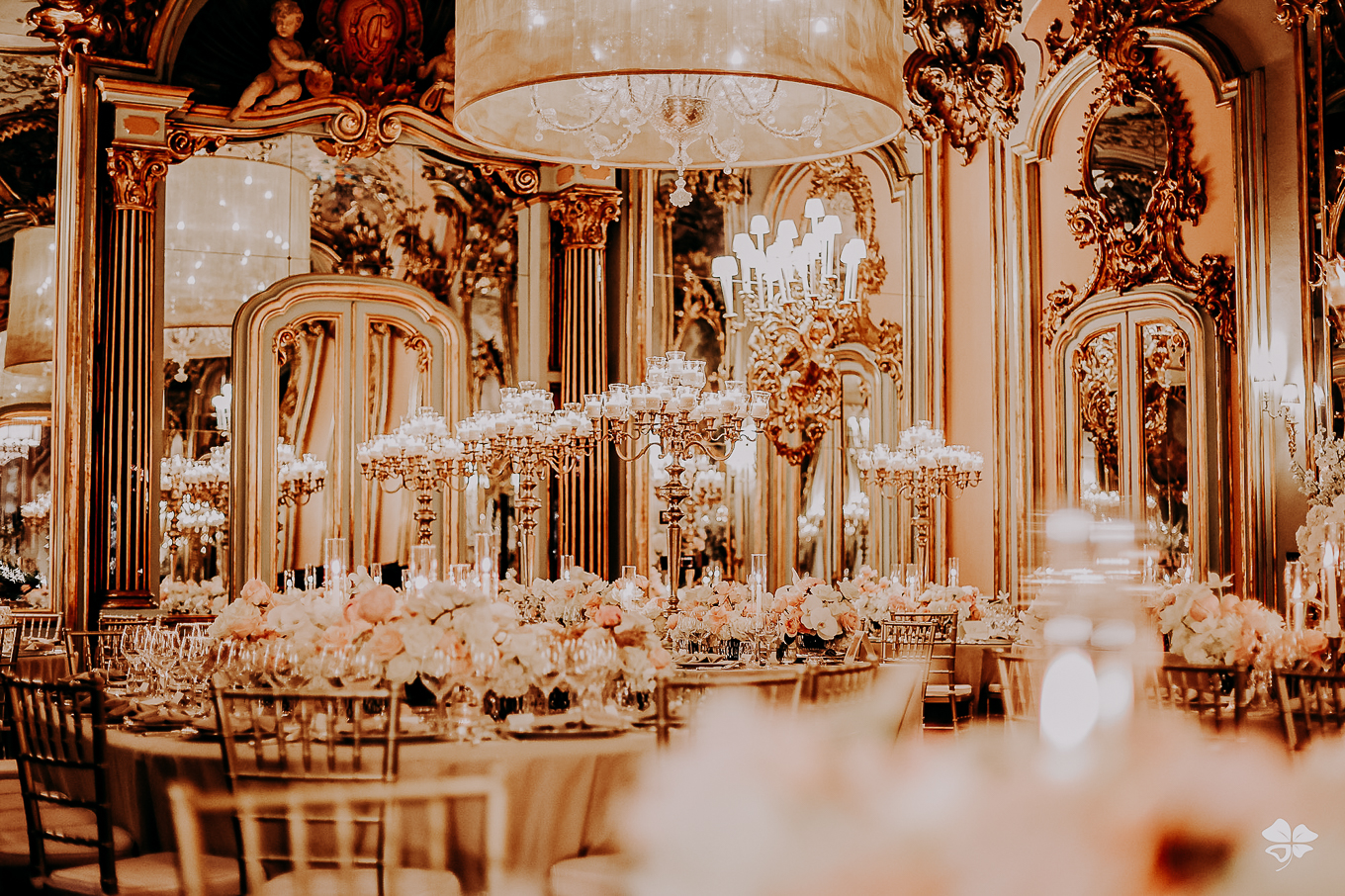
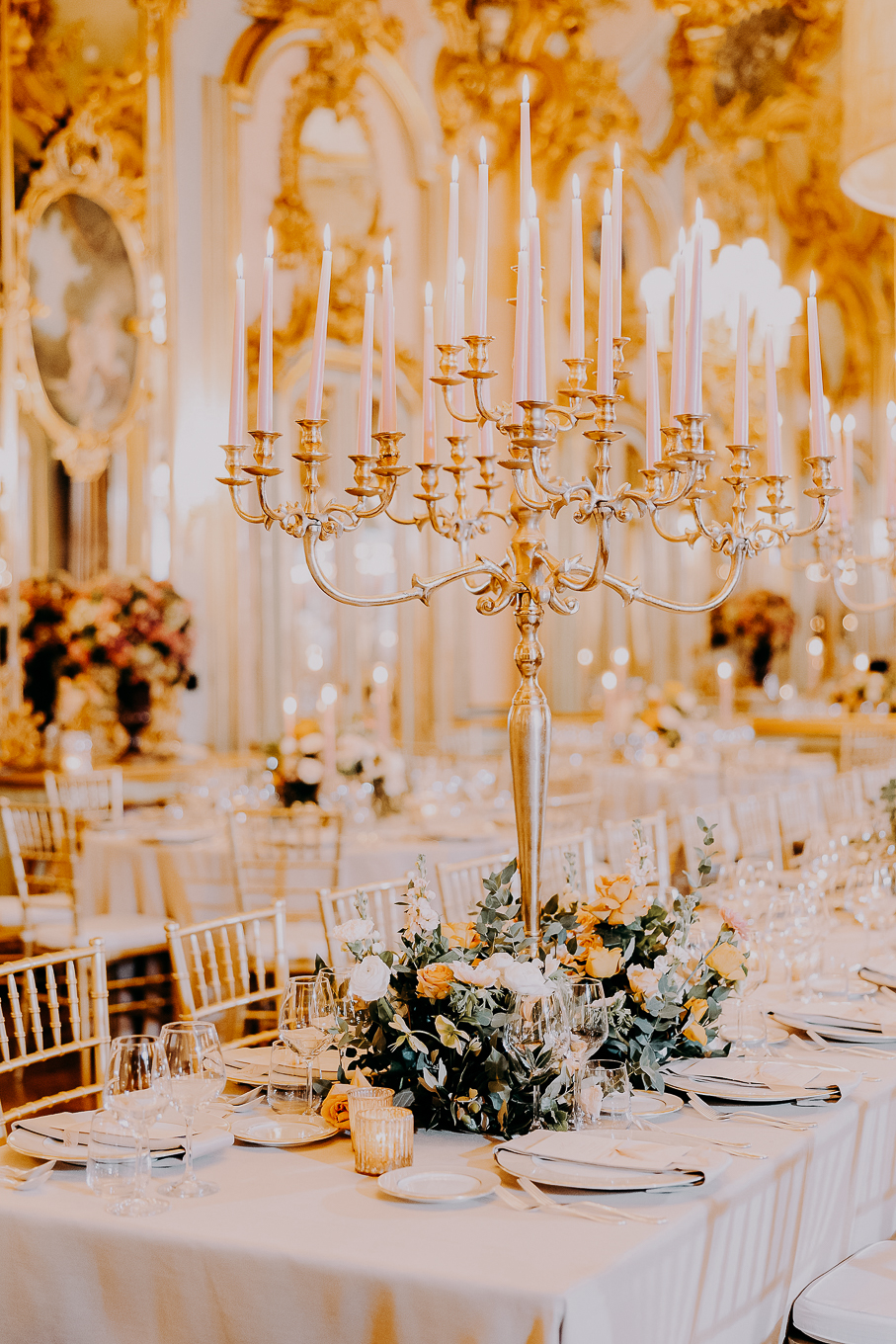
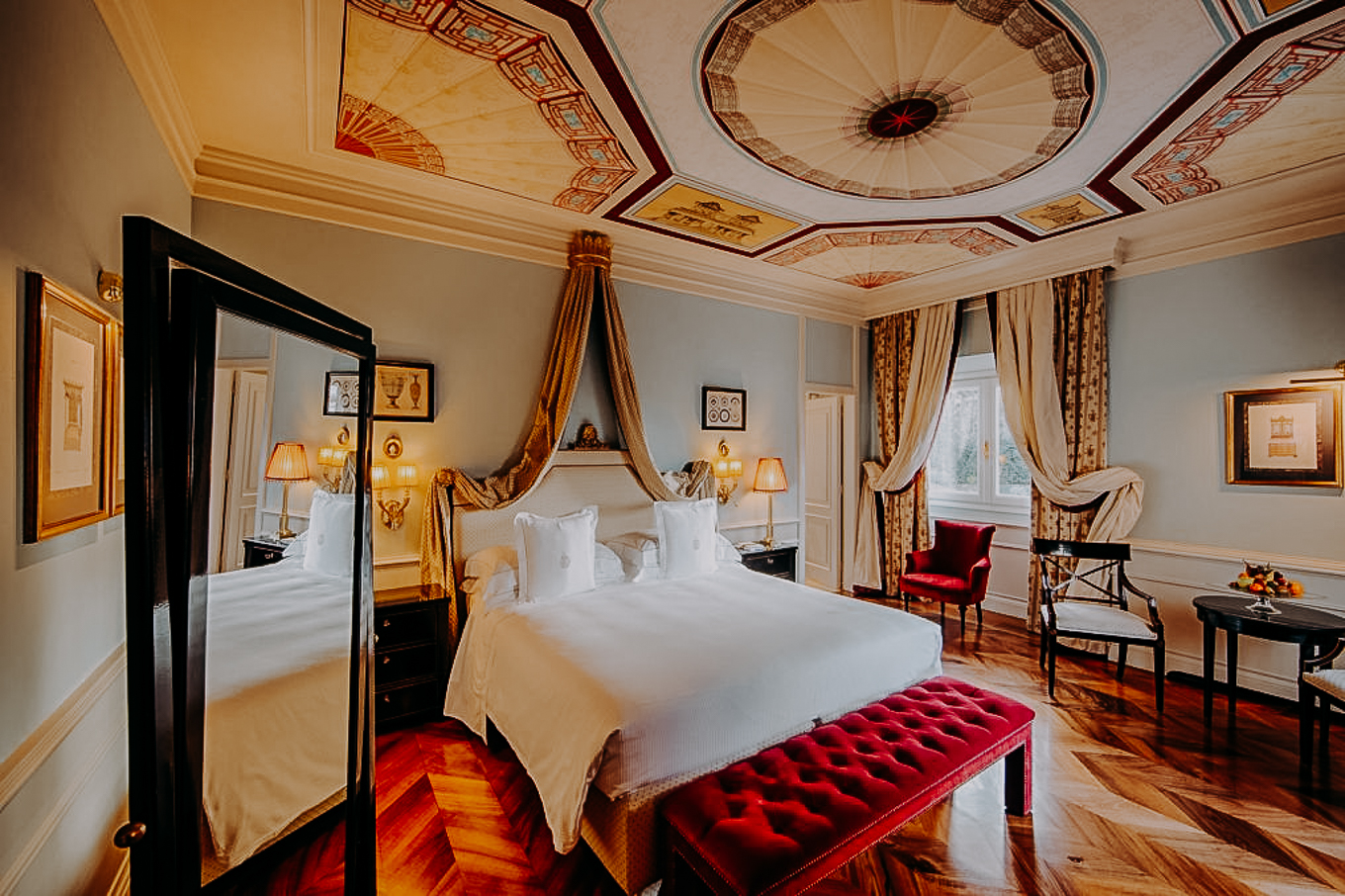
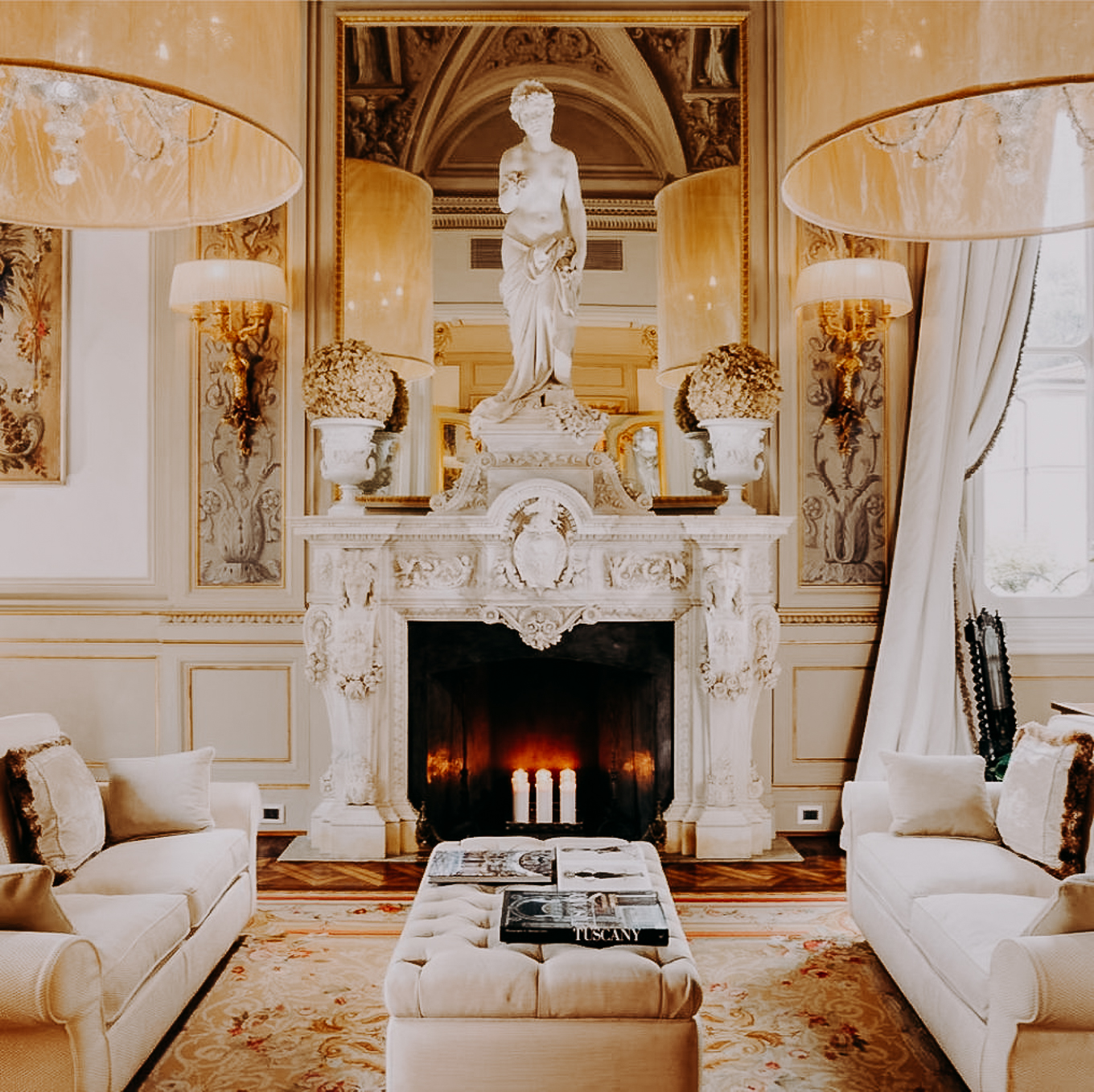
The architecture is the work of Pietro Comparini and Giuseppe Poggi — the latter the same urban architect who reshaped 19th-century Florence and laid out its great panoramic viale. The interiors, brought to life by Edoardo Gioja, were finished with the kind of materials that simply are not used this way any more: Carrara marble, the warm yellow marble of Siena, Murano glass, ebony, and silk from the celebrated Aubusson workshops. Frescoes, period decoration and sculpture fill the historic halls, so that even before a single flower is arranged, the rooms already carry their own ornament.
For a photographer, this changes the work entirely. Inside Villa Cora I am not building atmosphere from nothing; I am working with ceilings, mirrors and gilding that catch light beautifully on their own. A wedding portrait taken in one of these frescoed rooms borrows a depth and a sense of occasion that no amount of styling can manufacture in a plain space.
A Garden Above the City, with Boboli in View
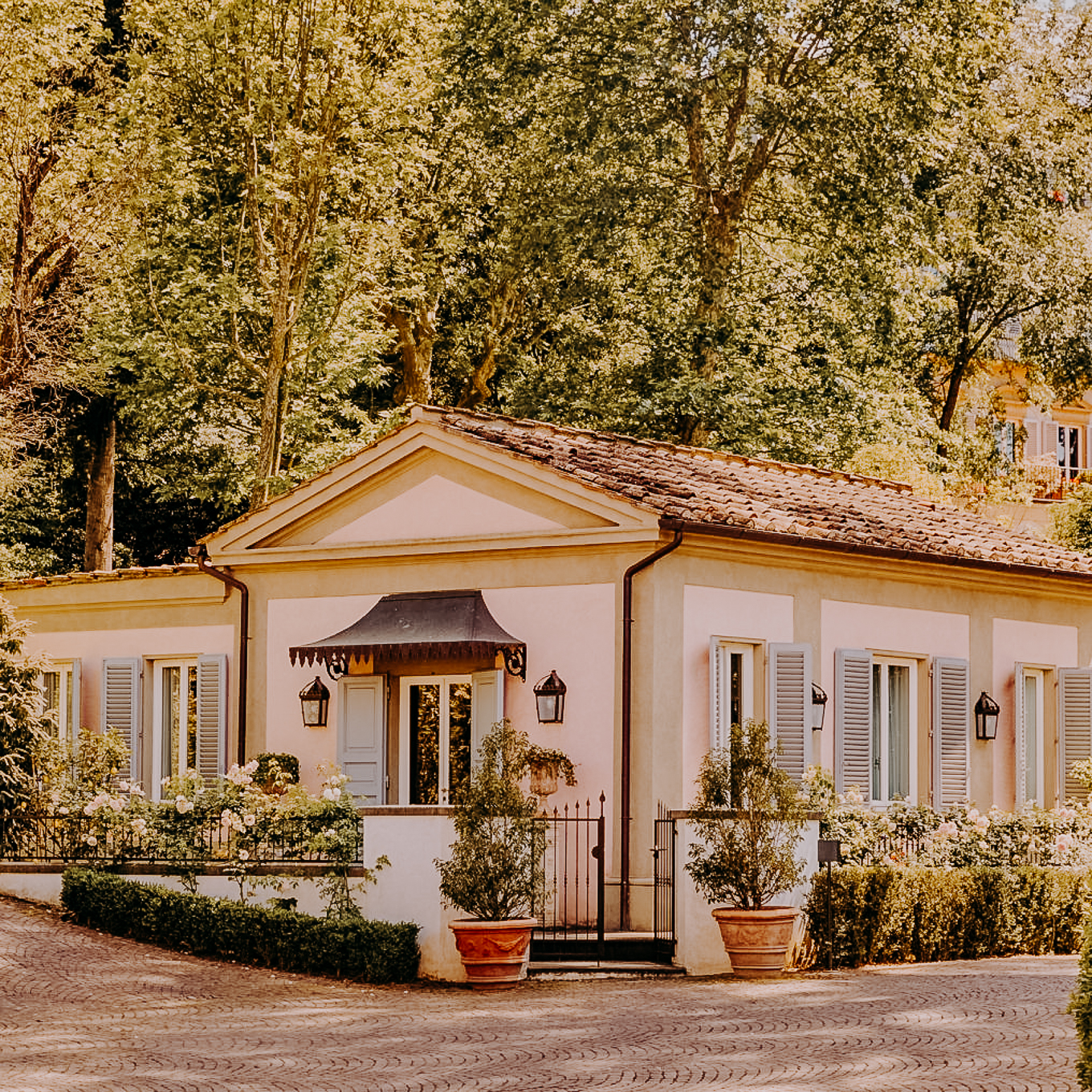
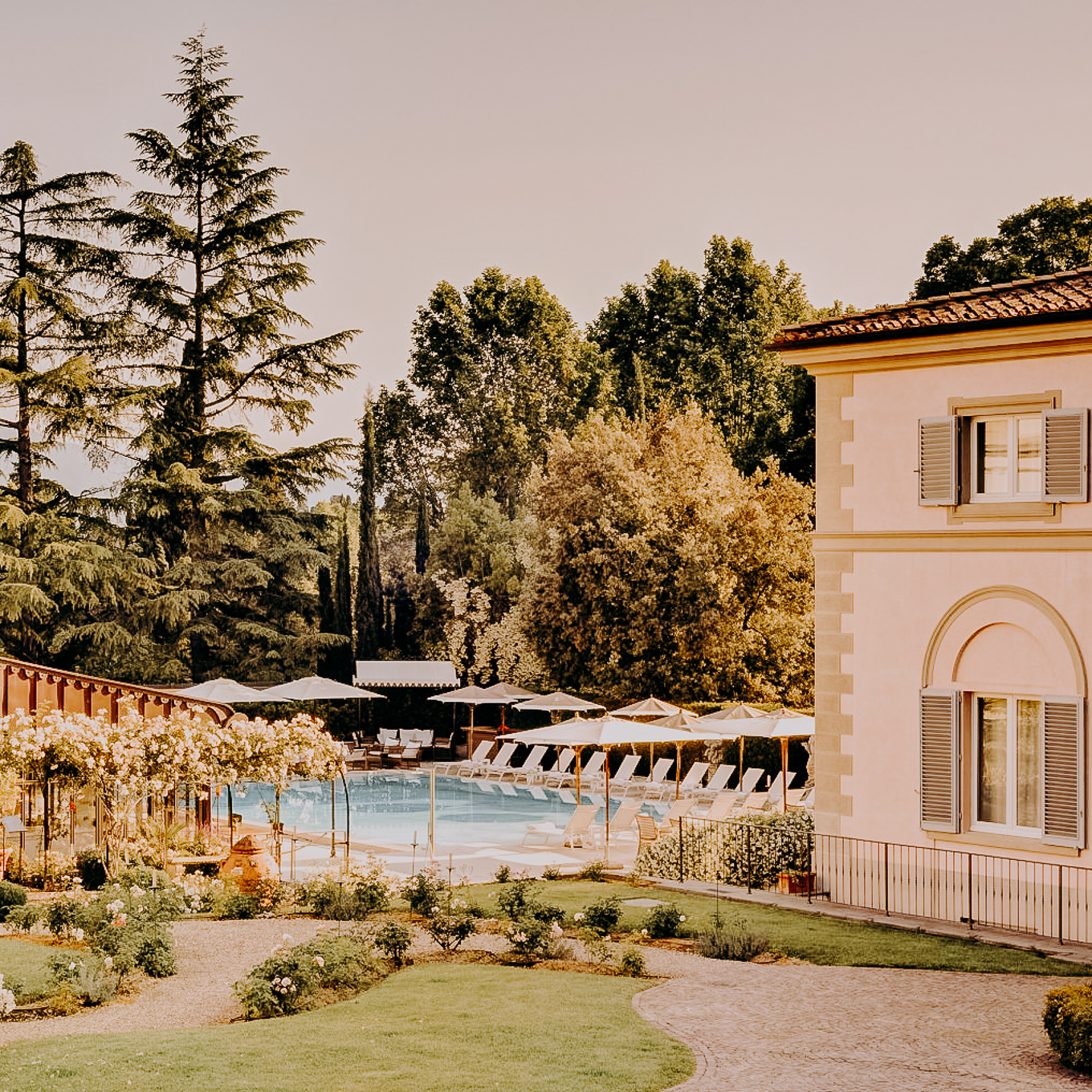
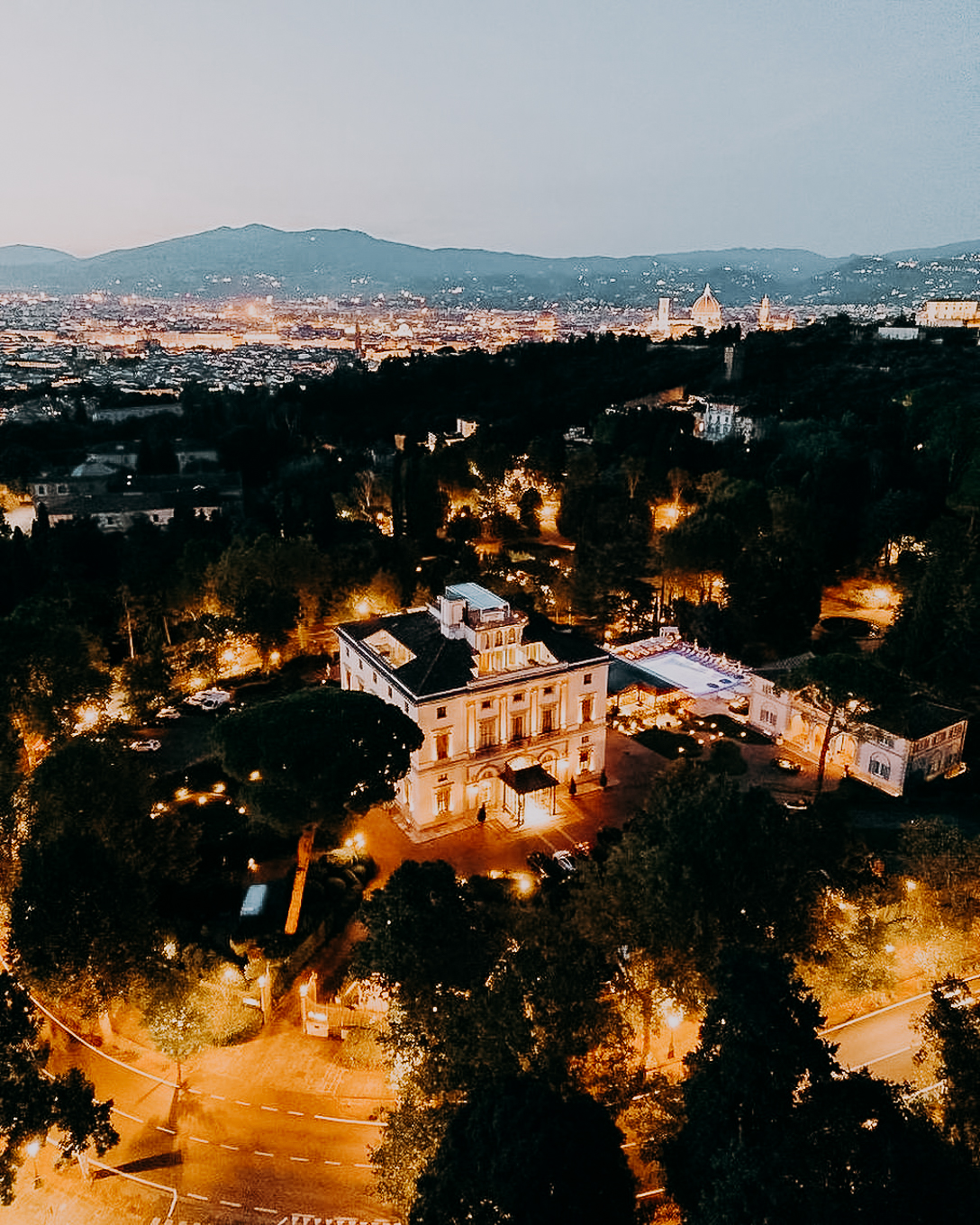
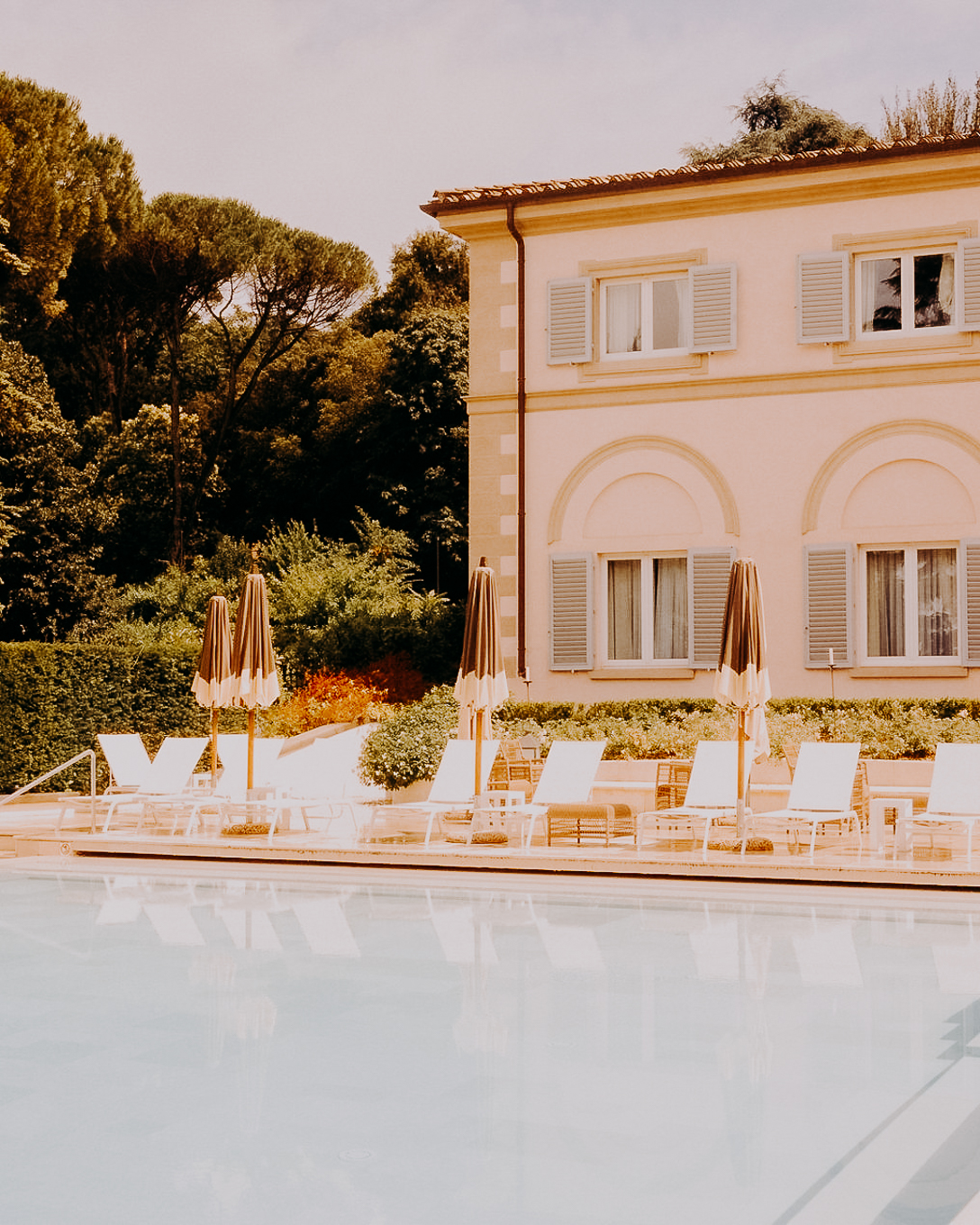
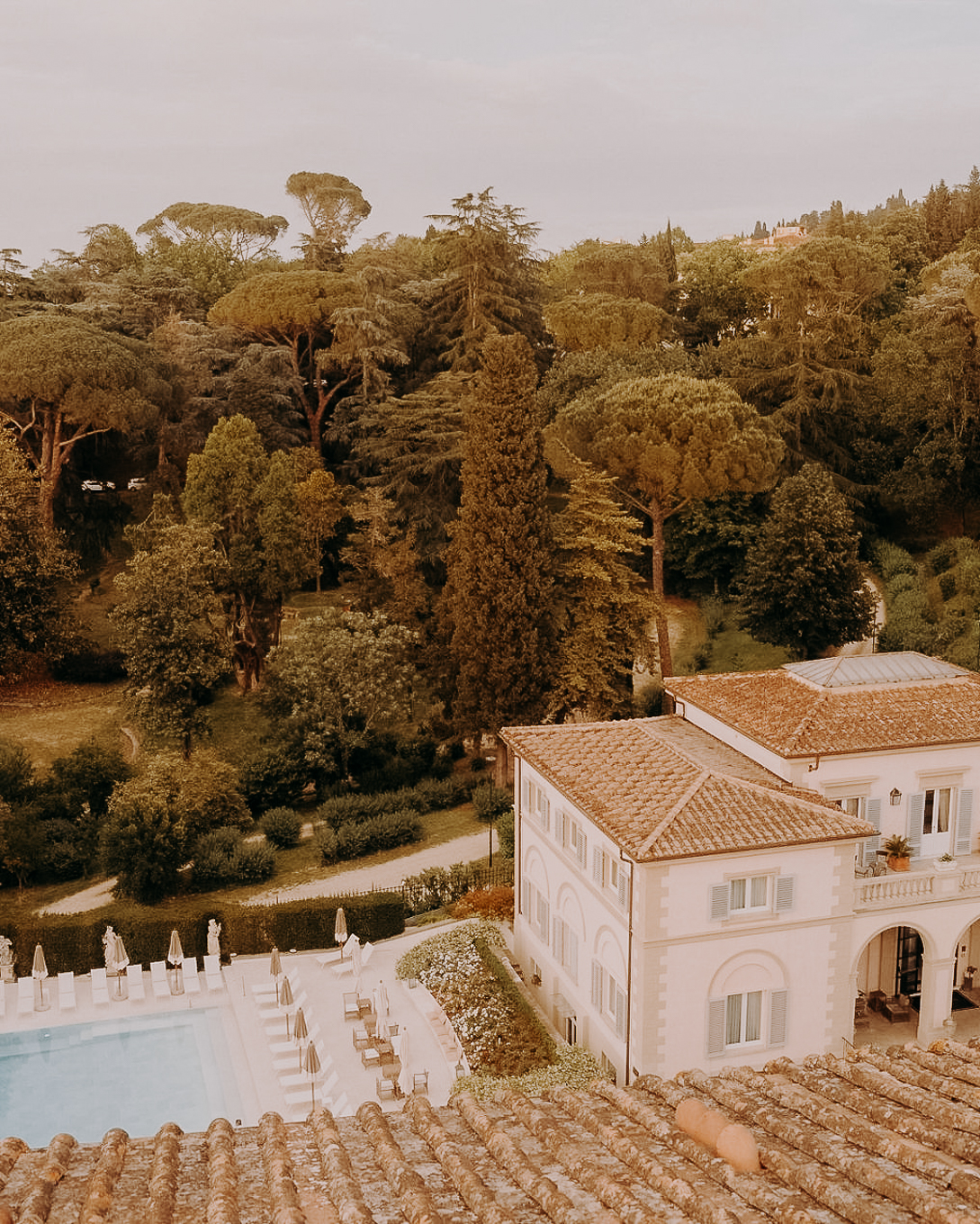
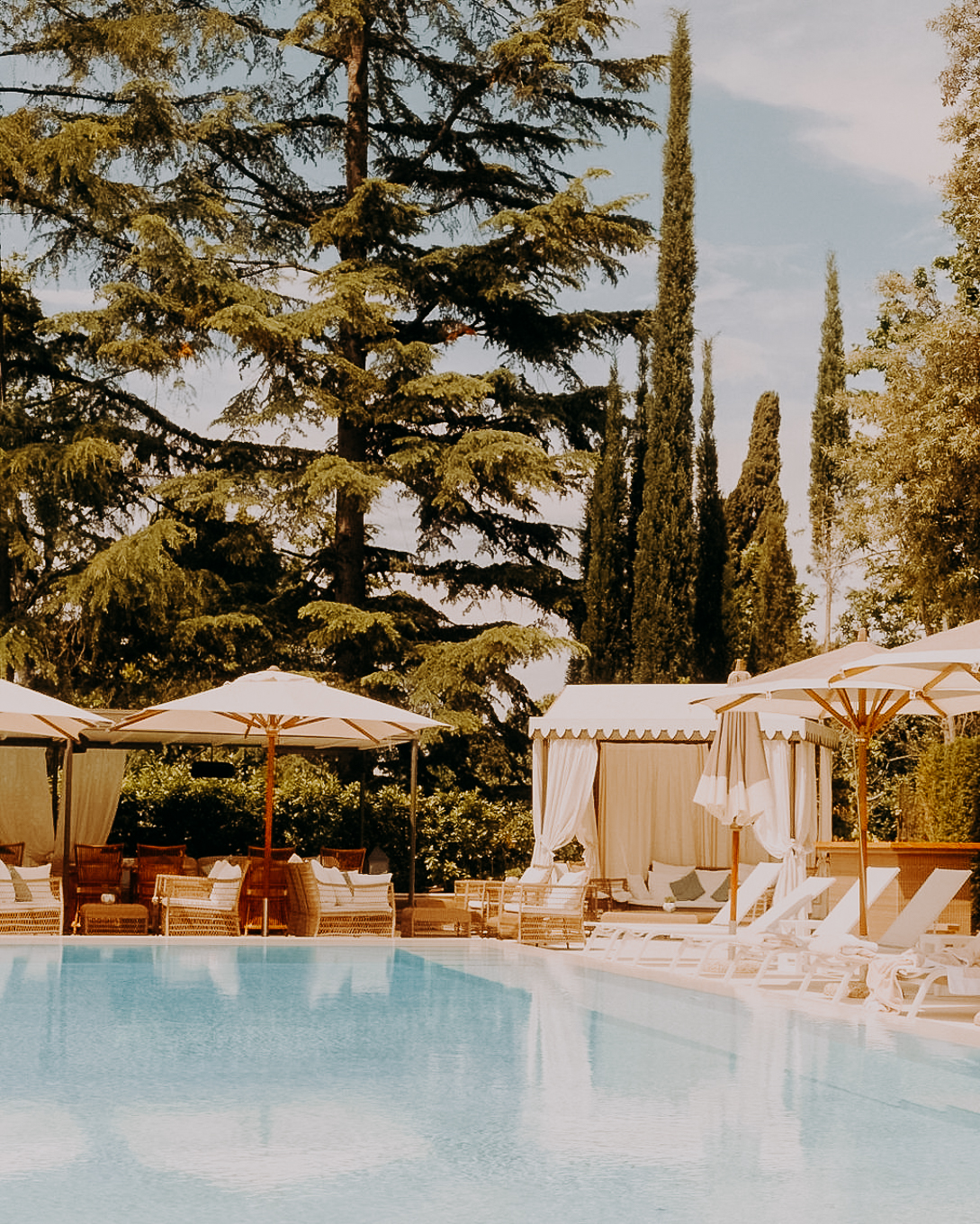
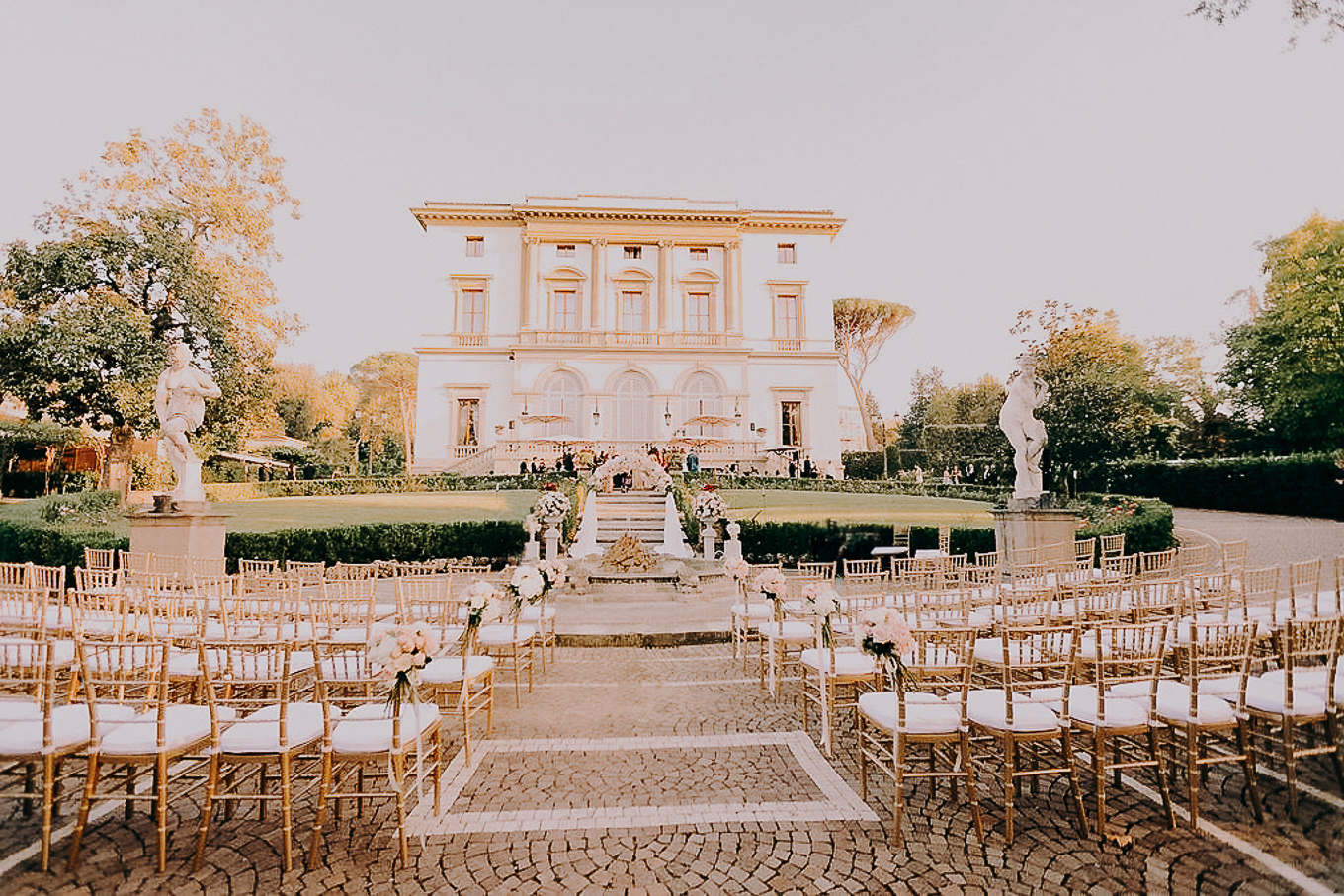
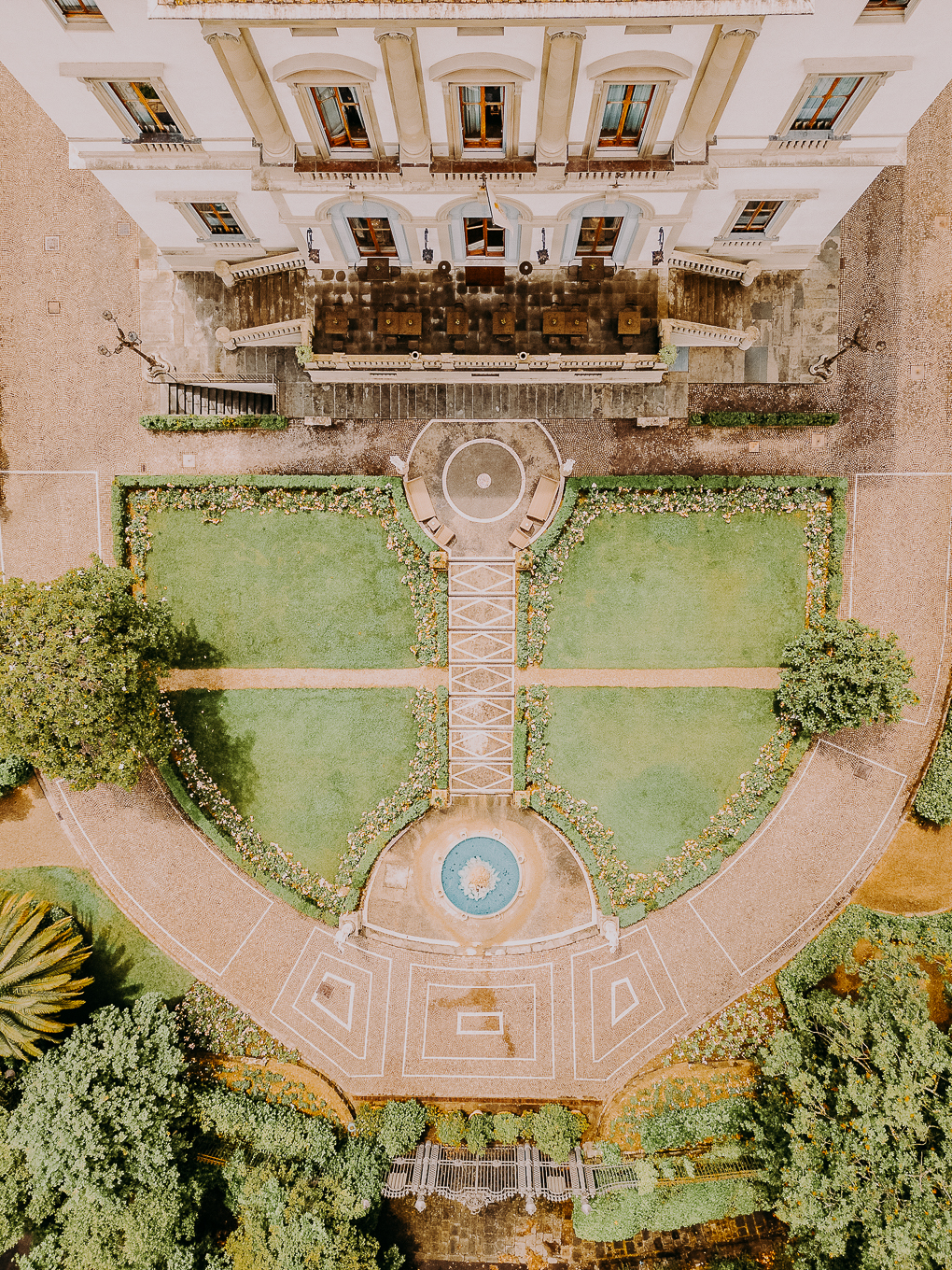
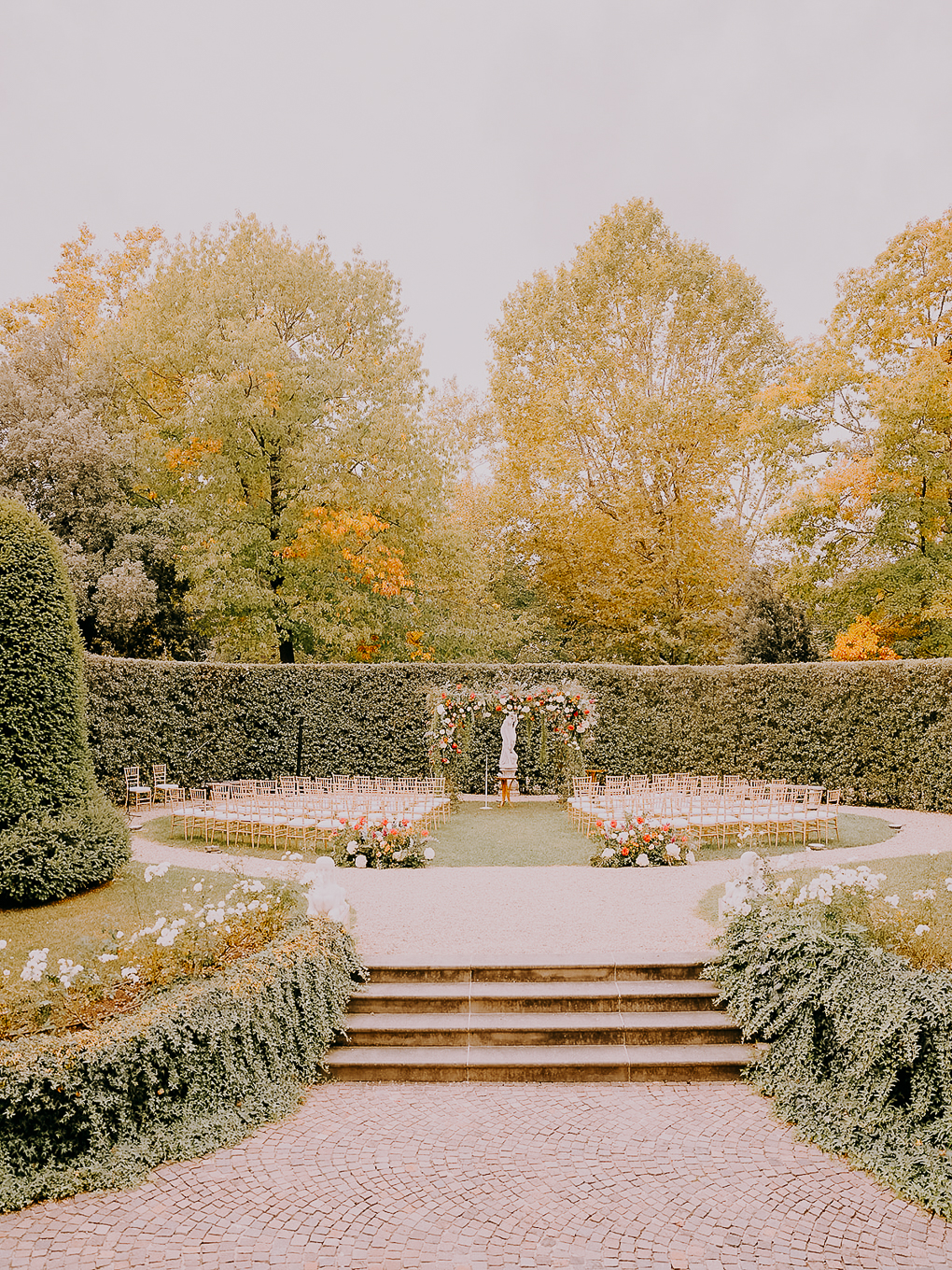
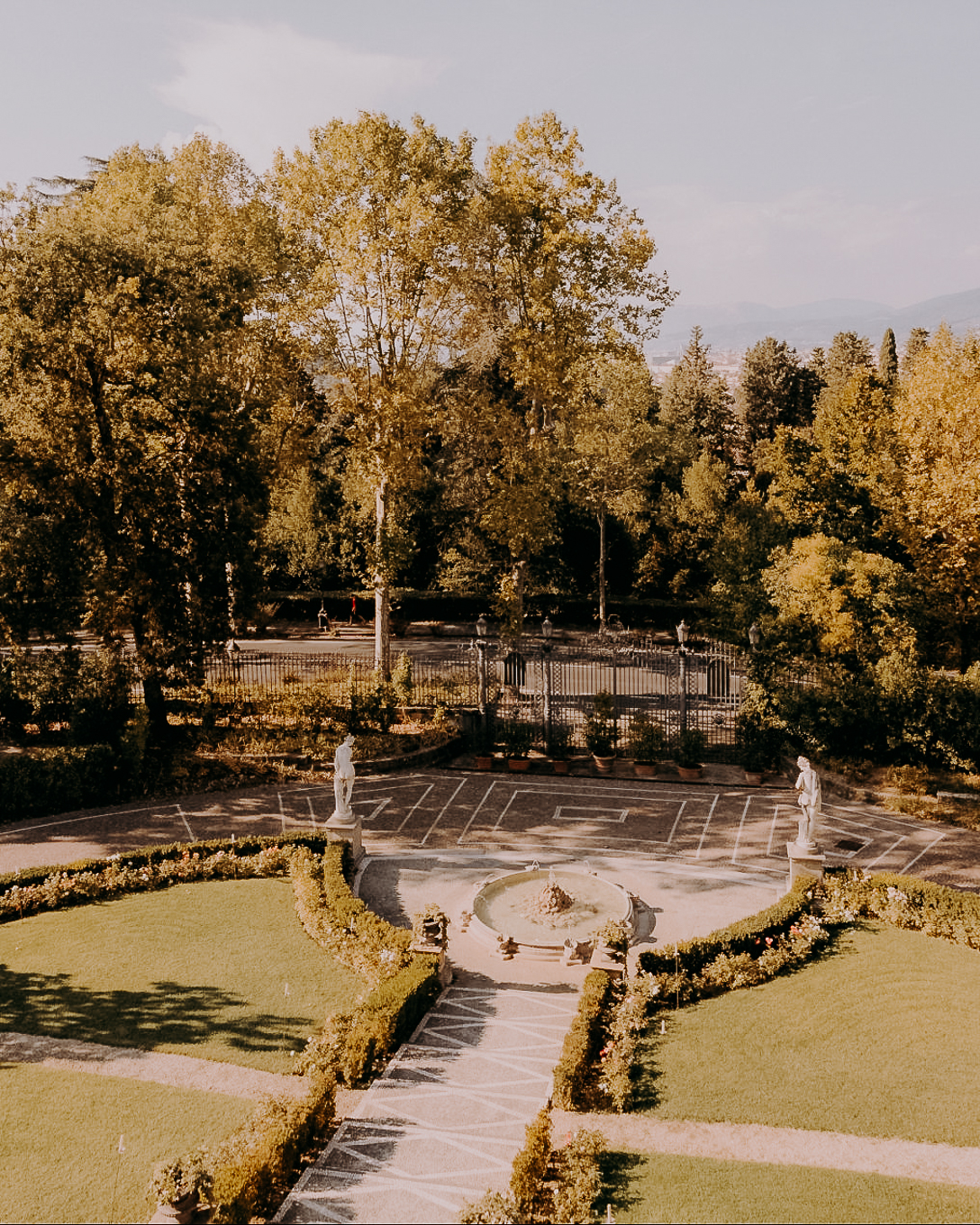
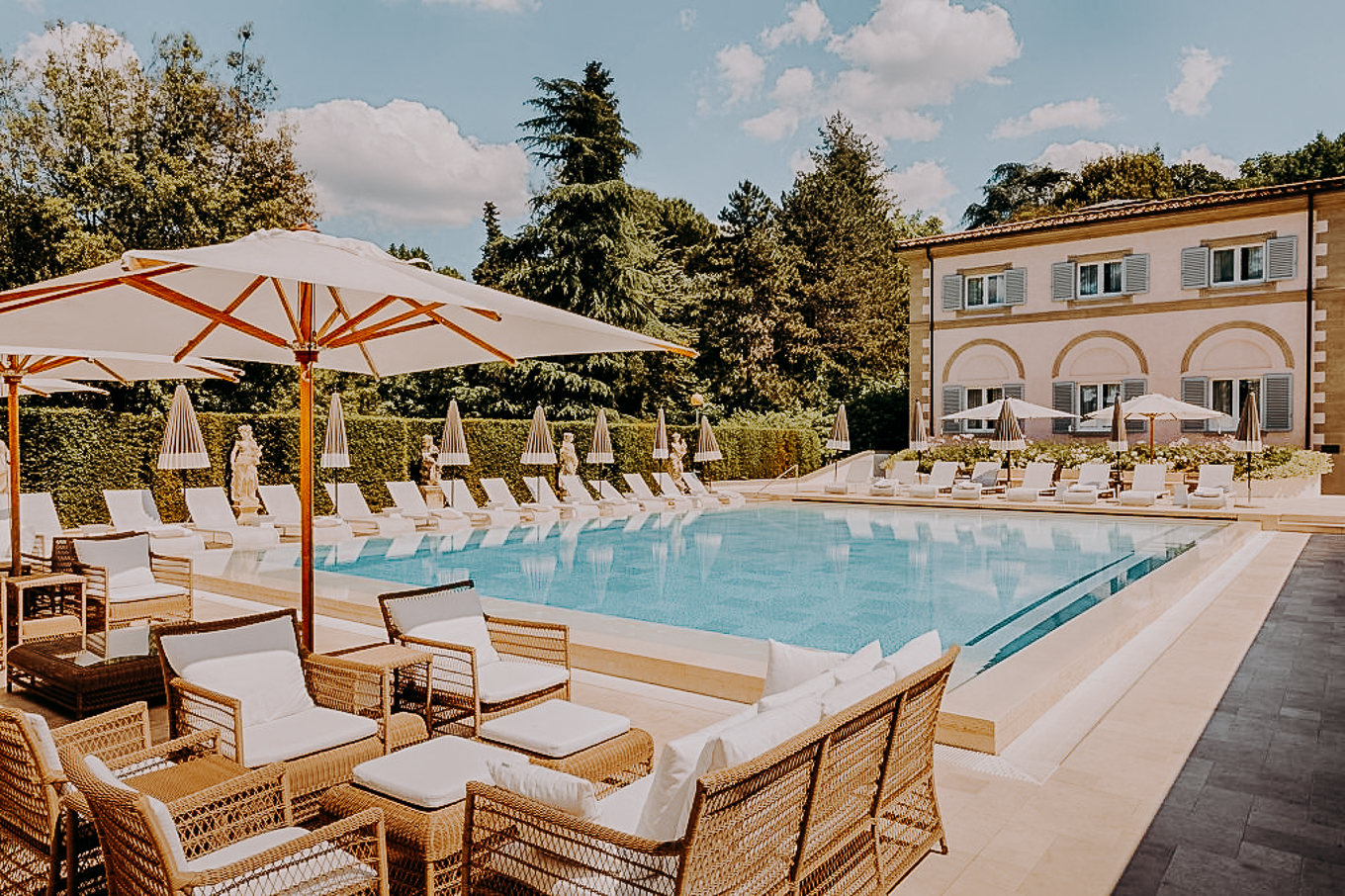
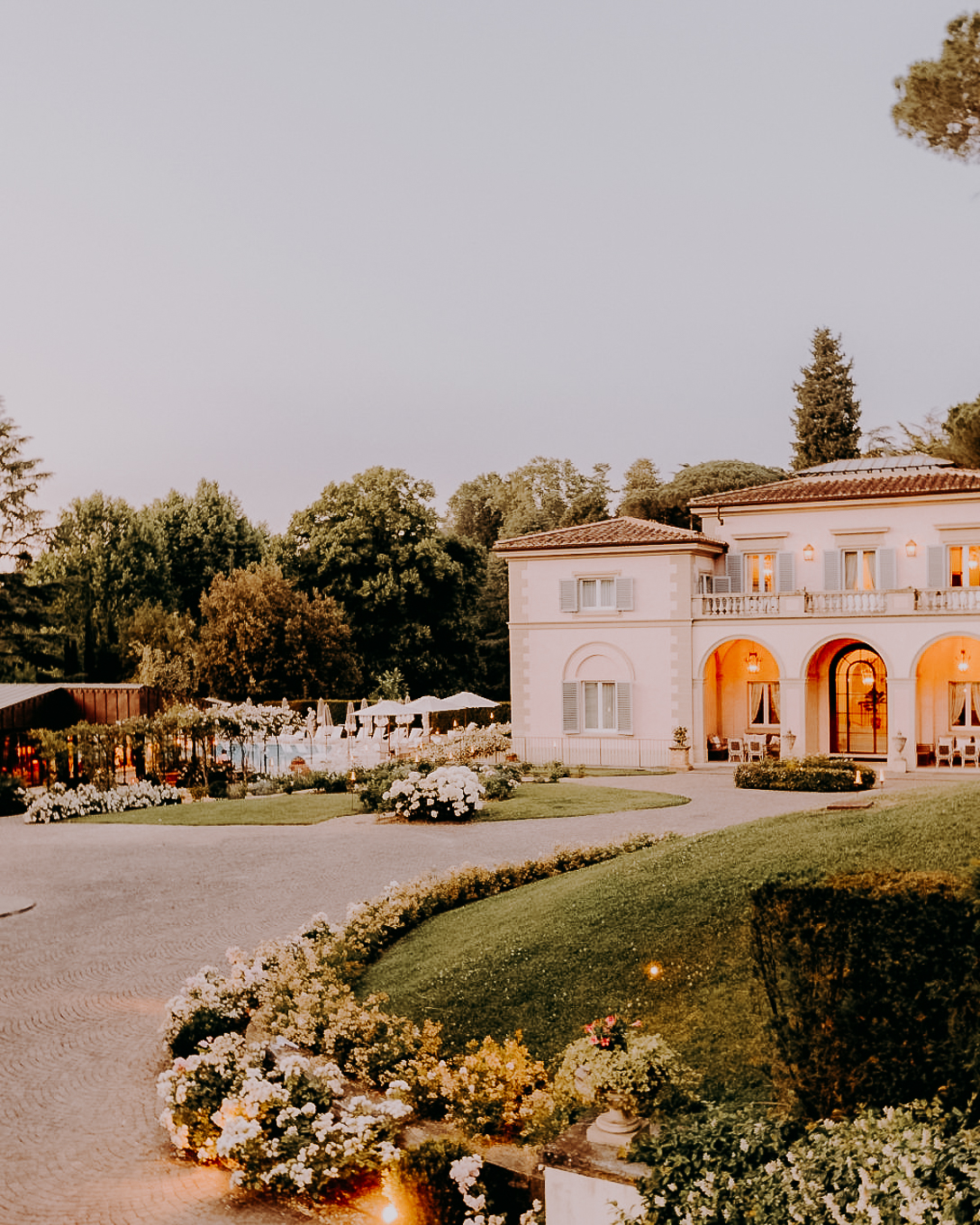
What keeps Villa Cora from feeling like a museum is its setting. The villa sits in the Oltrarno district within a centuries-old, Italian-style garden of ancient oak trees and roses, looking across to the Boboli Gardens — a rare pocket of green calm that feels almost rural, yet sits minutes from the heart of Florence. There is a heated outdoor pool that guests use even in October, a spa for the days around the wedding, and the Bellevue Roof Terrace, where the whole of Florence — the Duomo, the towers, the river — opens out beneath you at sunset. Dining runs from the refined Le Bistrot restaurant to the garden cocktail club, which means the different chapters of a wedding day each have a natural home.
That combination — a private garden, a rooftop over the city, frescoed interiors and a real hotel underneath it all — is unusually complete. You are not piecing a wedding together from separate suppliers and venues; almost everything the day needs is already here, behind one gate.
Is the best view in Florence worth climbing for on your wedding day?
The rooftop aperitivo, with the city glowing below, tends to produce the photographs couples frame first. It is worth building the evening around that light.
Get in touch about your weddingReaching Villa Cora: Notes for Couples Travelling from Abroad
One of Villa Cora's quiet advantages for international couples is how easy it is to reach while still feeling secluded. It sits in the Oltrarno, a short and pleasant walk from the centre of Florence, and the hotel runs a complimentary shuttle to and from the city for guests who would rather not walk. Florence's own airport is roughly twenty minutes away by car; Pisa offers a further gateway to the west, and Rome's airports, a longer drive south, widen the range of long-haul connections. The main railway station, Santa Maria Novella, is only a short transfer away, which makes the villa genuinely simple for guests arriving from elsewhere in Italy. For your planner and your drivers, the address is Viale Machiavelli 18, 50125 Florence.
What Couples Ask Me Before Choosing Villa Cora
How does the legal side of marrying in Italy work for a foreign couple?
A legally binding civil marriage in Italy is performed by Italian authorities, and the documents you need depend on your nationality. Most couples coming from abroad require a sworn declaration of no impediment to marry — usually arranged through your own country's consulate or embassy in Italy — together with further paperwork, and it is wise to begin several months ahead. In Florence, civil ceremonies are often held in settings such as the city's historic town hall, while the personal celebration takes place at the villa. Many of the international couples I photograph complete the legal step separately and hold a symbolic ceremony in the garden or on the terrace at Villa Cora. My honest advice is to confirm exactly what your two passports require early, because that one detail sets the whole timeline.
Is the whole hotel ours, or do we share it with other guests?
Villa Cora operates as a working five-star hotel throughout the year, so full exclusive use is something to discuss directly with their events team rather than assume. Many couples reserve a large block of rooms for their party and use the garden, halls and terrace for the celebration, while some pursue a complete buy-out for true privacy. The right arrangement depends on your guest numbers and your budget, and it is one of the first things worth clarifying when you enquire, since it shapes everything from the date to the atmosphere.
What happens if it rains on the day?
This is exactly where a villa like this earns its keep. Because Villa Cora's historic halls are frescoed and beautiful in their own right, the indoor option is never a disappointing fallback — it is genuinely one of the most striking parts of the property. A garden ceremony can move under cover without the day losing any of its grandeur, and from a photographer's point of view, those frescoed rooms in soft, rainy light can produce some of the most atmospheric images of all. A good rain plan here is not damage control; it is simply a second, equally lovely version of the day.
Can our wedding guests stay at Villa Cora?
Yes — that is one of the real strengths of marrying at a hotel of this calibre. Accommodation ranges from classic rooms through to lavish suites, including the Imperial Suite dedicated to Emperor Akihito, so your closest guests can stay where you marry and simply walk upstairs at the end of the night. With the spa, the pool and the rooftop on site, and the shuttle into Florence for everyone else, it lends itself naturally to a celebration spread across a weekend rather than a single evening. I would recommend blocking rooms early, as a hotel this sought-after fills its best dates well in advance.
When is the best time of year to marry here?
Late spring and early autumn are the classic windows for a Florence wedding, with comfortable temperatures and the kind of low, golden light that flatters both the garden and the rooftop views. High summer is hot in the middle of the day, but the heated pool and long, warm evenings make it work, and the garden offers welcome shade. Even the cooler months have their appeal here, when the frescoed interiors come into their own and the city is quieter. Because so much of the venue is usable indoors and out, Villa Cora is less hostage to the season than many garden-only locations.
What makes Villa Cora special to photograph?
Two things, really. The first is the Bellevue rooftop, where the whole skyline of Florence becomes your backdrop at sunset — a view very few wedding venues in the city can offer from their own roof. The second is the contrast the villa gives me within a few steps: ornate frescoed halls, a serene green garden with Boboli beyond, and that panoramic terrace, all in one place. It means a single wedding day here can move through completely different moods and settings without anyone leaving the property, which makes for an album with real range rather than variations on one room.