Castello di Fighine: A Wedding in a Restored Hilltop Hamlet in Southern Tuscany
Of all the things a ruined medieval hamlet might be rebuilt with, Castello di Fighine kept a theatre. High on a hill in southern Tuscany, 650 metres up where the region begins to blur into Umbria and Lazio, this 11th-century castle and the small borgo around it were restored not as a museum but as a place that still puts on a show — and on a wedding night, the theatre becomes the room where everyone dances. I'm Francesco Caroli, an Italian wedding photographer, and as a wedding photographer in Tuscany I've learned that the most memorable venues are the ones with a clear idea of themselves. Fighine's idea is performance: a whole hamlet, with the castle for a backdrop and the valleys falling away below, arranged like a stage waiting for its event. For a destination wedding in Tuscany, it is genuinely unlike anywhere else.
That theatre is not a metaphor I'm inventing; it is one of the buildings the estate restored, alongside the castle, a church, five villas, two apartments and the gardens, and the wedding pages name it plainly as the place for dancing and entertainment. It tells you how Fighine thinks about a celebration — not as a single ceremony bolted onto a hotel, but as an evening with acts and scenes, moving across an entire village that is, for those days, entirely yours.
An Eleventh-Century Castle, Brought Back to Life
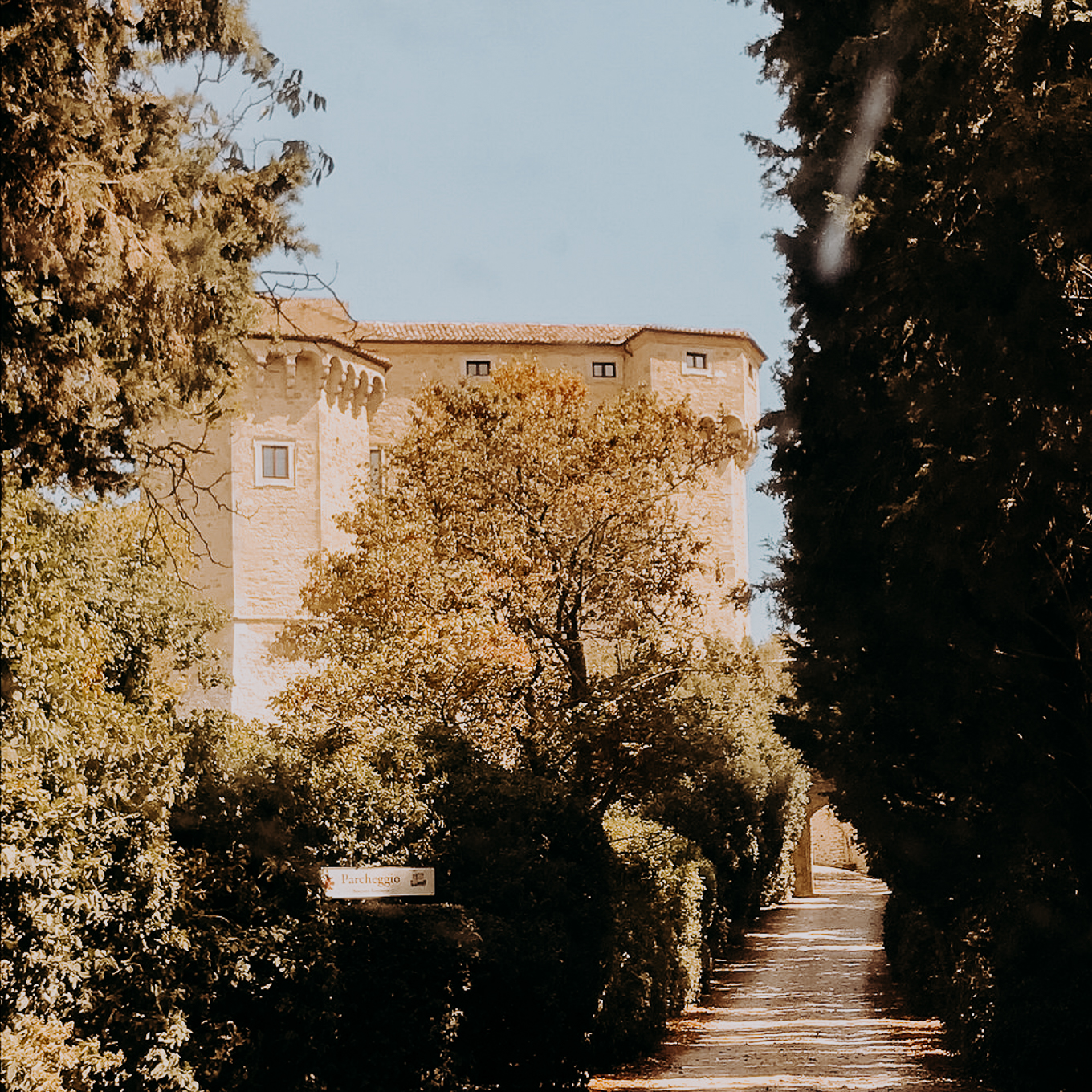
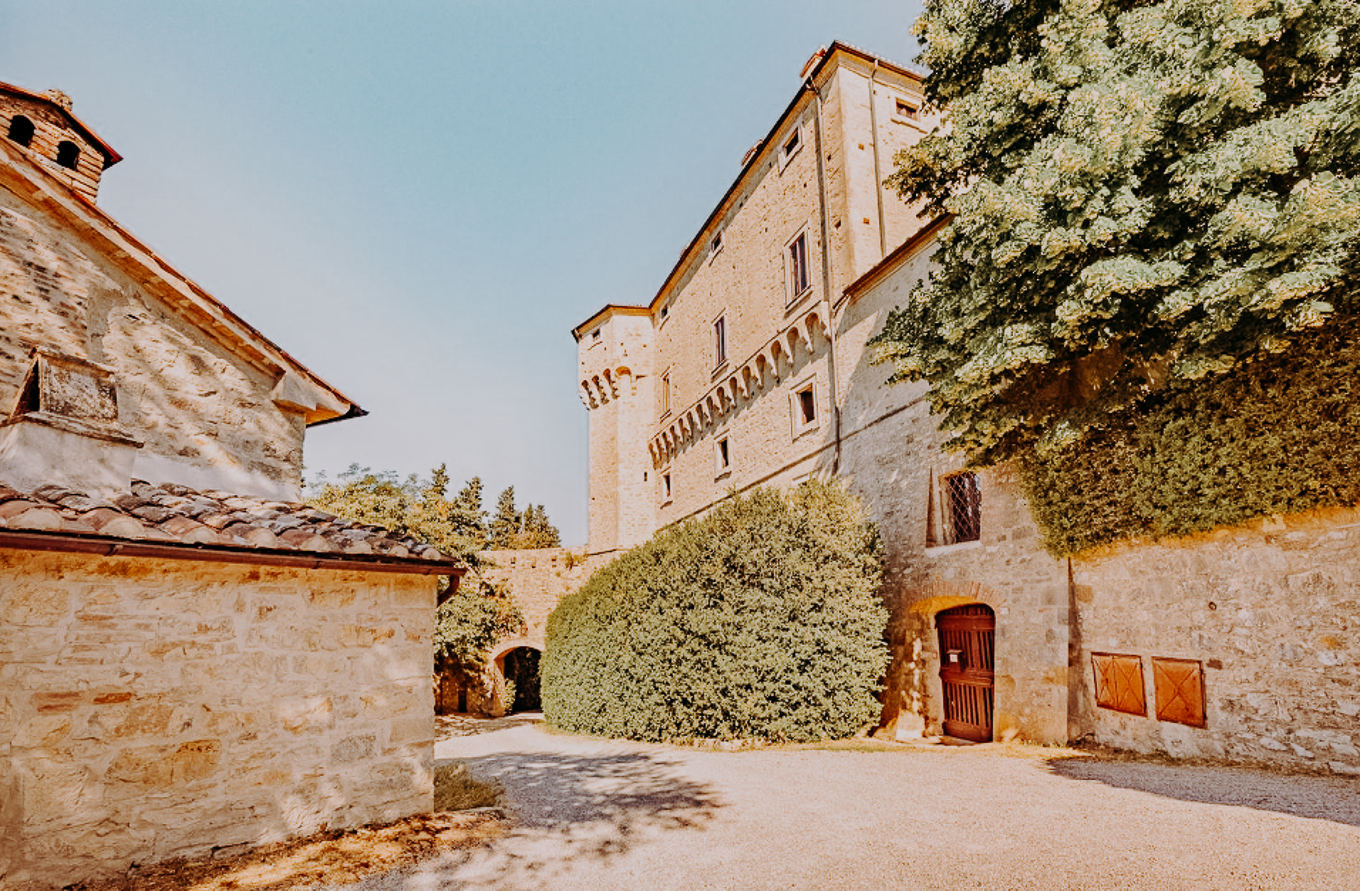
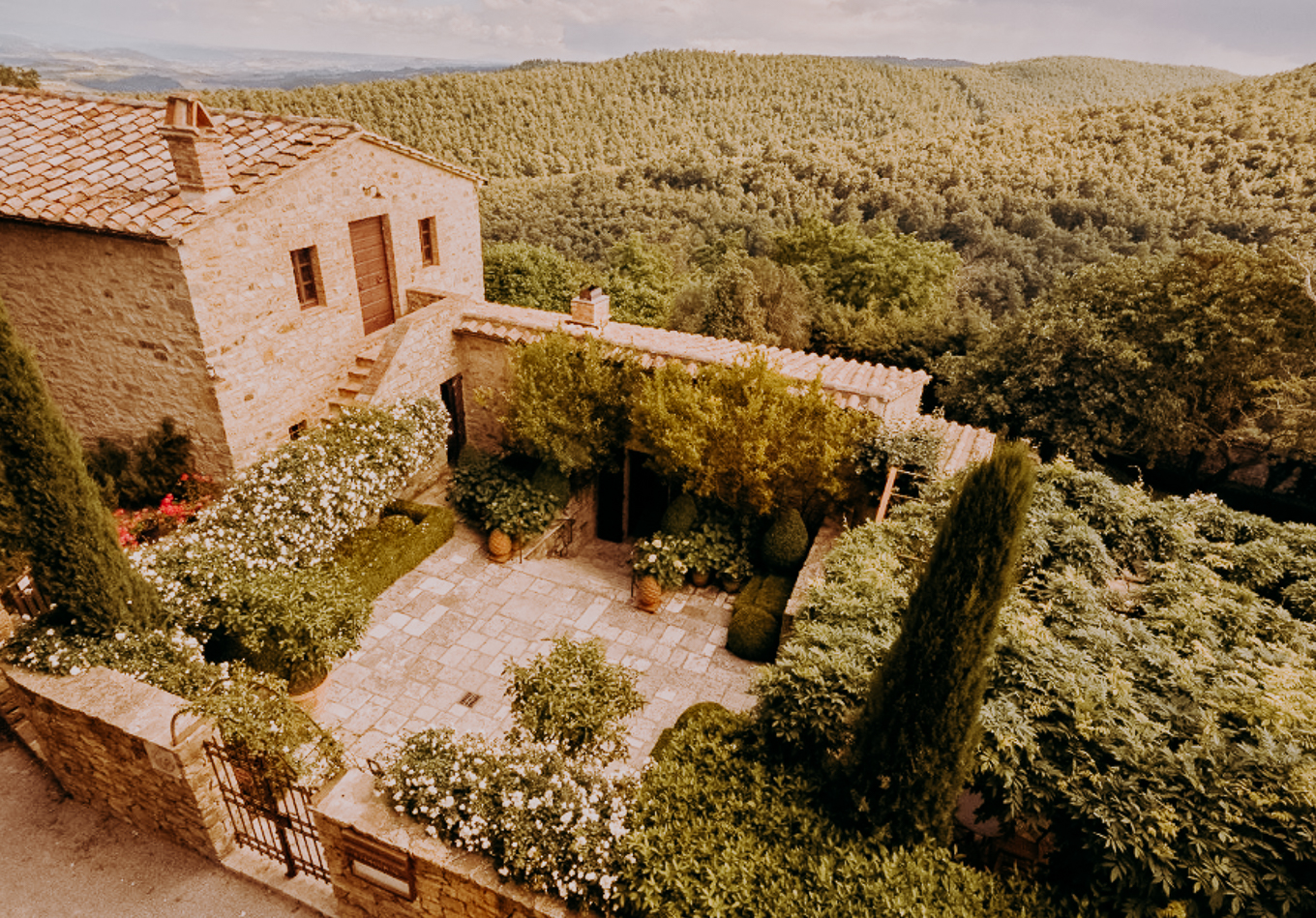
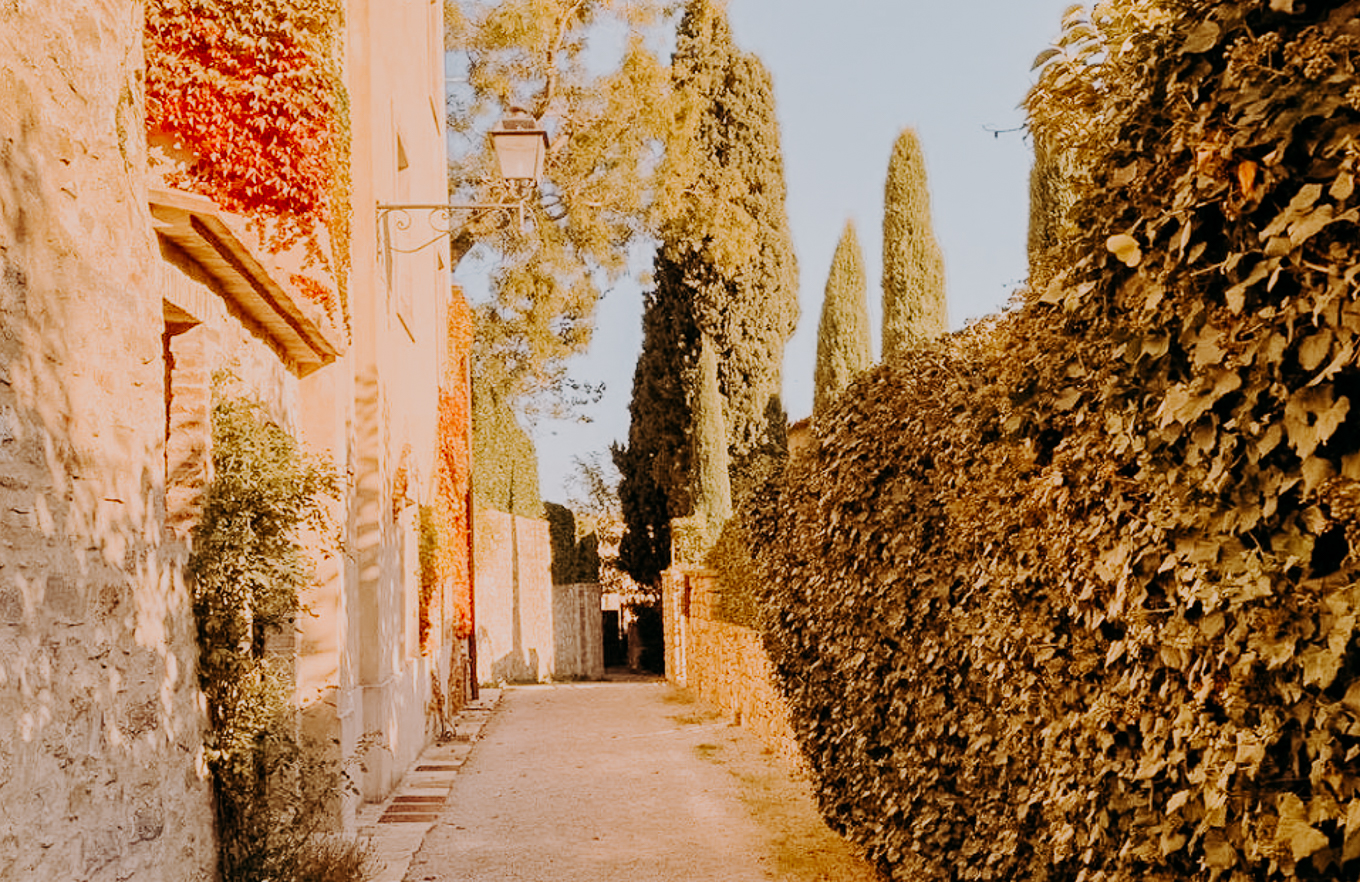
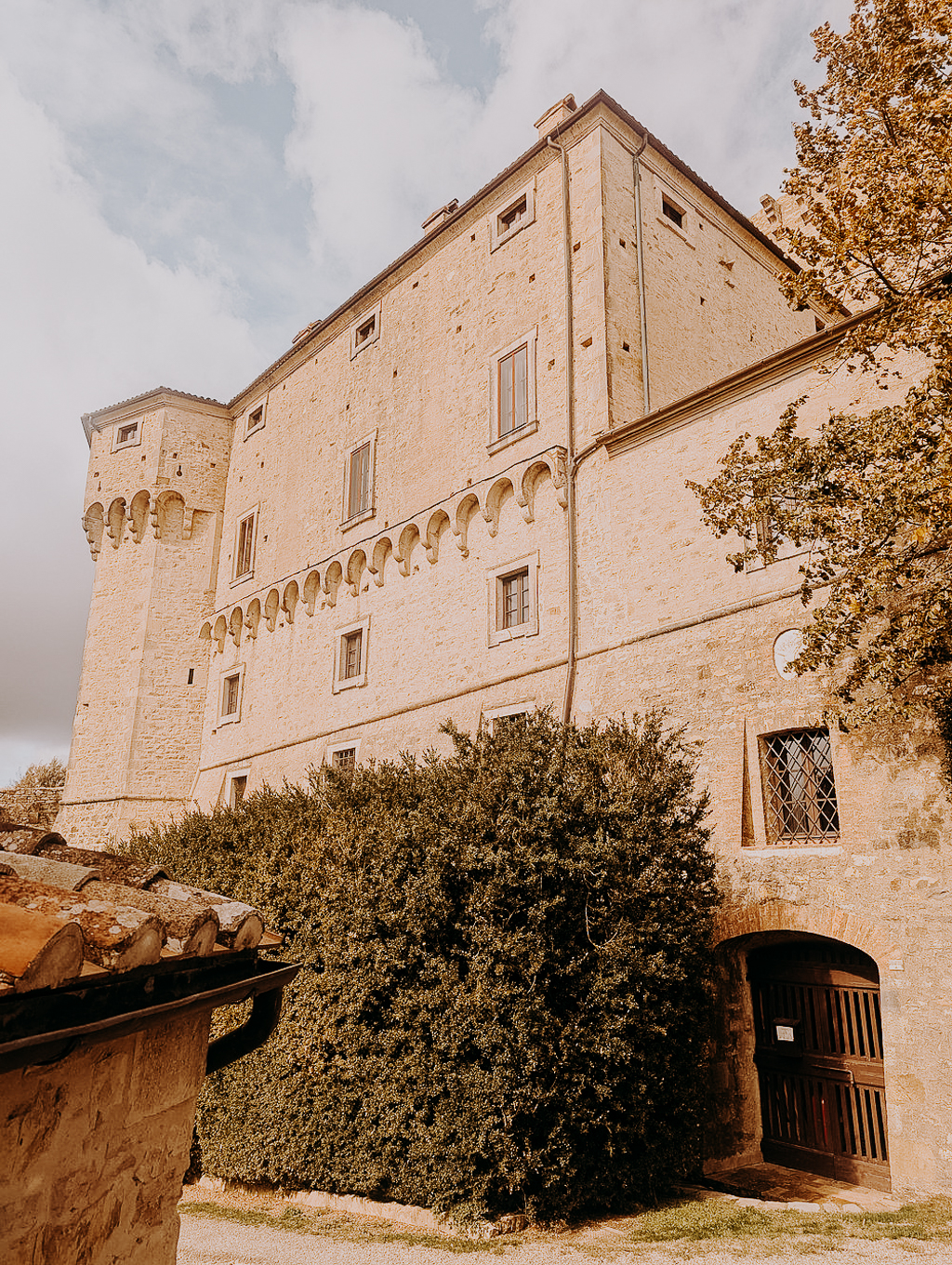
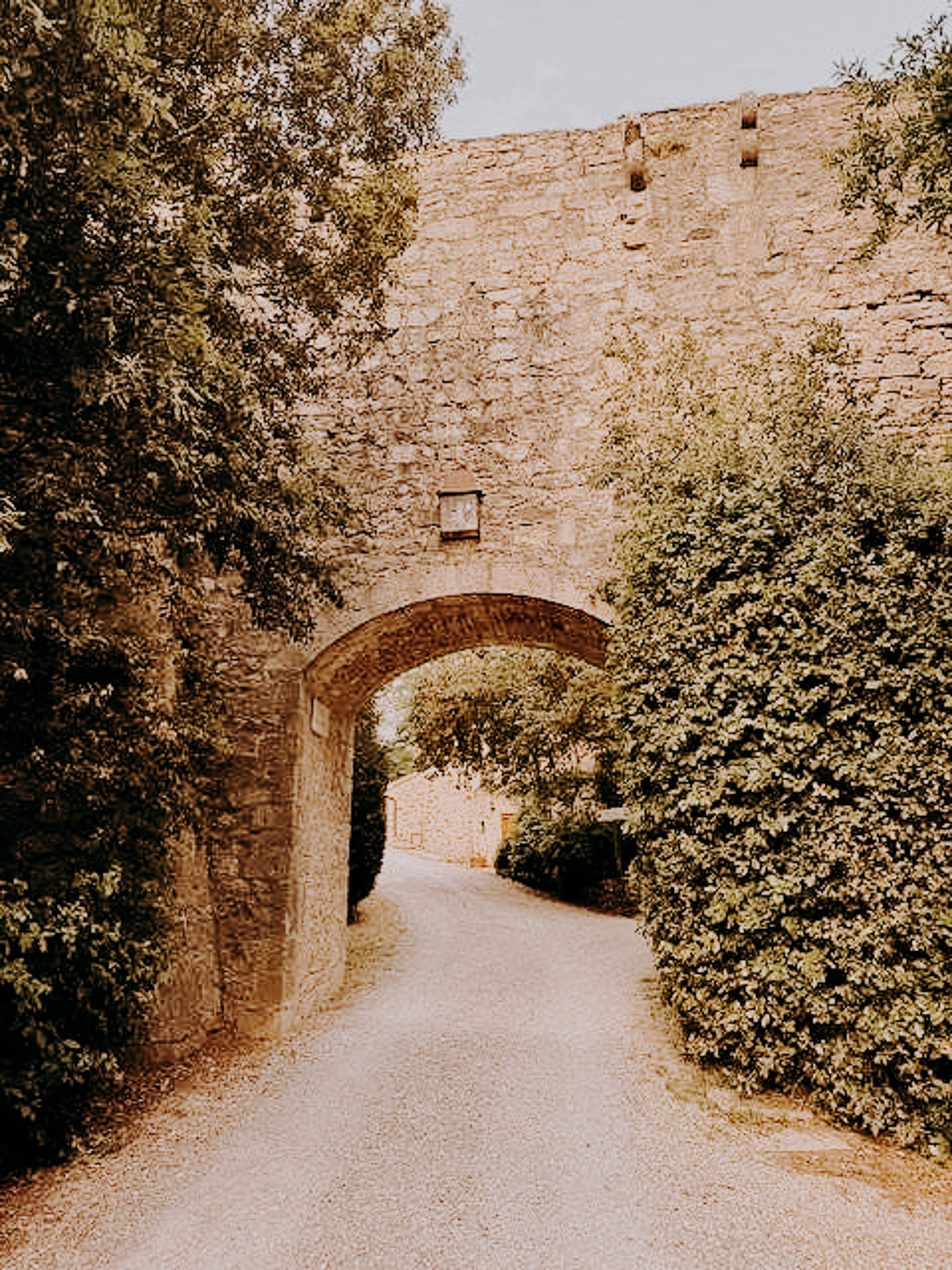
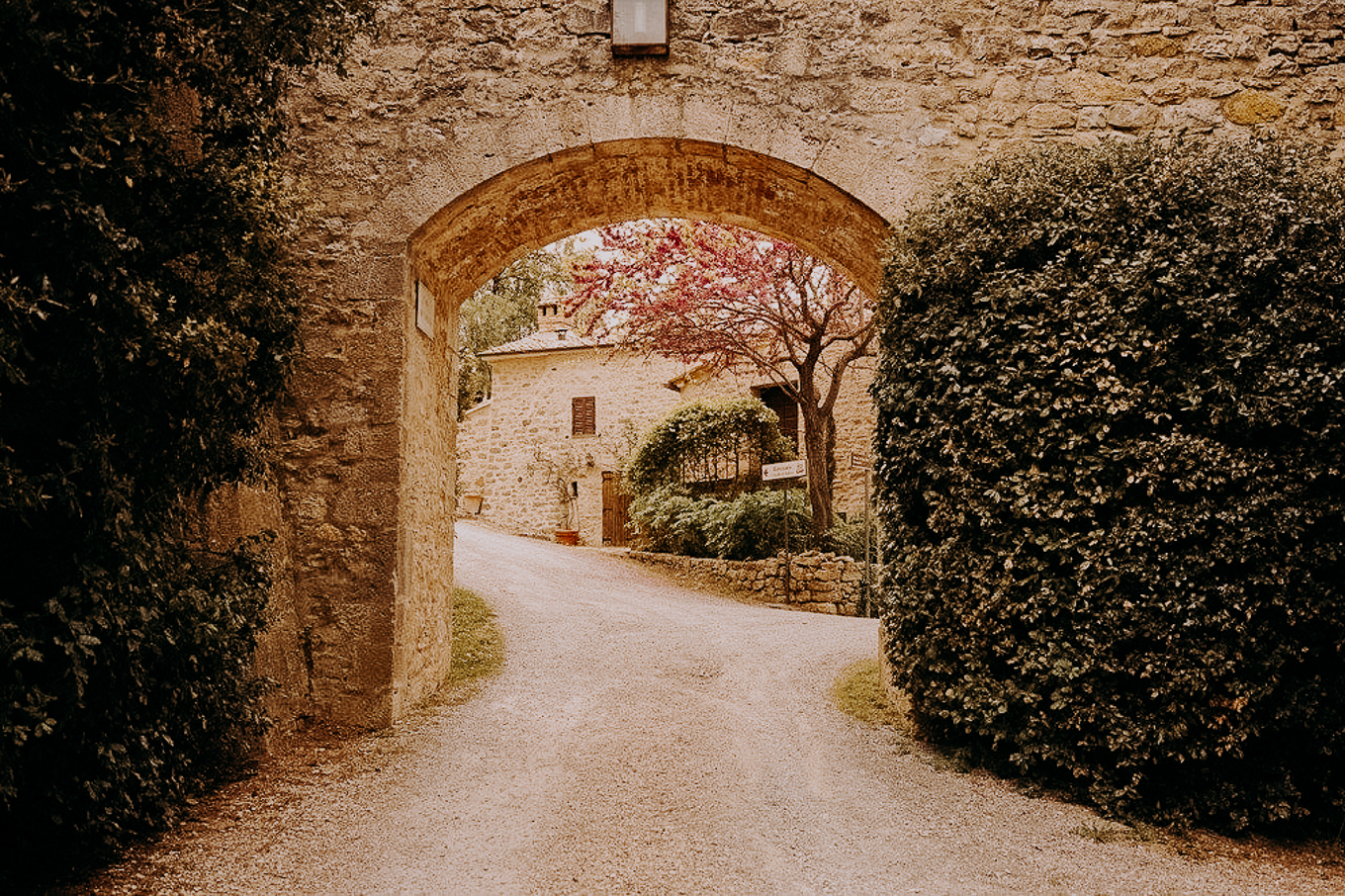
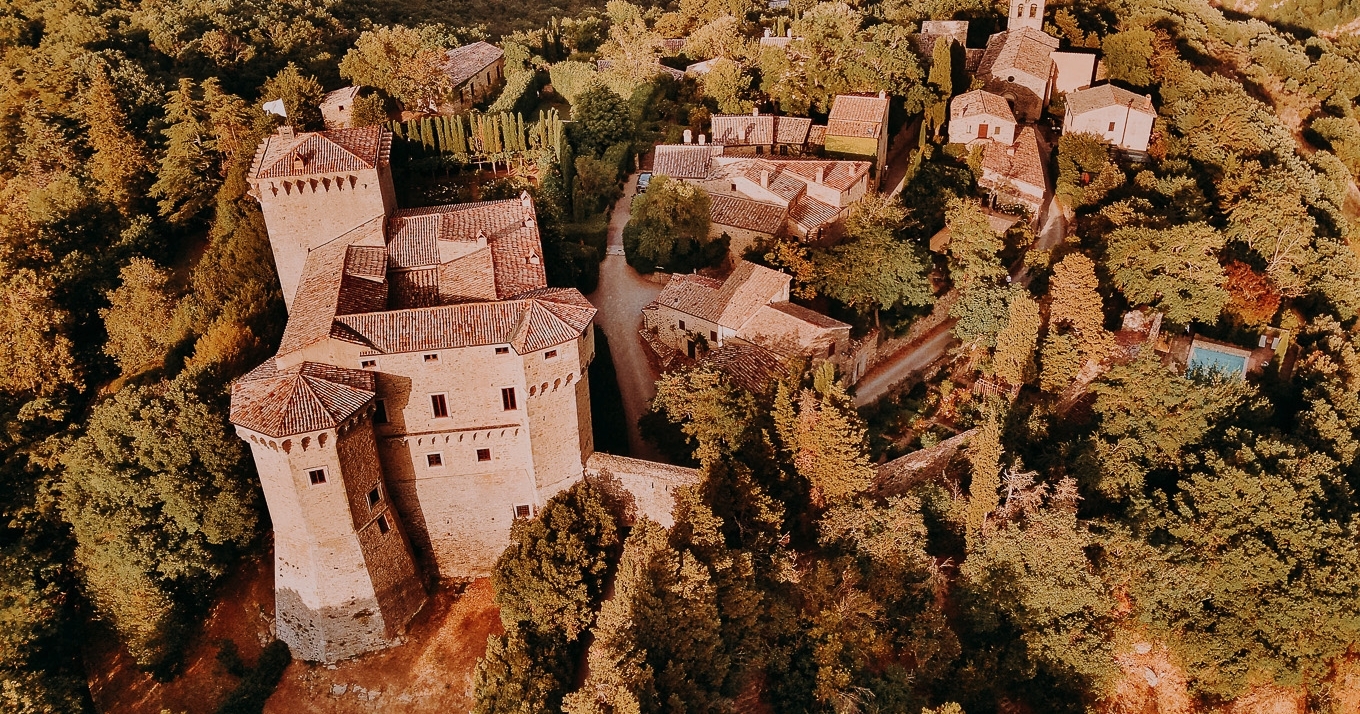
Fighine's history runs back to the 11th century, and the hamlet you walk through today is the result of a patient, complete restoration that kept the original architecture — domed painted ceilings, stone floors, beamed roofs — while quietly adding every modern comfort. The houses are furnished with Italian antiques and fine rugs; two of them, Casa Rossa and the Parretti apartments, were decorated by the celebrated Italian designer Federico Forquet. At the heart of it all stands the castle itself, which becomes the backdrop to the day, with the southern Tuscan hills rolling out beneath the village in every direction.
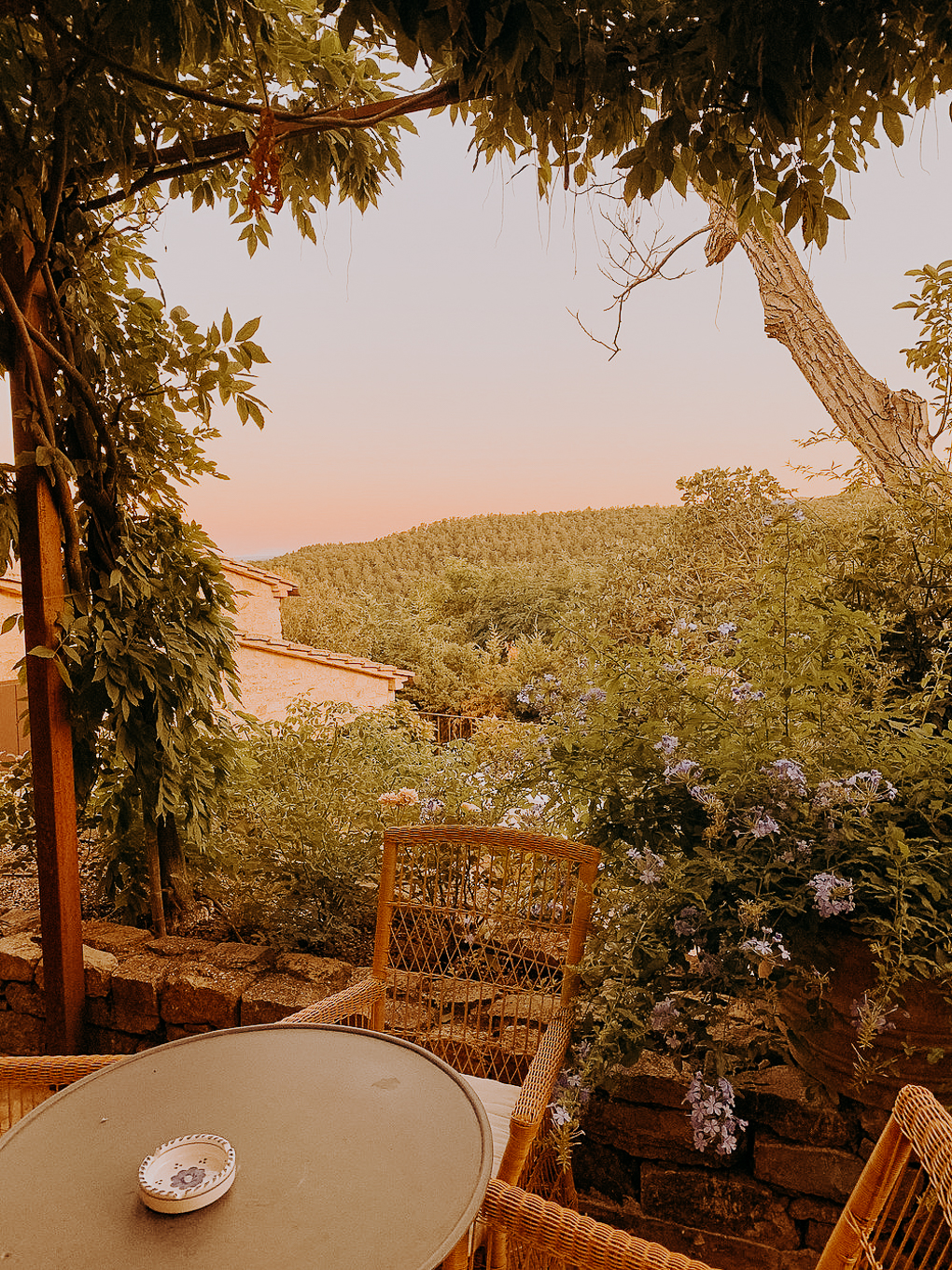
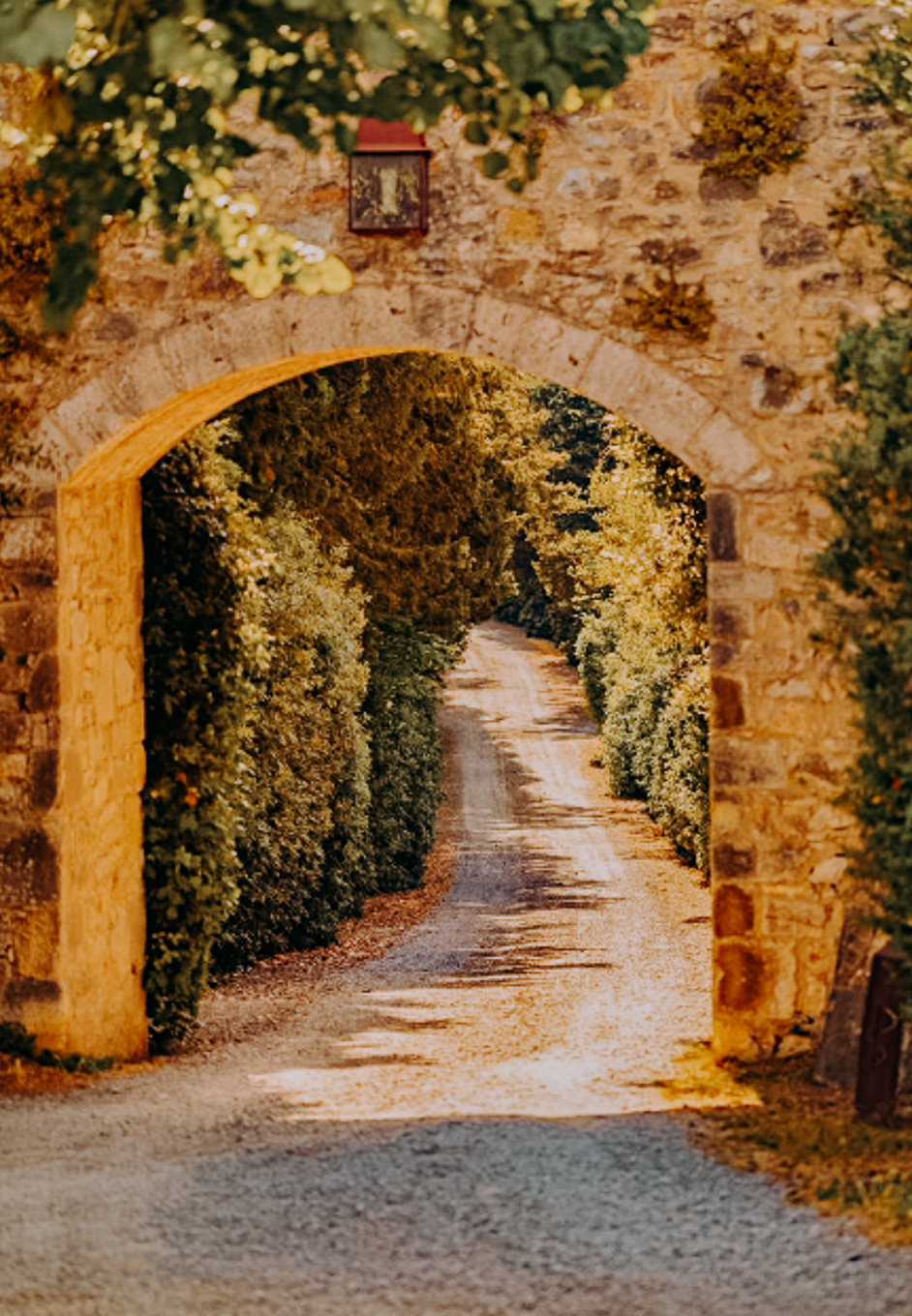
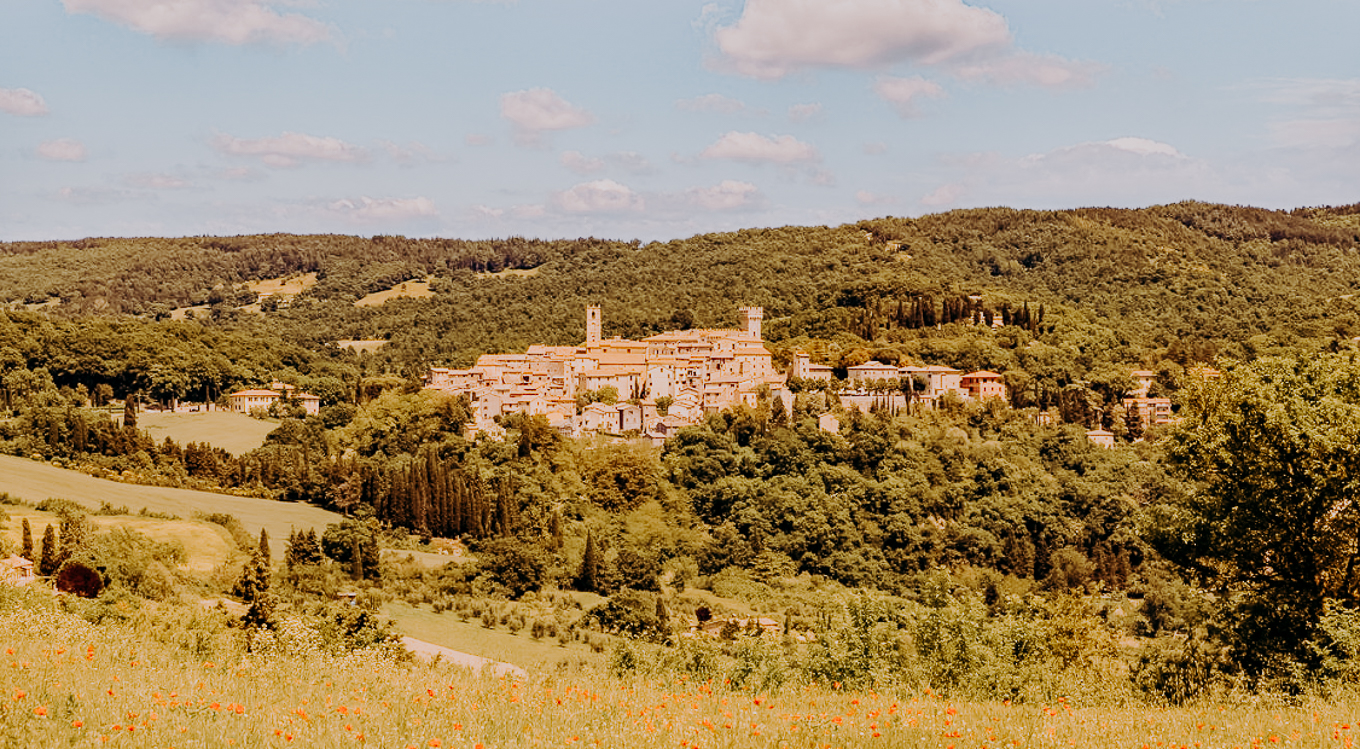
Perched at 650 metres, Fighine sits in one of the quieter, wilder corners of Tuscany, near San Casciano dei Bagni, close to where Tuscany, Umbria and Lazio meet. This is the landscape of Montepulciano, Pienza and the Val d'Orcia, of Orvieto just over the border — but Fighine itself is set apart and above it, an oasis of stillness with the kind of long, uninterrupted views that photograph beautifully at either end of the day.
Should a wedding be one room, or a whole village to wander?
At Fighine the day moves from church to gardens to theatre across an entire hamlet. That sense of a place unfolding is something I love to capture both in stills and on film.
See how I film a Tuscan weddingThe Church, the Gardens and the Theatre: How the Day Unfolds
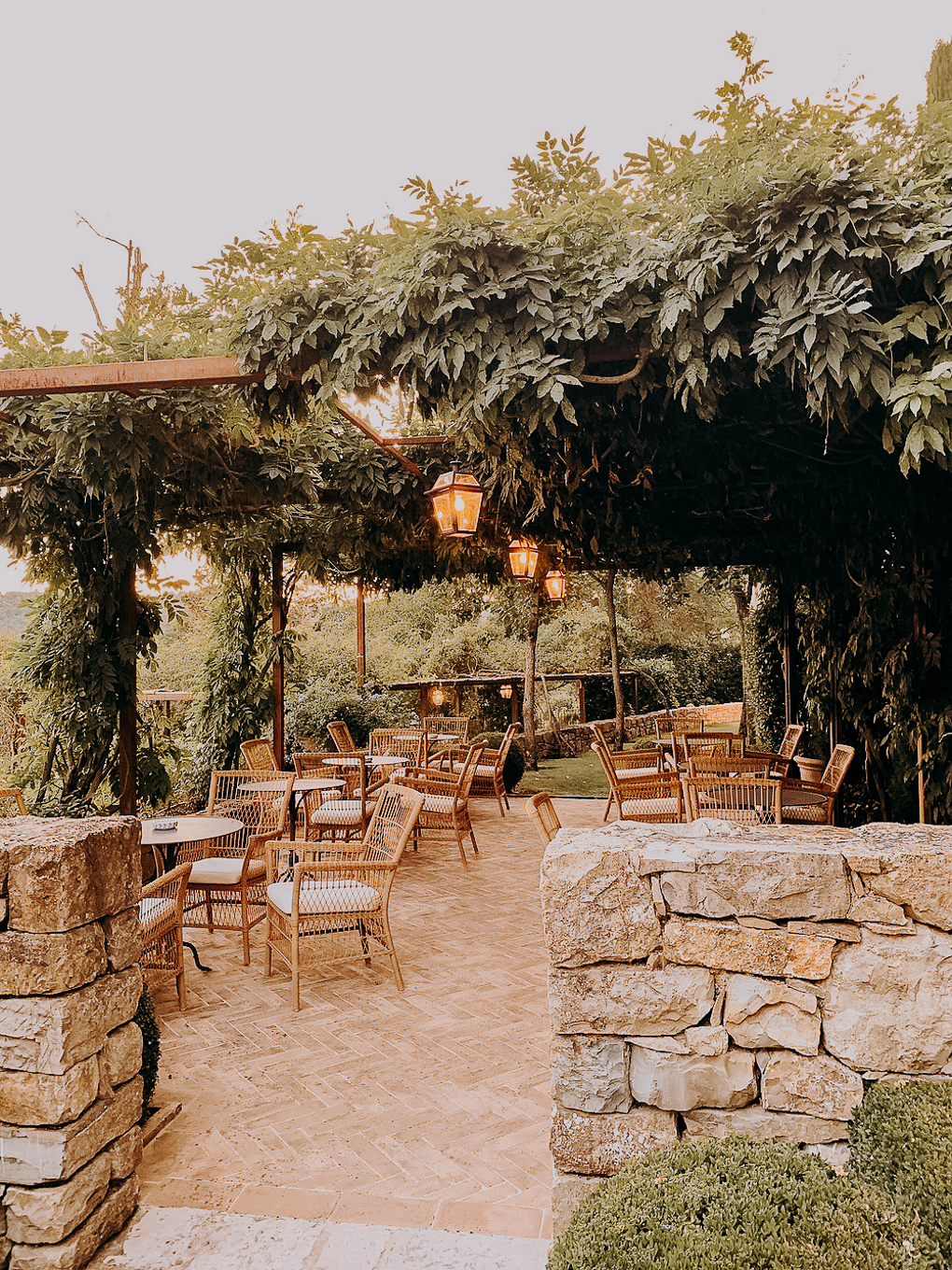
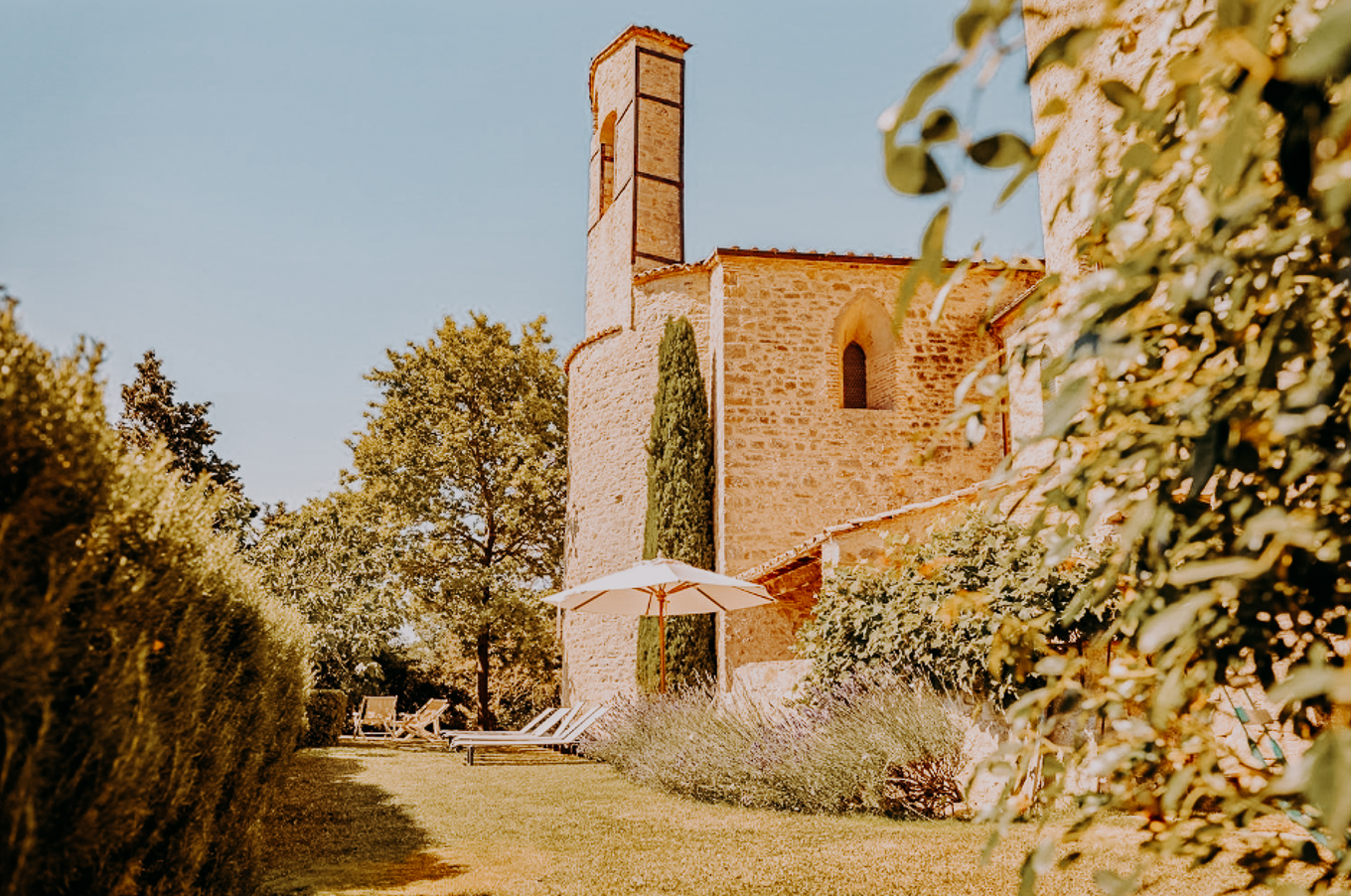
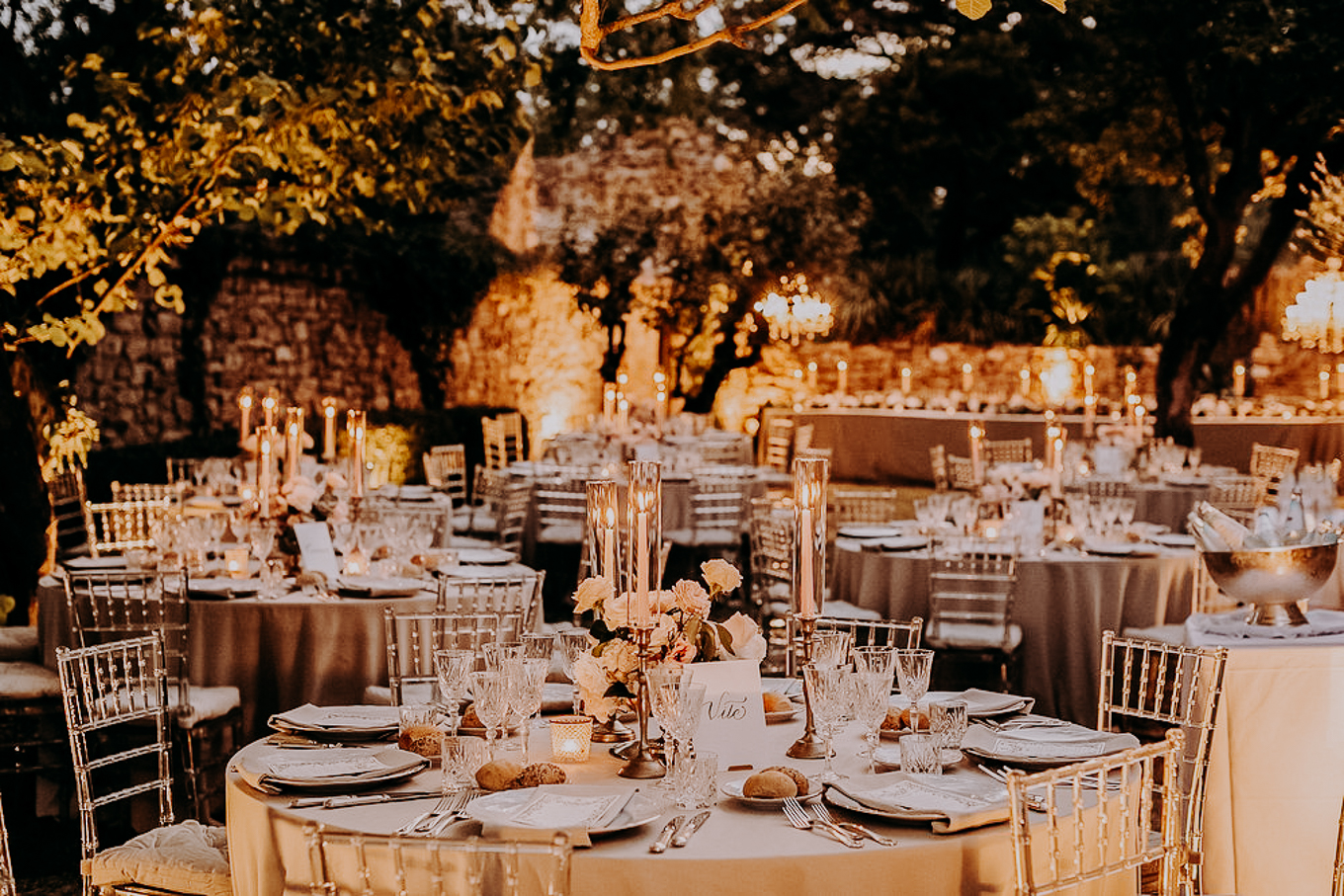
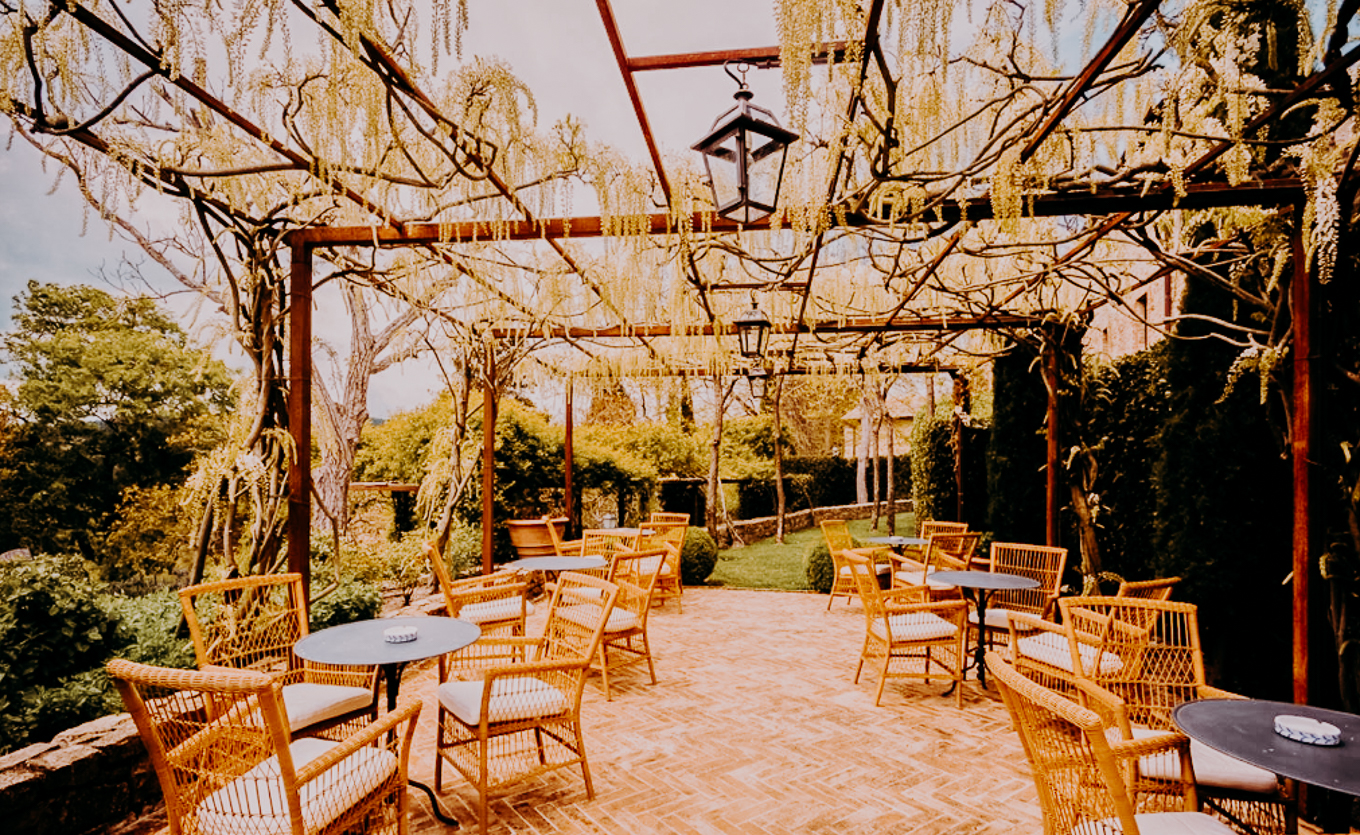
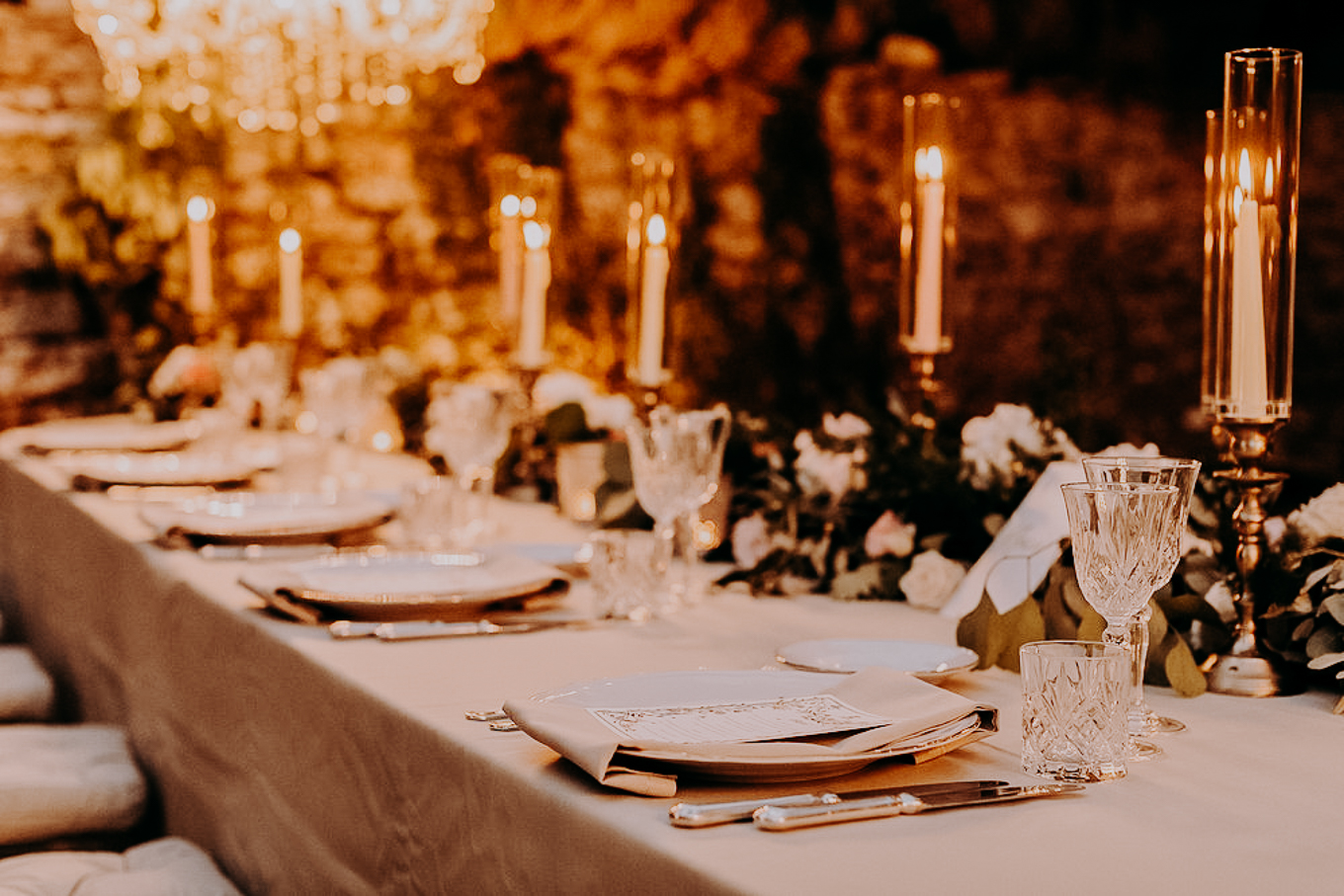
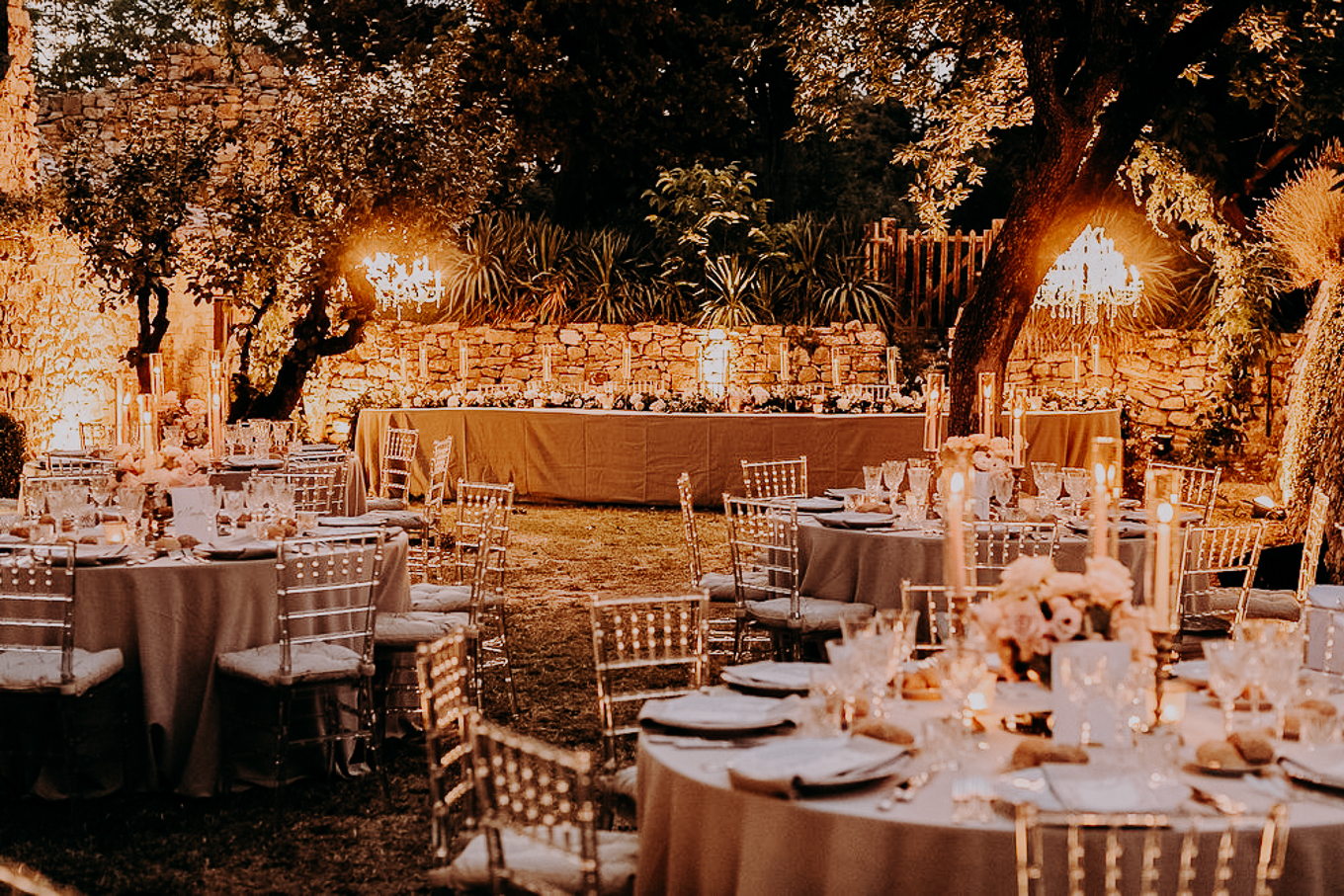
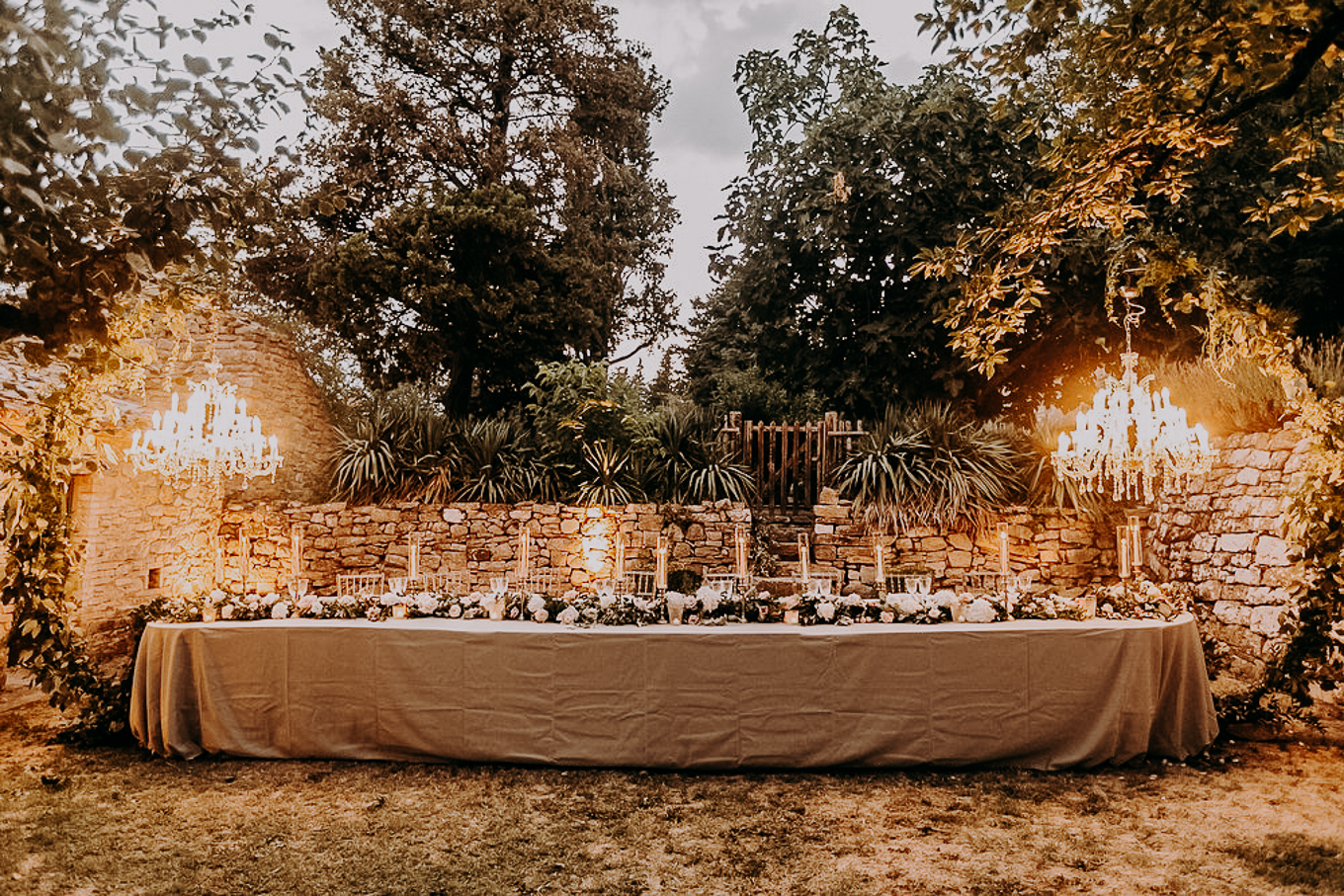
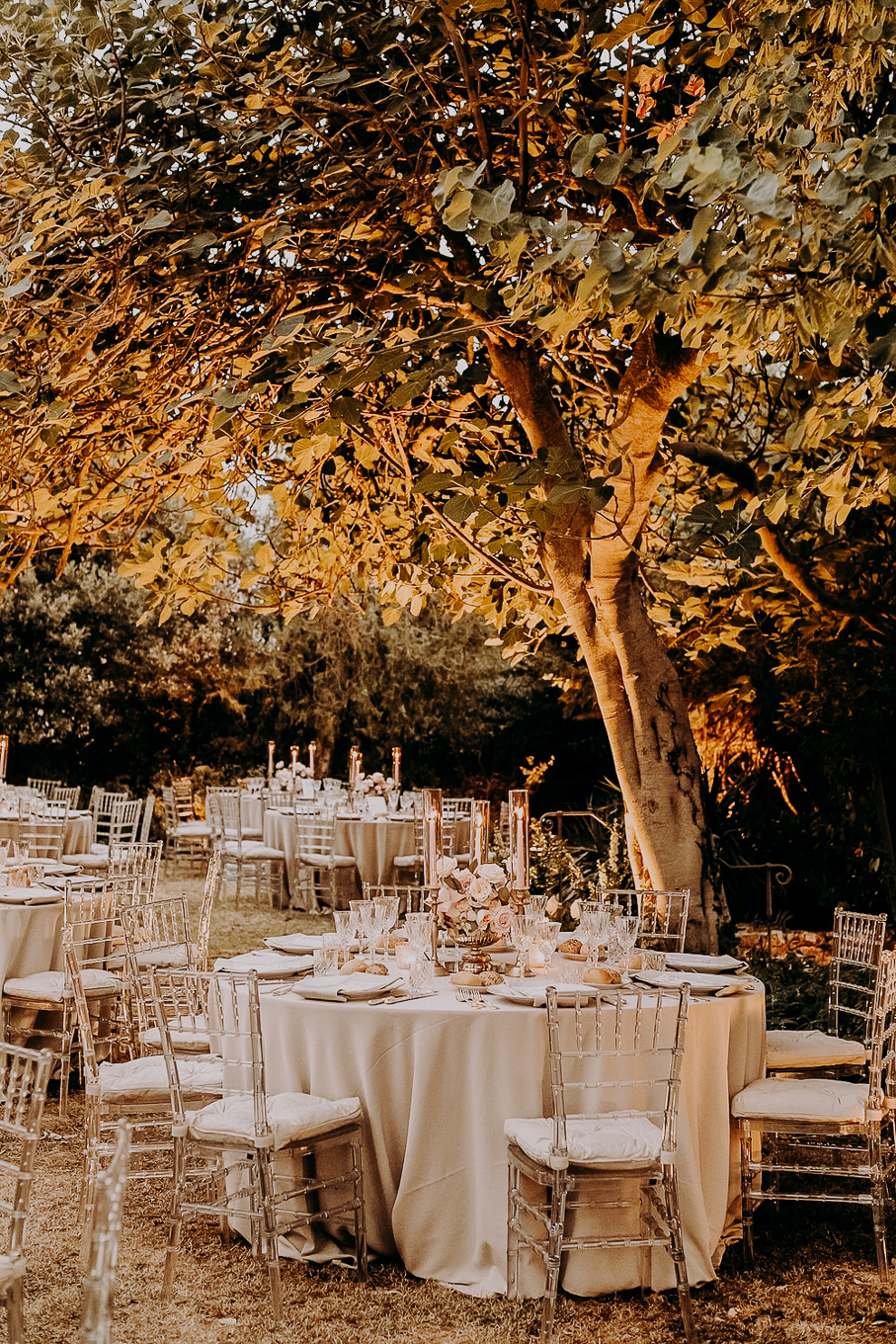
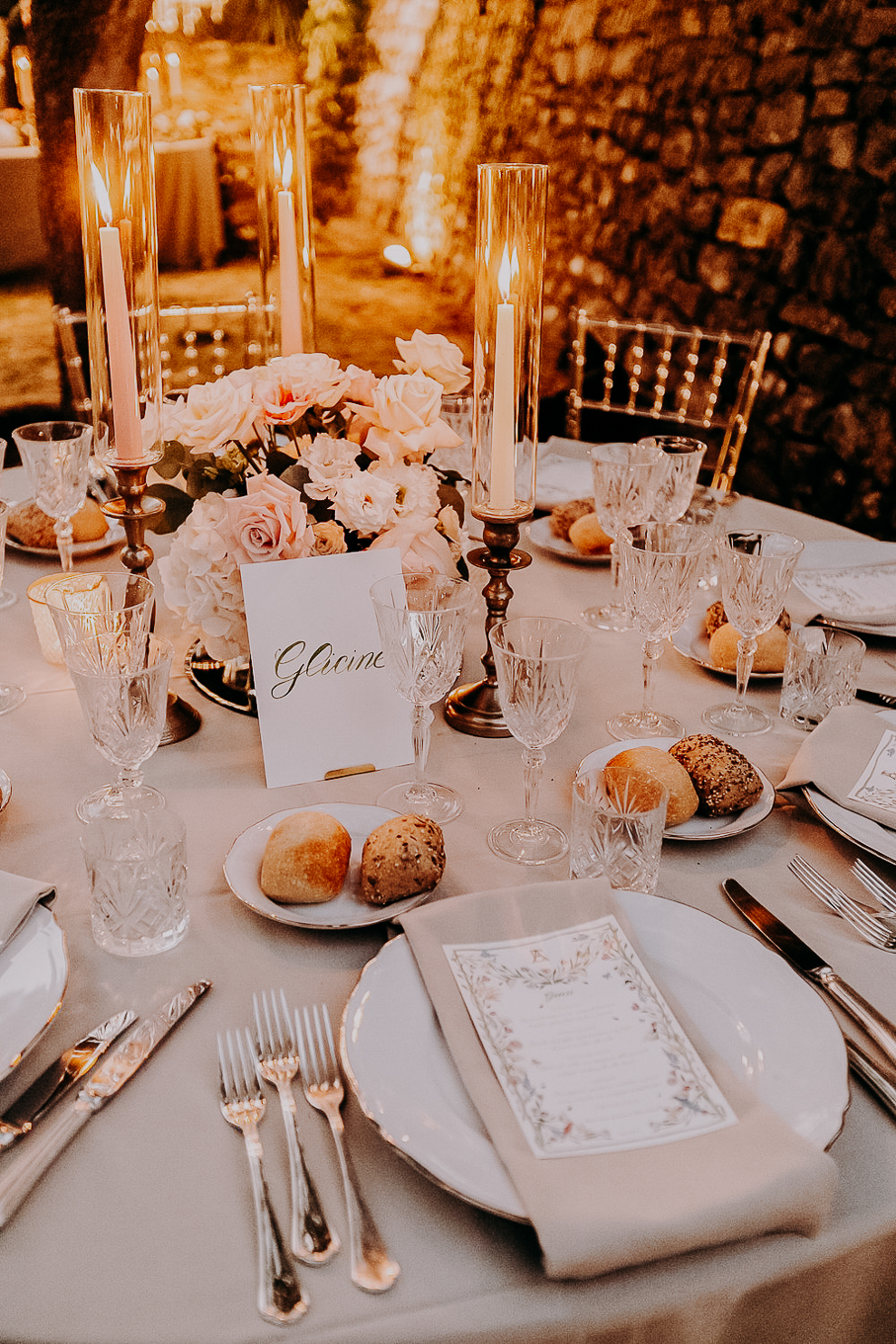
A wedding at Fighine has a natural rhythm written into the hamlet. The ceremony can take place in the village church, the Pieve di San Michele Arcangelo; aperitifs and dinner spread through the gardens and terraces, with the castle behind and the valleys below; and the theatre takes over for the dancing and entertainment once the light has gone. Each setting is a genuinely different photograph, and because they are all within the same small borgo, guests simply stroll from one to the next — no transfers, no waiting, no breaking the spell.
Anchoring the food is something rare for so remote a hilltop: a Michelin-starred restaurant on site. That a village this high and this hidden should hold a starred kitchen is part of Fighine's particular character — the sense that nothing here has been done by halves. For a wedding, it means the dining can be as much a part of the occasion as the ceremony itself.
Staying in the Borgo: Five Villas, Two Apartments
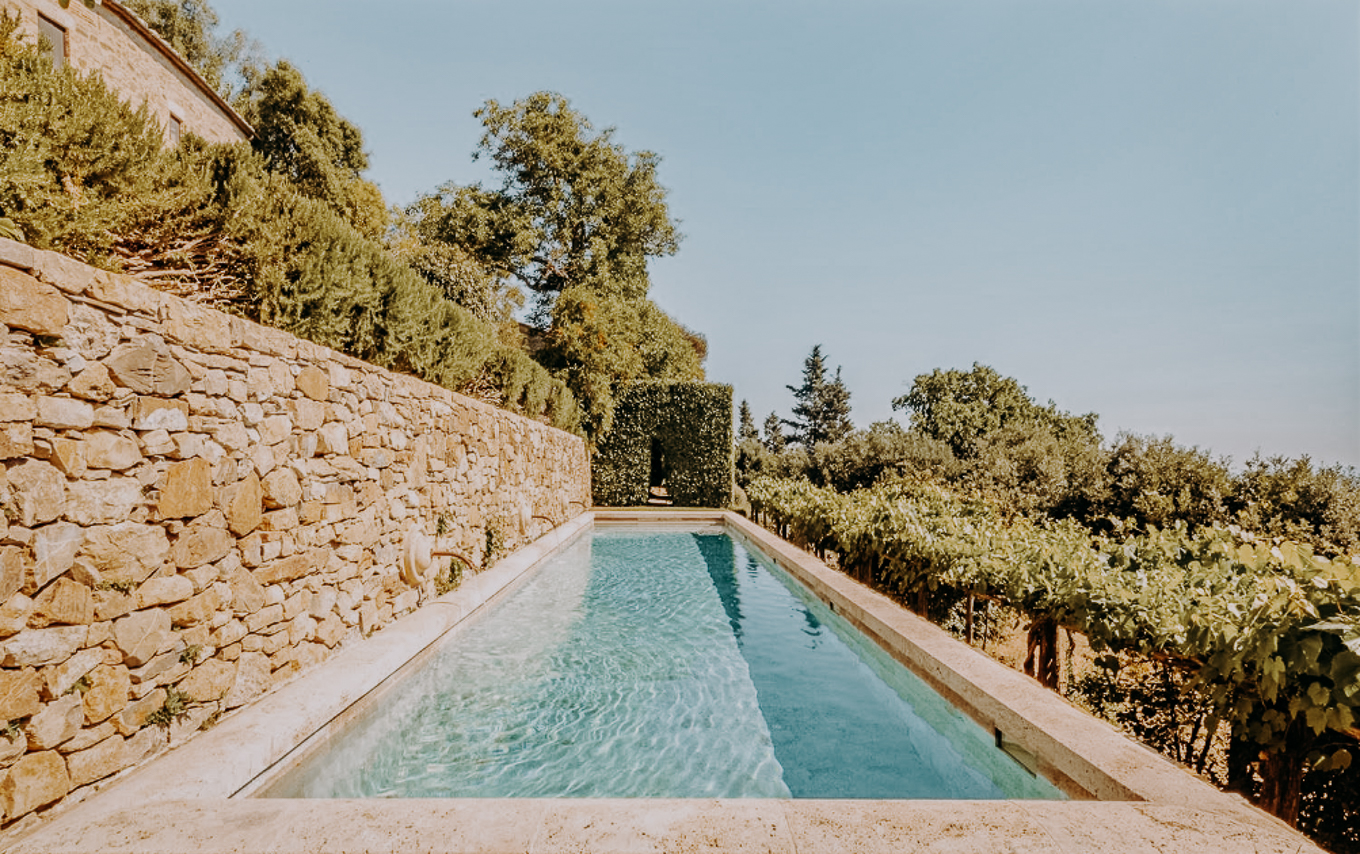
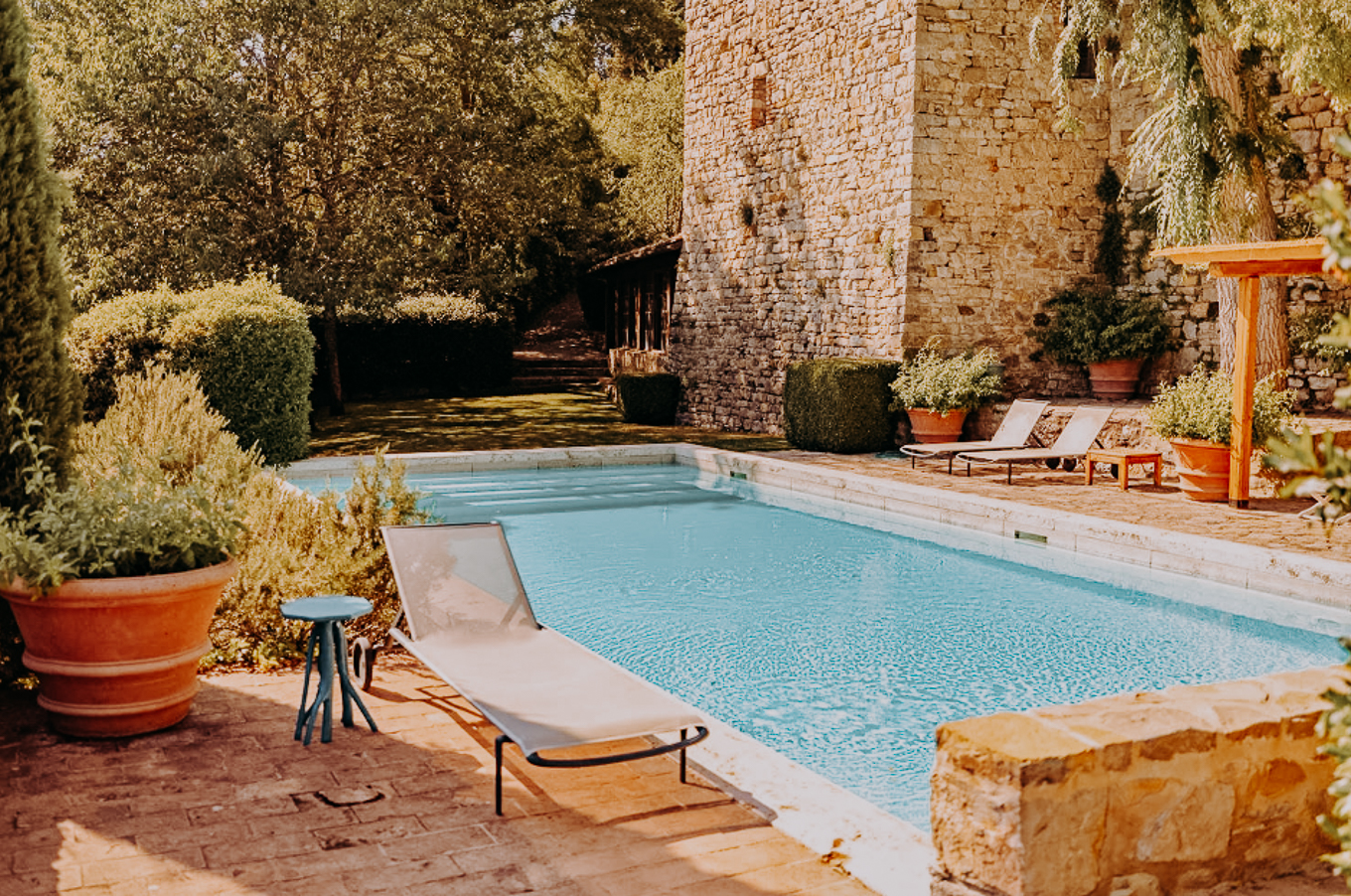
The hamlet's accommodation lets your closest people stay where you marry. Five villas — two of them with their own pools — and two apartments together sleep up to thirty-four guests within the borgo, with further guests easily accommodated in the beautiful nearby village of San Casciano dei Bagni. The houses range from the spacious Villa Melissa, with its bridal suite and pool, to the intimate Casa Rossa and the Parretti apartments styled by Federico Forquet. For the days around the wedding, the renowned natural thermal spa of Fonteverde, in San Casciano dei Bagni, is available to guests — a fitting way to slow down before or after the celebration.
Because the whole hamlet can be taken for exclusive use, a wedding here naturally becomes a multi-day gathering rather than a single evening. Families arrive, settle into the villas, and the celebration spills gently across a long weekend on the hill.
When did you last have an entire village to yourselves?
With the borgo booked exclusively, the unhurried hours — breakfasts in the gardens, evenings on the terraces — are where the truest pictures live. Those are the ones I most want to be there for.
Get in touch about your weddingReaching Castello di Fighine: Notes for Couples Travelling from Abroad
Fighine sits in the comune of San Casciano dei Bagni, in the province of Siena, in southern Tuscany near the Umbrian border — beautifully remote, which is the point, but worth planning for. For international couples and their guests, Florence and Rome are the most useful gateways: Florence's airport lies to the north and Rome's airports to the south, each roughly a couple of hours away by road, with Perugia in Umbria a smaller nearer option. The historic towns of Montepulciano, Pienza and Orvieto are all within easy reach for guests who want to explore. Because the hamlet is high in the hills along winding country roads, I'd strongly encourage arranging transfers or car hire rather than relying on public transport. For your planner and your drivers, the estate is at Località Fighine, 53040 San Casciano dei Bagni, Siena.
What Couples Ask Me Before Choosing Castello di Fighine
How does the legal side of marrying in Italy work for a foreign couple?
A legally binding civil marriage in Italy is performed by Italian authorities, and the documents required depend on your nationality. Most couples coming from abroad need a sworn declaration of no impediment to marry — usually arranged through your own country's consulate or embassy in Italy — together with further paperwork, and it is best begun several months ahead. In practice, many international couples complete the legal formalities at a local town hall and hold their ceremony at Fighine — in the village church or in the gardens — as the meaningful celebration. My honest advice is to confirm exactly what your two passports require early, because that single detail shapes the whole timeline.
How many guests can stay at Fighine, and what about larger numbers?
The hamlet's five villas — two with pools — and two apartments together sleep up to thirty-four guests within the borgo itself, which makes it ideal for an intimate-to-mid-sized wedding where the closest people stay on the hill with you. For larger guest lists, additional accommodation is readily available in the nearby village of San Casciano dei Bagni. It's worth discussing your likely numbers with the estate early, since the balance between who sleeps in the borgo and who stays nearby shapes the feel of the whole weekend.
Can we reserve the entire hamlet for ourselves?
Yes — Fighine lends itself to exclusive use of the whole borgo, which is what gives a wedding here its rare sense of privacy. With the castle, the church, the gardens, the theatre and the villas all part of one small village, taking the hamlet means the celebration is genuinely yours, with no other guests passing through. On a hilltop this secluded, that level of seclusion is hard to match, and it is well worth confirming the exclusive-use arrangement with the team when you first enquire, as it tends to determine which dates are possible.
Can our wedding dinner be prepared by the Michelin-starred restaurant?
A Michelin-starred kitchen on site is one of Fighine's most distinctive features, and dining is clearly central to how the estate approaches a celebration. Exactly how the starred restaurant's cuisine is woven into a wedding — from the rehearsal dinner to the wedding banquet itself — is best discussed directly with their team, as menus and formats are tailored to each event. For couples who care as much about the food as the setting, it is a genuine point of difference: few remote Tuscan venues can offer cooking at this level without bringing in outside caterers.
When is the best time of year to marry at this altitude?
Fighine's height — 650 metres — is worth bearing in mind when choosing a date. Late spring and early autumn are the classic windows, with comfortable temperatures and beautiful low light over the valleys; one quiet advantage of the altitude is that high summer here tends to be fresher in the evenings than down on the plains, which suits an outdoor celebration. Autumn brings the golden colours of the southern Tuscan countryside, and the views are at their clearest. Because the church and theatre offer covered options, the day is not wholly at the mercy of the weather either way.
What makes Castello di Fighine special to photograph?
It is the rare combination of an entire restored hamlet and a vast open landscape. Within a few steps I can frame the village church, the antique-filled interiors and the theatre, then turn around to the castle rising behind the celebration and the valleys stretching out far below. The elevation gives a clarity and reach to the light that lower venues simply don't have, especially at sunrise and sunset. For a wedding album it means real range — intimate, atmospheric interiors on one hand, and sweeping images of two people on a hilltop above southern Tuscany on the other.