Villa Cetinale: A Wedding at a Baroque Villa and Its Holy Wood Near Siena
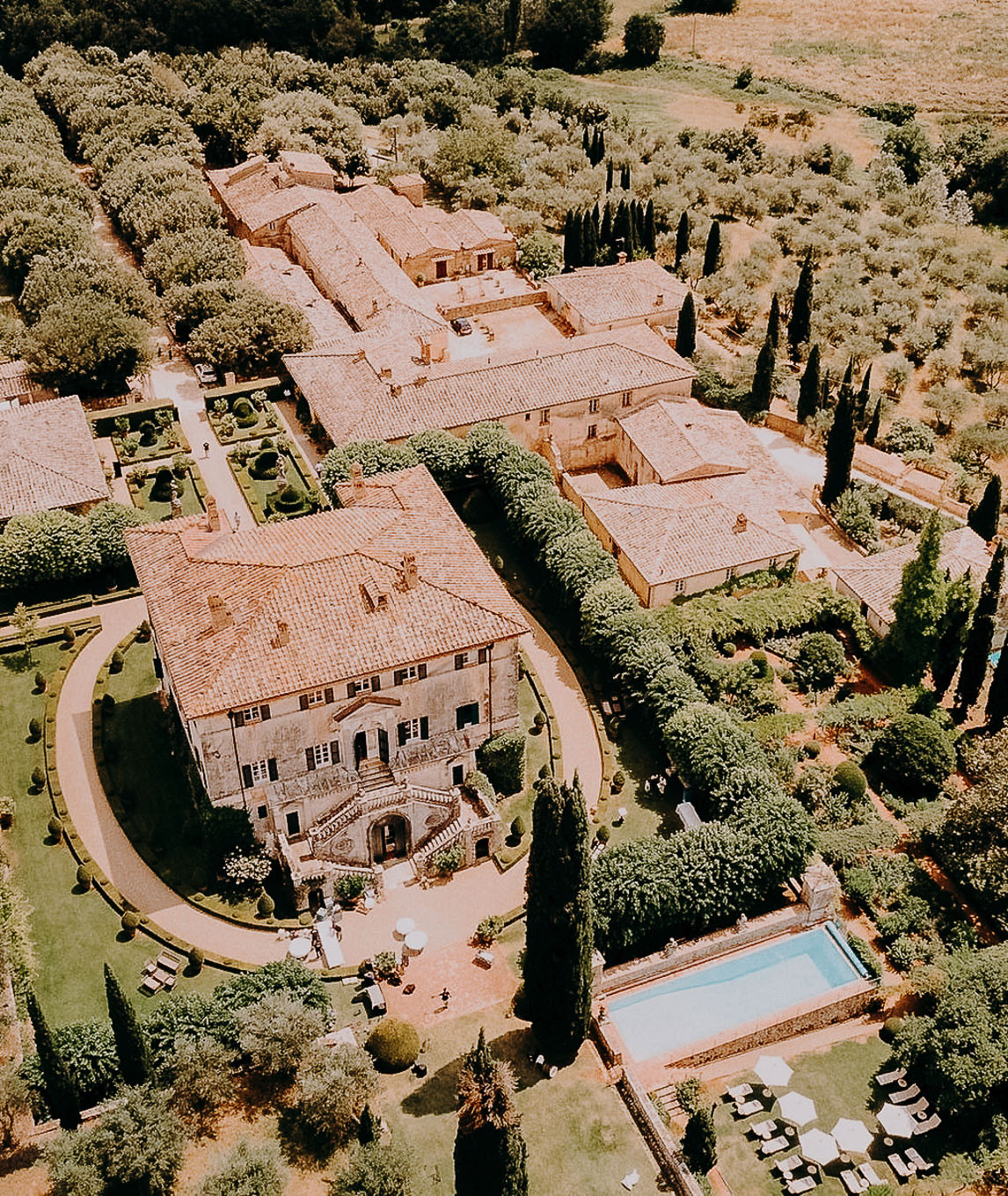
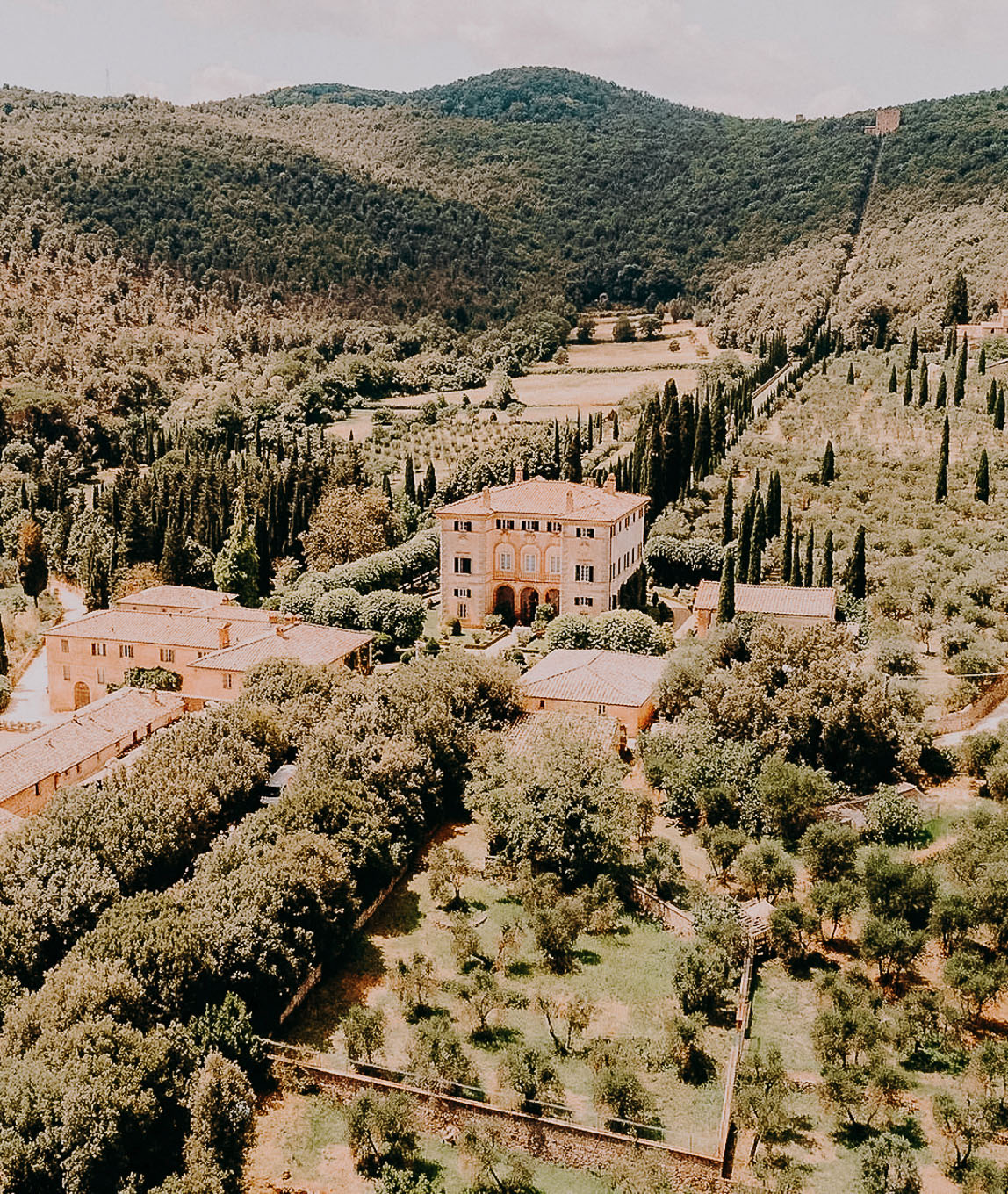
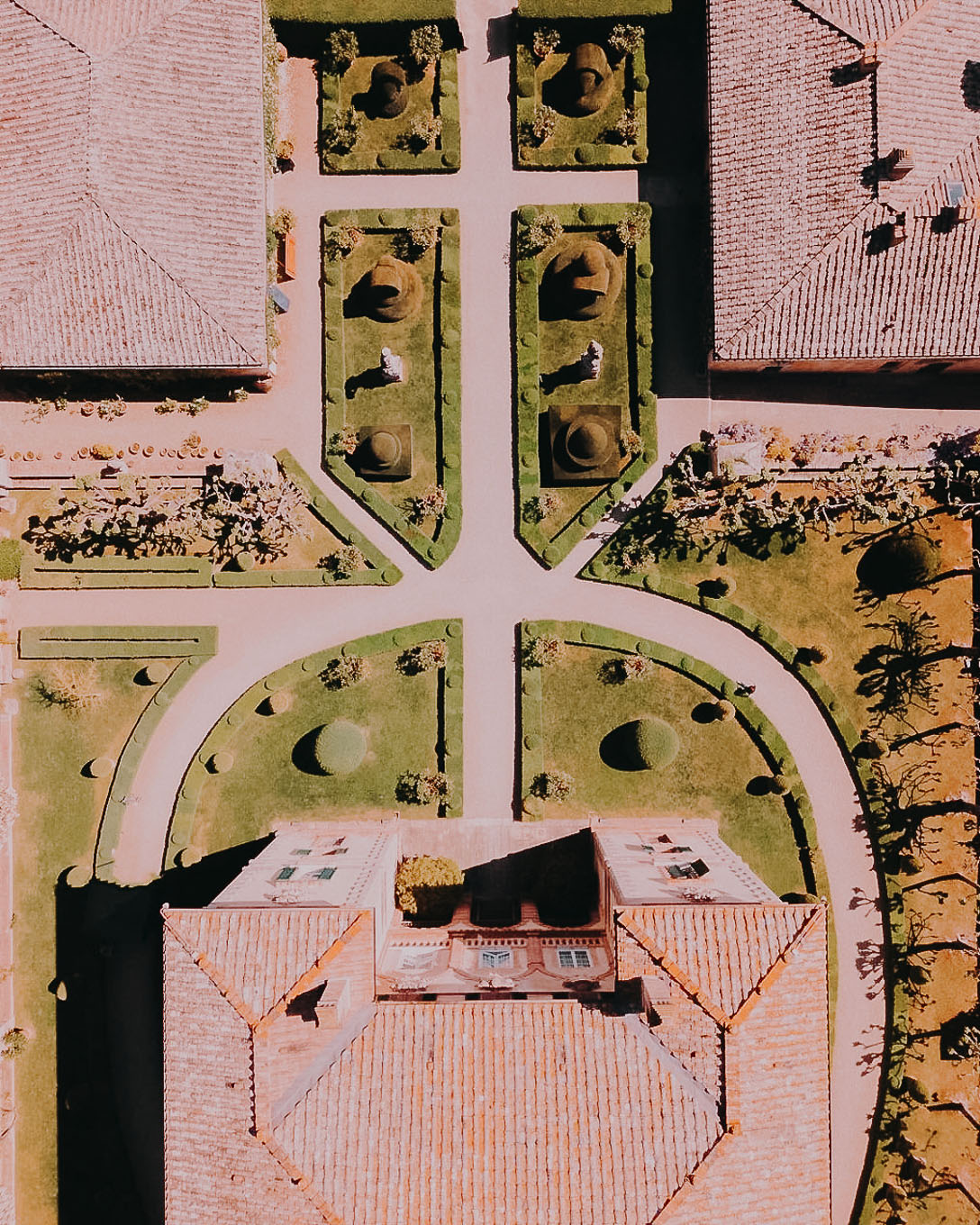
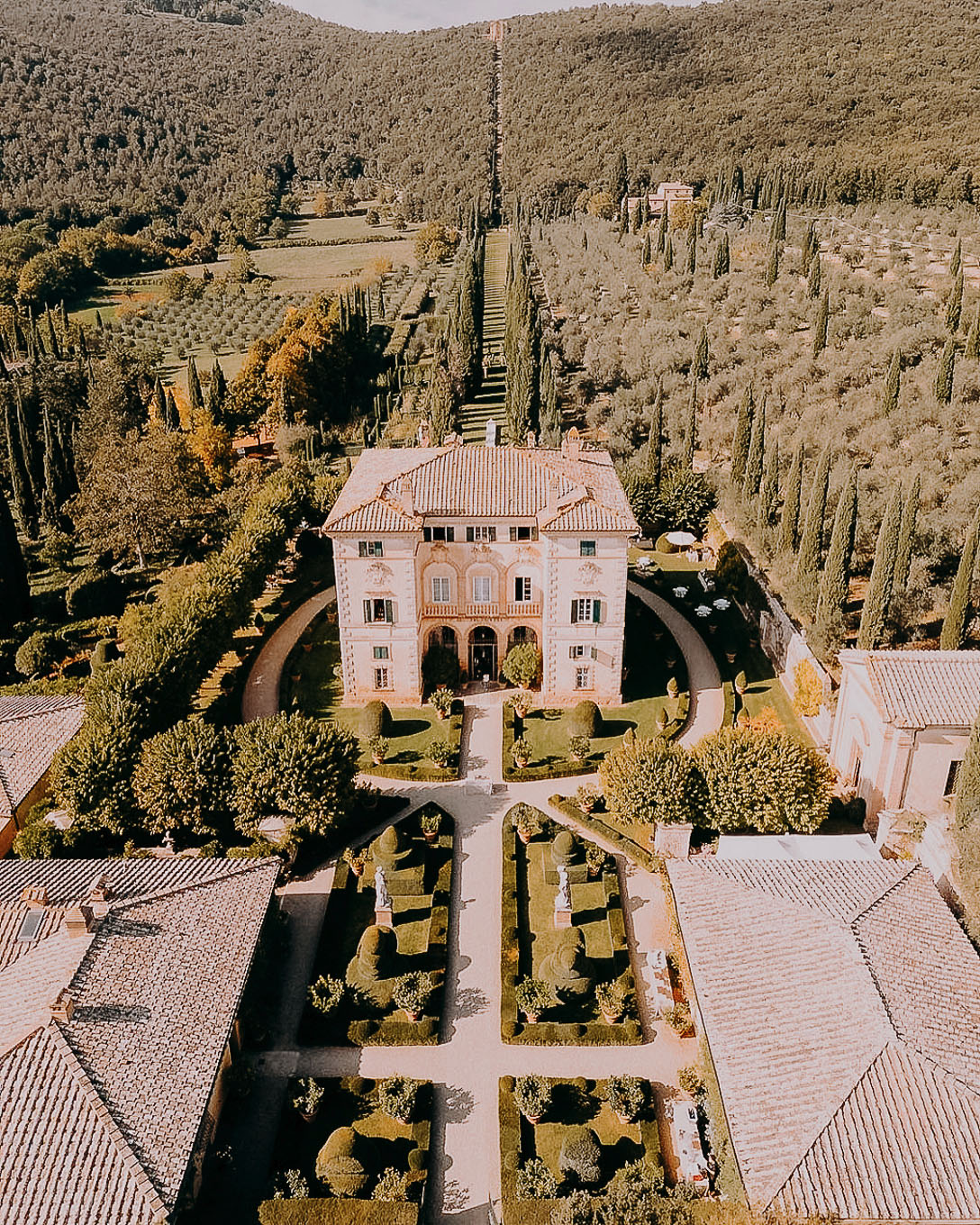
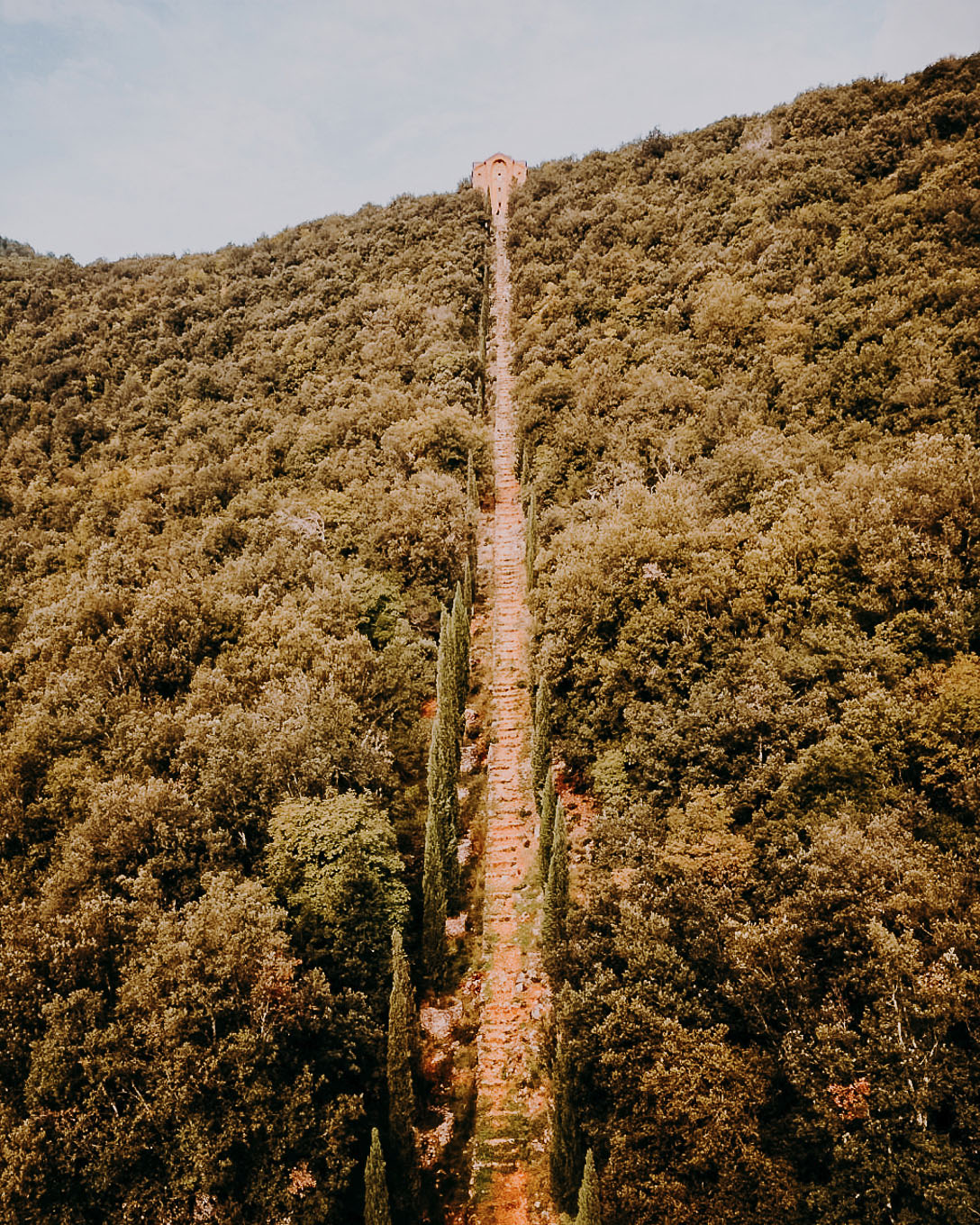
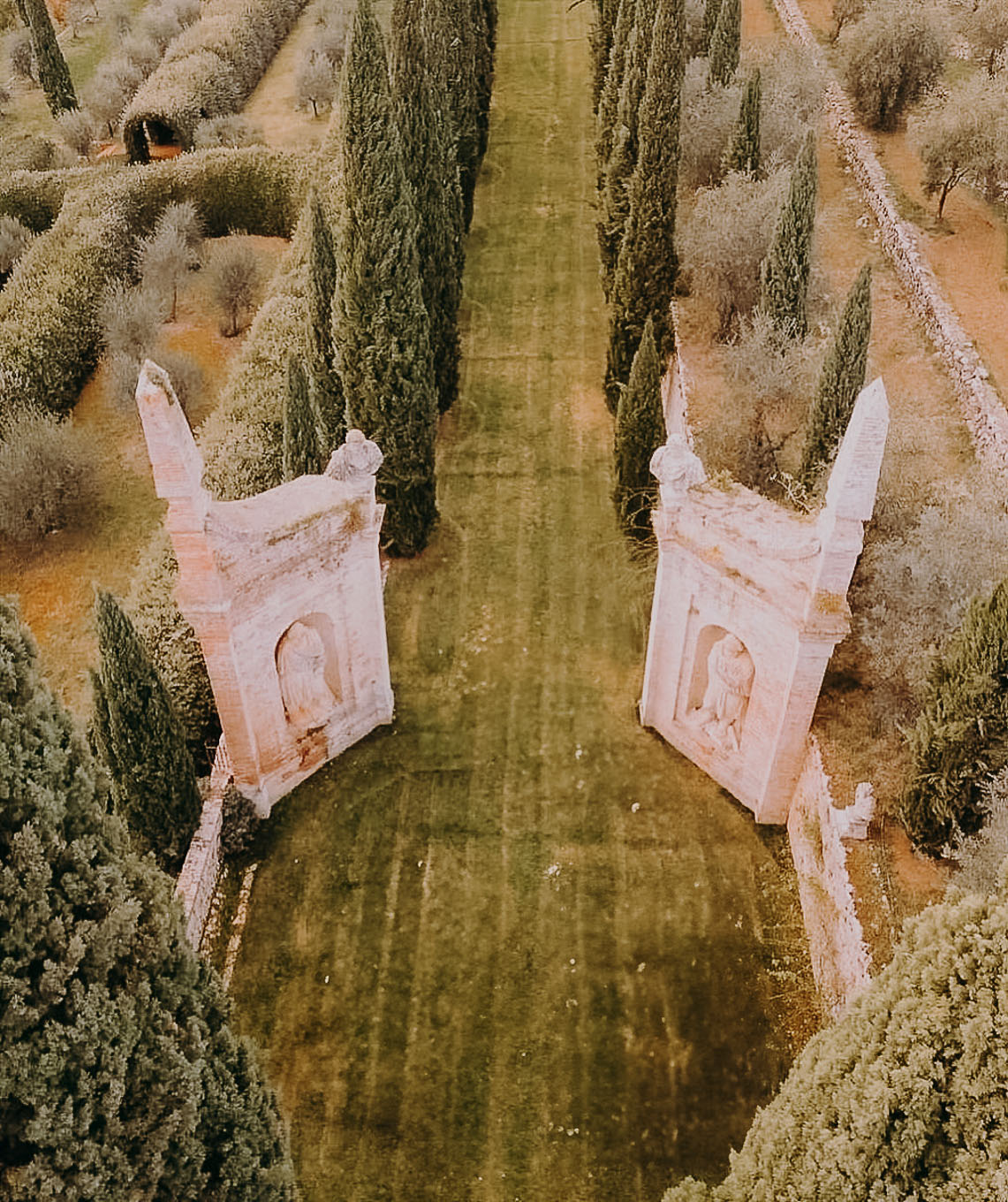
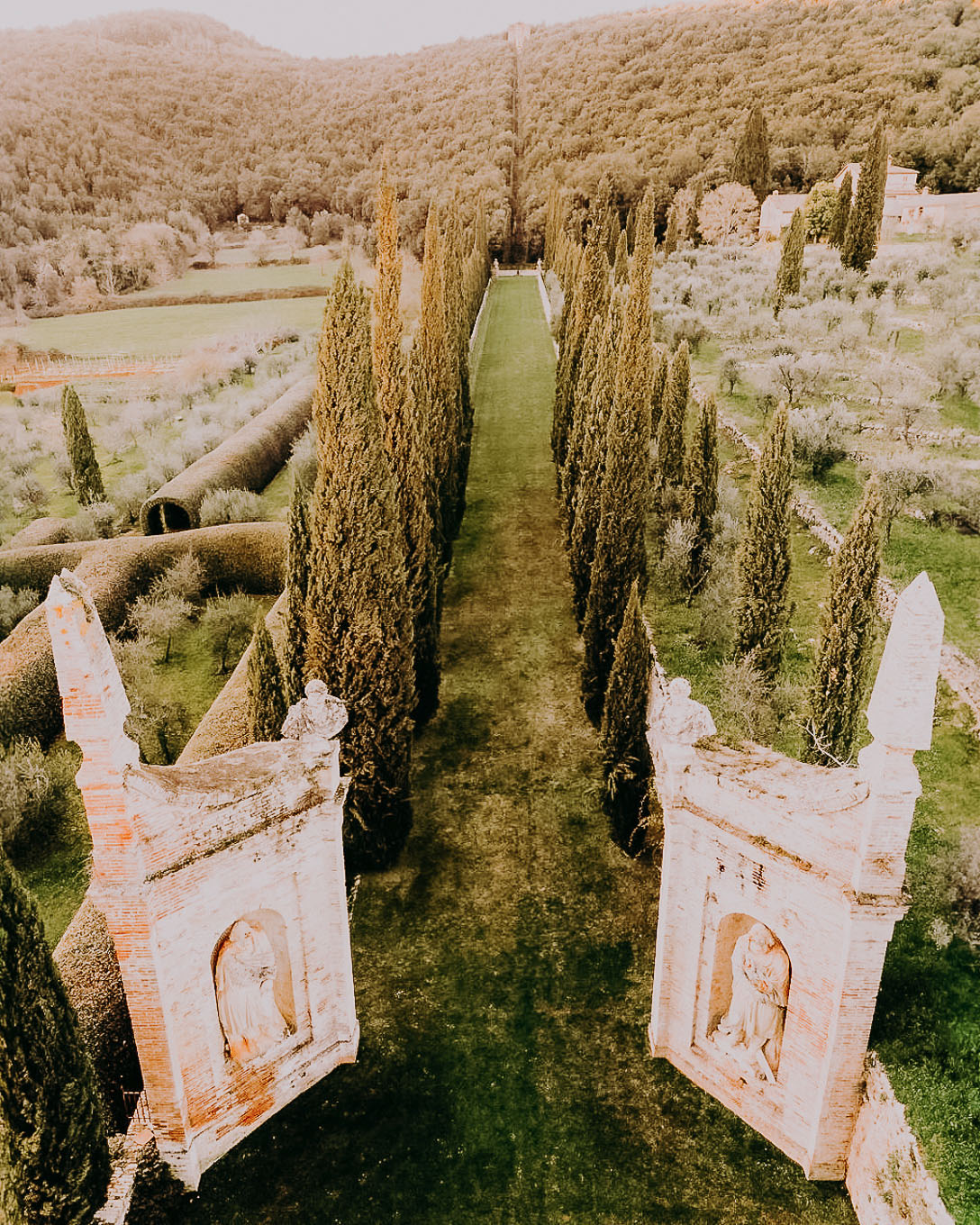
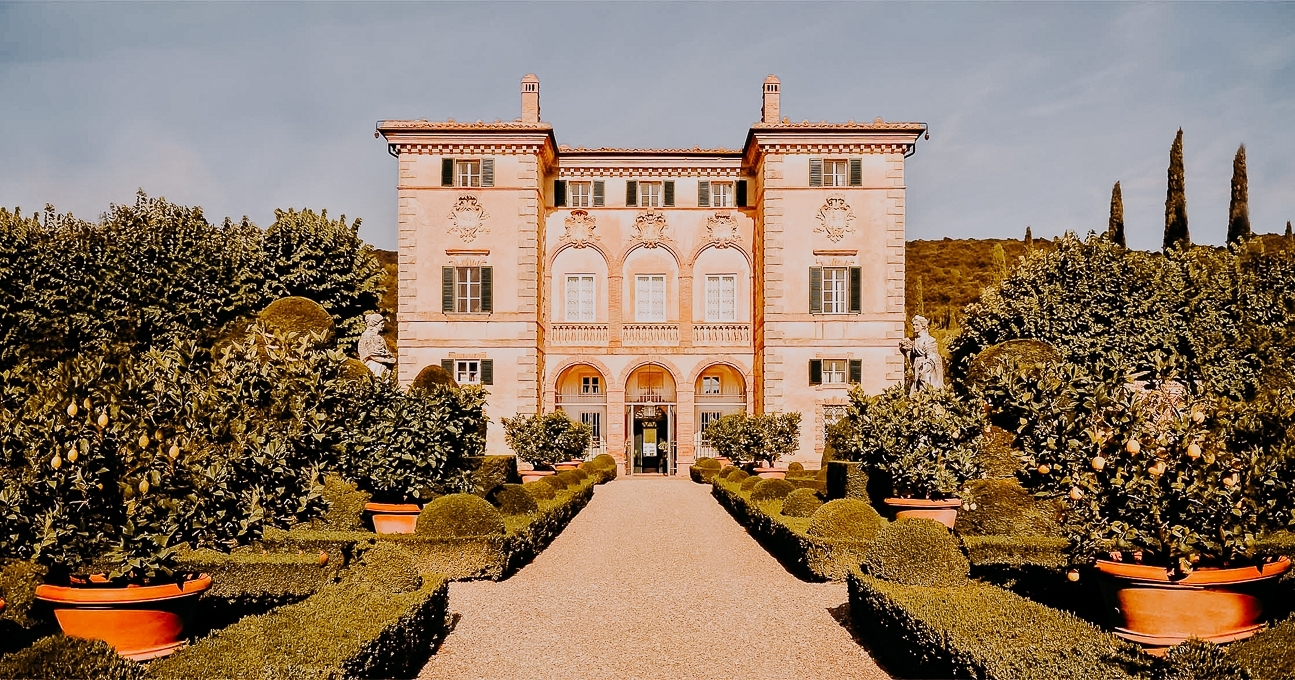
Most Tuscan villas end at the edge of their gardens. Villa Cetinale, ten kilometres west of Siena, sits at the centre of something far stranger and more beautiful: a single straight line, running the length of the estate, from a monumental statue of Hercules at one end, through the heart of the villa, and up three hundred stone steps of a holy staircase into a sacred wood called the Thebaid, where a hermitage still looks down on the house. I'm Francesco Caroli, an Italian wedding photographer, and as a wedding photographer in Tuscany I've photographed a great many gardens — but never a landscape laid out quite like a prayer. Architectural Digest has called Cetinale the most beautiful villa in Tuscany; for a destination wedding, it is also among the most extraordinary places I know.
That sacred geometry is no accident. The Thebaid — the holy wood — was once a place of pilgrimage, where visitors walked contemplative paths past seven chapels dedicated to the Sorrows of the Virgin and statues of saints and animals carved by Bartolomeo Mazzuoli, before climbing the three hundred steps of the santa scala to the Romitorio, the hermitage that crowns the hill. To stand in the villa and look up at that wooded ascent is to feel the whole estate pulling gently upward. It is unlike any garden in Tuscany, and it gives a wedding here a sense of occasion that no purely decorative setting can.
A Pope, a Cardinal and the Pupil of Bernini
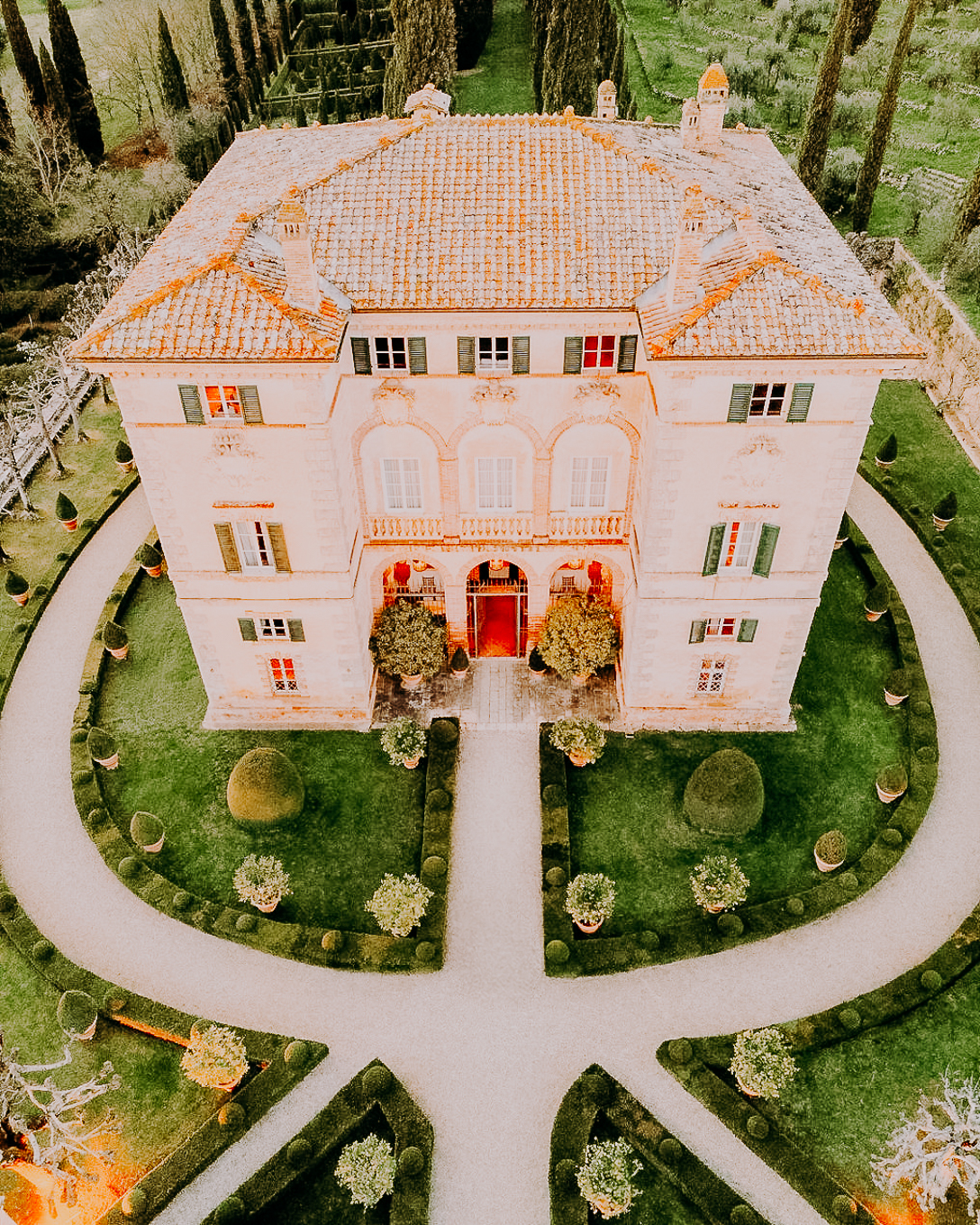
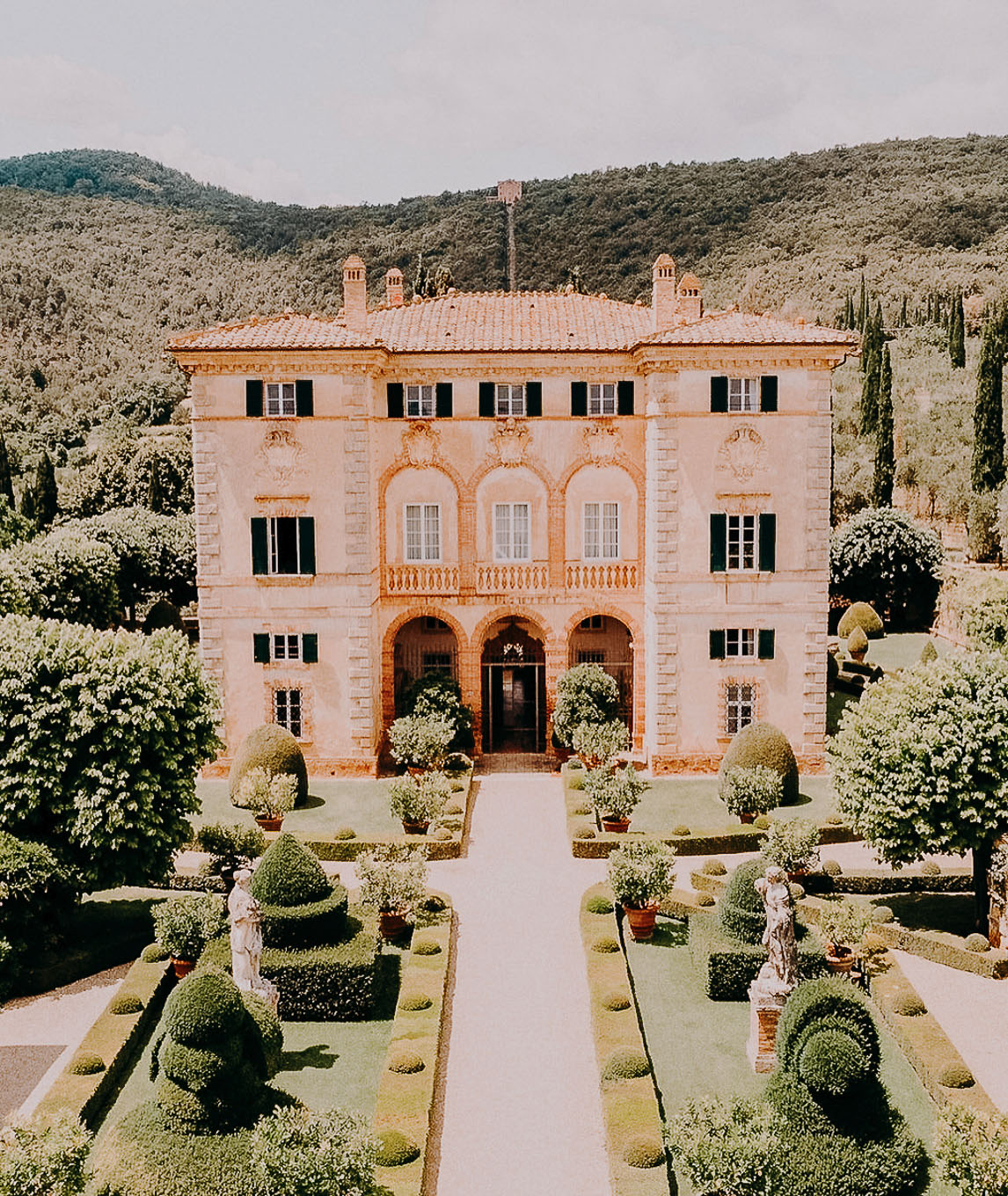
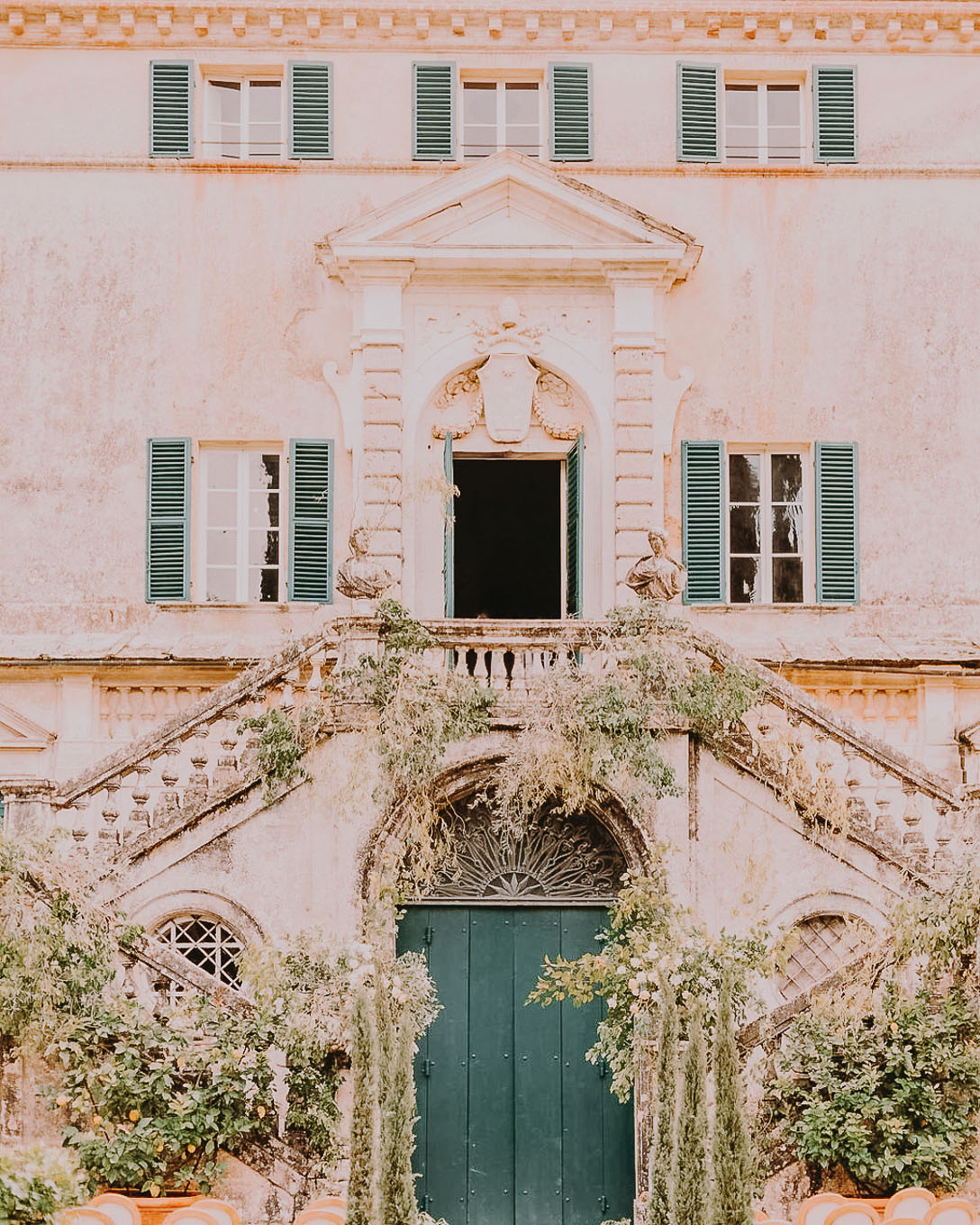
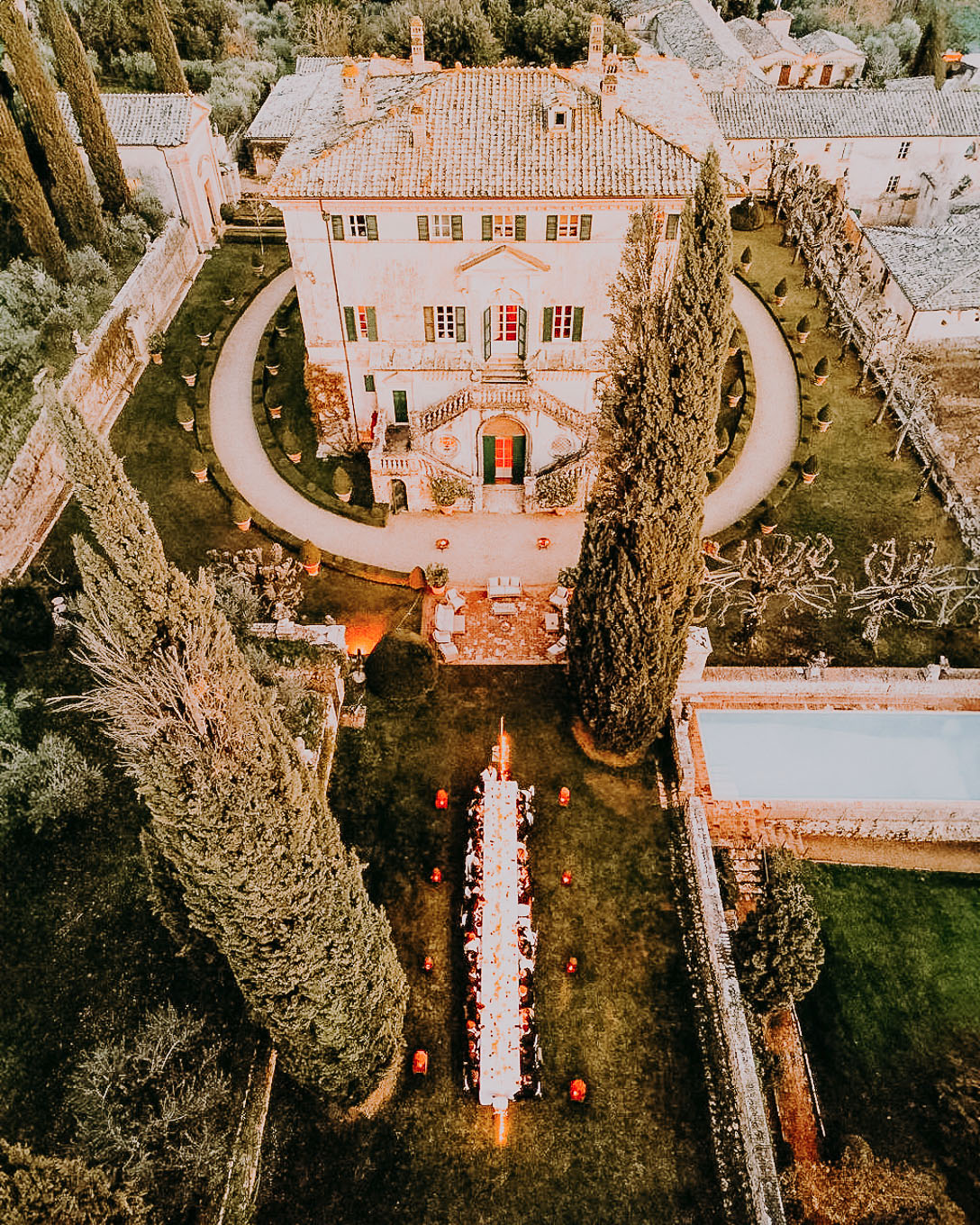
Cetinale's grandeur comes from the Chigi family. The villa in its present Roman Baroque form was completed in 1680 by Cardinal Flavio Chigi, who had inherited it from his uncle Fabio — the man who, in 1655, became Pope Alexander VII. To build it, Flavio employed Carlo Fontana, the celebrated pupil of Bernini, who raised the villa from the foundations of a modest farmhouse standing on a site that reaches back to Etruscan times. Fontana's design quietly honours Baldassarre Peruzzi, the great architect who had built for the Chigi a century and a half earlier; fittingly, the nearby village of Ancaiano was Peruzzi's birthplace.
There is a legend, which the estate itself is careful to call unproven, that Flavio Chigi retreated to the Thebaid to live as a hermit, atoning for a rival's death. The truth is more worldly: he came to Cetinale to escape the politics of Rome and to indulge his passions for hunting and horse racing — Siena's famous Palio was even run in the Thebaid seven times in the late 1600s. I find that mixture of the sacred and the earthly is exactly what makes the place photograph so well: a villa poised between a giant Hercules and a hermit's cell.
Should your wedding photographs look composed — or like they were always meant to be here?
A place this deliberately designed gives the camera a structure to work with. It is a setting I'd love to capture in film as much as in stills.
See how I film a Tuscan weddingA Villa Rescued, and Opened for the First Time
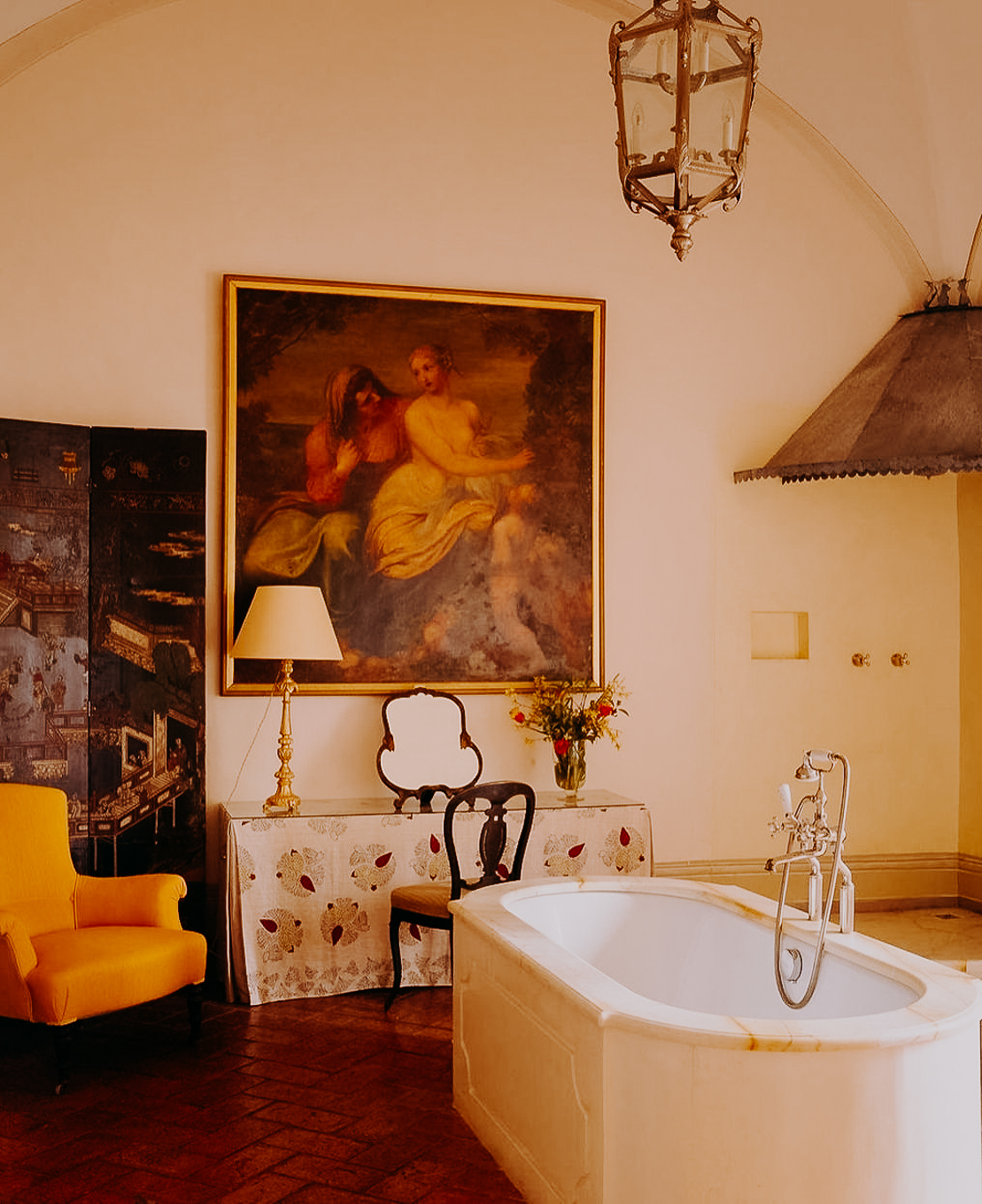
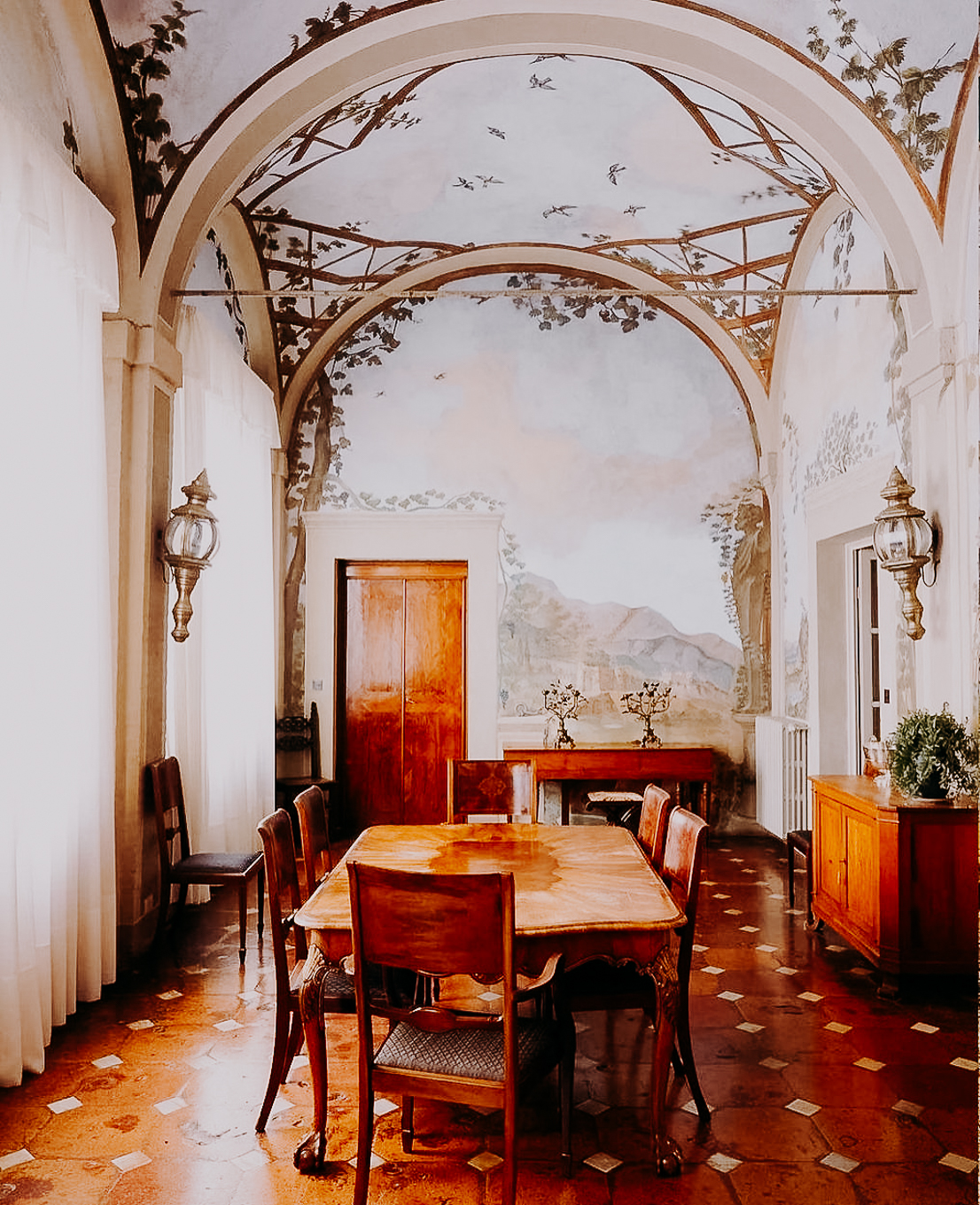
For all its history, Cetinale is described, rightly, as grand yet unpretentious — a country villa rather than a palace. By the late 20th century it had been all but abandoned, until the British peer Lord Lambton bought it in 1978 and, with his partner Claire Ward, devoted decades to bringing house and gardens back to life until his death in 2006. The villa has since been fully refurbished — a new roof, new bathrooms — without altering its character, and it is now available for private rental for the first time in its long history. For a couple, that means renting not a hotel but an actual historic home, with the gardens, the wood and the hillside as your own for the celebration.
The setting only deepens the sense of seclusion. Cetinale sits on the edge of the Montagnola Senese, a great expanse of wooded hills once known for bandits and now home to wild boar, deer, foxes and migratory birds. It is genuinely wild country, yet Siena and its surroundings are close at hand — a rare balance of remoteness and reach.
Where You Marry: The Gardens and the Chapel of Sant'Eustachio
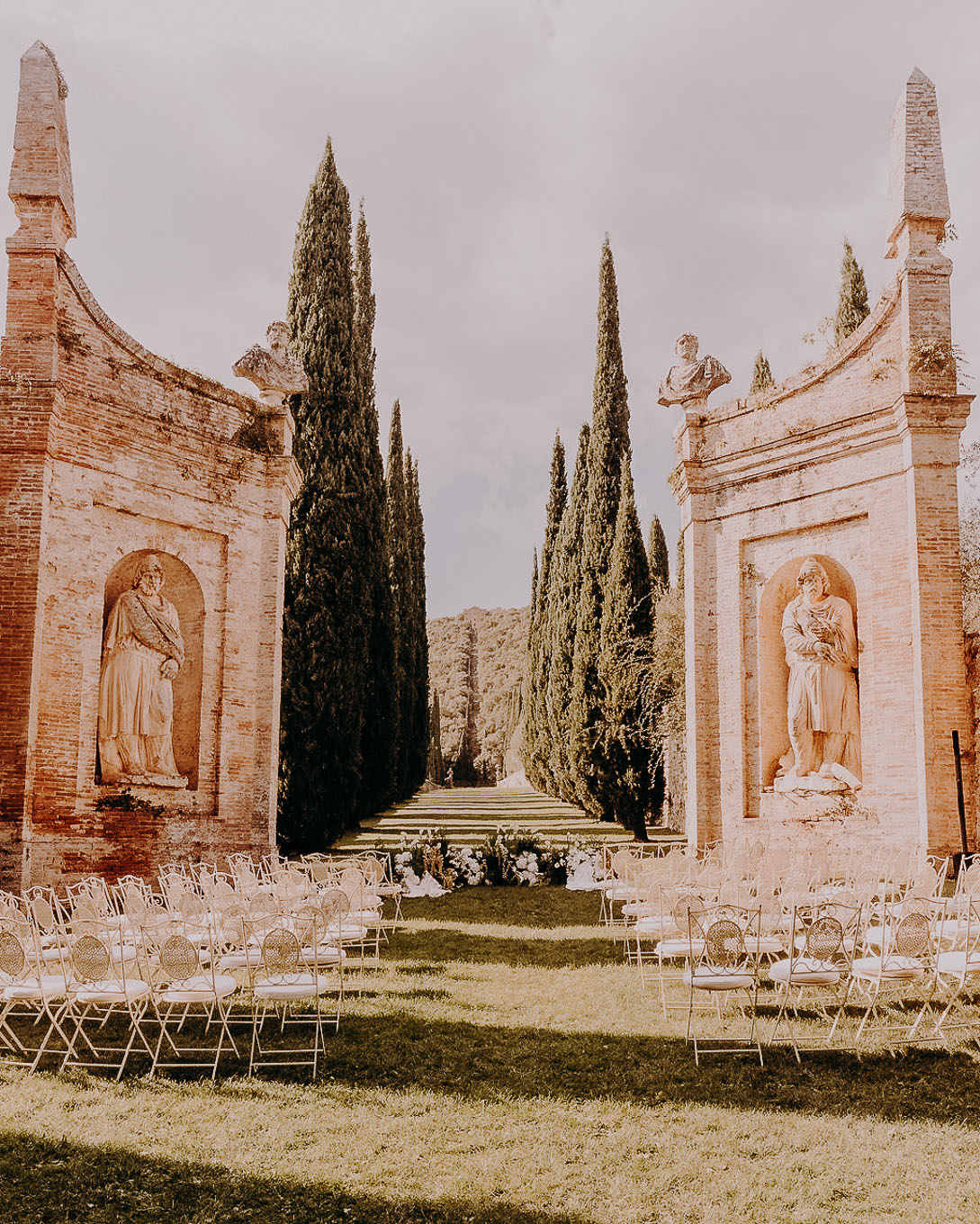
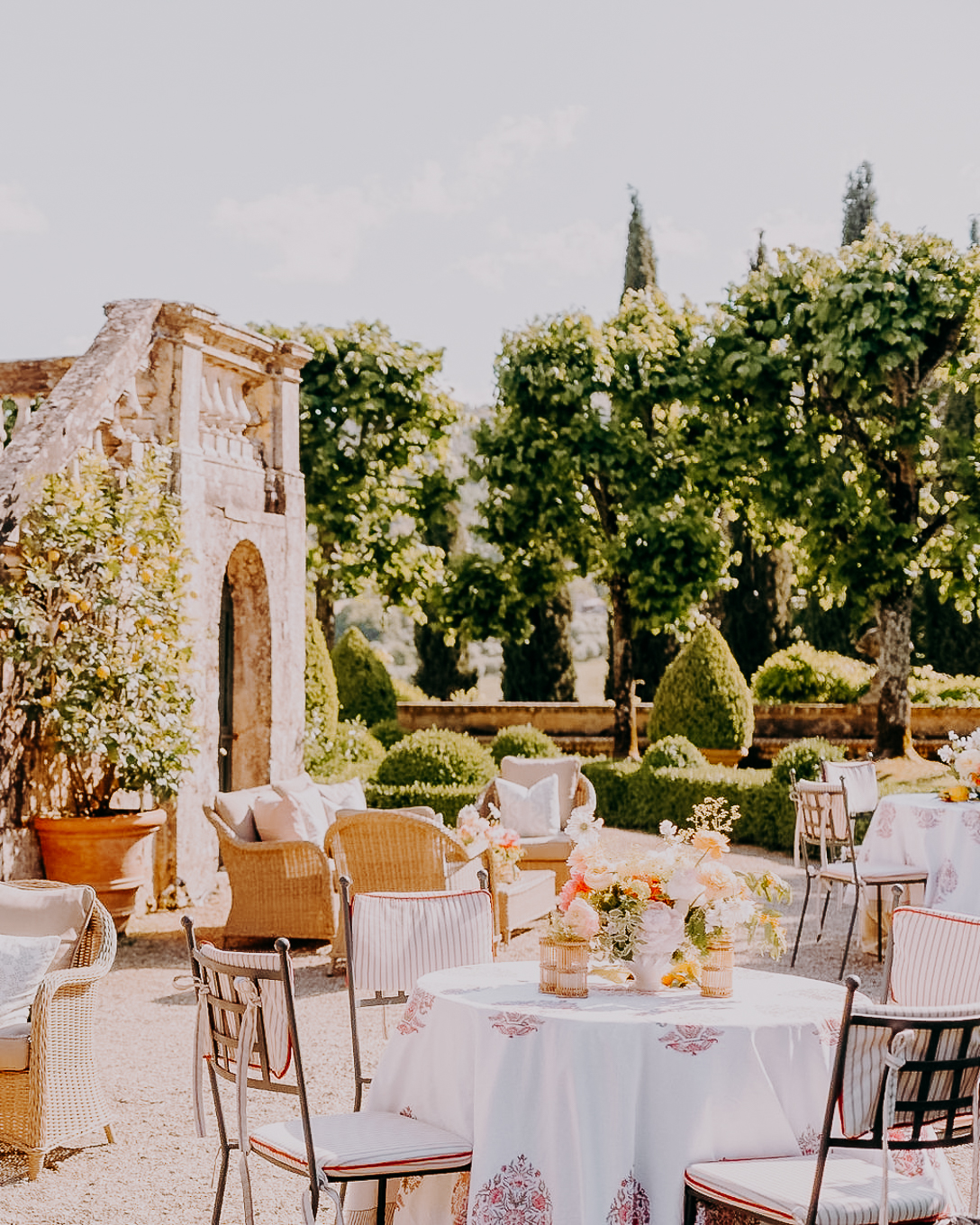
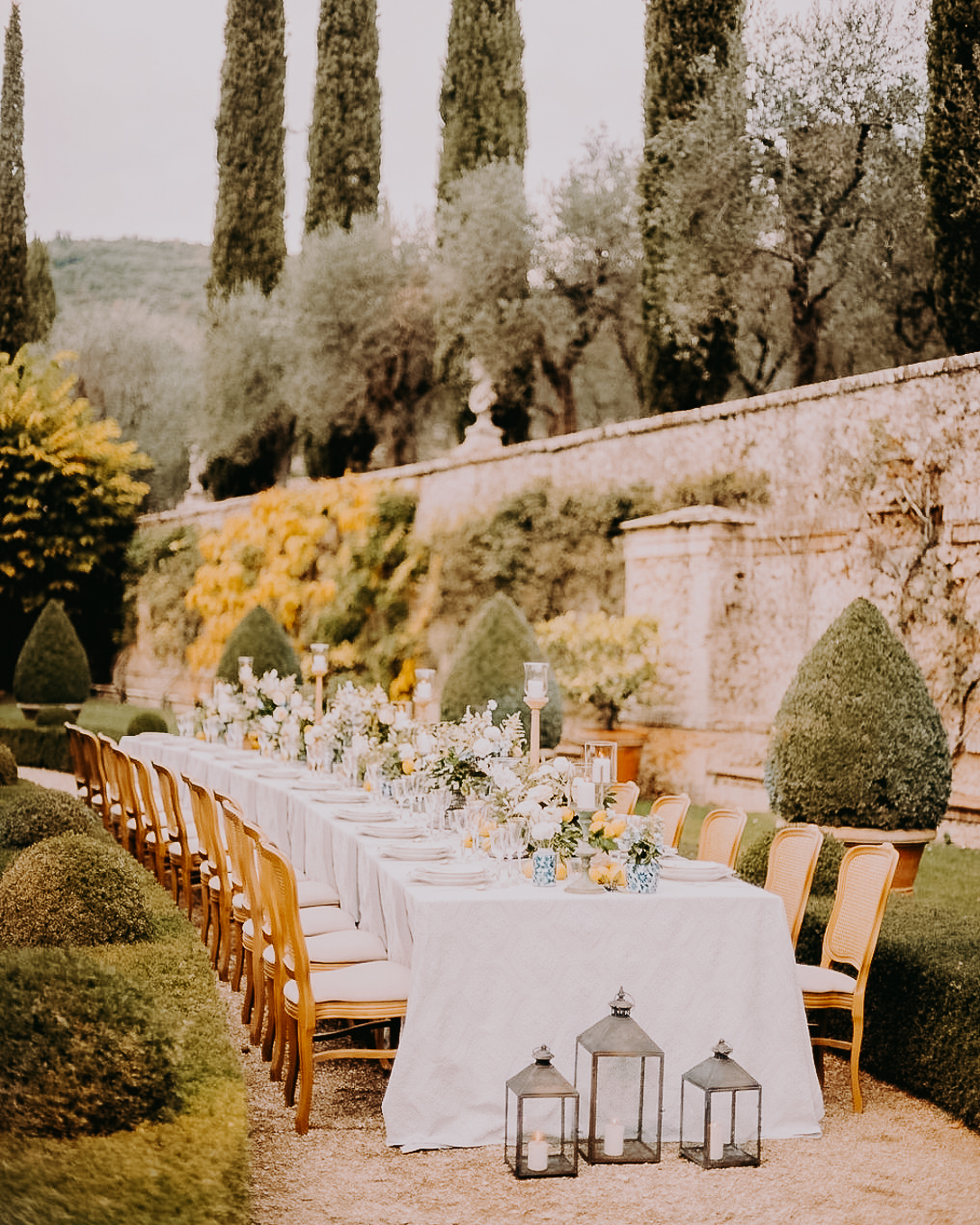
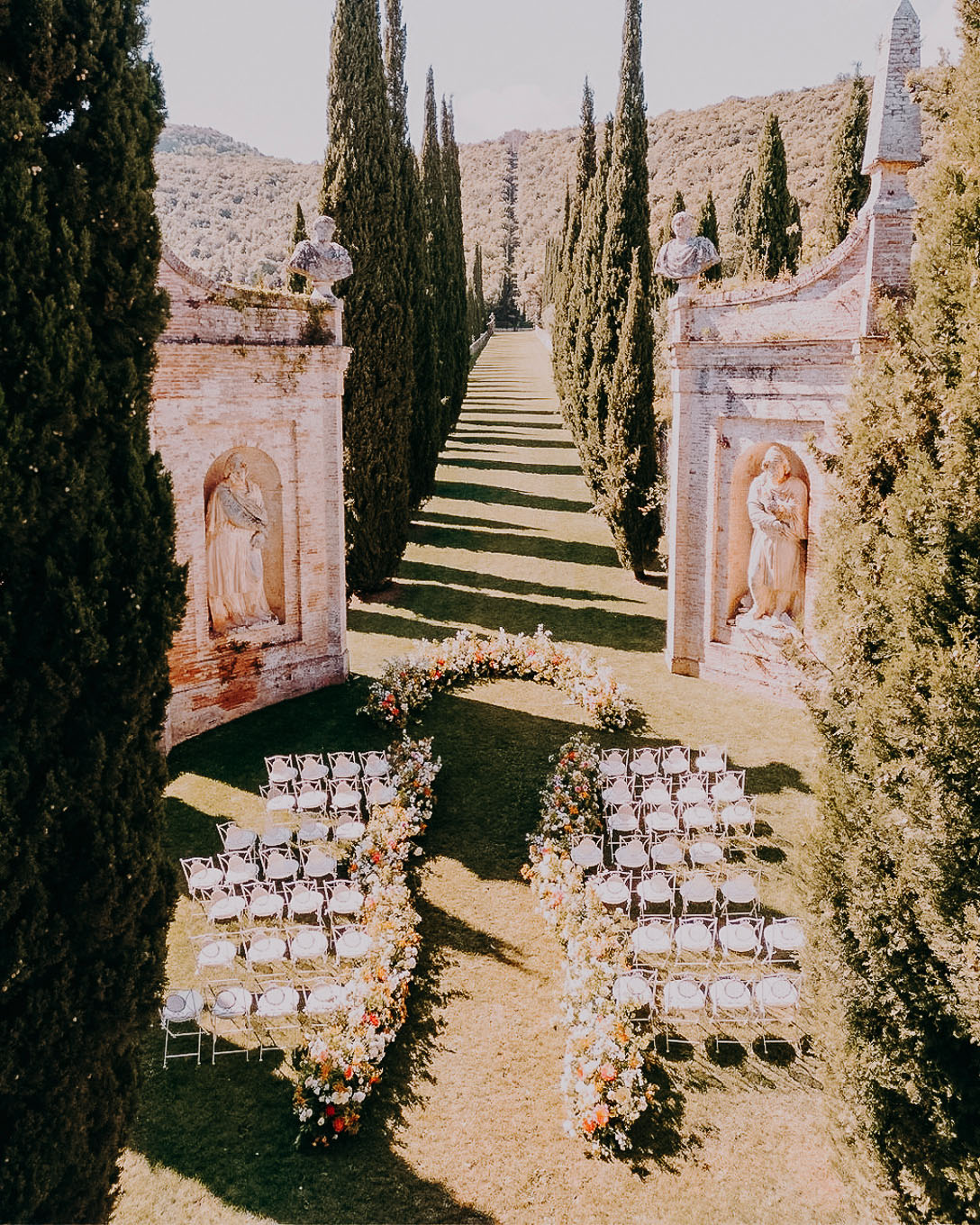
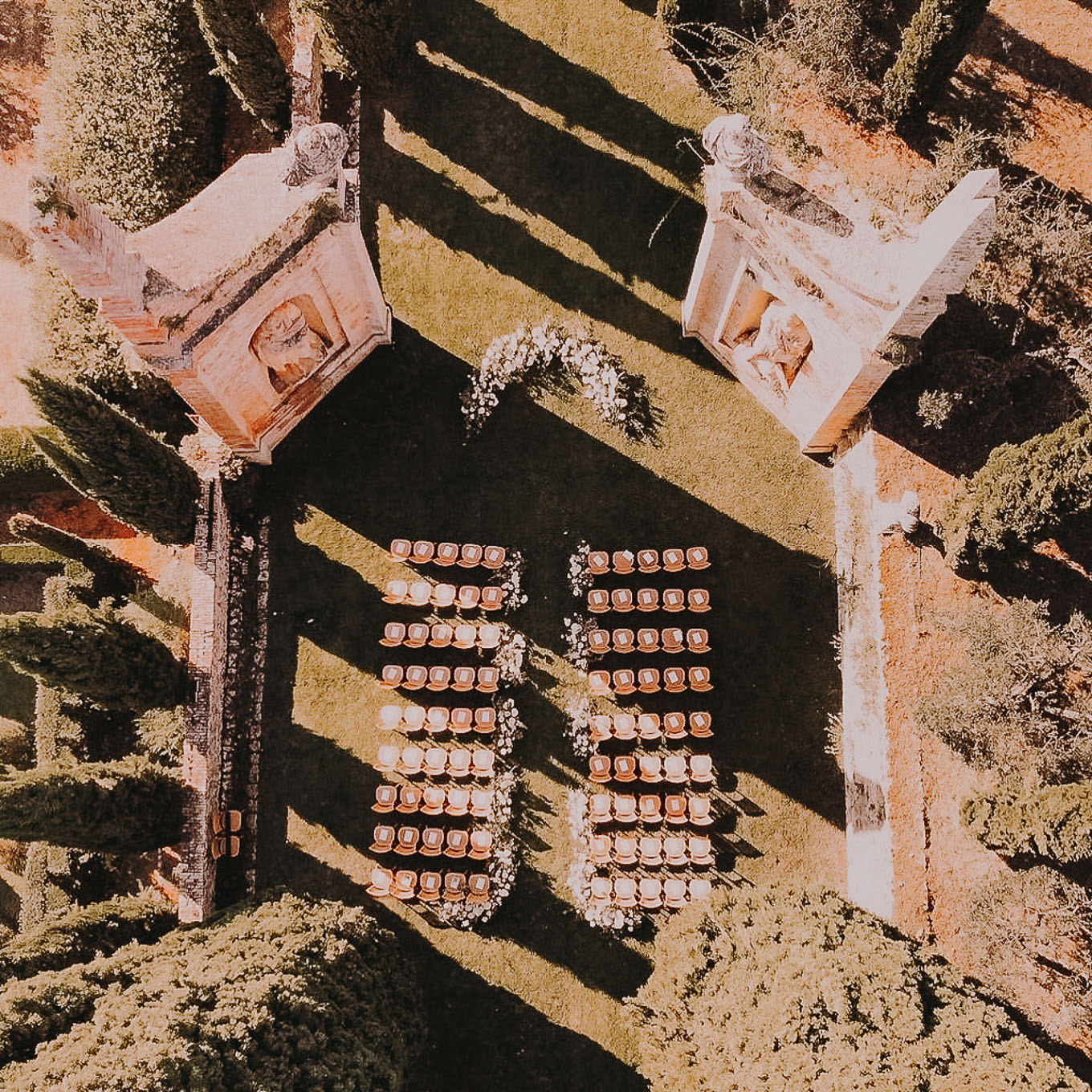
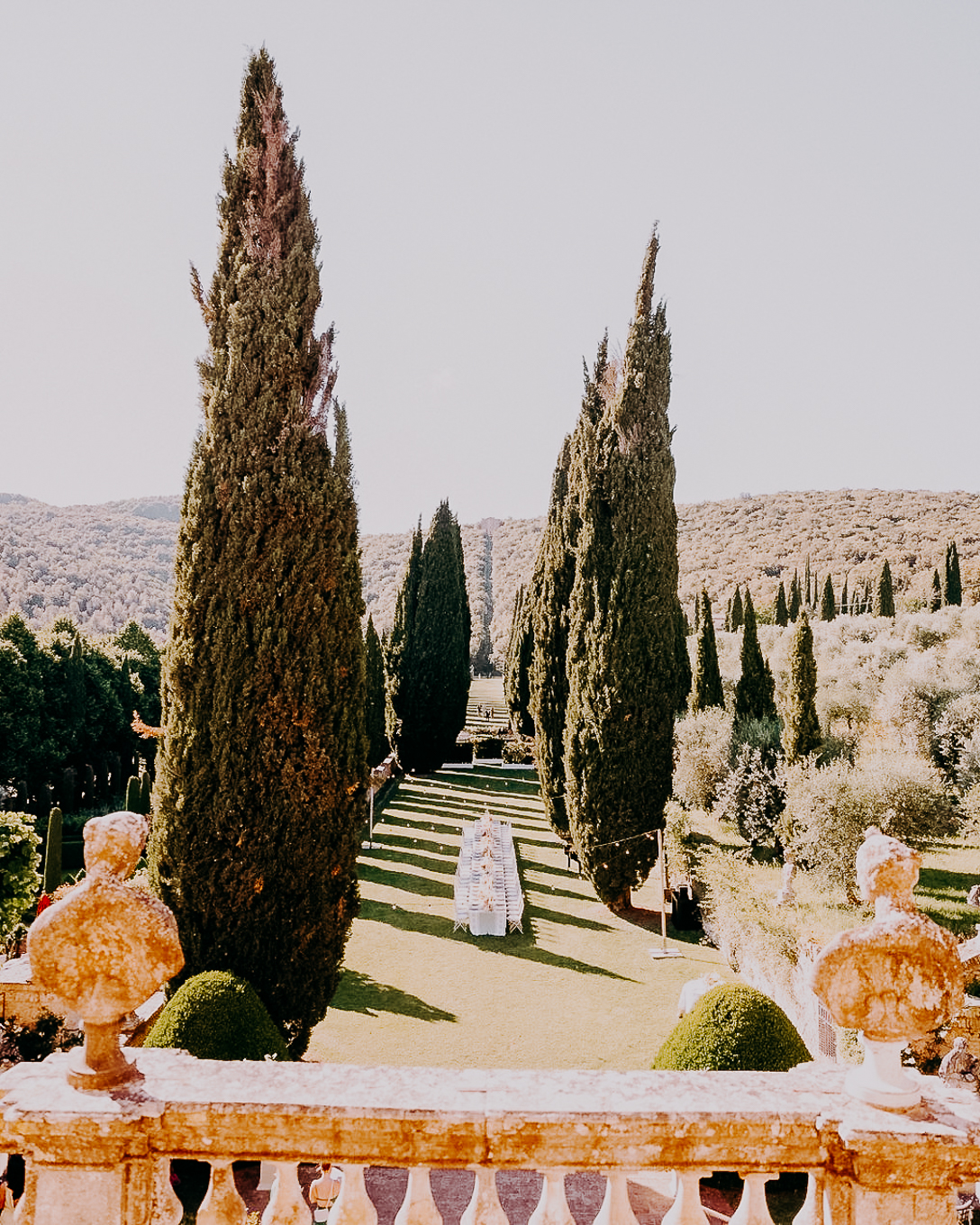
For the wedding itself, Cetinale offers two settings of real character. The world-renowned gardens make a beautiful place for a blessing, with the villa, the wood and the holy staircase as a backdrop that needs no decoration. And the villa has its own 17th-century chapel, the chiesa di Sant'Eustachio, which suits a more intimate blessing for a smaller group. The estate allows a maximum of one hundred guests, and the team can help recommend trusted local wedding organisers and vendors to bring the day together.
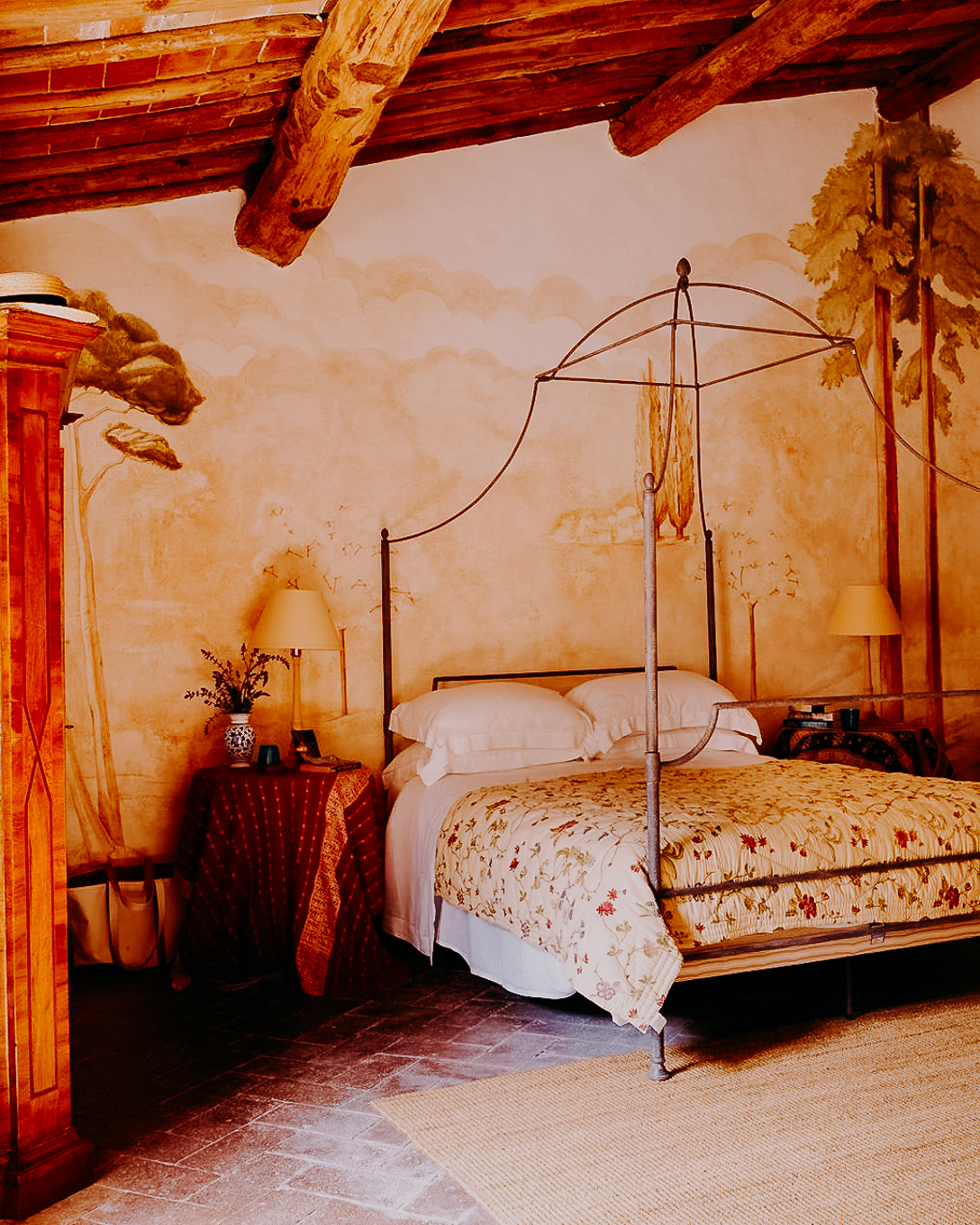
For staying, the villa itself sleeps twenty-five, and three further houses on the estate — La Cerbaia, Casa Fabbri and Casa Stella — bring the total to forty-eight guests within the grounds, with everyone gathered on the same private estate. It is the kind of arrangement that turns a wedding into a long, shared stay rather than a single evening, with the gardens and the wood to wander between celebrations.
What if your guests could lose themselves in a sacred wood between courses?
The walks, the staircase, the hermitage above the house: at Cetinale the in-between hours are as photogenic as the ceremony. Those are the ones I most want to be there for.
Get in touch about your weddingReaching Villa Cetinale: Notes for Couples Travelling from Abroad
Villa Cetinale sits at Sovicille, in the province of Siena, about ten kilometres west of the city on the edge of the Montagnola Senese — secluded, but not difficult to reach. For international couples and their guests, Florence and its airport lie to the north, roughly an hour and a half away, while Pisa to the west and Rome to the south broaden the range of long-haul connections; Siena itself is close by for sightseeing and for guests who prefer to stay in the city. Because the villa sits in wooded hill country reached by quiet roads, I'd encourage arranging transfers or car hire rather than relying on public transport. For your planner and your drivers, the address is Strada di Cetinale 9, 53018 Sovicille, Siena.
What Couples Ask Me Before Choosing Villa Cetinale
How does the legal side of marrying in Italy work for a foreign couple?
A legally binding civil marriage in Italy is performed by Italian authorities, and the documents required depend on your nationality. Most couples coming from abroad need a sworn declaration of no impediment to marry — usually arranged through your own country's consulate or embassy in Italy — together with further paperwork, and it is best begun several months ahead. At Cetinale, the gardens and the chapel are used for blessings rather than the civil formalities, so many international couples complete the legal step at a local town hall and hold their meaningful ceremony at the villa. My honest advice is to confirm exactly what your two passports require early, because that single detail shapes the whole timeline.
How many guests can attend, and how many can stay on the estate?
Cetinale allows a maximum of one hundred guests for a wedding, which keeps celebrations on a refined, manageable scale rather than a vast one. For accommodation, the villa itself sleeps twenty-five, and three further houses on the estate — La Cerbaia, Casa Fabbri and Casa Stella — bring the total to forty-eight guests staying within the grounds. Larger guest lists can be accommodated in the surrounding area. It's worth discussing your numbers with the estate's manager early, since who sleeps on site shapes the rhythm of the whole celebration.
Can we have the whole villa and estate to ourselves?
Yes — Cetinale is offered as a private rental, so you take the villa, its gardens and the estate as your own for the duration. This is one of its great attractions: you are not sharing the grounds, the wood or the staircase with other guests, and the celebration unfolds in genuine privacy. Because the villa has only recently become available for private rental, dates are worth securing well ahead, and the estate's manager can talk you through exactly what exclusive use includes.
Is there a chapel, and where can the ceremony take place?
There is — the villa's own 17th-century chapel, the chiesa di Sant'Eustachio, which lends itself to an intimate blessing for a smaller group. For larger gatherings, the celebrated gardens make a beautiful setting for a blessing, with the wood and the holy staircase rising behind. A formal Catholic ceremony would carry its own requirements, arranged through your home parish and diocese, so it is best discussed directly; many couples choose a symbolic blessing on the estate and handle the legal civil ceremony separately. Either way, the Thebaid and the staircase provide a backdrop for photographs that is genuinely one of a kind.
When is the best time of year to marry here?
Late spring and early autumn are the classic windows, with comfortable temperatures and soft light over the gardens and the wooded hills of the Montagnola. Late spring brings the gardens into full life; early autumn turns the surrounding woods, and the light grows golden and long. High summer is warm but the wood offers welcome shade, and evenings in the hills are pleasant. Because the estate is so much about its landscape, I'd simply suggest choosing the season whose mood — fresh green or turning gold — matches the pictures you most want to keep.
What makes Villa Cetinale special to photograph?
It is the deliberate design of the whole place. Few venues give me a true axis to work with — the statue of Hercules at one end, the villa at the centre, the holy staircase climbing through the Thebaid to the hermitage at the other — so that the landscape itself has a direction and a story. Add the Baroque architecture, the world-renowned gardens and the wild Montagnola beyond, and a single wedding day here can move from formal grandeur to sacred wood to open hillside. For an album it means real range and a strong sense of place: images that could only have been made at Cetinale.