Founded to Grow Vines. Documented in a Papal Bull of 1151. Still Producing Wine: Getting Married at Abbazia Santa Anastasia
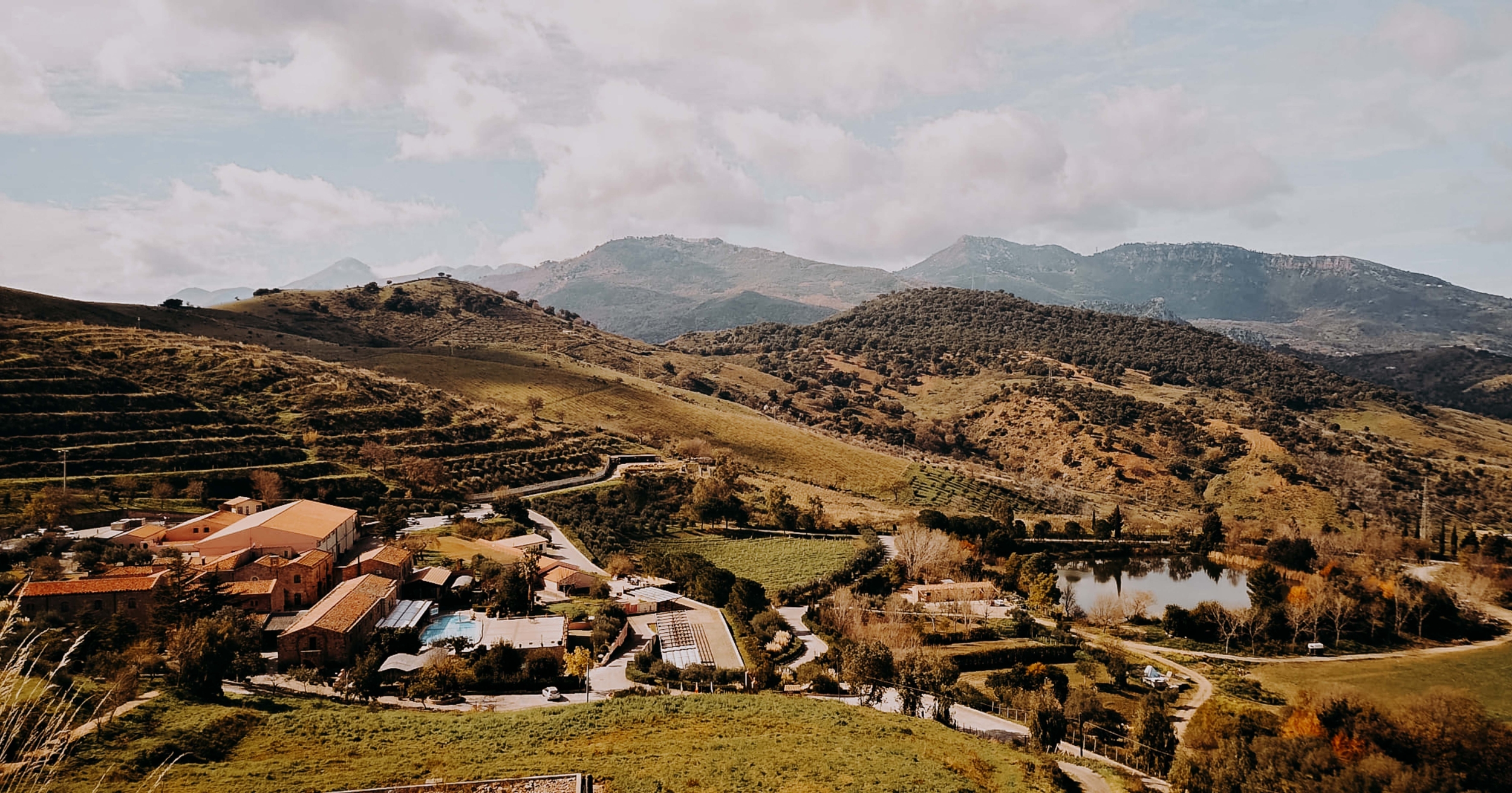
On February 24, 1151, Pope Eugene III issued a papal bull that, among other things, documented the existence of Abbazia Santa Anastasia and its church. The abbey had been founded in the previous century by Count Roger — Ruggero d'Altavilla, the Norman nobleman who unified Sicily under a single rule — on a hillside in the Madonie mountains north of Palermo, specifically for the cultivation of vines and the production of wine. Nine centuries later, the vines are still there, the abbey is still standing, and the wine — now biodynamic, now carrying the most rigorous agricultural certification in the world — is still made according to principles that, in their attention to the rhythms of nature, have more in common with the practices of the Benedictine monks who first planted these vineyards than with the methods of most contemporary wine estates. For international couples planning a destination wedding in Sicily who are looking for a venue whose history is not decorative but documentary, verifiable in primary sources going back to the twelfth century, Abbazia Santa Anastasia near Castelbuono, in the Parco delle Madonie, is a category of place that does not have many equivalents anywhere in Italy.
Working as a wedding photographer in Sicily, I often find that the properties which move me most are the ones that have a reason to exist independent of the wedding industry — places that were doing something important before the first couple arrived and will continue doing it long after the last one leaves. Abbazia Santa Anastasia is one of those places. The vineyards were here before any of this. The church was here before the relais. The Madonie mountains were here before everything.
The Norman Abbey and Its Medieval Church
Ruggero d'Altavilla — Count Roger, the Norman warrior-ruler who spent decades fighting to unify Sicily and who built some of the island's most important religious monuments in the process — founded this abbey in the twelfth century on land he chose specifically for its agricultural quality and its position within the Madonie landscape. The church that forms the heart of the complex was built with the original abbey, around 1100, and its existence was formally recognised in the Papal Bull of Eugene III in 1151 — a document that places this building among the most historically verified ecclesiastical structures in northern Sicily. The walls that have been standing here for nine centuries are not a romantic suggestion of the medieval past. They are the medieval past, physically present, restored with the care that their classification demands and inhabited by a hospitality operation that has chosen to define itself by what this place actually is rather than by what it might be made to look like.
For weddings, the medieval church — still consecrated and used for liturgical celebrations including Christmas and Easter Mass — is available for the renewal of vows and anniversary ceremonies under the authorisation of the Diocese. Civil ceremonies take place in the enchanting tree-lined garden with its gazebo, accommodating up to one hundred guests, where the abbey's stone walls and the surrounding vineyards and Madonie landscape create a ceremony setting of extraordinary natural and historical depth.
Demeter: The Most Rigorous Certification in Agricultural History
Most organic estates describe themselves as organic. Abbazia Santa Anastasia holds the Demeter certification — the international standard for biodynamic agriculture that goes significantly beyond standard organic requirements. Biodynamic farming follows not only the prohibition of synthetic inputs but also the cycles of the moon and planets in determining planting, pruning, and harvesting schedules. The estate describes the application of these methods as part of its commitment to harmonising the various phases of production with the rhythms of nature — a philosophy that, in the context of an abbey founded by monks who organised their entire lives around liturgical time and natural cycles, has a continuity that is not accidental.
The practical consequences of this commitment are present in every glass of wine produced here. The grapes are grown without synthetic fertilisers, pesticides, or herbicides. The cultivation calendar is responsive to celestial cycles. The wines have won prestigious international recognition and are described, with accuracy, as the expression of a terroir whose specific character — the altitude of the Madonie, the volcanic and limestone soils, the particular microclimate of this mountain enclave in northern Sicily — is one that can be found nowhere else. For a wedding where the wine served at dinner comes from the abbey's own biodynamic production, the glass in every guest's hand contains the specific story of this place.
The Madonie: A National Park, a UNESCO Geopark, and a Landscape Unlike Anything on the Coast
The Parco delle Madonie is not the Sicily of postcards. It is the Sicily that most visitors do not see: a mountain range of limestone and volcanic rock in northern Sicily, with forests of holm oak and chestnut, ancient manna ash trees whose sweet resin has been harvested since Greek and Roman times, medieval hilltop towns whose streets have not changed in centuries, and a biodiversity that has earned the territory recognition as a UNESCO Geopark. Abbazia Santa Anastasia sits within this park, surrounded by its own vineyards and the wider Madonie landscape, and on the clearest days — when the Sicilian winter air is sharp enough to sharpen every line of the horizon — the views from this hillside reach as far as the summit of Etna to the east and the outline of the Aeolian Islands to the north.
Getting married in this landscape is a different experience from getting married at the coast or in the agricultural plain. The light here is higher, cooler, more variable — the Madonie in late spring or early autumn produces a quality of illumination that the seaside venues cannot match, because the altitude and the mountain air give it a clarity and a depth that low-lying coastal light does not have. For the photography, this means images that feel genuinely different: the abbey walls against the sky, the vineyard rows dropping away into the valley, the manna ash trees on the hillside, the distant suggestion of Etna in the background of a portrait.
The Restaurants, the Biological Kitchen Garden, and the Wines
The food offer at Abbazia Santa Anastasia divides across two distinct restaurants with different registers. La Corte dell'Abate is the gourmet restaurant operating year-round: a kitchen that uses the estate's own biological kitchen garden as its primary source and reinterprets the traditional recipes of the Madonie and Sicilian cooking in a contemporary key, with the abbey's own wines as the natural pairing. Passioni e Tentazioni is the summer restaurant adjacent to the pool, more relaxed in format but drawing on the same kitchen philosophy: quality of ingredient, typicità of flavour, locality of source. The kitchen garden — the orto biologico — is not a gesture toward sustainability but an operational centre of the estate's food production, supplying seasonal produce that changes with the agricultural calendar of the Madonie.
The wine programme at the estate is one of the most complete available at any Sicilian destination wedding venue: cellar visits, guided tastings, wine masterclasses and tasting courses conducted by expert sommeliers. For a wedding party spending several days at the abbey, the combination of the vineyards, the cellar, and the structured wine education available on site gives guests an introduction to the specific winemaking tradition of northern Sicily that no restaurant visit or wine shop purchase can replicate.
How many wedding venues were documented in a Papal Bull before your grandparents were born?
The church at Abbazia Santa Anastasia was verified in writing in 1151. The vines were planted to produce wine for monks. The Demeter certification means the land is farmed in dialogue with the moon. Photographing a wedding in a place with this kind of accumulated intent is a particular privilege — and a particular responsibility.
How Francesco worksEcosostenibilità: 80% Renewable Energy, Water Recycling, and What It Actually Means
Abbazia Santa Anastasia's commitment to ecological sustainability is documented in specifics that distinguish it from the vague green positioning of most hospitality operations. A 750-square-metre photovoltaic installation using silicon panels covers 80% of the estate's energy requirements. The water used in the winemaking process is recycled and reused for the irrigation of the agricultural land. Plastic use across the property has been reduced with a deliberate programme. Electric vehicle charging points are installed for guests arriving by EV. For couples choosing this venue, these are not marketing points — they are the operational reality of a place that has taken the question of its environmental footprint seriously enough to invest substantially in answering it.
Getting to Abbazia Santa Anastasia: Practical Information for International Couples
Abbazia Santa Anastasia is located at Contrada Santa Anastasia, 90013 Castelbuono, in the province of Palermo. Palermo Falcone-Borsellino Airport is the most convenient international gateway for most guests. The medieval hill town of Castelbuono — one of the most beautiful villages in the Madonie, known for its Norman castle and its manna and pastry traditions — is approximately twenty minutes from the estate. Cefalù, the Norman coastal city with its extraordinary twelfth-century cathedral and Tyrrhenian Sea beach, is accessible within a comfortable drive. The medieval borghi of the Madonie — Petralia Sottana, Petralia Soprana (with its UNESCO Geopark salt caves), Polizzi Generosa, Gangi — are all reachable for excursions. The astronomical observatory at Isnello, one of the most important in the Mediterranean, is in the same area. For guests who want to combine the mountain experience with the Tyrrhenian coast, the sea at Cefalù and the beaches west of it are the natural destination for a day away from the estate.
Abbazia Santa Anastasia: Questions From Couples Planning a Wedding in the Madonie
How does the legal wedding process work for foreign couples getting married at Abbazia Santa Anastasia?
Civil ceremonies at Abbazia Santa Anastasia take place in the tree-lined garden with its gazebo, accommodating up to one hundred guests. For foreign nationals, the documentation process begins through the Italian consulate in your country of residence, typically several months before the wedding date, with requirements varying by nationality. Whether the ceremony is authorised directly by the Comune di Castelbuono or requires additional administrative steps is something to confirm with the abbey's wedding planning team, who offer a professional wedding planner service for all aspects of the organisation. Religious ceremonies in the medieval church require authorisation from the Diocese and are available for silver and golden wedding anniversary celebrations and renewals of vows rather than for first marriages.
What exactly is the Demeter certification, and why does it matter for a wedding here?
The Demeter certification is the international standard for biodynamic agriculture — a system that goes beyond standard organic requirements to incorporate the cultivation calendar into the lunar and planetary cycles, and to treat the farm as a self-contained ecological organism. It is among the most rigorous and most demanding agricultural certifications in the world, and the fact that Abbazia Santa Anastasia holds it means that every element of the food and wine production on this estate — the grapes, the kitchen garden produce, the olive oil — is the product of a cultivation philosophy that has far more in common with how Benedictine monks farmed for centuries than with how most modern agricultural estates operate. For a wedding dinner, this means that the quality, integrity, and specificity of everything on the table is guaranteed at the most demanding level available.
Can guests see Etna and the Aeolian Islands from the estate?
On the clearest days — typically in the cooler months from October through April, when the Sicilian mountain air has the transparency that summer haze removes — the views from the Madonie hillside where the abbey stands extend east to the summit of Etna and north to the outline of the Aeolian Islands archipelago. The estate's own descriptions confirm both. In summer, the heat haze over the plains tends to reduce visibility at these distances, but the views over the immediate Madonie landscape — the vineyards, the forested ridges, the medieval towns on the hilltops — remain extraordinary in any season.
What is the manna, and why is it specific to the Madonie?
Manna is a naturally sweet resin that is harvested by incising the bark of manna ash trees — Fraxinus ornus — which grow on the slopes of the Madonie in conditions that exist almost nowhere else in the world. The resin runs from the cuts and hardens in the summer air, collected by farmers using methods that have remained essentially unchanged since ancient times. The Greeks and Romans knew it and described it as honey of the dew. Today it is produced in significant commercial quantities only in the Castelbuono and Pollina areas of the Madonie, and the estate offers walking trails along the manna ash groves as one of the experiences available to guests. For international visitors who have never encountered it, the manna and its production story is one of the most specifically local and genuinely surprising things the Madonie has to offer.
What accommodation is available at Abbazia Santa Anastasia for wedding guests?
The relais offers rooms and suites across multiple categories — Comfort, Deluxe, Junior Suite, and Grand Suite — as well as a dedicated Pet Room for guests travelling with animals. The estate is pet friendly, child friendly, and has been certified for families with children through the KidSicily programme. The exact number of rooms and overall accommodation capacity is best confirmed directly with the estate team when planning a wedding, as the room configuration determines the scale of the private residential experience available on site.