When Trees Build a Cathedral: Getting Married at Tenuta Savoca Near Piazza Armerina
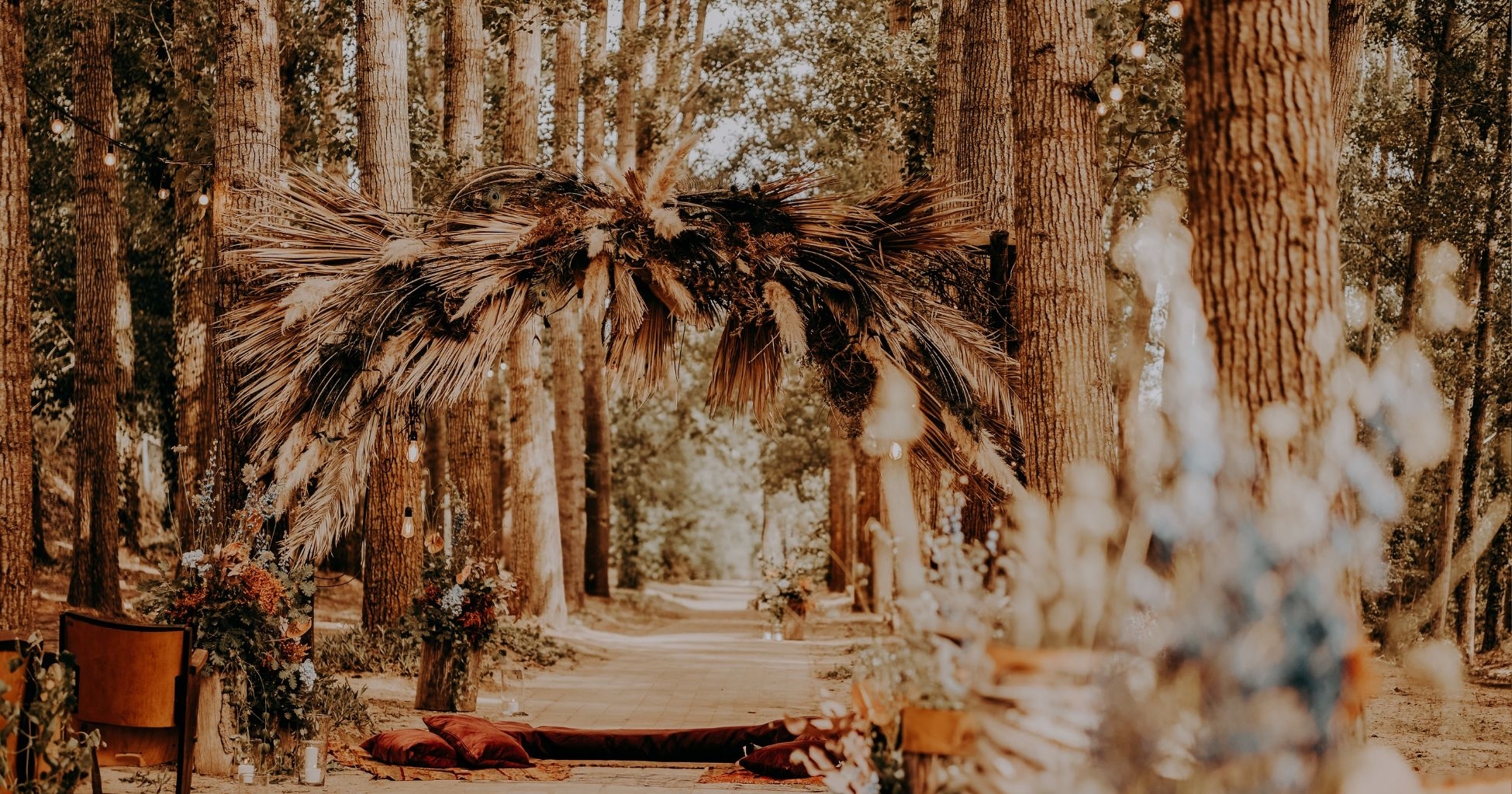
There is a place at Tenuta Savoca, in the agricultural interior of Sicily near Piazza Armerina, where tall straight tree trunks rise from the ground in rows and their branches interlock above to form arches of leaves and light. The estate itself describes it as unique in Sicily, and calls it the Cattedrale Verde — the Green Cathedral. The description is not poetic exaggeration: the trees were planted in lines, the rows create the logic of nave and aisles, and the canopy overhead does what a vaulted stone ceiling does in a medieval church — it encloses a space, focuses attention, and creates the particular quality of suspended atmosphere that makes people lower their voices. For international couples planning a destination wedding in Sicily who want a ceremony setting that is genuinely, irreproducibly natural — not a garden, not an olive grove, but a living architectural structure that no human hand could have designed and that no other venue in the island can replicate — Tenuta Savoca presents a case that stops the search.
I photograph weddings in the Sicilian interior as well as along the coast, and what the landscape around Piazza Armerina offers is a quality of light and a spatial depth that the coastal venues, however beautiful, cannot match. This is the heart of the island — the Enna province, historically the wheat country, the territory that fed the Mediterranean for centuries — and its particular combination of rolling countryside, ancient hazelnut groves, and the occasional extraordinary archaeological monument produces images with a weight and a rootedness that I find difficult to achieve anywhere else in Sicily.
Three Generations and a Hazelnut Grove: The Story of the Estate
The history of Tenuta Savoca is the history of a family across three generations, and the estate itself states its mission with unusual clarity: creare ricordi — to create memories. The grandfather purchased the farmhouse at the beginning of the twentieth century, when the contrada surrounding it was characteristic hazelnut grove country, and founded the agricultural estate that would sustain the family through the following decades. The second generation — the founders' father and his brothers — extended the agricultural identity of the place with a hospitality offering, sharing with guests everything the land had always offered. The third generation, which runs the estate today, undertook the deeper transformation: converting spaces that had been exclusively agricultural into the event environments and accommodations that now define the property, guided by a research programme into local vernacular architecture and a commitment to using only local craftsmen and locally specific materials. The result is not a venue that has been installed in a historic property but a living family estate that has grown into its current form through three generations of accumulated decisions, each one building on what was there before.
The Cattedrale Verde: A Gothic Cathedral Made of Trees
The site describes the Cattedrale Verde in its own words with precision: the space is marked by the trunks of the trees, tall and slender, rising like the columns of an ancient church. The system of these natural columns, planted in rows and interlaced into arches of leaves and branches, evokes the naves of a Gothic cathedral, creating an emotional sense of sacredness. Civil ceremonies take place here. The estate observes that it is as if nature itself has yielded to the human desire to celebrate love and life in a place of extraordinary suggestiveness and uniqueness — and that every promise of love, every sincere vow, is whispered among the leaves and blessed by nature itself. For the photographer standing inside this space at the moment a couple exchanges their vows, the light that filters through the canopy at different angles depending on the season and the time of day produces images that are unlike anything I find at any other ceremony setting in Sicily. The tree trunks frame the ceremony without closing it; the sky is visible through the arches; the silence has the specific quality of a sheltered natural space, not of an open field.
The Sala a Cassettoni: Two Hundred and Fifty Places, Caltagirone Ceramics, and an Antique Furniture Collection
The estate's main indoor reception hall — the Sala a Cassettoni — takes its name from the wooden coffered ceiling that gives the space its defining architectural character. The sala accommodates up to 250 guests and is decorated with antique furniture and permanent collections of historical Sicilian ceramics and terracottas, all of it patiently acquired and restored from the surrounding inland territory. The vivid green Caltagirone majolica — a reference to the nearby ceramic city whose production tradition is among the most famous in Sicily — appears alongside sofas and objects that the estate describes as evoking the welcoming homes where those who spent their childhood in this land forged their memories. Wide glass doors connect the sala to the lawn in front of it, making it functionally open to the outdoor world in the warmer months and fully enclosed and warm in winter. The estate describes the effect as an elegant contrast between the eclectic character of the furnishings and the almost austere simplicity of the white-walled, coffered-ceiling architecture that contains them.
A second indoor space — the Sala a Capriate — has a different architectural character: a timber truss ceiling of the type found in the rural buildings of this part of Sicily, with the exposed structural logic of agricultural construction brought into an event environment. The entire accommodation programme was designed by the estate's own designer and executed by local craftsmen at unique run, using materials selected from the local vernacular tradition: Caltagirone ceramics, handmade terracotta tiles, cocciopesto, wood, woven straw.
The Historic Nucleus: Borgo, Garden, Chapel, and Pool
Beyond the two main indoor halls, the Nucleo Storico of the estate offers a collection of complementary outdoor and semi-outdoor spaces that give a wedding at Tenuta Savoca the full range of environments across the day. The Festa nel Borgo space brings the character of a traditional Sicilian village festival setting to the aperitivo and cocktail hour. The Jardinu — spelled in Sicilian dialect, a choice that carries its own significance — is the garden space for smaller gatherings and moments of transition. The Bordo Piscina provides the poolside environment that a summer wedding in the Sicilian interior demands. The Chiesetta di Campagna, the small country chapel on the estate, adds a sacred architectural presence to the celebration.
In the woodlands section of the estate, the Magia del Bosco space provides a second woodland setting with a different character from the Cattedrale Verde — more intimate, more enclosed, the light arriving through the canopy with the particular quality that deep woodland produces at every latitude but that the Sicilian inland countryside gives its own specific warmth and density.
What if the most extraordinary ceremony setting in Sicily is not a church, not a chapel, not a stone courtyard, but a grove of trees that grew into a cathedral on their own?
The Cattedrale Verde at Tenuta Savoca was not designed by a landscape architect. It grew. Photographing a ceremony inside it requires the same patience that the trees exercised in building it: knowing when to wait, when to be still, when the light will do the work.
How Francesco worksPiazza Armerina and the Villa Romana del Casale: The Territory
Tenuta Savoca sits in the Contrada Polleri near Piazza Armerina, in the province of Enna — the geographical centre of Sicily, known historically as the umbilico della Sicilia, the navel of the island. For international guests arriving for a multi-day wedding, this position places them within a short drive of one of the most extraordinary archaeological sites in the Mediterranean: the Villa Romana del Casale, a fourth-century Roman villa whose floors are covered by more than three thousand five hundred square metres of intact mosaic — the most extensive and best-preserved Roman mosaic complex in the world, and a UNESCO World Heritage Site. The hunt scenes, the athletes, the famous bikini girls, the geographical panoramas: these are among the most vivid direct records of Roman daily life that survive anywhere. To be within minutes of this site during a wedding stay and not visit it would be, for most international guests, a genuine loss. Piazza Armerina itself — a Baroque hill town with a notable cathedral and a medieval festival tradition — is immediately adjacent to the estate. Caltagirone, the ceramic city, is accessible to the south. Enna, the hilltop capital with its views across the entire island, is to the north.
Getting to Tenuta Savoca: Practical Information for International Couples
Tenuta Savoca is located at Contrada Polleri, Piazza Armerina, province of Enna, in the geographical centre of Sicily. Catania Fontanarossa Airport is the most convenient international gateway, at approximately one hour by car. Palermo Airport is also accessible. The estate team includes both Italian-speaking and English- and French-speaking contacts — Marco for Italian speakers, Anouchka for English and French — which gives international couples direct access to a team member who can communicate comfortably in their own language from the first enquiry. The Sicilian interior is less immediately accessible than the coastal airports of the north or south, but the journey through the Ennese countryside — with the wheat fields, the hilltop towns, and the first approach to the inland valleys — is itself part of the experience of arriving here.
Tenuta Savoca: Questions From Couples Planning a Wedding in the Sicilian Interior
How does the legal wedding process work for foreign couples getting married at Tenuta Savoca?
Foreign nationals wishing to marry legally in Italy must begin the documentation process through the Italian consulate in their country of residence several months before the wedding date, with requirements varying by nationality. The Cattedrale Verde is used for civil ceremonies, which means the legal formalities can take place directly on the estate — whether this requires prior authorisation from the Comune di Piazza Armerina is something to confirm with the Tenuta Savoca team. For English and French-speaking couples, the estate's contact Anouchka can manage communication throughout the planning process. A locally based wedding coordinator with experience in destination weddings for international couples is the most reliable practical support for the administrative side.
What exactly is the Cattedrale Verde and why is it described as unique in Sicily?
The Cattedrale Verde is an outdoor ceremony space formed by rows of tall, straight-trunked trees whose branches interlock above to create arches of leaves — evoking the columns and vaulted nave of a Gothic cathedral. The estate itself describes it as unique in Sicily, and no other venue in this guide offers a comparable natural ceremony environment. It is not a garden or an olive grove but a living architectural structure created by the growth pattern of the trees, which produces a ceremony setting of genuine sacredness and natural drama that no designer could have commissioned or built.
What is the capacity of the main indoor hall?
The Sala a Cassettoni, the estate's main reception hall, accommodates up to 250 guests. It has a wooden coffered ceiling, antique furniture, and permanent collections of historical Sicilian ceramics and terracottas — including the vivid green majolica characteristic of nearby Caltagirone — and opens via wide glass doors to the outdoor lawn. The Sala a Capriate provides a second indoor space with exposed timber truss ceilings, giving the estate flexibility across different scales and configurations.
What is the Villa Romana del Casale and how close is it to the estate?
The Villa Romana del Casale is a fourth-century Roman villa near Piazza Armerina whose floors are covered by over three thousand five hundred square metres of intact Roman mosaic — the most extensive and best-preserved Roman mosaic complex in the world, inscribed on UNESCO's World Heritage List. It is a short drive from Tenuta Savoca. For international wedding guests who have never visited it, the combination of the estate and the Villa makes the Piazza Armerina area one of the most unexpectedly rewarding destinations in all of Sicily.
Does the estate use local materials and craftsmen in its spaces?
Yes. The architecture and interior design programme at Tenuta Savoca was founded on a deliberate research effort to recover the uses, techniques, and materials of the local vernacular building tradition. All accommodations were designed by the estate's own designer and made entirely by local craftsmen at unique run. The materials — Caltagirone ceramics, handmade terracotta tiles, cocciopesto, wood, woven straw — were selected specifically from the local tradition and reinterpreted with the estate's own aesthetic. The ceramic collection in the Sala a Cassettoni, including the Caltagirone green majolica, was patiently acquired from the surrounding inland territories and restored for the estate. Everything that defines the visual character of this property comes from within twenty or thirty kilometres of where it stands.